Symbolist Expressionism · 1895
The Skeleton Painter (James Ensor, 1895)
James Ensor (1860–1949) on loonud teose The Skeleton Painter. See on pärinev 1895 aastast. See kuulub Symbolist Expressionism suuntrime. Teos on valmistatud materjalist Acrylic On Canvas. Teos asub Koninklijk Museum voor Schone Kunsten kogamuses Antverp, Belgia.
- 1895
- Acrylic On Canvas
- Koninklijk Museum voor Schone Kunsten, Antverp

 Eelvaade

 Käsitsi maalatud õlimaalatsioon
 Saada
 Jaga
 Teave teose kohta


 Laadi alla
 Sarnased teosed
 Röntgenuuring
 Slaidietendus
 KÜSIMUSED JA VASTUSID

 Statistika
The Skeleton Painter lühidalt
- Pealkiri
- The Skeleton Painter
- Kunstnik
- James Ensor (1860–1949)
- Kunstnik on sündinud
- Oostende, Belgia
- Kuupäev
- 1895
- Tehnika
- Acrylic On Canvas
- Kus seda näeb
- Koninklijk Museum voor Schone Kunsten, Antverp, Belgia
- Suunad
- Symbolist Expressionism
- Teema
- skeleton, artist, death, masks, paintings, room
Mida The Skeleton Painter kujutab?
A Dance with Mortality: James Ensor’s “The Skeleton Painter”
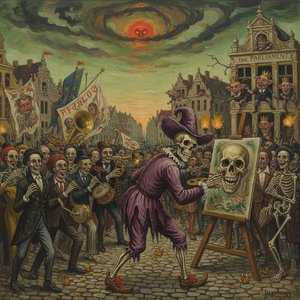
James Ensor's "The Skeleton Painter," completed in 1895, is not merely a painting; it’s an unsettling plunge into the subconscious, a meticulously crafted tableau of morbidity and artistic obsession. The image, rendered with a distinctive and increasingly personal style, immediately confronts the viewer with a scene both bizarre and profoundly familiar – a room overflowing with art, dominated by a central figure: a skeleton diligently wielding a paintbrush. This isn’t a morbid spectacle intended to shock for shock's sake; rather, it’s a complex meditation on life, death, creativity, and the inescapable nature of artistic endeavor. Ensor, born in Ostend, Belgium, in 1860, cultivated an intensely individual vision, one deeply rooted in his upbringing amidst the vibrant chaos of a seaside resort town and fueled by a fascination with masks, disguise, and the theatricality of human experience.
The Artist’s Studio – A Realm of Shadows
The setting itself is crucial to understanding the painting's power. The room is crammed with canvases, each bearing witness to Ensor’s restless hand. A dining table, laden with objects—a clock, a partially consumed meal—suggests an interrupted life, a space where sustenance and creation intertwine. The presence of other skeletons, scattered amongst the chairs and leaning against walls, reinforces the pervasive theme of mortality. These aren't simply decorative elements; they are active participants in the scene, almost as if they’re observing or even contributing to the artist’s work. The inclusion of a cat, curled up near the left edge, adds an element of domesticity and perhaps a subtle critique – a creature of instinct and survival nestled within this world of intellectual pursuit.
Symbolism and Technique: A Palette of Unease
Ensor’s technique is immediately recognizable. He employed a thick, impasto application of paint, building up layers of color to create a tactile surface that seems almost sculptural. The palette is deliberately muted – browns, greys, ochres, and deep blues dominate—contributing to the painting's somber mood. The skeletal figure itself is rendered with remarkable detail, highlighting the fragility of bone while simultaneously conveying a sense of focused determination. Notice how Ensor uses strong diagonals – particularly in the arrangement of the chairs and paintings – to create a feeling of unease and instability. The use of color is not about beauty; it’s about evoking emotion, creating a visual atmosphere of melancholy and contemplation. His style evolved significantly throughout his career, moving away from academic influences towards a highly expressive, often unsettling, approach that anticipated the Symbolist movement.
Ensor's Exploration of Artistic Identity
"The Skeleton Painter" can be interpreted as an exploration of Ensor’s own artistic identity and his relationship to mortality. The skeleton artist represents not just death but also the inevitable end of creative endeavor, the fading of inspiration with time. It speaks to the paradox of the artist – someone who often seems detached from the everyday realities of life, yet is ultimately defined by their engagement with them. Ensor’s own struggles with artistic recognition and his rejection of traditional academic training likely fueled this preoccupation with themes of isolation and the ephemeral nature of existence. The painting isn't a celebration of art; it’s a questioning of its purpose and its ultimate significance in the face of oblivion. It invites us to consider what drives an artist to create, knowing that their work, like their own physical form, will eventually succumb to time.
OriginalUniqueArt offers exquisite, hand-painted reproductions of James Ensor’s “The Skeleton Painter,” allowing you to bring this haunting masterpiece into your home or office. Each reproduction is created with the same meticulous attention to detail and expressive technique as the original, capturing the painting's unique atmosphere and emotional depth. Explore our collection today and experience the unsettling beauty of Ensor’s vision.
Kumba muuseumis asub teos The Skeleton Painter?
Koninklijk Museum voor Schone Kunsten
Antverp, Belgia
Muuseumi päritolu ja ajalugu Koninklijk Museum voor Schone Kunsten sai alguse aastal 1810. Selle vundament on sügavalt juurdunud Antverpi Püha Luku gildia pärandisse – institutsiooni, mis oli aktiivne 14. sajandi lõpust kuni 1773.


The Skeleton Painter kõrge resolutsiooniga pildid

Avalik omanik: kunstnik suri aastal 1949.
Teised laiused, uueste lõikud ja alluding →James Ensor, The Skeleton Painter (1895), Koninklijk Museum voor Schone Kunsten. Avalik omaniklik õigus
Küsimused teemal The Skeleton Painter – vastused
Kust saan näha originaalteost „The Skeleton Painter“, autor James Ensor?
Originaalteost "The Skeleton Painter" saab vaadata Koninklijk Museum voor Schone Kunsten, Antverp, Belgia-is.
Mis aastal loodi teos „The Skeleton Painter“, autor James Ensor?
Teos "The Skeleton Painter" on pärit aastast 1895. See ajastu aitab mõista teost James Ensor karjääri ja selle ajastu kontekstis.
Millises materjalis on teos „The Skeleton Painter“, autor James Ensor valmistatud?
Teose „The Skeleton Painter“, autor James Ensor materjal on Acrylic On Canvas. Reproduktsioonide eesmärk on jälitada selle tehnika välimust.
Millised teemad teoses „The Skeleton Painter“, autor James Ensor esile tõelve?
Teemad, mis teoses „The Skeleton Painter“, autor James Ensor esinevad, hõlmavad skeleton, artist, death, masks, paintings, room, cat, decay. Koos need kokkuvõtavad teose sisu.
Kas teos "The Skeleton Painter" on ilma autoriõigusteta?
Tegijateõiguse osas on teos "The Skeleton Painter" kuuluv klassifikatsiooni alla: avalikus õiguses – selle autoriõigud onหมดunud.
Millisele kunstnikule on teos "The Skeleton Painter" atribuutseeritud?
Teose "The Skeleton Painter" autoriks on mõeldud James Ensor.
Millissele stiilile kuulub "The Skeleton Painter"?
"The Skeleton Painter" on Symbolist Expressionism suunaga teos. See suundumine viitab kunstilisele traditsioonile, millega teos on seotud.
Millissele perioodile James Ensor karjäärist kuulub teos "The Skeleton Painter"?
Teos "The Skeleton Painter" kuulub James Ensor loomingulise karjääri perioodi Late Period. See klassifikatsioon seostab teose kunstniku loovliku arenguga.
Mis vanuses loos James Ensor teose "The Skeleton Painter"?
Kui teos "The Skeleton Painter" loodi aastal 1895, oli James Ensor (sündinud aastal 1860) 35 aastane.
Kunstnikust, James Ensor

1860–1949, Belgia
James Ensor
Varane elu, pere ja kunstiline haridus James Ensor sündis 13. aprillil 1860 Belgias, Ostendis. Tema identiteeti kujendas spetsiifiline kultuuriline ristumiskoht: tema isa, James Frederic Ensor, oli sündinud Brüsselis inglise päritolu vanemate juures, samas kui tema ema, Maria Catherina Haegheman, oli belgialane. See topeltpärand pani aluse vaatenurgale, mis asus sageli kohaliku traditsiooni kitsaste piiride väljas.
Ka James Ensor teosed
 Kristuse sisserändimine Brüsseli1888
 Maskidega Isamaapildi1899
 Puhastus Ostendis
 Luud soojumasid1889

Essee teemadel The Skeleton Painter
 Beauty in Mortality: Capturing the Soul of the Skull through the Luminous Lens of Impressionist ArtExplore the profound beauty of mortality through Impressionism. Discover how masters like Monet and Renoir transformed the Memento Mori tra…
 Mängulise kujunduse psühholoogia: kuidas huumor ja veiderus maalides emotsionaalset heaolu ja sotsiaalset seotust katalyseeriivadAvastage mängulise kujunduse psühholoogilist mõju maalides! Uurime huumori, veideruse ja alateadvuse rolli emotsionaalses heaolus ja sotsia…
 James Ensor's Grotesque Visions: Social Commentary & Artistic InnovationExplore the unsettling yet captivating world of James Ensor, a pioneer of Expressionism. Discover his satirical masterpieces, symbolic imag…