

 Vaata sisu
 Jaga teost
 Jaga
Jaga
 Detailid
 Õppekate juhend

 Laadi alla
 Sarnased teosed
 Röntgenuuring
 Slaidietendus
 Statistika
Rue de Flandre in the Snow


 Loe lähemalt
Giclée / Kunstiprint
Muuseumikvaliteediga giclée- või kangasprint kiire tootmisega ja paindlikud viimistlusvõimalused. ( Telli käsitsi maalitud reproduktsioon Ülemineku digitaalse pildi müügi kanalisse)




































Vali meie eelmääratud suurused, mis vastavad teose algupärastele proportsioonidele.

Sisestage vajalik laius ja kõrgus, et see sobiks teie raamile või seinale. Trükki saab ainult lõigata, seda ei saa kunagi pildist suuremaks teha, seega ka differentse vormiga suurus kaotab osa pildist. Enne trükkimist saadame teile kinnitamiseks digitaalse näidisprojektsiooni. Sellel lehel näidatud pilt ei kujuta reaalset lõiget — seda näitab ainult näidisprojekttsioon.
Ülemaailmne tarne () 2 nädala jooksul, tavalise 4/5 nädala asemel. (25 oktoober)

Tasuta ekspresssaatmine üle maailma

Kõrgekvaliteediline lina-kangastest muld

Täielik transpordikindlustus

Tollimaksude tagastamise garantii

Värvitoime täpsuse garantii

100 päeva tagastusõigus (ainult defektide korral)

100% raha tagasi garantii

Hulgusoodustus
 Klaasivalik on saadaval ainult kuni 110 cm suuruses teostes

Rue de Flandre in the Snow
Giclée / Kunstiprint
Reproduktsiooni mõõtmed
-


Lõppsumma
€ 70
Introduction to James Ensor and Rue de Flandre in the Snow
James Ensor, a Belgian painter who defied convention and embraced darkness with an unwavering gaze, remains one of the most distinctive voices of Symbolism and Expressionism. His oeuvre is marked by unsettling imagery—masks concealing identities, skeletons looming over landscapes—yet within these disturbing visions lies a profound appreciation for beauty found in unexpected places. Rue de Flandre in the Snow (1880), housed in the Fondation Socindec, exemplifies Ensor’s genius: it's not merely a depiction of winter; it’s an exploration of solitude, contemplation, and the subtle interplay between reality and psychological projection. This oil on canvas masterpiece invites viewers to delve beneath the surface of appearances and confront the anxieties inherent in everyday life.Composition and Visual Elements: A Study in Quiet Tension
The painting presents a deceptively simple scene—a deserted street lined with snow-covered houses against a muted winter sky. Ensor’s masterful use of perspective draws the eye inward, emphasizing the emptiness of the space and amplifying the sense of stillness. The absence of human figures is crucial to conveying this mood; they serve as anchors for our gaze, prompting us to consider what might be hidden beneath the façade of normalcy. Dominating the center of the composition is a fire hydrant—a commonplace object rendered with meticulous detail—which acts as an unsettling focal point, disrupting the serene tranquility and hinting at underlying tension. Ensor’s careful attention to texture—the rough surface of the buildings contrasted with the smooth sheen of the snow—further enhances the visual experience.Stylistic Influences: Expressionism's Embrace of Emotion
Ensor’s artistic style is undeniably rooted in Expressionism, a movement that prioritized conveying inner feelings over objective representation. Like Monet’s evocative landscapes – particularly Vetheuil, Pink Effect and The Boulevard de Pontoise at Argenteuil, Snow Effect – Ensor sought to capture the emotional resonance of his subjects rather than simply reproducing their visual appearance. However, unlike Monet's Impressionistic approach, Ensor deliberately distorted forms and colors to heighten psychological impact. This technique—characterized by bold brushstrokes and jarring juxtapositions—reflects Ensor’s belief that art should confront viewers with uncomfortable truths about the human condition.Symbolism Beyond Surface Appearance
Rue de Flandre in the Snow is laden with symbolic significance. The deserted street represents isolation and alienation, mirroring Ensor's preoccupation with themes of psychological vulnerability. The fire hydrant, seemingly insignificant, symbolizes urban decay and perhaps even a hint of impending doom—a jarring contrast to the pristine snowscape. Ensor’s use of color – predominantly muted blues and whites – contributes to the painting’s melancholic atmosphere, reinforcing its emotional core. These subtle visual cues invite contemplation about mortality, identity, and the anxieties inherent in confronting the complexities of modern life.Comparison with Claude Monet: Shared Landscape Themes, Divergent Visions
While Ensor and Monet shared a fascination with winter landscapes—Monet famously capturing the ethereal beauty of snowy scenes—their artistic approaches differed markedly. Where Monet aimed for luminous impressions of light and color, Ensor deliberately employed distortion and symbolism to express inner turmoil. Rue de Flandre in the Snow stands as testament to Ensor’s singular vision: a haunting portrayal of solitude that transcends mere visual depiction, cementing its place as a cornerstone of Expressionist art and an enduring symbol of artistic innovation.Küsimused ja vastused
Kas on olemas sarnaseid teoseid kui "Rue de Flandre in the Snow"?
Teosed, mis sarnanevad teosega "Rue de Flandre in the Snow", on loetletud teose Sarnased teosed lehel.
Mille kohta teos "Rue de Flandre in the Snow" on?
Teose "Rue de Flandre in the Snow" teemad on winter landscape, urban scene, snowy street, fire hydrant, symbolism, james ensor, belgium.
Millist emotsionaalset toonikut saadab kaasata teose "Rue de Flandre in the Snow" Expressionism stiil?
Expressionism suunangu raames on teos "Rue de Flandre in the Snow" üles seabetud Reflective toonil.
Kunstniku elulugu
James Ensor: A Pioneer of Modernism
James Sidney Edouard, Baron Ensor (Ostend, 13 April 1860 – 19 November 1949) was a Flemish-Belgian painter and printmaker, an important influence on expressionism and surrealism who lived in Ostend for almost his entire life. He was associated with the artistic group Les XX.
Early Life and Artistic Training
James Ensor’s father, James Frederic Ensor, born in Brussels to English parents, was a cultivated man who studied engineering in England and Germany. Ensor's mother, Maria Catharina Haegheman, was Belgian. Ensor himself lacked interest in academic study and left school at the age of fifteen to begin his artistic training with two local painters. From 1876, he attended drawing lessons at the College of the Blessed Virgin in Ostend.
The Impressionist Influence and Initial Works
Ensor’s early paintings reflected a more traditional approach, depicting scenes of everyday life rendered in somber tones. Works like *Russian Music* (1881) and *The Drunkards* (1883) reveal a nascent talent grappling with realism, but even within these early pieces, hints of the unsettling imagery to come are present. A pivotal shift occurred as Ensor’s palette brightened and his subject matter grew increasingly bizarre. He began to populate his canvases with carnivals, skeletons, puppets, and allegorical figures—a world steeped in fantasy and often bordering on the grotesque. This wasn't merely a stylistic change; it was a deliberate exploration of the darker aspects of human existence, a rejection of societal norms, and an embrace of the irrational.
Les XX and Artistic Innovation
In 1883 Ensor, along with a few older students of the Brussels‘ academy, would take leave of the artists‘ association *L'Essor*. They established the artists‘ association* Les Vingt*. This will play an important role in the dissemination of various international *avant-garde* movements. Ensor’s father’s shop in Ostend was a main purveyor of carnival paraphernalia, and this fascination would permeate his artwork.
Major Paintings and Recurring Themes
Throughout his career, Ensor produced a series of works that continue to shock and fascinate audiences today. *The Scandalized Masks* (1883) stands as an early testament to his fascination with the power of disguise and its ability to reveal hidden emotions. Perhaps his most controversial work, *Christ’s Entry into Brussels* (1888-1889), remains a powerful satire of religious hypocrisy and societal indifference—a painting initially met with harsh criticism but now celebrated as a masterpiece. The unsettling image of Christ entering a city teeming with grotesque masked figures is a potent commentary on the disconnect between spiritual ideals and human behavior.
Legacy and Influence
James Ensor was recognized as a pivotal figure in the transition from 19th-century Symbolism to early 20th-century Expressionism and Surrealism—a true pioneer of modern art. His fearless exploration of the subconscious, his embrace of grotesque imagery, and his rejection of academic conventions paved the way for future generations of artists who dared to challenge artistic norms. He is remembered as a visionary artist whose uncompromising vision continues to inspire contemplation and debate.

James Ensor
1860 - 1949 , Belgium
Lühikest infot
- Artistic Movement Or Style: Expressionism, Surrealism
- Artists Who Influenced This Artist:
- Bruegel the Elder
- Francisco Goya
- Whistler
- Date Of Birth: April 13, 1860
- Date Of Death: November 19, 1949
- Full Name: James Sidney Edouard Ensor
- Nationality: Belgian
- Notable Artworks:
- The Scandalized Masks
- Skeletons Fighting...
- Christ's Entry into Brussels
- Place Of Birth: Ostend, Belgium
Sarnased artiklid

James Abbott McNeill Whistler: 25 meistriteost kunstikollektsioonis | OriginalUniqueArt.com
Avastage James Abbott McNeill Whistler'i 25 võrratut meistriteost! Sukelduge esteetilisse kunstimaailma, õppige tema maalitehnikatest ja leidke täiuslik seina kaunistus OriginalUniqueArt.com-ist. Kunstikollektsioonid & reprodutsioonid.

Francisco Goya Parimad Teosed: Hingematvad Kunstiteosed Kodudesse – OriginalUniqueArt
Avastage Francisco Goya 25 parimat teost! Sukelduge Hispaania kunsti, romantismisse ja portree maalide maailma. Leidke inspiratsiooni kodudekoriks OriginalUniqueArt.com-is – kvaliteetsed kunstireproduktsioonid ja kollektsioonid.

Sir Alfred Munnings' Masterpieces: 25 Paintings That Define Equine Art | OriginalUniqueArt
Explore 25 iconic Sir Alfred Munnings paintings! Discover the beauty of British Impressionism, equine art & rural England. Find museum-quality reproductions and elevate your home decor with OriginalUniqueArt. Explore the full collection online.

About Us
Discover our story! We bring world-class art into your life through expert curation, personalized creations, and free previews. Trusted by individuals and businesses since 2000.
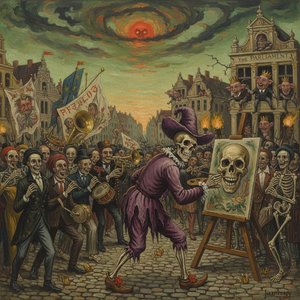
James Ensor's Grotesque Visions: Social Commentary & Artistic Innovation
Explore the unsettling yet captivating world of James Ensor, a pioneer of Expressionism. Discover his satirical masterpieces, symbolic imagery & lasting influence on modern art. High-quality reproductions available at OriginalUniqueArt.


