

 Vaata sisu
 Jaga teost
 Jaga
Jaga
 Detailid
 Õppekate juhend

 Laadi alla
 Sarnased teosed
 Röntgenuuring
 Slaidietendus
 Statistika
Le Jardin d' amour


 Loe lähemalt
Giclée / Kunstiprint
Muuseumikvaliteediga giclée- või kangasprint kiire tootmisega ja paindlikud viimistlusvõimalused. ( Telli käsitsi maalitud reproduktsioon Ülemineku digitaalse pildi müügi kanalisse)




P118B €10

P118H €10

P118W €10

P438Z €10

P508JH €12

P508YH €12

P805H €10

P805Z €10

P919BZ €10

P919G €10

P919XJ €10

P959ZH €10

P968JZ €12

W106C €8

W218G €10

W218JH €8

W218Y €10

W307PJ €10

W316G €10

W316PJ €8

W316Y €10

W398PJ €8

W4111J €10

W500HY €15

W500JH €15

W692G €12

W849H €8

W940BG €15

W953PJ €8




Vali meie eelmääratud suurused, mis vastavad teose algupärastele proportsioonidele.

Sisestage vajalik laius ja kõrgus, et see sobiks teie raamile või seinale. Trükki saab ainult lõigata, seda ei saa kunagi pildist suuremaks teha, seega ka differentse vormiga suurus kaotab osa pildist. Enne trükkimist saadame teile kinnitamiseks digitaalse näidisprojektsiooni. Sellel lehel näidatud pilt ei kujuta reaalset lõiget — seda näitab ainult näidisprojekttsioon.
Ülemaailmne tarne () 2 nädala jooksul, tavalise 4/5 nädala asemel. (22 oktoober)

Tasuta ekspresssaatmine üle maailma

Kõrgekvaliteediline lina-kangastest muld

Täielik transpordikindlustus

Tollimaksude tagastamise garantii

Värvitoime täpsuse garantii

100 päeva tagastusõigus (ainult defektide korral)

100% raha tagasi garantii

Hulgusoodustus
 Klaasivalik on saadaval ainult kuni 110 cm suuruses teostes

Le Jardin d' amour
Giclée / Kunstiprint
Reproduktsiooni mõõtmed
-


Lõppsumma
€ 70
A Dreamscape of Desire: Unveiling James Ensor’s *Le Jardin d'Amour*
James Ensor’s *Le Jardin d'Amour* (The Garden of Love) is a captivating and unsettling masterpiece, brimming with the artist’s signature blend of fantasy, social critique, and deeply personal symbolism. Painted around 1889, this work transports viewers to an enigmatic outdoor gathering, a theatrical space populated by figures masked and costumed in the style of the *commedia dell'arte*. It is not merely a depiction of revelry, but a complex exploration of human desire, alienation, and the anxieties of modern life.Subject & Composition: A Masquerade of Souls
The scene unfolds within a densely wooded area, bathed in an ethereal, almost hallucinatory light emanating from behind the assembled figures. These are not portraits of identifiable individuals, but rather archetypes – masked characters engaged in ambiguous interactions. Some embrace, others turn away, and still others seem lost in their own private worlds. The composition is deliberately crowded and dynamic, creating a sense of claustrophobia and unease despite the ostensibly idyllic setting. The figures’ elaborate costumes and masks conceal their true identities, suggesting a performance of love and desire that may be hollow or deceptive.Style & Technique: Bridging Expressionism and Symbolism
*Le Jardin d'Amour* exemplifies Ensor’s unique artistic vision, foreshadowing both Expressionism and Surrealism. His technique is characterized by loose, visible brushstrokes and a vibrant, yet often unsettling, color palette. The painting employs elements of pointillism*, with small dabs of paint creating texture and luminosity. The flattened perspective and dreamlike atmosphere contribute to the work’s otherworldly quality. Ensor masterfully uses light and shadow to heighten the dramatic tension and emphasize the emotional intensity of the scene.Historical Context & Influences
Ensor was deeply fascinated by 18th-century art, particularly the fêtes galantes of Jean-Antoine Watteau. However, he subverts the traditional idyllic scenes of Watteau, infusing them with a sense of crepuscular melancholy and psychological complexity. The painting also reflects the social anxieties of late 19th-century Belgium – a period marked by rapid industrialization, political unrest, and growing disillusionment. Ensor’s own troubled childhood and experiences with societal hypocrisy likely informed his cynical view of human relationships.Symbolism & Interpretation: Masks and Meaning
The masks worn by the figures are central to the painting's symbolism. They represent not only concealment but also the artificiality of social conventions and the performative nature of identity. The garden itself can be interpreted as a metaphor for the human heart – a place of both beauty and darkness, pleasure and pain. Some scholars suggest that the painting reflects Ensor’s own anxieties about intimacy and his fear of emotional vulnerability. The swirling patterns in the background may symbolize the chaotic forces underlying human desire.Emotional Impact & Legacy
*Le Jardin d'Amour* is a profoundly evocative work that continues to resonate with viewers today. It evokes feelings of both fascination and unease, inviting contemplation on themes of love, loss, identity, and the complexities of the human condition. Ensor’s groundbreaking style paved the way for future generations of artists who sought to express subjective experience and challenge conventional artistic norms. Recognized by institutions like the Museo Nacional Thyssen-Bornemisza, this painting remains a pivotal work in the development of modern art, solidifying James Ensor's place as a visionary artist.- A masterful blend of Expressionism and Symbolism.
- Rich with symbolic meaning and psychological depth.
- An influential work that foreshadowed key movements in modern art.
Küsimused ja vastused
Mis tüüpi teos on „Le Jardin d' amour“, autor James Ensor?
Kataloogis on teos „Le Jardin d' amour“, autor James Ensor liigitatud kui WallArt. See kategooria aitab leida sarnaseid teoseid.
Milline palett ja domineeriv värv määravad teose "Le Jardin d' amour"?
Teose „Le Jardin d' amour“, autor James Ensor värvitoon: Earthy palett, mille domineerib Phthalo Green (#221c1d).
Millist atmosfääri teevad „Le Jardin d' amour“, autor James Ensor sisekujundusse?
Teose „Le Jardin d' amour“, autor James Ensor meeleolu on Dramatic ning seda soovitatakse ruumides, mis on Living Room. Meeleolu tähistab seda, mida teos ümbritsevale piirkonnale lisab.
Kunstniku elulugu
James Ensor: A Pioneer of Modernism
James Sidney Edouard, Baron Ensor (Ostend, 13 April 1860 – 19 November 1949) was a Flemish-Belgian painter and printmaker, an important influence on expressionism and surrealism who lived in Ostend for almost his entire life. He was associated with the artistic group Les XX.
Early Life and Artistic Training
James Ensor’s father, James Frederic Ensor, born in Brussels to English parents, was a cultivated man who studied engineering in England and Germany. Ensor's mother, Maria Catharina Haegheman, was Belgian. Ensor himself lacked interest in academic study and left school at the age of fifteen to begin his artistic training with two local painters. From 1876, he attended drawing lessons at the College of the Blessed Virgin in Ostend.
The Impressionist Influence and Initial Works
Ensor’s early paintings reflected a more traditional approach, depicting scenes of everyday life rendered in somber tones. Works like *Russian Music* (1881) and *The Drunkards* (1883) reveal a nascent talent grappling with realism, but even within these early pieces, hints of the unsettling imagery to come are present. A pivotal shift occurred as Ensor’s palette brightened and his subject matter grew increasingly bizarre. He began to populate his canvases with carnivals, skeletons, puppets, and allegorical figures—a world steeped in fantasy and often bordering on the grotesque. This wasn't merely a stylistic change; it was a deliberate exploration of the darker aspects of human existence, a rejection of societal norms, and an embrace of the irrational.
Les XX and Artistic Innovation
In 1883 Ensor, along with a few older students of the Brussels‘ academy, would take leave of the artists‘ association *L'Essor*. They established the artists‘ association* Les Vingt*. This will play an important role in the dissemination of various international *avant-garde* movements. Ensor’s father’s shop in Ostend was a main purveyor of carnival paraphernalia, and this fascination would permeate his artwork.
Major Paintings and Recurring Themes
Throughout his career, Ensor produced a series of works that continue to shock and fascinate audiences today. *The Scandalized Masks* (1883) stands as an early testament to his fascination with the power of disguise and its ability to reveal hidden emotions. Perhaps his most controversial work, *Christ’s Entry into Brussels* (1888-1889), remains a powerful satire of religious hypocrisy and societal indifference—a painting initially met with harsh criticism but now celebrated as a masterpiece. The unsettling image of Christ entering a city teeming with grotesque masked figures is a potent commentary on the disconnect between spiritual ideals and human behavior.
Legacy and Influence
James Ensor was recognized as a pivotal figure in the transition from 19th-century Symbolism to early 20th-century Expressionism and Surrealism—a true pioneer of modern art. His fearless exploration of the subconscious, his embrace of grotesque imagery, and his rejection of academic conventions paved the way for future generations of artists who dared to challenge artistic norms. He is remembered as a visionary artist whose uncompromising vision continues to inspire contemplation and debate.

James Ensor
1860 - 1949 , Belgium
Lühikest infot
- Artistic Movement Or Style: Expressionism, Surrealism
- Artists Who Influenced This Artist:
- Bruegel the Elder
- Francisco Goya
- Whistler
- Date Of Birth: April 13, 1860
- Date Of Death: November 19, 1949
- Full Name: James Sidney Edouard Ensor
- Nationality: Belgian
- Notable Artworks:
- The Scandalized Masks
- Skeletons Fighting...
- Christ's Entry into Brussels
- Place Of Birth: Ostend, Belgium
Sarnased artiklid

Sir Alfred Munnings' Masterpieces: 25 Paintings That Define Equine Art | OriginalUniqueArt
Explore 25 iconic Sir Alfred Munnings paintings! Discover the beauty of British Impressionism, equine art & rural England. Find museum-quality reproductions and elevate your home decor with OriginalUniqueArt. Explore the full collection online.
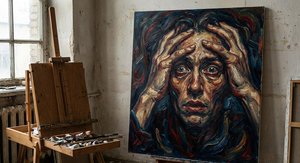
Figurative Expressionism: Emotional Intensity & Subjective Reality in 20th-Century Art
Explore the powerful world of Figurative Expressionism with OriginalUniqueArt. Discover key artists like Kirchner & Beckmann, understand its emotional depth, and learn how to collect this influential 20th-century art movement.

The Raw Emotion of Expressionism: A Deep Dive into its History, Characteristics & Enduring Influence
Explore the raw emotion of Expressionism with OriginalUniqueArt. Discover its history, key artists like Kirchner & Munch, and lasting influence on modern art. Expert insights for collectors & enthusiasts.
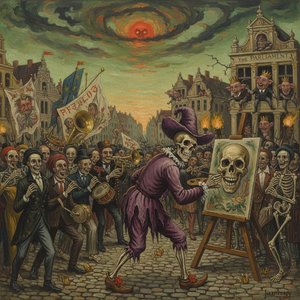
James Ensor's Grotesque Visions: Social Commentary & Artistic Innovation
Explore the unsettling yet captivating world of James Ensor, a pioneer of Expressionism. Discover his satirical masterpieces, symbolic imagery & lasting influence on modern art. High-quality reproductions available at OriginalUniqueArt.

James Abbott McNeill Whistler: 25 meistriteost kunstikollektsioonis | OriginalUniqueArt.com
Avastage James Abbott McNeill Whistler'i 25 võrratut meistriteost! Sukelduge esteetilisse kunstimaailma, õppige tema maalitehnikatest ja leidke täiuslik seina kaunistus OriginalUniqueArt.com-ist. Kunstikollektsioonid & reprodutsioonid.


