

 Eelvaade
 Saada
Saada Jaga
Jaga
 Teave teose kohta

 Laadi alla
 Sarnased teosed
 Röntgenuuring
 Slaidietendus
Tüdruku pea


 Loe lähemalt
Giclée / Kunstiprint
Muuseumikvaliteediga giclée- või kangasprint kiire tootmisega ja paindlikud viimistlusvõimalused. ( Osta käsitsi maalitud maal Osta pilt)




P118B $10

P118H $10

P118W $10

P438Z $10

P508JH $12

P508YH $12

P805H $10

P805Z $10

P919BZ $10

P919G $10

P919XJ $10

P959ZH $10

P968JZ $12

W106C $8

W218G $10

W218JH $8

W218Y $10

W307PJ $10

W316G $10

W316PJ $8

W316Y $10

W398PJ $8

W4111J $10

W500HY $15

W500JH $15

W692G $12

W849H $8

W940BG $15

W953PJ $8




Vali meie eelmääratud suurused, mis vastavad teose algupärastele proportsioonidele.

Saate sisestada oma mõõdud, et need sobiks konkreetse raami või ruumi sisse. Kui valitud suurus ei vasta originaalteose proportsioonidele, lõigame teose ära või laiendame pilti peegeldatud või ühtlase servaga. Enne tootmisprotsessi algust saadetakse Teie kinnitamiseks digitaalne näidis.
Palun märka, et ekraanil kuvatav eelvaade ei kajasta tegelikku lõigamist või laiendamist. Ainult näidis kujutab täpselt lõplikku kompositsiooni.
Kuigi erimõõdu on saadaval, soovitame originaaproportsioonide säilitamiseks valida mõõt ette määratud nimekirjast.
Ülemaailmne tarne () 2 nädala jooksul, tavalise 4/5 nädala asemel. (21 august)

Tasuta ekspresssaatmine üle maailma

Kõrgekvaliteediline linakangas

Täielik transpordikindlustus

Tollimaksude tagastamise garantii

Värvitoime täpsuse garantii

60-päevane tagastusõig: ainult tootmisdefektide korral

100% raha tagasi garantii

Hulgusoodustus
 Klaasivalik on saadaval ainult suuruses kuni 110 cm

Tüdruku pea
Giclée / Kunstiprint
Reproduktsiooni suurus
-


Kogusumma
$ 80
Kogumuse kirjeldus
Jacques François Joseph Saly: A Portrait of Innocence Embodied
Jacques François Joseph Saly (1717–1776) stands as a cornerstone of French sculpture during the Enlightenment, yet his legacy transcends mere artistic achievement; he was instrumental in shaping cultural discourse and fostering intellectual exchange between France and Denmark. His appointment as director of the Royal Danish Academy wasn’t simply a career progression—it represented a fervent embrace of reformist ideals and an unwavering commitment to elevating artistic excellence within Scandinavia. Born in Valenciennes, Saly's formative years instilled within him a profound appreciation for classical aesthetics and meticulous craftsmanship, disciplines that would permeate his entire oeuvre. He honed his skills under Nicolas Fouquet, Louis XIV’s flamboyant superintendent of finances, absorbing lessons in grandeur and stylistic innovation – influences that undeniably shaped the monumental equestrian statue of Frederick V, arguably Saly's magnum opus.- Style & Technique: Saly’s artistic vision firmly rooted itself within Neoclassical principles. This movement championed order, symmetry, and idealized forms—a deliberate reaction against the excesses of Baroque art. He skillfully employed marble carving techniques, utilizing precise instruments to sculpt a remarkably lifelike representation of youthful beauty. The surface texture achieved through painstaking manipulation reflects Saly’s dedication to capturing the essence of his subject matter.
- Historical Context: Saly's work flourished during a period of significant intellectual and artistic upheaval. The Enlightenment prioritized reason, observation, and humanism—values that profoundly impacted artistic production. His involvement with the Danish Academy exemplifies this spirit of reform, aiming to establish standards of excellence and fostering dialogue between art and science.
- Symbolism & Subject Matter: The portrait itself speaks volumes about Saly’s aesthetic sensibilities. Representing a young girl—often interpreted as symbolizing purity and innocence—the sculpture embodies the Enlightenment's fascination with idealized beauty. It reflects broader cultural anxieties surrounding femininity and virtue during the era.
- Provenance & Reproduction: This particular bust, housed in the Victoria and Albert Museum’s collection, is believed to be an early copy of Saly’s original model—a testament to its enduring appeal and artistic significance. OriginalUniqueArt offers a meticulously crafted reproduction that captures the subtle nuances of marble texture and tonal variation, allowing viewers to experience the artwork's serene atmosphere firsthand.
Kunstniku elulugu
A Sculptor of Enlightenment: The Life and Legacy of Jacques Saly
The history of eighteenth-century sculpture is often told through the lens of grand royal commissions and the pursuit of classical perfection, a narrative in which Jacques François Joseph Saly stands as a luminous figure. Born in 1717 in Valenciennes, France, Saly’s journey from a provincial apprentice to a central pillar of European neoclassicism is a testament to the era's burgeoning artistic mobility. His early training began at the tender age of nine under the local master Antoine Gilles, but his profound talent soon beckoned him toward the heart of the French art world. By 1732, he had arrived in Paris, immersing himself in the prestigious studio of Guillaume Coustou and attending the Académie royale de peinture et de sculpture. It was within these hallowed halls that Saly began to refine a style characterized by anatomical precision and a graceful command over form, earning him several medals that signaled the arrival of a master in the making.
Saly’s artistic identity was forged in the crucible of French grandeur, yet his most enduring impact would be felt far beyond the borders of his homeland. While his early years were steeped in the opulent traditions of the French court, his career took a transformative turn when he moved into the international sphere, working across France, Italy, and Malta. However, it was in Denmark that Saly truly found his monumental stage. His appointment as the Director of the Royal Danish Academy of Art from 1754 to 1771 was more than a professional milestone; it was a cultural mission. Under the patronage of the Danish crown, specifically during the era of Christian VII, Saly became an architect of national identity, blending the sophisticated aesthetics of French Neoclassianism with the ambitious architectural projects of the Danish Enlightenment.
Mastery in Marble and Bronze
The breadth of Saly’s oeuvre reflects a remarkable ability to navigate between the delicate intimacy of portraiture and the overwhelming scale of public monuments. His works often capture a sense of timelessness, where the cold rigidity of stone is breathed into life through meticulous detail. In pieces such as Hebe, one can observe his profound connection to classical mythology, utilizing the elegance of the Greek goddess to showcase a mastery of drapery and soft, flowing lines that suggest movement even in stillness. Similarly, his Head of a Girl demonstrates an exquisite sensitivity to the human form, capturing a fleeting moment of youthful grace with a tenderness that resonates across centuries.
Beyond the delicate, Saly possessed a rare talent for the monumental and the anatomical. His most celebrated achievement remains the Equestrian Statue of Frederick V of Denmark, located at Amalienborg. This colossal work serves as a pinnacle of his career, representing a triumph of technical skill and symbolic power. The statue, which depicts the monarch on horseback, required an extraordinary understanding of equine anatomy—a subject Saly studied with obsessive devotion. Through this work, he achieved a seamless integration of royal propaganda and artistic excellence, creating a landmark that continues to define the architectural landscape of Copenhagen.
The hallmarks of his technical development include:
- Anatomical Accuracy: A rigorous dedication to the study of musculature, particularly evident in his equine models and mythological figures.
- Neoclassical Harmony: The ability to balance the grandeur of classical themes with a clarity of composition that avoids unnecessary ornamentation.
- Material Versatility: An expert command over both the softness required for marble portraiture and the strength necessary for large-scale bronze casting.
A Lasting Impression on European Art
The historical significance of Jacques Saly lies in his role as a cultural bridge. He did not merely transplant French style to Northern Europe; rather, he helped cultivate a unique artistic synthesis that elevated the Danish Academy to international prominence. By collaborating with figures such as Nicolas Henri Jardin, Saly contributed to an era of architectural and sculptural innovation that sought to rival the great capitals of Europe. His life’s work represents the very essence of the Enlightenment—a period defined by the pursuit of order, the celebration of reason, and the elevation of human achievement through the beauty of the arts.
Though he passed away in 1776 in his native Valenciennes, Saly’s influence endured through the institutions he led and the monuments he left behind. He remains a vital figure for any student of the Neoclassical movement, embodying the transition from the ornate flourishes of the Rococo to the disciplined, noble simplicity that would define the modern era of sculpture. His legacy is etched not just in the marble of Copenhagen, but in the very spirit of European artistic excellence.

jacques françois joseph saly
1717 - 1776 , France
Lühikesed faktid
- Artistic Movement Or Style: Neoclassical
- Artists Or Movements Influenced By This Artist: ['French Academy']
- Artists Who Influenced This Artist:
- Jean-Baptiste Girardon
- Nicolas Beauvais
- Date Of Birth: June 20, 1717 Valenciennes, France
- Date Of Death: May 4, 1776 Valenciennes, France
- Full Name: Jacques François Joseph Saly
- Nationality: French
- Notable Artworks:
- Equestrian Statue of Frederick V
- Head of a Girl
- Hebe
- Place Of Birth: Valenciennes, France
Seotud artiklid

RoKokoo: 10 Meisterteost, Mis Määritsesid Kunstisuundi | OriginalUniqueArt
Sukeldu RoKokoo maailma! Avasta 10 meistriteost, mis defineerisid kunstisuunda – prantsuse kunstnikud, kuldsed toonid ja luksuslik interjöör. Tutvu lugudega legendaarsete teoste taga & leia inspiratsiooni OriginalUniqueArt.com-ilt!

The Rococo Aesthetic: Opulence, Rebellion & the Pursuit of Pleasure in 18th-Century Art
Explore the opulent world of Rococo art! Discover its origins, key artists like Watteau & Boucher, and lasting influence on design. Expert insights for collectors & enthusiasts.
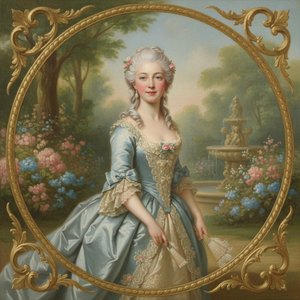
The Elegance of Rococo Portraiture: A Journey Through Grace, Soft Light, and Pastel Dreams
Discover the exquisite world of Rococo portraiture. Explore the delicate beauty of 18th-century French art, from pastel light to graceful asymmetry, and learn how to bring this era of elegance into your home through masterfully hand-painted oil reproductions.
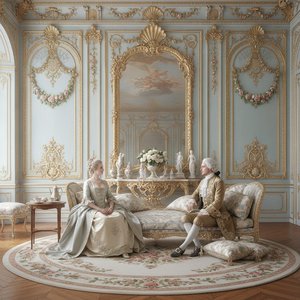
Rococo Art Guide: Elegance, Ornamentation, and the Era of Luxury
Explore the elegance of Rococo art. From Watteau to Fragonard, discover the history, aesthetics, and masters of 18th-century luxury in this expert guide for art lovers and collectors.

The Elegance of Rococo: A Journey Through Pastel Dreams and Ornate Splendor
Embark on an elegant journey through the Rococo era. Discover the delicate beauty of pastel masterpieces, the intricate artistry of 18th-century French masters, and how this era of ornate splendor continues to inspire timeless luxury in fine art collecting.


