Post-Impressionist Landscape
Kimer (Jacek Malczewski)
Jacek Malczewski (1854–1929) on loonud teose Kimer. See kuulub Post-Impressionist Landscape suuntrime. See on valmistatud materjalist Õlimaal kangaruumil.
- Õlimaal kangaruumil

 Eelvaade

 Käsitsi maalatud õlimaalatsioon
 Saada
 Jaga
 Teosest infokaart


 Laadi alla
 Sarnased teosed
 Röntgenuuring
 Slaidietendus
 KÜSIMUSED JA VASTUSID

 Statistika
Kimer lühidalt
- Pealkiri
- Kimer
- Kunstnik
- Jacek Malczewski (1854–1929)
- Kunstniku sünnukoht
- Radom, Poola
- Materjalid
- Õlimaal kangaruumil
- Liikumine
- Post-Impressionist Landscape
- Aeglkond
- 19. sajand
- Teema
- rural landscape, women dialogue, warm palette, impasto texture, atmospheric light, polish symbolism
Mida Kimer kujutab?
A Vision of Polish Identity: Exploring Jacek Malczewski’s “Chimera”
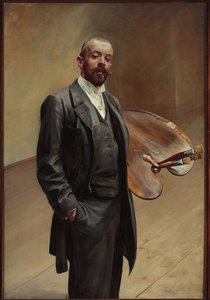
The painting "Chimera" by Jacek Malczewski stands as a cornerstone of Polish Symbolism, capturing not merely a picturesque landscape but also the very soul of a nation grappling with its heritage and aspirations. Created around 1897, this artwork transcends mere visual representation; it’s an emotive declaration of artistic conviction rooted in deeply held patriotic sentiments. Born in Radom during a period of Russian dominion over Congress Poland—a formative experience that instilled within him the fervent desire for Polish independence—Malczewski's life mirrored his art: driven by idealism and fueled by recollections of heroic narratives. His father, Julian Malczewski, nurtured this passion for Polish culture and history, shaping Jacek into a painter who would become synonymous with Symbolist aesthetics.- Subject Matter & Composition: The scene depicts two women engaged in conversation amidst a rural backdrop featuring a rustic building. The asymmetrical composition emphasizes the figures’ presence against an expansive sky, creating a dynamic interplay of light and shadow that underscores the intimacy of their interaction. This deliberate imbalance mirrors the complexities inherent in Polish national identity—a striving for unity amidst division.
- Style & Technique: Malczewski's approach firmly establishes itself within Post-Impressionism, incorporating expressive elements reminiscent of Expressionism. Thick impasto brushstrokes dominate the canvas, generating palpable texture and conveying an emotional intensity characteristic of Symbolist art. The artist skillfully employs atmospheric perspective to heighten the sense of depth and luminosity, prioritizing mood over precise realism. This technique isn’t simply about depicting what is seen; it's about channeling feeling onto the surface of the painting—a hallmark of Symbolist artistic vision.
- Historical Context: “Chimera” emerged during a pivotal moment in Polish history—the waning years of the Austro-Hungarian Empire and the burgeoning movement for national revival. Malczewski’s Symbolist style reflects the broader intellectual currents of his time, aligning with artists who sought to transcend mere depiction and delve into psychological landscapes and spiritual truths. The painting speaks directly to the anxieties and hopes surrounding Poland's quest for sovereignty during this turbulent era.
- Symbolism & Emotion: The painting’s title itself—"Chimera"—references mythological creatures combining disparate elements, symbolizing the multifaceted nature of Polish identity. Just as the Chimera embodies contradictions – beauty alongside terror – Malczewski’s artwork confronts viewers with a poignant blend of melancholy and optimism regarding Poland's future. It evokes themes of companionship, contemplation, and connection with the natural world, conveying a profound sense of longing for a lost past while simultaneously embracing the promise of renewal.
- Material & Craftsmanship: Executed in oil paints on canvas, “Chimera” exemplifies meticulous craftsmanship. The layering of paint creates a rich surface texture that captures fleeting moments of light and color—a testament to Malczewski’s dedication to conveying both visual beauty and emotional resonance. This careful attention to detail underscores the artist's belief that art should aspire to capture not just what is seen but also what is felt.
Kimer kõrge resolutsiooniga pildid
Jacek Malczewski, Kimer. Avalik omaniklik õigus
Küsimused teemal Kimer – vastused
Millist tehnikat teose „Kimer“, autor Jacek Malczewski valmistamisel kasutati?
Teos "Kimer" on valmistatud tehnika Õlimaal kangaruumil.
Mille kohta teos "Kimer" on?
Teose "Kimer" teemad on rural landscape, women dialogue, warm palette, impasto texture, atmospheric light, polish symbolism, quiet reflection.
Kas teose „Kimer“, autor Jacek Malczewski pilt on vabalt reproduseeritav?
Teos „Kimer“, autor Jacek Malczewski on lubaõiguslikult avalik && copyright on aegunud. See staatus reguleerib teose pildi reprodüseerimise võimalusi.
Kes on teose "Kimer" looja?
Teose "Kimer" autoriks on mõeldud Jacek Malczewski.
Millissele stiilile kuulub "Kimer"?
"Kimer" on Post-Impressionist Landscape suunaga teos. See suundumine viitab kunstilisele traditsioonile, millega teos on seotud.
Millist etap Jacek Malczewski loomingus teos "Kimer" esindab?
Jacek Malczewski loomingus kuulub teos "Kimer" perioodi Mature Period. See etap aitab seda võrdida kunstniku teiste töödega.
Miks on teose "Kimer" autoriõiguste staatus selline, nagu see on?
Teose "Kimer" autoriõiguste staatus - avalik && copyright on aegunud - tuleneb kunstniku surma aastast 1929.
Milliseid ühiseid elemente jagab teos "Kimer" Jacek Malczewski muud loominguga?
Jacek Malczewski loomingus on teos "Kimer", mis kuulub Post-Impressionist Landscape stiili ja kordub teemad nagu romantic symbolism, polish nationalism, landscape expression, artist legacy.
Kust kohalt Jacek Malczewski korduvad teemad teoses "Kimer" ilmumisel?
"Kimer" kujutab teemasid rural landscape, women dialogue, warm palette, impasto texture, atmospheric light, polish symbolism, quiet reflection, samal ajal kui Jacek Malczewski tuntud teemad on romantic symbolism, polish nationalism, landscape expression, artist legacy. Nende kahe võrdlemine näitab, kuidas teos seobub kunstniku tavalistega motiividega.
Kunstnik Jacek Malczewski kohta
1854–1929, Poola
Jacek Malczewski
Elu, mis on läbi imbunud Poola igatsusest Jacek Malczewski, sündinud 1854. aastal Radomis, linnas, mis asub tollal Venemaa kontrolli all olnud Preisimaa-Poolas, oli palju enamat kui lihtsalt maalija; ta oli poola rahvusliku identiteedi visuaalne kehastus ja sügav häälekajastaja rahvale, kes ihaldas iseseisvust. Tema elu tee ja kunstiline visioon olid lahutamatult seotud sõltumatuse romantiliste ideaalidega, mis said tema isale Julian Malczewskile – pühendunud patrioodile – tänu suuresti südi noore Jaceku südamesse armastus Poola kultuuri, kirjanduse ja ajaloo vastu. See varajane mõjutus sai tema loomingulise väljenduse aluseks, kujundades temast poola sümbolismi juhtfiguuri ning teenides teda austatud tiitliga „poola sümbolismi isa“.
Teel Jacek Malczewski kohta Jacek Malczewski silmapaistvad teosed
Ka Jacek Malczewski teosed
 Self-portrait in armor with violin.1908
 Madonna and Children1897
 Portrait of artist's sister Helene with lute1906
 The Artist's death1909
Teemad teemal Kimer
 Polish artworks of the 1900sPolish Symbolism in the 1900s features masterpieces by Jacek Malczewski, Olga Boznańska, and Józef Mehoffer. View the full collection at Or…
 The Language of Brushstrokes: Decoding Emotion and Technique in Art HistoryExplore the profound connection between technique and emotion. From the sculptural depth of impasto to classical mastery, decode the langua…
 20th century Polish painters20th-century Polish painters like Tamara de Lempicka, Sigmar Polke, and Aleksandra Ekster define an era. Find museum-quality reproductions …