Symbolism · 1903
Art (Jacek Malczewski, 1903)
Jacek Malczewski (1854–1929) on loonud teose Art. See on pärinev 1903 aastast. See kuulub Symbolism suuntrime. See on valmistatud materjalist Oil On Canvas. Teos on säilitatud National Museum in Wrocław kogamuses Wrocław, Poland. Mõõtmed on 70 × 98 cm.
- 1903
- Oil On Canvas
- 70 × 98 cm
- National Museum in Wrocław

 Eelvaade

 Käsitsi maalatud õlimaalatsioon
 Saada
 Jaga
 Teosest infokaart


 Laadi alla
 Sarnased teosed
 Röntgenuuring
 Slaidietendus
 KÜSIMUSED JA VASTUSID

 Statistika
Art lühidalt
- Pealkiri
- Art
- Kunstnik
- Jacek Malczewski (1854–1929)
- Kunstniku sünnukoht
- Radom, Poola
- Kuupäev
- 1903
- Materjalid
- Oil On Canvas
- Mõõtmed
- 70 × 98 cm
- Kus seda näeb
- National Museum in Wrocław, Wrocław, Poland
- Liikumine
- Symbolism
- Aeglkond
- 19th Century
- Teema
- symbolism, polish art, mythology, portraiture, national identity, allegory
Mida Art kujutab?
Identification of the Artwork and Artist
Art is an oil on canvas painting executed by Jacek Malczewski in 1903. The work belongs to the Symbolist movement, a style in which Malczewski established himself as a central figure. His practice often integrated themes of national identity and folklore into complex allegorical compositions.
Malczewski was a Polish symbolist painter. His approach frequently utilized mythological and religious motifs to explore psychological and existential states. This specific work, created at the turn of the twentieth century, reflects the artist's characteristic use of symbolic imagery to communicate ideas beyond literal representation.
Composition and Visual Elements
The composition is tightly framed, focusing the viewer's attention on the faces and upper bodies of the clustered figures. This arrangement creates a sense of intimacy and shared experience among the subjects, though the overall placement feels somewhat chaotic yet deliberate. A large, golden horse dominates the background, its head acting as a visual anchor that stabilizes the grouping of humans in the foreground.
The color palette is dominated by earthy tones, including browns, beiges, and muted greens. These base colors are contrasted by the vibrant golden hue of the horse and subtle touches of red in the hair and clothing of the figures. Lighting is diffused and soft, appearing to emanate from multiple sources without creating harsh shadows or strong contrasts. This gentle illumination contributes to the dreamlike quality of the scene.
The perspective is somewhat flattened due to the close-up framing, which limits the sense of spatial recession. Depth is achieved primarily through the layering of figures and the placement of the equine subject in the background. Organic and rounded shapes define the human forms and the natural contours of the horse, avoiding sharp angles or geometric structures.
Technique and Material Composition
Executed in oil on canvas, the work utilizes a method of blended brushstrokes to achieve its specific visual effects. The application of paint involves a visible layering process, which contributes to the depth and richness of the composition. This layering allows for a subtle transition between the earthy tones of the background and the more luminous highlights found on the figures and the equine subject.
The surface texture appears relatively smooth, a result of the extensive blending of the oil paints. This technique softens the edges of the forms, particularly in the rendering of hair and the drape of clothing. Consequently, the lines defining the facial features remain somewhat indistinct, contributing to a dreamlike quality. The interplay of light and shadow is achieved through these soft transitions rather than through harsh, high-contrast edges.
Related Works by Jacek Malczewski
The artist's exploration of symbolic and allegorical themes is evident in several other compositions. His 1901 work, Self-portrait with the Vistula in the Background, offers a different perspective on his relationship with the Polish landscape. Other significant pieces include Chimera 1 and the Thanatos series, which further investigate the psychological and spiritual dimensions central to his practice.
Malczewski also drew heavily from folklore and mythology to construct his visual language. This is particularly evident in his collection titled Bajki (Fables). These works, alongside his various symbolic studies, demonstrate the breadth of his engagement with national and universal motifs.
Kumba muuseumis asub teos Art?
National Museum in Wrocław
Wrocław, Poland
The Architecture of the National Museum in Wrocław The National Museum in Wrocław occupies a former Silesian regency building situated on the banks of the Odra river. Constructed between 1883 and 1886, the structure reflects the architectural language of the late 19th century. Its Neo-Renaissance design provides a formal setting for the collections housed within its three floors.


Art kõrge resolutsiooniga pildid

Jacek Malczewski, Art (1903), National Museum in Wrocław. Avalik omaniklik õigus
Küsimused teemal Art – vastused
Millises muuseumis on säilitatud originaal "Art"?
Teos „Art“, autor Jacek Malczewski on näitustel National Museum in Wrocław, Wrocław, Poland. Muuseumi keterangane viitab originaalteosele, mitte reproduktsioonidele.
Millal loodi teos "Art"?
Teose „Art“, autor Jacek Malczewski loomimisaastaks on märgitud 1903.
Millist tehnikat teose „Art“, autor Jacek Malczewski valmistamisel kasutati?
Teose „Art“, autor Jacek Malczewski materjal on Oil On Canvas. Reproduktsioonide eesmärk on jälitada selle tehnika välimust.
Mis on originaalteose "Art" mõõdud?
Originaalteose „Art“, autor Jacek Malczewski mõõdud on 70 x 98 cm.
Mida „Art“, autor Jacek Malczewski kujutab?
Teemad, mis teoses „Art“, autor Jacek Malczewski esinevad, hõlmavad symbolism, polish art, mythology, portraiture, national identity, allegory, artistic inspiration. Koos need kokkuvõtavad teose sisu.
Kas teos „Art“, autor Jacek Malczewski kuulub avalikku omandisse?
Autoriõiguse teave teose „Art“, autor Jacek Malczewski kohta: teos kuulub luba ala avalik && copyright on aegunud. See määrab, kas kujundist on lubatud vabadelt reproduktsioone teha.
Millisele kunstnikule on teos "Art" atribuutseeritud?
Teose "Art" autoriks on mõeldud Jacek Malczewski.
Millissele stiilile kuulub "Art"?
"Art" on Symbolism suunaga teos. See suundumine viitab kunstilisele traditsioonile, millega teos on seotud.
Kuhu Jacek Malczewski loomingulisse perioodi kuulub teos "Art"?
Teos "Art" kuulub Jacek Malczewski loomingulise karjääri perioodi Mature Period. See klassifikatsioon seostab teose kunstniku loovliku arenguga.
Kunstnik Jacek Malczewski kohta
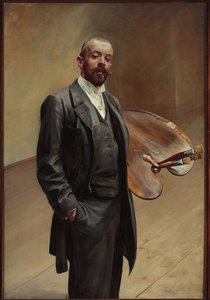
1854–1929, Poola
Jacek Malczewski
Elu, mis on läbi imbunud Poola igatsusest Jacek Malczewski, sündinud 1854. aastal Radomis, linnas, mis asub tollal Venemaa kontrolli all olnud Preisimaa-Poolas, oli palju enamat kui lihtsalt maalija; ta oli poola rahvusliku identiteedi visuaalne kehastus ja sügav häälekajastaja rahvale, kes ihaldas iseseisvust. Tema elu tee ja kunstiline visioon olid lahutamatult seotud sõltumatuse romantiliste ideaalidega, mis said tema isale Julian Malczewskile – pühendunud patrioodile – tänu suuresti südi noore Jaceku südamesse armastus Poola kultuuri, kirjanduse ja ajaloo vastu. See varajane mõjutus sai tema loomingulise väljenduse aluseks, kujundades temast poola sümbolismi juhtfiguuri ning teenides teda austatud tiitliga „poola sümbolismi isa“.
Teel Jacek Malczewski kohta Jacek Malczewski silmapaistvad teosed
Ka Jacek Malczewski teosed
 Self-portrait in armor with violin.1908
 Madonna and Children1897
 Portrait of artist's sister Helene with lute1906
 The Artist's death1909
Teemad teemal Art
 19th century Polish painters19th-century Polish art comes alive through the masterpieces of Jan Matejko and Jacek Malczewski. View the full collection online at Origin…
 Masterpieces of the Soil: The Top 25 Jean-François Millet ArtworksImmerse yourself in the soul of French Realism with our curated list of the top 25 Jean-François Millet artworks. From iconic peasant scene…
 20th century Polish painters20th-century Polish painters like Tamara de Lempicka, Sigmar Polke, and Aleksandra Ekster define an era. Find museum-quality reproductions …