Surrealism · 1969
Chorus (Ivan Eyre, 1969)
Chorus is a work by Ivan Eyre (1935–2022). It dates from 1969. It belongs to the Surrealism movement. It measures 142 × 243 cm.
- 1969
- 142 × 243 cm

 Eelvaade

 Käsitsi maalatud õlimaalatsioon
 Saada
 Jaga
 Juhend


 Laadi alla
 Sarnased teosed
 Röntgenuuring
 Slaidietendus
 KÜSIMUSED JA VASTUSID

 Statistika
Chorus: the essentials
- Title
- Chorus
- Artist
- Ivan Eyre (1935–2022)
- Artist born in
- Saskatchewan, Canada
- Date
- 1969
- Dimensions
- 142 × 243 cm
- Movement
- Surrealism
Chorus in high resolution

Ivan Eyre, Chorus (1969).
Questions about Chorus
Kuidas teose "Chorus" värvid omavahel koos toimivad?
Teose "Chorus" värviharmonia on Softly Mixed Palette.
Kas teoses "Chorus" on nähtav tugev kerge-tume kontrast?
Teose "Chorus" valgus-varjundite kontrast on Gentle. Kontrast kirjeldab, kui teravalt erinevad heeled ja tumedad alad.
Mis on teose „Chorus“, autor Ivan Eyre valgusus?
Kas ma saan enne ostmist näha teost „Chorus“, autor Ivan Eyre oma seinal?
Teost „Chorus“, autor Ivan Eyre saab omaenda seinal eelvaatata teose AR-eelvaade teose kohta lehe abil, kasutades ühendataval seadmel täiendatud reaalсust.
Mis vanuses loos Ivan Eyre teose "Chorus"?
Mis on teose „Chorus“, autor Ivan Eyre domineeriv värv?
Mille teiste nimetega on Ivan Eyre tuntud?
Ivan Eyre tuntub ära ka nime all Ivan Kenneth Eyre, إيفان أير.
Kuidas saan vaadata reproduktsiooni teosele „Chorus“, autor Ivan Eyre?
About the artist, Ivan Eyre
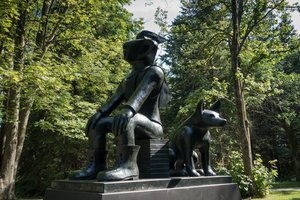
1935–2022, Canada
Ivan Eyre
A Prairie Visionary: The Life and Art of Ivan Eyre Ivan Kenneth Eyre, who passed away in November 2022 at the age of 87, was a profoundly important figure in Canadian art—a painter, sculptor, and educator whose work resonated with the vastness and subtle power of the prairie landscape. Born in the small Saskatchewan community of Tulymétik in 1935, Eyre’s artistic journey wasn't simply about depicting what he saw, but about translating a deeply felt connection to place into a visual language that explored existential themes and the complexities of human experience. His early life, marked by moves across the prairies—from Red Deer, Alberta, to Saskatoon—instilled in him an intimate understanding of the land’s character: its solitude, its ever-changing light, and its capacity for both beauty and starkness. This formative connection would become the bedrock of his artistic expression.
Also by Ivan Eyre
 White Collar1969
 Dragon Head1969
 White Flashing1969
 Touchwood Hills1972
Essays around Chorus
 Beyond Symbolism: Exploring the Spiritual Landscapes of Mikalojus Konstantinas Čiurlionis's ArtExplore the captivating world of Mikalojus Konstantinas Čiurlionis, a pioneer of abstract art. Discover his unique blend of music and paint…
 The Dramatic Flourish: Exploring Baroque Painting's Emotional Intensity & Artistic InnovationsExplore the dramatic world of Baroque painting! Discover its history, defining characteristics, iconic artists like Caravaggio & Rubens, an…
 25 Masterpieces by Alexej von Jawlensky: The Soul of ExpressionismImmerse yourself in the vibrant world of Alexej von Jawlensky. Explore 25 iconic Expressionist masterpieces, from soulful portraits to bold…