

 Eelvaade
 Saada
Saada Jaga
Jaga
 Teave teose kohta

 Laadi alla
 Sarnased teosed
 Röntgenuuring
 Slaidietendus
 Statistika
Springtime in Italy


 Loe lähemalt
Käsitsi valmistatud õlimaalireproduktsioon
Meie kunstnike poolt tellimusel valmistatud käsitsi maalitud õli-kainaste teos teie soovitud suuruses ja raamis. ( Lülita trükkitoodetele Ülemineks digitaalse pildiga müügi kanalisse)




P118B $10

P118H $10

P118W $10

P438Z $10

P508JH $12

P508YH $12

P805H $10

P805Z $10

P919BZ $10

P919G $10

P919XJ $10

P959ZH $10

P968JZ $12

W106C $8

W218G $10

W218JH $8

W218Y $10

W307PJ $10

W316G $10

W316PJ $8

W316Y $10

W398PJ $8

W4111J $10

W500HY $15

W500JH $15

W692G $12

W849H $8

W940BG $15

W953PJ $8




Vali meie eelmääratud suurused, mis vastavad teose algupärastele proportsioonidele.

Sa võite sisestada oma mõõtmed konkreetse raami või ruumi sobivuse tagamiseks. Kui teie valitud suurus ei vasta originaalpildi proportsioonidele, siis kärvime kunstiteost või laiendame maali täiendavate käsitsi maalitud elementidega. Enne tootmise algust saadetakse teile heakskiitmiseks digitaalne eelvaade.
Palun pidage meeles, et ekraanil kuvatav eelvaade ei kajasta tegelikku kärpimist või laiendamist. Ainult eelvaade näitab täpselt lõplikku kompositsiooni.
Kuigi on saadaval kohandatud suurused, soovitame originaalproportsioonide säilimiseks valida mõõdud eelmääratletud nimekirjast.
Pärast tellimust saadab OriginalUniqueArt.com meeskond kliendile e-posti juhised ning esitab eelvaate kavandi.
Maailmline tarne 3–4 nädala jooksul tavalise 5 nädala asemel. (12 september). Kvaliteedis kompromisse ei tehta.

Tasuta ekspresssaatmine üle maailma

Kõrgekvaliteediline linakangas

Täielik transpordikindlustus

Tollimaksude tagastamise garantii

Värvitoime täpsuse garantii

100 päeva tagastusõigus (ainult tootmisdefektide korral)

100% raha tagasi garantii

Hulgusoodustus
 Klaasivalik on saadaval ainult suuruses kuni 110 cm

Springtime in Italy
Reproduktsiooni tehnika
Reproduktsiooni suurus
-


Kogusumma
$ 300
A Symphony of Light and Longing: Exploring Isaak Levitan’s “Springtime in Italy”
Isaak Ilyich Levitan's "Springtime in Italy," painted around 1890, isn't merely a landscape; it’s a distilled emotion rendered in oil on canvas. This evocative piece transcends the simple depiction of nature, offering instead a poignant meditation on memory, solitude, and the enduring beauty of the Russian soul—a characteristic deeply rooted in Levitan’s personal experiences. Born into hardship and marked by early loss, Levitan sought solace and expression within the vastness of the natural world, a pursuit that profoundly shaped his artistic vision. “Springtime in Italy” embodies this sensibility, capturing not just the visual splendor of the Italian countryside but also an underlying sense of melancholy and quiet contemplation.
The painting immediately draws the eye with its masterful use of color—a deliberate orchestration of golds, yellows, browns, and greens that evoke the warmth of autumn subtly transitioning into spring. These aren’t vibrant, celebratory hues; rather, they possess a muted intensity, suggesting an overcast day or the fading light of twilight. This atmospheric quality is crucial to the work's emotional impact, lending it a dreamlike, almost melancholic atmosphere. Levitan employs a loose, impressionistic brushstroke—a hallmark of his style—allowing the paint to flow and blend, creating a sense of movement and airiness that captures the ephemeral nature of springtime itself. The lines are predominantly organic, mirroring the contours of the landscape rather than adhering to strict geometric precision, further enhancing the painting’s naturalistic feel.
Impressionism's Embrace: Technique and Composition
Levitan’s technique is characterized by a layered approach—thin washes of paint built up to create depth and volume. This method allows light to penetrate through the layers, resulting in a luminous effect that imbues the scene with an ethereal quality. Notice how he skillfully renders texture – from the dense foliage of the foreground to the rugged peaks of the distant mountains – not through meticulous detail but by varying the pressure and direction of his brushstrokes. The flattened perspective, typical of Impressionism, prioritizes the overall impression over strict realism, inviting the viewer to lose themselves in the scene’s atmosphere rather than dissecting its precise details.
The composition is carefully balanced, guiding the eye through a series of receding planes. The foreground bursts with vibrant wildflowers—a riot of yellow and orange against the verdant grasses – symbolizing renewal and life. Moving towards the middle ground, rolling hills are draped in a mix of browns and golds, while the background culminates in the majestic, snow-capped mountains, which stand as silent witnesses to the passage of time. These peaks evoke a sense of grandeur and permanence, providing a powerful counterpoint to the fleeting beauty of the springtime landscape.
Symbolism and Emotional Resonance
Beyond its purely aesthetic qualities, “Springtime in Italy” is rich in symbolic meaning. The mountains, with their snow-capped peaks, represent not just physical grandeur but also enduring strength and resilience—qualities that resonate deeply within the context of Levitan’s personal life. The wildflowers, scattered throughout the foreground, are emblems of hope, growth, and rebirth, subtly hinting at the artist's own yearning for renewal after experiencing profound loss. The overall mood is one of quiet contemplation and wistful longing – a feeling perhaps born from Levitan’s experiences as a Jewish man in Tsarist Russia, seeking solace and freedom within the vastness of nature.
This reproduction captures the essence of Levitan's masterpiece, allowing you to experience the painting's beauty and emotional depth firsthand. Whether adorning your living room wall or serving as a focal point in a serene interior space, “Springtime in Italy” will undoubtedly evoke a sense of tranquility and inspire reflection on the enduring power of nature’s beauty.
Kunstniku elulugu
A Symphony of the Russian Soul: The Life and Art of Isaak Ilyich Levitan
Isaak Ilyich Levitan, a name synonymous with the evocative power of Russian landscape painting, was more than just a chronicler of nature; he was a poet of the land, a translator of its moods into visual form. Born in 1860 in Kibarty (present-day Lithuania) to a Jewish family who later settled in Moscow, Levitan’s life was marked by both profound hardship and an unwavering dedication to his art. The early loss of his mother and father instilled within him a sensitivity that would permeate his canvases with a melancholic beauty—a beauty born from sorrow but illuminated by an enduring love for the Russian wilderness. He entered the Moscow School of Painting, Sculpture and Architecture in 1873, where he came under the tutelage of Alexei Savrasov, whose influence would prove pivotal in shaping Levitan’s artistic vision. It was Savrasov who nurtured his student's innate ability to capture not merely the appearance of nature, but its very essence—its atmosphere, its emotional resonance.The Birth of a ‘Mood Landscape’
Levitan swiftly distinguished himself as an artist capable of conveying profound emotion through landscape. He wasn’t interested in topographical accuracy for its own sake; rather, he sought to imbue his paintings with a sense of *mood*, a feeling that resonated deep within the viewer's soul. This approach earned him the title of pioneer of the “mood landscape,” a genre that moved beyond simple representation to explore the spiritual connection between humanity and nature. His palette was often subdued, favoring naturalistic colors and poetic elements over vibrant displays—colors chosen with meticulous care to convey precisely the desired emotional effect. He masterfully employed light and shadow, creating atmospheric effects that evoked feelings of tranquility, solitude, or even quiet despair. Consider *Autumn Day. Sokolniki* (1879), painted when he was just nineteen years old; the canvas breathes with a palpable stillness, capturing the fading warmth of summer as golden sunlight filters through the branches of ancient trees. The subtle gradations of color and the delicate rendering of light contribute to an overwhelming sense of melancholy—a poignant reminder of life’s fleeting beauty. This masterful technique would become Levitan's hallmark throughout his career.Influences and Artistic Kinships
While deeply indebted to Savrasov’s guidance, Levitan was receptive to other artistic currents. He collaborated with fellow artists like Konstantin Korovin, Mikhail Nesterov, and Nikolai Chekhov—the brother of the renowned playwright Anton Chekhov, who became a lifelong friend. This circle fostered an environment of creative exchange and mutual support; they shared a passion for exploring the depths of human emotion through art and literature alike. Levitan’s artistic sensibilities were profoundly shaped by Russian Romanticism, particularly by writers like Fyodor Tyutchev and Mikhail Lermontov, whose poems conveyed similar themes of longing, solitude, and communion with nature. He admired Savrasov's uncompromising realism and his ability to depict the Russian landscape with unflinching honesty—a quality that Levitan himself would strive to embody in his own work. Notably, he befriended Anton Chekhov, sharing a kinship rooted in their mutual appreciation for psychological depth and nuanced observation of human experience. Their correspondence reveals a shared fascination with capturing the subtleties of emotion and portraying characters grappling with existential dilemmas.Major Achievements and Artistic Development
Levitan’s artistic journey spanned several decades, marked by continuous experimentation and refinement of his style. He began as a student of Savrasov, absorbing his mentor's lessons in tonal painting and atmospheric perspective—techniques that would become foundational to Levitan’s distinctive approach. However, he quickly surpassed Savrasov’s influence, developing a uniquely personal vision rooted in his own profound sensitivity and artistic intuition. His early landscapes were characterized by a restrained palette and an emphasis on capturing the quiet grandeur of the Russian countryside—a style that resonated deeply with audiences of his time. As he matured as an artist, Levitan broadened his stylistic repertoire, incorporating Impressionistic influences while retaining his core commitment to emotional landscape painting. Works like *The Vladimirka Road* (1892) and *Eternal Rest* (1894), prominently displayed in the Tretyakov Gallery, exemplify this masterful blend of styles—a testament to Levitan’s adaptability and unwavering artistic integrity. He achieved considerable acclaim during his lifetime, becoming a celebrated artist recognized for his contribution to Russian landscape painting and his profound understanding of human emotion.Legacy and Enduring Resonance
In 1897, Levitan was elected to the Imperial Academy of Arts—a momentous occasion that acknowledged his growing stature within the Russian art world. He subsequently served as head of the landscape studio at Moscow School of Painting, Sculpture and Architecture, mentoring aspiring artists and fostering a tradition of emotional landscape painting that continues to inspire generations. His influence extended far beyond his students; Levitan’s paintings remain a cornerstone of Russian artistic heritage—a testament to his enduring vision and unparalleled ability to convey the soul of Russia through visual form. He died unexpectedly in 1900 at the age of forty, leaving behind an oeuvre that continues to captivate audiences worldwide. His remains were interred in Novodevichy Cemetery alongside Anton Chekhov—a poignant symbol of artistic kinship and a lasting reminder of Levitan’s profound contribution to Russian culture and art history.
Isaak Ilja Mihhailovski Levitan
1860 - 1900 , Rootsmaa
Lühikesed faktid
- Artistic Movement Or Style: Mood Landscape, Realism
- Artists Who Influenced This Artist:
- Alexei Savrasov
- Vasily Polenov
- Konstantin Korovin
- Date Of Birth: August 30, 1860
- Date Of Death: July 22, 1900
- Full Name: Isaak Ilyich Levitan
- Nationality: Russian
- Notable Artworks:
- Autumn Day. Sokolniki
- The Vladimirka Road
- Eternal Rest
- Spring Flood
- Stormy Day
- Vesper Chimes
- Place Of Birth: Kibarty, Lithuania
Seotud artiklid

Romantilise Maastikukunsti 10 Meisterteost: Kunstiteosed Koduks OriginalUniqueArt.com'ist
Avastage 10 romantilise maastikukunsti meistriteost! Tutvuge Caspar David Friedrichi, J.M.W. Turneri ja teiste suurte kunstnike loominguga OriginalUniqueArt.com-is. Leidke täiuslik õlimaal või reproduktsioon koduks – inspireeriv kollektsioon ootab!

Impressionistliku Maastiku Tipp 10 Meisterteost: Kunsti ja Disaini Klassika
Avasta impressionistliku maastikukunstiga 10 legendaarset meistriteost! Monet, Renoir jt. värvilised maailmad ja kunstnike lood – OriginalUniqueArt.com pakub kaunite kunstide ajaloo klassikat seinakaunistuseks. Uuri kollektsiooni!

Impressionistic Landscapes: 10 Masterpieces That Changed Art & Decor
Journey into the heart of Impressionism! Explore 10 masterpieces by Monet, Renoir & Degas that revolutionized landscape art. Discover their stories, techniques & find museum-quality reproductions to elevate your home decor on OriginalUniqueArt.com.

Evocations of Place: A Historical Journey Through Landscape Art
Explore the rich history of landscape art with OriginalUniqueArt. Discover renowned artists, movements like Impressionism & Romanticism, and expert guidance for collecting timeless pieces. Find your perfect serene escape today!
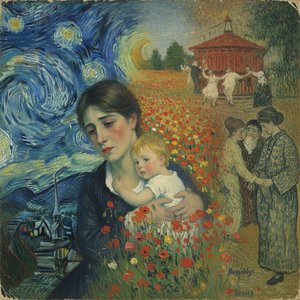
Capturing the Soul: The Most Emotionally Moving Impressionist and Post-Impressionist Masterpieces
Discover the profound emotional depth of Impressionist and Post-Impressionist masterpieces. Explore how legends like Monet, Van Gogh, and Gauguin captured light and soul through evocative landscapes and vibrant brushwork for a timeless connection to art history.
