

 Vaata sisu
 Jaga teost
 Jaga
Jaga
 Detailid
 Õppekate juhend

 Laadi alla
 Sarnased teosed
 Röntgenuuring
 Slaidietendus
 Statistika
Konvektor
 Akrüülkainal
- Seinakunst
- Functional Minimalism
 1960
1960 45.0 x 61.0 cm
 NEMO Science Museum
 Loe lähemalt
Sellel lehel kuvatav kunstiteos on kaitstud autoriõigusega, mis tähendab, et meil ei ole seaduslikku õigust luua või müüa identset reproduktsiooni. Seda kaitset rakendatakse rahvusvaheliste kokkulepete alusel, nagu näiteks Berne konventsioon ning riiklike seadustega, sealhulgas nendega, mida on sätestatud USA autoriõiguse seadus – 17. peatükk.
Austasena ja seaduslikuna alternatiivina pakume originaalist inspireeritud, käsitsi maalitud isikupärastatud teoseid. Meie osutavad ja professionalsed kunstnikud uurivad hoolikalt originaali stiili, meelemoi ja kunstilist olemust, et luua uus, ainulaadne teos, mis tekitab sama tunnet – olles samal ajal omaette originaalne looming.
See meetod järgib täielikult autoriõiguse reegleid, kuna see ei põhine kaitstud kunstiteose kopeerimisel või dupliteerimisel. Selle asemel on tegu loova reinterpreetatsiooniga – uue maaldisega, mis on algteosest inspireeritud, kuid ei ole sellest identiline.
Käsitsi valmistatud õlimaalireproduktsioon
Meie kunstnike poolt tellimusel valmistatud käsitsi maalitud õli-kainaste teos teie soovitud suuruses ja raamis. ( Lülita trükkitoodetele Ülemineku digitaalse pildi müügi kanalisse)




P118B €10

P118H €10

P118W €10

P438Z €10

P508JH €12

P508YH €12

P805H €10

P805Z €10

P919BZ €10

P919G €10

P919XJ €10

P959ZH €10

P968JZ €12

W106C €8

W218G €10

W218JH €8

W218Y €10

W307PJ €10

W316G €10

W316PJ €8

W316Y €10

W398PJ €8

W4111J €10

W500HY €15

W500JH €15

W692G €12

W849H €8

W940BG €15

W953PJ €8




Vali meie eelmääratud suurused, mis vastavad teose algupärastele proportsioonidele.

Sisestage vajalik laius ja kõrgus, et teos sobiks teie raamile või seinale. Kuna tegu on käsipainatud teosega, siis erineva kujuga suuruse korral võib kunstnik jätta pildi ümber veidi rohkem marginaali või lõigata osa ära — valik on teie. Enne maali alustamist saadame teile kinnitamiseks digitaalse näidisprojektsiooni. Sellel lehel näidatud pilt ei kajasta tegelikku tulemust — seda näitab ainult näidisprojekttsioon.
Pärast tellimust saadab OriginalUniqueArt.com meeskond kliendile e-posti juhised ning esitab eelvaate kavandi
Maailmline tarne 3–4 nädala jooksul tavalise 5 nädala asemel. (26 oktoober). Kvaliteedis kompromisse ei tehta.

Tasuta ekspresssaatmine üle maailma

Kõrgekvaliteediline lina-kangastest muld

Täielik transpordikindlustus

Tollimaksude tagastamise garantii

Värvitoime täpsuse garantii

100 päeva tagastusõigus (ainult defektide korral)

100% raha tagasi garantii

Hulgusoodustus
 Klaasivalik on saadaval ainult kuni 110 cm suuruses teostes

Konvektor
Reproduktsiooni materjal
Reproduktsiooni mõõtmed
-


Lõppsumma
€ 263
Convection Heater – A Testament to Functional Minimalism
Wim Rietveld’s “Convection Heater” stands as a cornerstone of Dutch postwar design, embodying the ethos of functional minimalism championed by his father, Gerrit Rietveld. Produced in 1960, this deceptively simple piece transcends mere practicality; it's a carefully considered exploration of geometric abstraction and material innovation that continues to resonate with contemporary aesthetics. The photograph captures an intimate glimpse into the heater’s form – a slender brown metal structure accented by a polished silver handle – resting serenely upon a tabletop. Its stark white background emphasizes its sculptural qualities, inviting contemplation of its elegant lines and understated beauty.The Influence of Gerrit Rietveld's Vision
Gerrit Rietveld’s architectural philosophy profoundly shaped Wim Rietveld’s artistic sensibilities. Like his father, Wim rejected ornamentation in favor of pure visual expression, prioritizing geometric shapes—primarily rectangles and trapezoids—to achieve structural integrity and aesthetic harmony. This approach is immediately apparent in the heater’s design; its two slightly convex side walls are constructed from painted sheet steel, creating a subtle curve that contributes to its overall balance and visual appeal. The perforated upper edge serves as an ingenious ventilation system, channeling warm air upwards – a testament to Rietveld's dedication to harnessing natural forces for optimal performance.Material Innovation and Gispen Collaboration
The heater’s construction utilizes innovative materials—primarily steel and plywood—chosen strategically by Wim Rietveld during his tenure at Gispen Furniture Company. Facing the challenges of postwar reconstruction, Rietveld skillfully combined functionality with aesthetic considerations, demonstrating a remarkable understanding of material properties and fabrication techniques. The use of thin-walled steel reflects Rietveld's commitment to efficiency and economy, mirroring the broader trend toward simplified forms and restrained palettes prevalent in Dutch design during this period. Collaborating closely with Friso Kramer at Gispen, Wim Rietveld pushed boundaries in furniture design, establishing a legacy of elegant simplicity that continues to inspire designers today.Symbolism Beyond Utility
While undeniably functional, “Convection Heater” possesses symbolic significance rooted in Rietveld’s broader artistic concerns. The geometric abstraction mirrors the principles of Mondrian’s neoplasticisme—a movement championed by Gerrit Rietveld—where primary colors and orthogonal lines represent fundamental elements of visual harmony. This deliberate reduction to essential forms speaks to a desire for clarity, purity, and intellectual engagement – values that extend beyond the realm of design into deeper explorations of artistic expression. The heater's quiet elegance embodies a contemplative spirit, inviting viewers to appreciate beauty in its understated form.A Legacy Enduring Through Reproduction
Today, OriginalUniqueArt offers exceptional reproductions of Wim Rietveld’s “Convection Heater,” allowing art enthusiasts and collectors alike to experience the enduring power of this iconic piece firsthand. Each reproduction meticulously captures the original artwork's textures and nuances, ensuring that its minimalist aesthetic remains accessible and inspiring for generations to come. Explore the beauty of functional minimalism – order, balance, and timeless elegance – through a stunning representation of Wim Rietveld’s masterpiece.Küsimused ja vastused
Kuidas saan tellida teose „Konvektor“, autor Inventum, Wim Rietveld trükki?
Teose „Konvektor“, autor Inventum, Wim Rietveld trüket saab tellida otse selle Kõlblik kunstutrüki kvaliteetne trükis lehelt: kunstiprint puuvillalõikel}}^{\text{canvas}}$ või arhiveeritaval kangaspaberil.
Milleks on teose „Konvektor“, autor Inventum, Wim Rietveld reproduktsiooni soovitatud kasutada?
Teose „Konvektor“, autor Inventum, Wim Rietveld reproduktsiooni kasutamist on soovitatav Aktsent jaoks. See soovituse on tulenev teose motiivist, meelelojast ja värvigabast.
Millist tooni suundub "Konvektor"?
Teose „Konvektor“, autor Inventum, Wim Rietveld läbimõtes on tunda Merevaalist safranikuldni toonist.
Kunstniku elulugu
The Legacy of Functional Elegance: The Life of Wim Rietveld
In the grand tapestry of Dutch modernism, few names resonate with as much quiet authority as Wim Rietveld. Born in 1924 in Utrecht, Wim was more than just a successor to a design dynasty; he was a visionary who translated the radical architectural principles of his father, Gerrit Rietveld, into the intimate language of everyday objects. Growing up in the shadow of the legendary Mondrian House, Wim was immersed from infancy in an environment where geometric abstraction and structural honesty were not merely aesthetic choices but fundamental truths. This early exposure to the avant-scale spatial experiments of his father provided a fertile ground for a career that would eventually redefine the boundaries between industrial utility and artistic grace.
His journey toward mastery began with a rigorous technical foundation, moving from an apprenticeship in construction to formal studies at the Royal Academy of Art in The Hague. This unique blend of technical prowess and artistic intuition allowed him to approach design not as a decorator, but as a constructor. He understood the soul of materials—the strength of steel, the warmth of laminated wood, and the versatility of plywood. As he navigated the post-war reconstruction era, a period marked by both scarcity and a desperate need for renewal, Wim’s work emerged as a beacon of hope, offering solutions that were as durable as they were beautiful.
A Symphony of Steel and Wood: The Design Evolution
The mid-century period saw the blossoming of Rietveld’s most iconic collaborations, most notably his transformative tenure at W. H. Gispen between 1953 and 1957. It was during these years that he truly mastered the art of functional minimalism. Working alongside talented peers like Friso Kramer, Wim sought to strip away the superfluous, leaving behind only the essential essence of form. His designs were characterized by a rhythmic interplay of lines and surfaces, often utilizing mass-production techniques to bring high-quality design to the broader public. The Mondrian Chair stands as a testament to this era, a piece that breathes the same geometric spirit as the De Stijl movement while remaining firmly rooted in the practical needs of modern living.
As his career progressed, Rietveld’s creative reach expanded far beyond the confines of furniture. He became a master of diverse industrial landscapes, applying his minimalist philosophy to everything from household appliances for Inventum to large-scale urban transport solutions for Werkspoor. His ability to imbue even a radiator or a drafting table with a sense of sculptural dignity is what separates him from his contemporaries. Whether it was the award-winning 1407 armchair, which earned him gold at the Milan Triennale, or the sleek, stackable seating that optimized modern office spaces, his work always maintained a certain poetic economy—a way of saying much with very little.
Historical Significance and the Enduring Modernist Spirit
The significance of Wim Rietveld lies in his ability to bridge the gap between the radical, often unapproachable experiments of early modernism and the practical requirements of a changing society. He did not merely design objects; he designed a way of life that valued clarity, efficiency, and aesthetic integrity. His later years, including his role as Head of Industrial Design at the University of Delft, allowed him to mentor a new generation, ensuring that the principles of Dutch functionalism would endure long after his passing in 1985.
Today, the works of Wim Rietveld are cherished not only as museum-grade artifacts but as living components of modern interiors. His legacy is found in:
- The mastery of materials: The seamless integration of metal and wood that defined mid-century Dutch style.
- The democratization of design: Creating high-quality, mass-producible items that brought beauty to the everyday person.
- A lasting aesthetic influence: A minimalist vocabulary that continues to inspire contemporary industrial designers worldwide.
In every clean line and purposeful curve of his creations, one can still feel the pulse of a designer who believed that true beauty is found in the perfect resolution of function and form.

Inventum, Wim Rietveld
1924 - 1985 , Netherlands
Lühikest infot
- Full Name: Wim Rietveld
- Nationality: Dutch
- Date Of Birth: 1924
- Date Of Death: 1985
- Place Of Birth: Utrecht, Netherlands
- Notable Artworks:
- Convection heater
- Mondial chair
- Artistic Movement Or Style: Modernism
- Artists Who Influenced This Artist: ['Gerrit Rietveld']
- Artists Or Movements Influenced By This Artist: ['Industrial design']
Sarnased artiklid

Beyond Form & Color: Geometric Abstraction's Evolution in 20th/21st Century Art
Explore the evolution of geometric abstraction from Cubism to contemporary art. Discover key artists like Malevich & Mondrian, investment insights, and expert collecting advice at OriginalUniqueArt.
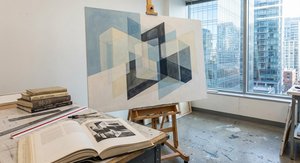
Beyond Form & Color: Geometric Abstraction's Enduring Legacy in Art History
Explore the captivating world of geometric abstraction! Discover its origins, key artists like Malevich & Mondrian, and why this movement remains highly valued by art collectors today. Expert insights at OriginalUniqueArt.

Geomeetrilise Abstraktsiooni 10 Meisterteost: Kunst ja Kodukaunistus OriginalUniqueArt.com-is
Avastage geomeetrilise abstraktsiooni 10 suurteost – Kandinsky, Mondrian ja teised. Lugege kunstiteoste lugusid ning leidke inspiratsiooni kodukaunistuseks OriginalUniqueArt.com-is! Kunstikollektsioon ja reprodutsioonid.

Neo-Abstract Art: The High-Impact Evolution of Modern Visual Energy and Geometric Sophistication
Discover the power of Neo-Abstract art. Explore how bold geometric forms and high-impact visual energy are redefining modern design. Learn to curate sophisticated, high-energy spaces with the latest trends in contemporary abstraction and structural color.

Kandinsky's Masterpieces: 25 Paintings That Define Abstract Art | OriginalUniqueArt
Journey through Wassily Kandinsky's 25 most iconic abstract paintings. Explore his revolutionary use of color, form & spiritual expressionism. Find museum-quality Kandinsky reproductions and elevate your home decor with OriginalUniqueArt.com. Discover all masterpieces on OriginalUniqueArt.com!
