
 Eelvaade
 Saada
Saada Jaga
Jaga
 Teave teose kohta
 Juhend

 Laadi alla
 Sarnased teosed
 Röntgenuuring
 Slaidietendus
 KÜSIMUSED JA VASTUSID
 Statistika
Unexpected Return.

- 160.0 x 167.0 cm


 Loe lähemalt
Giclée / Kunstiprint
Muuseumikvaliteediga giclée- või kangasprint kiire tootmisega ja paindlikud viimistlusvõimalused. ( Osta käsitsi maalatud teos Lülita digitaalse pildi juurde)




P118B €10

P118H €10

P118W €10

P438Z €10

P508JH €12

P508YH €12

P805H €10

P805Z €10

P919BZ €10

P919G €10

P919XJ €10

P959ZH €10

P968JZ €12

W106C €8

W218G €10

W218JH €8

W218Y €10

W307PJ €10

W316G €10

W316PJ €8

W316Y €10

W398PJ €8

W4111J €10

W500HY €15

W500JH €15

W692G €12

W849H €8

W940BG €15

W953PJ €8




Vali meie eelmääratud suurused, mis vastavad teose algupärastele proportsioonidele.

Sisestage vajalik laius ja kõrgus, et see sobiks teie raamile või seinale. Trükki saab ainult lõigata, seda ei saa kunagi pildist suuremaks teha, seega ka erineva mustega suurus kaotab osa pildist. Enne trükkimist saadame teile kinnitamiseks digitaalse näidisprojektsiooni. Sellel lehel näidatud pilt ei kujuta reaalset lõiget — seda näitab ainult näidisprojektsioon.
Ülemaailmne tarne () 2 nädala jooksul, tavalise 4/5 nädala asemel. (11 november)

Tasuta ekspresssaatmine üle maailma

Kõrgekvaliteediline lina-kangas

Täielik transpordikindlustus

Tollimaksude tagastamise garantii

Värvitoime täpsuse garantii

100 päeva tagastusõigus (ainult valmistusdefektide korral)

100% raha tagasi garantii

Hulgusoodustus
 Klaasivalik on saadaval ainult kuni 110 cm suuruses teostes

Unexpected Return.
Giclée / Kunstiprint
Reproduktsiooni suurus
-


Koguhind
€ 73
A Window Into the Soul: The Emotional Depth of Unexpected Return
In the vast tapestry of Russian Realism, few works capture the profound tension between private intimacy and public upheaval as poignantly as Ilya Yefimovich Repin’s Unexpected Return. Painted in 1884, this masterpiece is far more than a mere domestic tableau; it is a psychological study of a moment frozen in time, where the boundaries of a family's sanctuary are suddenly breached by the weight of history. The scene depicts the arrival of a revolutionary exile, a man whose very presence brings the turbulent winds of the Narodnik movement into the quietude of a Russian home. As he stands prominently in the center, clutching his hat, the viewer is immediately drawn into a complex web of anticipation, relief, and lingering anxiety.
The painting functions as a silent narrative, where every gaze tells a story of endurance. A woman leans over the returning man, her expression a delicate balance of compassion and concern, embodying the resilient bonds of family that persist even amidst political displacement. Through Repin’s masterful ability to capture subtle nuances in facial expressions, the canvas speaks volumes about the unspoken emotions of an era defined by social reform and upheaval. The blue wallpaper that adorns the room serves as a deliberate symbolic anchor, offering a sense of tranquility and stability that stands in stark, poignant contrast to the underlying social unrest represented by the man's sudden appearance.
Mastery of Technique and the Realist Vision
Repin’s technical execution in Unexpected Return is a testament to his dedication to the principles of realism. Eschewing the vibrant, light-drenched palettes of the Impressionists, Repin utilized a more subdued and atmospheric color scheme, deeply rooted in the traditions of Russian landscape painting. This choice of muted tones is essential to the work's melancholic mood, reflecting the uncertainties of a nation grappling with rapid industrialization and political repression. His use of oil on canvas allows for a remarkable textural depth; by employing a palette knife to build up thick impasto strokes, he captures the tactile reality of fabric, skin, and the very atmosphere of the room.
The composition is strikingly snapshot-like, prioritizing psychological immediacy over idealized beauty. This sense of "the moment" invites collectors and art enthusiasts to step into the room, feeling the weight of the man's experience and the breathless hush of the family's reaction. For those seeking to bring a piece of this profound historical resonance into their own spaces, a high-quality hand-painted reproduction offers an unparalleled opportunity. Such a rendition preserves the luminous colors and the intricate, painstaking detail that define Repin’s style, allowing the enduring themes of homecoming, reconciliation, and human resilience to continue captivating audiences in a contemporary setting.
Korduvad küsimused
Kas saan kasutada täiendatud reaalset, et näha teost „Unexpected Return.“, autor Ilya Repin oma toonas?
Teose „Unexpected Return.“, autor Ilya Repin leht AR-eelvaade teose kohta kasutab täiendatud reaalset, et näidata teost ühilduva seadme abil teie enda ruumis.
Milline värv domineerib teose „Unexpected Return.“, autor Ilya Repin kompositsioonis?
Gray (#9d907b) on teose „Unexpected Return.“, autor Ilya Repin domineeriv värv.
Milline paigutus sobib teose „Unexpected Return.“, autor Ilya Repin formaadile?
Teose „Unexpected Return.“, autor Ilya Repin Square formaat on soovitatav kasutada ruumis Living Room. Formaat ja ruum aitavad koos otsustada reproduktsiooni paigutamise kohta.
Kunstniku elulugu
Early Life and the Seeds of Realism
Ilya Yefimovich Repin, a name that resonates with the very soul of Russian art, was born in 1844 in the humble Ukrainian town of Chuguev. His origins were far removed from the aristocratic circles often associated with artistic patronage; his father, a former soldier who traded horses, and his mother, deeply rooted in local traditions, instilled in young Ilya a profound connection to the land and its people. This early immersion into rural life – its hardships, its vibrant spirit, and its unwavering resilience – would become the bedrock of his artistic vision. Formal education began at a local school where his mother taught, but a period at a military cantonist school followed, an experience Repin later recalled with little fondness. Yet, even within the rigid confines of military discipline, his innate talent for drawing blossomed. At sixteen, he apprenticed himself to Ivan Bunakov, an icon painter, embarking on a rigorous training in religious art that honed his skills in meticulous detail and compositional precision. These formative years were not merely technical exercises; they represented a crucial immersion into the visual language of Russian culture, laying the groundwork for his later explorations of national identity and social commentary. Through restoring ancient icons and fulfilling portrait commissions, Repin began to observe and capture the essence of human character – a skill he would master throughout his illustrious career.St. Petersburg and the Embrace of Social Consciousness
Driven by an unwavering ambition, Repin journeyed to St. Petersburg in 1863, seeking admission to the prestigious Imperial Academy of Fine Arts. Initial rejection did not deter him; he audited classes, immersing himself in the city’s vibrant artistic milieu. It was here that he encountered Ivan Kramskoi, a leading figure in the Peredvizhniki movement – a collective of realist artists who boldly rejected academic conventions and sought to depict Russian life with unflinching honesty. Kramskoi became Repin's mentor, guiding him towards a more socially conscious art. The influence of critic Vladimir Stasov was also pivotal, encouraging Repin to focus on contemporary themes and the lives of ordinary people. Repin’s talent quickly flourished, earning recognition and awards, including gold medals for works like “Job and His Friends” in 1869 and "The Raising of Jairus' Daughter" in 1871. These early successes signaled the arrival of a powerful new voice in Russian art – one that would challenge established norms and capture the spirit of a changing nation. A formative experience was his journey along the Volga River in 1870, sketching the arduous lives of barge haulers; this provided the inspiration for what would become his breakthrough masterpiece, a work that would forever cement his reputation as a champion of the downtrodden.Barge Haulers on the Volga: A Landmark Achievement
Repin’s artistic journey culminated in “Barge Haulers on the Volga” (1873), arguably his most celebrated painting and a cornerstone of Russian Realism. This monumental canvas captured the grueling labor of *burlaks*, or barge haulers, transporting goods along the Volga River – a scene that resonated deeply with Repin’s own upbringing in rural Ukraine. Unlike idealized depictions of peasant life prevalent at the time, Repin presented a brutally honest portrayal of physical exertion and social hardship. He meticulously rendered every detail—the weathered faces of the men, their straining muscles, the oppressive heat—creating an immersive experience for the viewer that conveyed both the dignity and despair inherent in manual labor. The painting’s dramatic lighting and masterful composition further amplified its emotional impact, establishing Repin as a pioneer in conveying psychological depth alongside visual realism. It immediately garnered critical acclaim and propelled him to national fame, marking a decisive break from academic conventions and ushering in an era of artistic innovation.Exploring Historical Drama and Psychological Insight
Repin’s artistic vision extended beyond capturing the everyday realities of Russian society; he tackled historical subjects with remarkable sensitivity and dramatic flair. His depiction of “Ivan the Terrible and His Son Ivan” (1885) remains one of his most haunting masterpieces, portraying Tsar Ivan IV's horrific act of murdering his son—a moment of profound psychological torment captured with chilling precision. Repin’s meticulous attention to detail—the textures of clothing, the expressions on faces—created an unforgettable tableau that conveyed not only historical accuracy but also a visceral understanding of human emotion. Similarly, “Reply of the Zaporozhian Cossacks” (1880–91) celebrated the defiant spirit of Ukrainian Cossacks composing a satirical letter to Sultan Mehmed IV – a symbol of resistance and national pride. Repin’s dynamic composition and expressive figures conveyed the energy and passion of this historical episode, cementing his reputation as an artist capable of capturing both grandeur and vulnerability. ## Legacy and Enduring Influence Throughout his prolific career, Repin continued to produce portraits that captured the essence of his subjects with unparalleled insight—Leo Tolstoy, Modest Mussorgsky, Pavel Tretyakov—among others. His unwavering commitment to realism and social commentary established him as a towering figure in Russian art history, influencing generations of artists who followed him. Repin’s legacy extends far beyond his individual paintings; he helped define the aesthetic principles of Realism and Socialist Realism, inspiring countless creatives to use their work as a vehicle for social critique. His ability to convey profound emotion through meticulous observation and masterful technique ensures that Ilya Repin's artistic vision continues to resonate powerfully with audiences worldwide. He died in 1930, leaving behind an unparalleled body of work—a testament to his enduring contribution to the art of the nineteenth century.
Ilya Repin
1844 - 1930 , Россия
Lühikest infot
- Artistic Movement Or Style: Realism
- Artists Or Movements Influenced By This Artist: ['Socialist Realism']
- Artists Who Influenced This Artist:
- Ivan Kramskoi
- Vladimir Stasov
- Date Of Birth: 5 august 1844
- Date Of Death: 29 september 1930
- Full Name: Ilya Yefimovich Repin
- Nationality: Russians
- Notable Artworks:
- Barge Haulers on Volga
- Reply Zaporozhian Cossacks
- Ivan the Terrible...
- Religious Procession Kursk Province
- Place Of Birth (City And Country): Chuguev, Rússia
Sarnased artiklid

Ivan Bilibin: A Synthesis of Folklore, Modernism & National Identity in Russian Illustration
Explore the enchanting world of Ivan Bilibin, a master Russian illustrator who synthesized folklore, Art Nouveau & national identity. Discover his iconic fairy tale illustrations and legacy with OriginalUniqueArt.
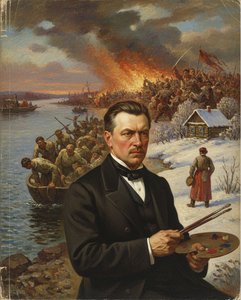
Ilya Repin: Realism, Revolution & the Russian Soul – A Comprehensive Exploration of Life and Legacy
Explore the life & legacy of Ilya Repin, Russia's leading realist painter. Discover his iconic works like 'Barge Haulers on the Volga,' social commentary, and profound portraits. A comprehensive guide for art enthusiasts.

Romantic Realism's Finest: 10 Masterpieces for Your Home | OriginalUniqueArt
Explore 10 defining masterpieces of Romantic Realism! Discover Courbet, Millet & Daumier's powerful paintings—capturing emotion and social realities. Find museum-quality reproductions for your home at OriginalUniqueArt.com.

The Hyper-Real Edge: Unveiling the Meticulous Mastery of Northern Renaissance Art
Discover the hyper-real mastery of Northern Renaissance art. Explore how pioneering oil techniques and intricate symbolism created a legacy of breathtaking detail that continues to inspire collectors and modern interiors today.
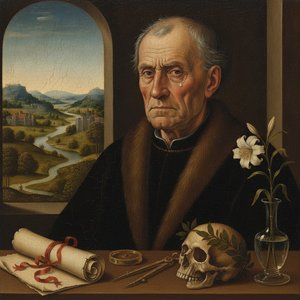
The Northern Renaissance: A Masterclass in Hyper-Realism, Oil Innovation, and Symbolic Depth
Explore the profound mastery of Northern Renaissance art. Discover the technical brilliance of Flemish oil painting, the intricate symbolism of Bosch and Bruegel, and the revolutionary realism that redefined European art history through an expert historical lens.


