

 Eelvaade
 Saada
Saada Jaga
Jaga
 Teave teose kohta

 Laadi alla
 Sarnased teosed
 Röntgenuuring
 Slaidietendus
 Statistika
The Artist's Hand V
 Lithograph
- WallArt
- Neo-Romanticism
 1979
1979- Modern
 26.0 x 19.0 cm
 Tate Britain
 Loe lähemalt
Giclée / Kunstiprint
Muuseumikvaliteediga giclée- või kangasprint kiire tootmisega ja paindlikud viimistlusvõimalused. ( Osta käsitsi maalitud maal Ülemineks digitaalse pildiga müügi kanalisse)




P118B $10

P118H $10

P118W $10

P438Z $10

P508JH $12

P508YH $12

P805H $10

P805Z $10

P919BZ $10

P919G $10

P919XJ $10

P959ZH $10

P968JZ $12

W106C $8

W218G $10

W218JH $8

W218Y $10

W307PJ $10

W316G $10

W316PJ $8

W316Y $10

W398PJ $8

W4111J $10

W500HY $15

W500JH $15

W692G $12

W849H $8

W940BG $15

W953PJ $8




Vali meie eelmääratud suurused, mis vastavad teose algupärastele proportsioonidele.

Saate sisestada oma mõõdud, et need sobiks konkreetse raami või ruumi sisse. Kui valitud suurus ei vasta originaalteose proportsioonidele, lõigame teose ära või laiendame pilti peegeldatud või ühtlase servaga. Enne tootmisprotsessi algust saadetakse Teie kinnitamiseks digitaalne näidis.
Palun märka, et ekraanil kuvatav eelvaade ei kajasta tegelikku lõigamist või laiendamist. Ainult näidis kujutab täpselt lõplikku kompositsiooni.
Kuigi erimõõdu on saadaval, soovitame originaaproportsioonide säilitamiseks valida mõõt ette määratud nimekirjast.
Ülemaailmne tarne () 2 nädala jooksul, tavalise 4/5 nädala asemel. (17 september)

Tasuta ekspresssaatmine üle maailma

Kõrgekvaliteediline linakangas

Täielik transpordikindlustus

Tollimaksude tagastamise garantii

Värvitoime täpsuse garantii

100 päeva tagastusõigus (ainult tootmisdefektide korral)

100% raha tagasi garantii

Hulgusoodustus
 Klaasivalik on saadaval ainult suuruses kuni 110 cm

The Artist's Hand V
Giclée / Kunstiprint
Reproduktsiooni suurus
-


Kogusumma
$ 80
A Poignant Meditation on Creation
In the quiet intimacy of Henry Moore’s “The Artist's Hand V,” created in 1979, we are invited into a profound dialogue between the creator and his medium. This exquisite lithograph serves as more than a mere anatomical study; it is a soulful meditation on the very act of making. Through the outstretched gesture of Moore’s own hand, the artwork captures a moment of suspended animation, where the boundary between the sculptor and his subject begins to dissolve. The piece resonates with a sense of reaching—a physical manifestation of the human desire to touch, to shape, and to leave an indelible mark upon the world. For the discerning collector or interior designer, this work offers a sophisticated focal point that brings both intellectual depth and a serene, contemplative energy to any curated space.
Executed in the evocative style of Neo-Romanticism, the print eschews clinical precision in favor of emotional resonance and organic truth. Moore, a master of capturing the essence of form, utilizes a delicate four-color lithograph process—incorporating shades of black, brown, light-brown, and yellow-brown—to breathe life into the Rives paper. This careful selection of tones allows for subtle gradations of shadow and light, creating a sculptural depth that mimics the three-dimensional qualities of his famous bronze works. The texture of the print, achieved through the meticulous printing technique of Curwen Prints Ltd., London, provides a tactile quality that invites the eye to linger on every crease and contour of the reaching fingers.
The Legacy of Form and Nature
To understand the gravity of this work, one must look to the landscape of Moore’s soul. Born in the rugged mining town of Castleford, Yorkshire, Moore’s aesthetic was forever shaped by the undulating hills and weathered stones of his homeland. In “The Artist's Hand V,” we see the echoes of that landscape reflected in the organic, almost geological rhythm of the hand itself. His ability to bridge the gap between the human figure and the natural world is at its zenith here; the hand does not merely represent flesh and bone, but rather a force of nature, much like the trees and animal skeletons that defined his monumental sculptures.
The historical significance of this piece is further heightened by its rarity. As part of an edition of only 50 numbered prints, it carries the prestige of a limited treasure, making it an exceptional acquisition for those who value exclusivity and art historical importance. Whether placed in a sunlit studio or a formal gallery setting, this lithograph acts as a bridge to the twentieth century's most significant sculptural legacy. It is a piece that does not demand attention through loudness, but commands it through its quiet, enduring strength—a timeless tribute to the enduring spirit of human creativity.
Kunstniku elulugu
A Life Sculpted in Form: The World of Henry Moore
Henry Spencer Moore OM CH FBA (30 July 1898 – 31 August 1986) was an English visual artist. He is best known for his semi-abstract monumental bronze sculptures, which revolutionized modern British sculpture and cemented his place as one of the most influential artists of the twentieth century. Born in Castleford, Yorkshire, Moore’s early life instilled in him a profound appreciation for the natural world—a fascination that would permeate his artistic vision throughout his career. His father, Raymond Spencer Moore, was a self-taught man who championed education and steered Henry away from the traditional path of coal mining, recognizing his innate talent for modeling clay and carving wood. This formative experience nurtured a lifelong dedication to tactile exploration and established the bedrock for his sculptural endeavors.Early Influences and Artistic Education
Moore’s formal artistic training commenced at Leeds School of Art in 1913, where he honed his skills under the guidance of influential instructors who championed classical sculpture alongside emerging modernist movements like Cubism. Recognizing Moore's exceptional aptitude, they encouraged him to pursue advanced studies at the Royal College of Art in London in 1921, fostering a synthesis of artistic traditions that would define his distinctive style. During this period, he immersed himself in the study of Michelangelo’s sculptures and wrestled with the challenge of representing human form in an increasingly abstract context—a struggle that ultimately liberated him from representational constraints.The Breakthrough: Encountering Pre-Columbian Art
A transformative journey to Mexico in 1925 proved pivotal in shaping Moore's artistic trajectory. The encounter with Aztec sculptures profoundly impacted his aesthetic sensibilities, sparking a fascination with simplification and abstraction—a fascination that would propel him toward his signature style. He abandoned meticulous anatomical accuracy in favor of exploring organic forms and voids, mirroring the undulating curves of the Mexican landscape and reflecting a desire to capture the essence of human experience rather than its literal depiction. This stylistic shift signaled a decisive break from traditional sculpture and established Moore’s commitment to pursuing artistic innovation.Sculptural Style and Recurring Themes
Moore's sculptural style evolved over time, yet remained remarkably consistent—characterized by rounded, organic shapes that evoke a sense of fluidity and serenity. He frequently employed voids or openings within his sculptures, manipulating light and space to create dynamic visual effects. His most recognizable motifs included the *reclining figure*, which became synonymous with his name, and the *mother and child* theme—representations imbued with profound emotional depth and capturing the intimacy of familial bonds. These sculptures were not idealized portraits but honest explorations of human connection, often reflecting anxieties and uncertainties of their time. Moore’s artistic vision was informed by a deep appreciation for the Yorkshire landscape—a fascination that would permeate his oeuvre and contribute to its enduring beauty.Legacy and Recognition
Henry Moore's influence on twentieth-century art is undeniable. He championed abstraction as a means of conveying emotion and exploring fundamental questions about human existence, challenging conventional notions of form and space. His monumental bronzes transformed urban landscapes and inspired generations of artists—solidifying his reputation as one of Britain’s most celebrated sculptors. Throughout his life, Moore remained steadfast in his belief that art should be accessible to all, actively seeking opportunities to integrate his work into civic spaces and fostering artistic innovation through the establishment of the Henry Moore Foundation—a testament to his enduring legacy.- Notable Sculptures: *Reclining Figure*, *Family Group*, *Shelter Drawings*.
- Influential Movements: Modernism, Abstract Sculpture
- Key Characteristics: Rounded Forms, Organic Shapes, Void Spaces

Henry Moore
1898 - 1986 , Ühenduvaimkond
Lühikesed faktid
- Artistic Movement Or Style: Modernism, Abstrakti skulptuur
- Artists Who Influenced This Artist: ['Michelangelo']
- Date Of Birth: 30. juuli 1898
- Date Of Death: 31. august 1986
- Full Name: Henry Spencer Moore
- Nationality: Inglismaa
- Notable Artworks:
- Reclining Figure
- Family Group
- Shelter Drawings
- Place Of Birth: Castleford, Ühenduvaimmikond
Seotud artiklid

Designing Your Forever Space: An Expert Guide to Elevating Your New Home with Neo-Abstract Art
Elevate your first home with the bold energy of Neo-Abstract Art. Our expert guide helps newlyweds master modern geometric compositions, textures, and color palettes. Discover how custom hand-painted oils and multi-panel designs can transform your new space into a curated masterpiece.

Neo-Abstract Art: The High-Impact Evolution of Modern Visual Energy and Geometric Sophistication
Discover the power of Neo-Abstract art. Explore how bold geometric forms and high-impact visual energy are redefining modern design. Learn to curate sophisticated, high-energy spaces with the latest trends in contemporary abstraction and structural color.

Bronze Sculptures That Defined Art History | OriginalUniqueArt
Journey through art history with our Top 10 bronze sculptures! Explore masterpieces by Rodin, Michelangelo & more. Discover stories behind iconic statues and find museum-quality reproductions for your home decor at OriginalUniqueArt.com.
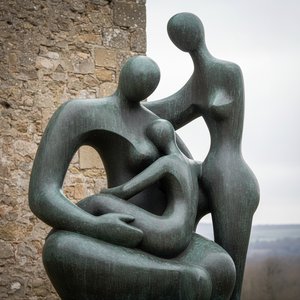
Henry Moore: Sculpting Modernity – Form, Emotion & the Human Condition
Explore the revolutionary sculptures of Henry Moore – abstract forms, reclining figures & powerful expressions of the human condition. Discover his legacy & artistic process with OriginalUniqueArt.
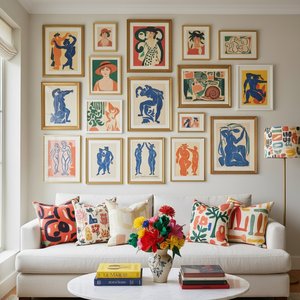
Henri Matisse: 25 meistriteost värviküllase kunsti maailmast | OriginalUniqueArt
Avastage Henri Matisse 25 ikoonilist teost! Sukelduge värviküllase Fauvismi maailma, modernse kunsti ajaloosse ja inspireerige oma interjööri. Kvaliteetsed kunstireprodutsioonid OriginalUniqueArt.com-is. Avasta kogu kollektsioon online!


