
 Eelvaade
 Saada
Saada Jaga
Jaga
 Teave teose kohta
 Juhend

 Laadi alla
 Sarnased teosed
 Röntgenuuring
 Slaidietendus
 KÜSIMUSED JA VASTUSID
 Statistika
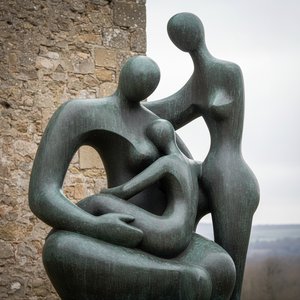
Mother And Child 4

 Loe lähemalt
Sellel lehel kuvatav kunstiteos on kaitstud autoriõigusega, mis tähendab, et meil ei ole seaduslikku õigust luua või müüa identset reproduktsiooni. Seda kaitset rakendatakse rahvusvaheliste kokkulepete alusel, nagu näiteks Berne konventsioon ning riiklike seadustega, sealhulgas nendega, mida on sätestatud USA autoriõiguse seadus – 17. peatükk.
See meetod järgib täielikult autoriõiguse reegleid, kuna see ei põhine kaitstud kunstiteose kopeerimisel või dupliteerimisel. Selle asemel on tegu loova reinterpreetatsiooniga – uue maaldisega, mis on algteosest inspireeritud, kuid ei ole sellest identiline.
Giclée / Kunstiprint
Muuseumikvaliteediga giclée- või kangasprint kiire tootmisega ja paindlikud viimistlusvõimalused. ( Osta käsitsi maalatud teos Lülita digitaalse pildi juurde)




P118B €10

P118H €10

P118W €10

P438Z €10

P508JH €12

P508YH €12

P805H €10

P805Z €10

P919BZ €10

P919G €10

P919XJ €10

P959ZH €10

P968JZ €12

W106C €8

W218G €10

W218JH €8

W218Y €10

W307PJ €10

W316G €10

W316PJ €8

W316Y €10

W398PJ €8

W4111J €10

W500HY €15

W500JH €15

W692G €12

W849H €8

W940BG €15

W953PJ €8




Vali meie eelmääratud suurused, mis vastavad teose algupärastele proportsioonidele.

Sisestage vajalik laius ja kõrgus, et see sobiks teie raamile või seinale. Trükki saab ainult lõigata, seda ei saa kunagi pildist suuremaks teha, seega ka erineva mustega suurus kaotab osa pildist. Enne trükkimist saadame teile kinnitamiseks digitaalse näidisprojektsiooni. Sellel lehel näidatud pilt ei kujuta reaalset lõiget — seda näitab ainult näidisprojektsioon.
Ülemaailmne tarne () 2 nädala jooksul, tavalise 4/5 nädala asemel. (8 november)

Tasuta ekspresssaatmine üle maailma

Kõrgekvaliteediline lina-kangas

Täielik transpordikindlustus

Tollimaksude tagastamise garantii

Värvitoime täpsuse garantii

100 päeva tagastusõigus (ainult valmistusdefektide korral)

100% raha tagasi garantii

Hulgusoodustus
 Klaasivalik on saadaval ainult kuni 110 cm suuruses teostes

Mother And Child 4
Giclée / Kunstiprint
Reproduktsiooni suurus
-


Koguhind
€ 72
A Universal Bond: Exploring Henry Moore’s ‘Mother and Child 4’
This striking black and white photograph captures a sculpture by one of Britain's most important artists, Henry Moore. The work depicts two abstracted bird-like forms – a larger figure sheltering a smaller one – embodying the timeless theme of motherhood and familial protection. While the material is suggested to be wood or stone, its smooth, organic curves and textured surface speak to Moore’s mastery of form and his deep connection to natural materials. This particular piece, part of a prolific series exploring the mother-and-child motif, exemplifies Moore's signature style developed throughout his long career.Moore’s Sculptural Language: Form & Technique
Henry Moore is renowned for his semi-abstract sculptures, often focusing on the human figure – particularly reclining figures and *mother and child* compositions. He pioneered a technique called “direct carving,” where he worked directly with the material (often stone or wood), allowing the form to emerge organically rather than adhering strictly to a pre-conceived design. This approach is evident in ‘Mother and Child 4’ where the forms appear both monumental and intimately connected. The simplification of shapes, the emphasis on volume, and the interplay of positive and negative space are hallmarks of his style, influenced by prehistoric sculpture, African art, and the works of Michelangelo. Moore wasn't interested in literal representation; instead, he sought to capture the *essence* of form and emotion.Symbolism & Emotional Resonance
The mother-and-child theme held profound significance for Moore throughout his life. Having experienced hardship during World War I while serving as a soldier, he found solace in images of nurturing and protection. The abstracted forms in ‘Mother and Child 4’ transcend specific identities, becoming universal symbols of maternal love, vulnerability, and the enduring bond between generations. The protective gesture of the larger form enveloping the smaller one evokes feelings of safety, comfort, and unconditional care. While seemingly simple, the sculpture resonates with deep emotional power, prompting contemplation on fundamental human experiences. The use of birds as a metaphor adds another layer – suggesting freedom, fragility, and the instinct to nurture offspring.A Lasting Legacy: Moore in Context
Born in 1898, Henry Moore lived through periods of immense social and political change, which profoundly impacted his artistic vision. His work gained prominence in the post-war era, reflecting a desire for renewal and a search for universal values. Moore’s sculptures are now found in public collections and private homes worldwide, celebrated for their beauty, emotional depth, and enduring relevance. ‘Mother and Child 4’, like many of his works, continues to inspire artists and captivate audiences with its powerful simplicity and profound message. A reproduction of this sculpture would bring a sense of serenity, strength, and timeless elegance to any interior space.Korduvad küsimused
Kas Henry Moore teos "Mother And Child 4" kuulub avalikku omandisse ja miks?
„Mother And Child 4“, autor Henry Moore on on endiselt autoriõiguse all under kaitse. Tegijakeskuse kaitse kestus arvatakse kunstniku surmaajaest, mis toimus aastal 1986.
Kui karge on teose "Mother And Child 4" väripalett?
Teose "Mother And Child 4" värvipalett on koonuse方面 Muted.
Kust saan alla laadida „Mother And Child 4“, autor Henry Moore?
Teose „Mother And Child 4“, autor Henry Moore digitaalset pilti vormatsis kõrge resolutsiooniga digitaalse pildi allalaadimine saab alla laadida selle Laadi alla lehelt.
Kunstniku elulugu
A Life Sculpted in Form: The World of Henry Moore
Henry Spencer Moore OM CH FBA (30 July 1898 – 31 August 1986) was an English visual artist. He is best known for his semi-abstract monumental bronze sculptures, which revolutionized modern British sculpture and cemented his place as one of the most influential artists of the twentieth century. Born in Castleford, Yorkshire, Moore’s early life instilled in him a profound appreciation for the natural world—a fascination that would permeate his artistic vision throughout his career. His father, Raymond Spencer Moore, was a self-taught man who championed education and steered Henry away from the traditional path of coal mining, recognizing his innate talent for modeling clay and carving wood. This formative experience nurtured a lifelong dedication to tactile exploration and established the bedrock for his sculptural endeavors.Early Influences and Artistic Education
Moore’s formal artistic training commenced at Leeds School of Art in 1913, where he honed his skills under the guidance of influential instructors who championed classical sculpture alongside emerging modernist movements like Cubism. Recognizing Moore's exceptional aptitude, they encouraged him to pursue advanced studies at the Royal College of Art in London in 1921, fostering a synthesis of artistic traditions that would define his distinctive style. During this period, he immersed himself in the study of Michelangelo’s sculptures and wrestled with the challenge of representing human form in an increasingly abstract context—a struggle that ultimately liberated him from representational constraints.The Breakthrough: Encountering Pre-Columbian Art
A transformative journey to Mexico in 1925 proved pivotal in shaping Moore's artistic trajectory. The encounter with Aztec sculptures profoundly impacted his aesthetic sensibilities, sparking a fascination with simplification and abstraction—a fascination that would propel him toward his signature style. He abandoned meticulous anatomical accuracy in favor of exploring organic forms and voids, mirroring the undulating curves of the Mexican landscape and reflecting a desire to capture the essence of human experience rather than its literal depiction. This stylistic shift signaled a decisive break from traditional sculpture and established Moore’s commitment to pursuing artistic innovation.Sculptural Style and Recurring Themes
Moore's sculptural style evolved over time, yet remained remarkably consistent—characterized by rounded, organic shapes that evoke a sense of fluidity and serenity. He frequently employed voids or openings within his sculptures, manipulating light and space to create dynamic visual effects. His most recognizable motifs included the *reclining figure*, which became synonymous with his name, and the *mother and child* theme—representations imbued with profound emotional depth and capturing the intimacy of familial bonds. These sculptures were not idealized portraits but honest explorations of human connection, often reflecting anxieties and uncertainties of their time. Moore’s artistic vision was informed by a deep appreciation for the Yorkshire landscape—a fascination that would permeate his oeuvre and contribute to its enduring beauty.Legacy and Recognition
Henry Moore's influence on twentieth-century art is undeniable. He championed abstraction as a means of conveying emotion and exploring fundamental questions about human existence, challenging conventional notions of form and space. His monumental bronzes transformed urban landscapes and inspired generations of artists—solidifying his reputation as one of Britain’s most celebrated sculptors. Throughout his life, Moore remained steadfast in his belief that art should be accessible to all, actively seeking opportunities to integrate his work into civic spaces and fostering artistic innovation through the establishment of the Henry Moore Foundation—a testament to his enduring legacy.- Notable Sculptures: *Reclining Figure*, *Family Group*, *Shelter Drawings*.
- Influential Movements: Modernism, Abstract Sculpture
- Key Characteristics: Rounded Forms, Organic Shapes, Void Spaces

Henry Moore
1898 - 1986 , Ühenduvaimkond
Lühikest infot
- Artistic Movement Or Style: Modernism, Abstrakti skulptuur
- Artists Who Influenced This Artist: ['Michelangelo']
- Date Of Birth: 30. juuli 1898
- Date Of Death: 31. august 1986
- Full Name: Henry Spencer Moore
- Nationality: Inglismaa
- Notable Artworks:
- Reclining Figure
- Family Group
- Shelter Drawings
- Place Of Birth: Castleford, Ühenduvaimmikond
Sarnased artiklid

Bronze Sculptures That Defined Art History | OriginalUniqueArt
Journey through art history with our Top 10 bronze sculptures! Explore masterpieces by Rodin, Michelangelo & more. Discover stories behind iconic statues and find museum-quality reproductions for your home decor at OriginalUniqueArt.com.

The Enduring Legacy of Bronze: A Historical & Artistic Exploration for the Collector
Explore the rich history & enduring appeal of bronze sculpture with expert insights for collectors at OriginalUniqueArt. Learn about casting techniques, iconic artists, collecting tips & contemporary interpretations.

Bronze Age to Modern Masters: 10 Sculptures That Redefined Art | OriginalUniqueArt
Journey through art history with 10 legendary bronze sculptures – from Michelangelo's David to Rodin’s Thinker. Explore the stories, techniques & timeless beauty of these masterpieces. Find museum-quality reproductions & elevate your home decor on OriginalUniqueArt.com.
Henry Moore: Sculpting Modernity – Form, Emotion & the Human Condition
Explore the revolutionary sculptures of Henry Moore – abstract forms, reclining figures & powerful expressions of the human condition. Discover his legacy & artistic process with OriginalUniqueArt.

The Enduring Legacy of Bronze: History, Technique & Artistic Expression for the Collector
Explore the rich history & enduring appeal of bronze sculpture with expert insights for collectors at OriginalUniqueArt. Learn about casting techniques, iconic artists, and collecting tips.


