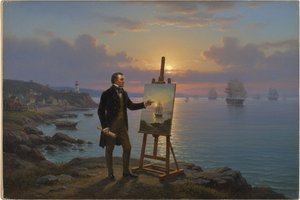
Catspaws off the Land
Oil On Canvas
WallArt
Marine Painting
1885
19th Century
70.0 x 12.0 cm
Tate Britain
Käsitsi valmistatud õlimaalireproduktsioon
Meie kunstnike poolt tellimusel valmistatud käsitsi maalitud õli-kainaste teos teie soovitud suuruses ja raamis. ( Osta print
Osta pilt)
P118B $10
P118H $10
P118W $10
P438Z $10
P508JH $12
P508YH $12
P805H $10
P805Z $10
P919BZ $10
P919G $10
P919XJ $10
P959ZH $10
P968JZ $12
W106C $8
W218G $10
W218JH $8
W218Y $10
W307PJ $10
W316G $10
W316PJ $8
W316Y $10
W398PJ $8
W4111J $10
W500HY $15
W500JH $15
W692G $12
W849H $8
W940BG $15
W953PJ $8
Vali meie eelmääratud suurused, mis vastavad teose algupärastele proportsioonidele.
Sa võite sisestada oma mõõtmed konkreetse raami või ruumi sobivuse tagamiseks. Kui teie valitud suurus ei vasta originaalpildi proportsioonidele, siis kärvime kunstiteost või laiendame maali täiendavate käsitsi maalitud elementidega. Enne tootmise algust saadetakse teile heakskiitmiseks digitaalne eelvaade.
Palun pidage meeles, et ekraanil kuvatav eelvaade ei kajasta tegelikku kärpimist või laiendamist. Ainult eelvaade näitab täpselt lõplikku kompositsiooni.
Kuigi on saadaval kohandatud suurused, soovitame originaalproportsioonide säilimiseks valida mõõdud eelmääratletud nimekirjast.
Pärast tellimust saadab OriginalUniqueArt.com meeskond kliendile e-posti juhised ning esitab eelvaate kavandi.
Maailmline tarne 3–4 nädala jooksul tavalise 5 nädala asemel. (19 august). Kvaliteedis kompromisse ei tehta.
Tasuta ekspresssaatmine üle maailma
Kõrgekvaliteediline linakangas
Täielik transpordikindlustus
Tollimaksude tagastamise garantii
Värvitoime täpsuse garantii
60-päevane tagastusõig: ainult tootmisdefektide korral
100% raha tagasi garantii
Hulgusoodustus
Catspaws off the Land
Reproduktsiooni tehnika
Reproduktsiooni suurus
-
Kogusumma
$ 300
Teose kirjeldus
A Voyage into Coastal Dreams: Exploring Catspaws off the Land
To gaze upon Catspaws off the Land is to be gently swept away by the vast, breathing expanse of the sea meeting the steadfast embrace of the shore. This magnificent piece captures a moment suspended in time—a quintessential 19th-century marine painting that speaks volumes through its masterful handling of light and atmosphere. The composition itself is a study in balance; while the rugged coastline anchors one side, the open sky and the graceful passage of two sailing boats draw the eye across the water. It is an invitation to contemplation, suggesting both the wild unpredictability of nature and the enduring rhythm of human endeavor.
Technique and Texture: The Painter's Hand at Work
The artist employed oil paint with a visible, tactile energy that rewards close inspection. One can almost feel the texture beneath the surface—the impasto built up in the churning waves, the subtle grit suggested on the rocky cliffs, and the soft diffusion of light across the water. The brushwork is remarkably controlled yet loose, lending the entire scene a palpable sense of movement. This technique allows the cool palette of blues and greens to dominate, punctuated by warmer, ethereal tones within the clouds. It is this masterful interplay between defined structure—seen in the geometric forms of the boats and rocks—and organic fluidity—present in the waves and sky—that gives the painting its profound depth.
Symbolism Woven into the Tides
Beyond its breathtaking visual appeal, Catspaws off the Land resonates with deeper symbolic currents. The maritime setting itself has always been a metaphor for life’s journey; the boats represent human passage and connection, while the formidable, rugged landscape speaks eloquently of isolation and inherent resilience. The very act of sailing into such a dramatic environment suggests themes of perseverance against overwhelming natural forces. It is a quiet meditation on humanity's place within the grand, untamed sweep of the natural world.
Historical Echoes and Enduring Appeal
Dating from 1885, this work stands as a beautiful artifact of the great tradition of marine art. While the artist’s signature style may echo the sensibilities of its time—a period fascinated by exploration and the sublime power of nature—its appeal remains timeless. For the collector or designer seeking to infuse a space with depth, history, and an undeniable sense of tranquility, this painting offers more than mere decoration; it offers an emotional anchor. Reproducing such a piece allows one to bring the expansive, calming spirit of the open ocean into the intimate confines of a home.
Kunstniku elulugu
A Life Sculpted in Form: The World of Henry Moore
Henry Spencer Moore OM CH FBA (30 July 1898 – 31 August 1986) was an English visual artist. He is best known for his semi-abstract monumental bronze sculptures, which revolutionized modern British sculpture and cemented his place as one of the most influential artists of the twentieth century. Born in Castleford, Yorkshire, Moore’s early life instilled in him a profound appreciation for the natural world—a fascination that would permeate his artistic vision throughout his career. His father, Raymond Spencer Moore, was a self-taught man who championed education and steered Henry away from the traditional path of coal mining, recognizing his innate talent for modeling clay and carving wood. This formative experience nurtured a lifelong dedication to tactile exploration and established the bedrock for his sculptural endeavors.Early Influences and Artistic Education
Moore’s formal artistic training commenced at Leeds School of Art in 1913, where he honed his skills under the guidance of influential instructors who championed classical sculpture alongside emerging modernist movements like Cubism. Recognizing Moore's exceptional aptitude, they encouraged him to pursue advanced studies at the Royal College of Art in London in 1921, fostering a synthesis of artistic traditions that would define his distinctive style. During this period, he immersed himself in the study of Michelangelo’s sculptures and wrestled with the challenge of representing human form in an increasingly abstract context—a struggle that ultimately liberated him from representational constraints.The Breakthrough: Encountering Pre-Columbian Art
A transformative journey to Mexico in 1925 proved pivotal in shaping Moore's artistic trajectory. The encounter with Aztec sculptures profoundly impacted his aesthetic sensibilities, sparking a fascination with simplification and abstraction—a fascination that would propel him toward his signature style. He abandoned meticulous anatomical accuracy in favor of exploring organic forms and voids, mirroring the undulating curves of the Mexican landscape and reflecting a desire to capture the essence of human experience rather than its literal depiction. This stylistic shift signaled a decisive break from traditional sculpture and established Moore’s commitment to pursuing artistic innovation.Sculptural Style and Recurring Themes
Moore's sculptural style evolved over time, yet remained remarkably consistent—characterized by rounded, organic shapes that evoke a sense of fluidity and serenity. He frequently employed voids or openings within his sculptures, manipulating light and space to create dynamic visual effects. His most recognizable motifs included the *reclining figure*, which became synonymous with his name, and the *mother and child* theme—representations imbued with profound emotional depth and capturing the intimacy of familial bonds. These sculptures were not idealized portraits but honest explorations of human connection, often reflecting anxieties and uncertainties of their time. Moore’s artistic vision was informed by a deep appreciation for the Yorkshire landscape—a fascination that would permeate his oeuvre and contribute to its enduring beauty.Legacy and Recognition
Henry Moore's influence on twentieth-century art is undeniable. He championed abstraction as a means of conveying emotion and exploring fundamental questions about human existence, challenging conventional notions of form and space. His monumental bronzes transformed urban landscapes and inspired generations of artists—solidifying his reputation as one of Britain’s most celebrated sculptors. Throughout his life, Moore remained steadfast in his belief that art should be accessible to all, actively seeking opportunities to integrate his work into civic spaces and fostering artistic innovation through the establishment of the Henry Moore Foundation—a testament to his enduring legacy.- Notable Sculptures: *Reclining Figure*, *Family Group*, *Shelter Drawings*.
- Influential Movements: Modernism, Abstract Sculpture
- Key Characteristics: Rounded Forms, Organic Shapes, Void Spaces
Henry Moore
1898 - 1986 , Ühenduvaimkond
Lühikesed faktid
- Artistic Movement Or Style: Modernism, Abstrakti skulptuur
- Artists Who Influenced This Artist: ['Michelangelo']
- Date Of Birth: 30. juuli 1898
- Date Of Death: 31. august 1986
- Full Name: Henry Spencer Moore
- Nationality: Inglismaa
- Notable Artworks:
- Reclining Figure
- Family Group
- Shelter Drawings
- Place Of Birth: Castleford, Ühenduvaimmikond

Klaasivalik on saadaval ainult suuruses kuni 110 cm