
 Eelvaade
 Saada
Saada Jaga
Jaga
 Teave teose kohta
 Juhend

 Laadi alla
 Sarnased teosed
 Röntgenuuring
 Slaidietendus
 KÜSIMUSED JA VASTUSID
 Statistika
Duet

- 101.0 x 81.0 cm


 Loe lähemalt
Giclée / Kunstiprint
Muuseumikvaliteediga giclée- või kangasprint kiire tootmisega ja paindlikud viimistlusvõimalused. ( Osta käsitsi maalatud teos Lülita digitaalse pildi juurde)




P118B €10

P118H €10

P118W €10

P438Z €10

P508JH €12

P508YH €12

P805H €10

P805Z €10

P919BZ €10

P919G €10

P919XJ €10

P959ZH €10

P968JZ €12

W106C €8

W218G €10

W218JH €8

W218Y €10

W307PJ €10

W316G €10

W316PJ €8

W316Y €10

W398PJ €8

W4111J €10

W500HY €15

W500JH €15

W692G €12

W849H €8

W940BG €15

W953PJ €8




Vali meie eelmääratud suurused, mis vastavad teose algupärastele proportsioonidele.

Sisestage vajalik laius ja kõrgus, et see sobiks teie raamile või seinale. Trükki saab ainult lõigata, seda ei saa kunagi pildist suuremaks teha, seega ka erineva mustega suurus kaotab osa pildist. Enne trükkimist saadame teile kinnitamiseks digitaalse näidisprojektsiooni. Sellel lehel näidatud pilt ei kujuta reaalset lõiget — seda näitab ainult näidisprojektsioon.
Ülemaailmne tarne () 2 nädala jooksul, tavalise 4/5 nädala asemel. (3 november)

Tasuta ekspresssaatmine üle maailma

Kõrgekvaliteediline lina-kangas

Täielik transpordikindlustus

Tollimaksude tagastamise garantii

Värvitoime täpsuse garantii

100 päeva tagastusõigus (ainult valmistusdefektide korral)

100% raha tagasi garantii

Hulgusoodustus
 Klaasivalik on saadaval ainult kuni 110 cm suuruses teostes

Duet
Giclée / Kunstiprint
Reproduktsiooni suurus
-


Koguhind
€ 72
Hendrick Terbrugghen’s “Duet”: A Window into Dutch Baroque Sensuality
“Duet,” painted in 1628 by Hendrick Jansz ter Brugghen, is more than just a depiction of two young musicians; it's a vibrant snapshot of the burgeoning artistic and social landscape of the Dutch Golden Age. This captivating oil on canvas, now residing within the esteemed collection of the Louvre Museum in Paris, offers a glimpse into the world of Caravaggism – a movement that profoundly influenced Terbrugghen’s distinctive style and approach to portraying human emotion.
Ter Brugghen, born in 1588 in Overijssel, Netherlands, was deeply connected to the artistic currents of his time. His father, Jan Egbertsz ter Brugghen, served as secretary to Prince William the Silent, exposing young Hendrick to a world of courtly patronage and artistic refinement. This early exposure undoubtedly shaped his trajectory, leading him to study under Abraham Bloemaert, a prominent Mannerist painter, before embracing the dramatic intensity of Caravaggio’s style – characterized by intense contrasts of light and shadow, known as *chiaroscuro*. The Utrecht Caravaggisti group, of which Terbrugghen was a key member alongside Gerrit van Hondhorst and Dirck van Baburen, sought to capture the same emotional depth and dynamism found in Caravaggio's works, adapting them to the Dutch context.
A Symphony of Light and Color: Artistic Technique
The painting’s immediate impact lies in its masterful use of light. Terbrugghen expertly employs *chiaroscuro* to sculpt the figures, creating a dramatic interplay between illumination and shadow that draws the viewer's eye and imbues the scene with a palpable sense of drama. The strong directional lighting highlights the youthful faces of the musicians, emphasizing their expressions of joy and engagement. Notice how the light catches the feathered cap of the male figure, adding to his theatrical presence, while simultaneously casting subtle shadows across his face, hinting at an underlying intensity.
Terbrugghen’s brushwork is remarkably fluid and expressive. He utilizes loose, gestural strokes to convey movement and energy, particularly in the depiction of the lute and the flowing garments. The vibrant palette – dominated by rich reds, blues, and yellows – contributes significantly to the painting's overall dynamism. These colors aren’t merely decorative; they are carefully chosen to evoke a sense of warmth, sensuality, and youthful exuberance.
Symbolism and Social Context
Beyond its technical brilliance, “Duet” is rich in symbolic meaning. The lute itself, a prominent instrument in the Baroque era, was often associated with pleasure, music, and even eroticism. The young men’s attire – featuring flamboyant colors and feathered accessories – reflects the influence of theatrical traditions and suggests a world of entertainment and indulgence. The low-cut dress worn by the female musician is particularly noteworthy; it subtly challenges conventional notions of modesty, hinting at a playful disregard for social norms.
Furthermore, the scene can be interpreted as an allegory for harmony and balance – both musical and emotional. The two figures, engaged in a shared activity, represent a union of spirits, reflecting the broader humanist ideals prevalent during the Dutch Golden Age. The inclusion of the clock in the background subtly reminds us of the fleeting nature of time and the importance of savoring these moments of joy.
A Timeless Masterpiece: Emotional Resonance
“Duet” transcends its historical context to resonate with viewers today. The painting’s depiction of youthful exuberance, musical passion, and intimate connection evokes a powerful sense of nostalgia and delight. Terbrugghen's ability to capture the fleeting expressions of human emotion – the joy in the male musician’s gaze, the gentle affection in the female musician’s expression – is truly remarkable. It’s a painting that invites us to step into the scene, to feel the warmth of the music, and to share in the simple pleasures of companionship.
Reproductions of “Duet” offer an accessible way to experience this masterpiece firsthand, bringing its vibrant colors and captivating imagery into your home or office. Consider a high-quality reproduction to add a touch of Dutch Baroque elegance to any space – a reminder of the enduring power of art to inspire and uplift.
Korduvad küsimused
Mis on teose „Duet“, autor Hendrick Terbrugghen kuju ja mõõdud?
„Duet“, autor Hendrick Terbrugghen on Portrait kompositsioon, mille originaalmõõdud on 101 x 81 cm.
Kas „Duet“, autor Hendrick Terbrugghen on maalid, joonis või etsing?
Kataloogis on teos „Duet“, autor Hendrick Terbrugghen liigitatud kui WallArt. See kategooria aitab leida sarnaseid teoseid.
Millal loodi teos "Duet"?
Teos "Duet" on pärit aastast 1628. See ajastu aitab mõista teost Hendrick Terbrugghen karjääri ja selle ajastu kontekstis.
Kunstniku elulugu
varajae elu ja mõjud
Hendrick Jansz Ter Brugghen, Hollandi kuldkella ajastu üks silmapaistvamaid kujundajaid, sündis 1588. aastal Overijsselis, Hollandis. Tema isa, Jan Egbertsz Ter Brugghen, teenis Utrechti õukonnas sekretärina prints William Silentiga. See lähedine poliitilise ja kultuurilise elu keskusele mõjutas tõenäoliselt Hendricki varajast huvi kunsti vastu.kunstiline karjäär ja stiil
Ter Bruggheni kunstiline teekond algas manneristliku maalikuja Abraham Bloemaerti õppetööga. Hiljem sai ta üheks juhtivaks liikmeks Utrechti Caravaggiste rühmituses, mis koosnes hollandi maalijatest, kes olid saanud inspiratsiooni suurest itaaliasest meistrist Caravaggiost. Tema teoseid iseloomustab dramaatiline valgus- ja varjundkasutus, nagu on nähtav tema maalingutes nagu Annunsiatsioon (Alte Pinakothek, München, Saksamaa) ja Reveller (Alte Pinakothek, München, Saksamaa).olulised teosed ja pärand
- Laulav lüütnäitaj (The Kremer Collection, Amsterdam, Holland), mis on autograafiline replika Londoni National Gallerys asuvast maalist, esitledes tema rikkalikku värvikust.
- Annunsiatsioon, tõeline meistriteos, mis peegeldab tema täiuslikku kontrolli Caravaggio stiilis.
muuseumid ja kogumikud, kus Ter Bruggheni teoseid näitakse
- Mauritshuis (Haag, Holland), kus on näitaval Nymph and Satyr teos autorilt Sir Peter Paul Rubens.
- The Kremer Collection (Amsterdam, Holland), kus hoiustatakse Ter Bruggheni teost Laulav lüütnäitaj.
- Avastage veel Ter Bruggheni teoseid saidukal OriginalUniqueArt.com
- Avastage Hollandi kuldkella ajastu maalikunst ja selle mõjud OriginalUniqueArt.com ajaloolises osas
- Lugege teiste kunstikodade kohta, nagu Utrechti Caravaggiste kolleeg Dirck van Baburen, OriginalUniqueArt.com lehelt
johtlõpus
Ter Bruggheni salapärane elu ja tema olulised panused Hollandi kuldkella ajastu maalikunsti arendamisele on jätnud tematu jälje kunstile. Tema dramaatiline valgus- ja varjundkasutus jätkub inspireerimas nii kunstnikke kui ka kunstihuvilisi, muutes ta üheks kunstimaailma lummavaks tegelaseks.
Hendrick Terbrugghen
1627 - 1629 , Eesti
Lühikest infot
- Artistic Movement Or Style: Caravaggisti maaling
- Artists Or Movements Influenced By This Artist: Rembrandt van Rijn
- Artists Who Influenced This Artist: Abraham Bloemaert
- Date Of Birth: 1588
- Date Of Death: November 1629
- Full Name: Hendrick Jansz Terbrugghen
- Nationality: Hollandlane
- Notable Artworks:
- Laulav lüütnäkij
- Annunratsioon
- David, kelle austavad israelilased naised
- Place Of Birth: Overijssel, , ,
Sarnased artiklid

Hollandi Kuldaja Särgas Kunstipärit: 10 Meisterteost Sinu Koduks
Sukeldu Hollandi Kuldaja kunstivorme! Avasta 10 ikoonilist meistriteost – Rembrandt, Vermeer jt. - ning nende ajatu loojatööd. Leia inspiratsiooni interjöörile ja kaunista kodu OriginalUniqueArt.com kvaliteetsete reproduktsioonidega. Uuri kollektsiooni!
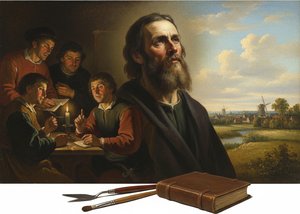
Hendrick Terbrugghen: Caravaggism, Spirituality & the Dutch Golden Age Painter's Evolving Style
Explore the captivating world of Hendrick Terbrugghen, a leading Dutch Golden Age painter influenced by Caravaggio. Discover his dramatic use of light, spiritual depth & lasting legacy. Learn more at OriginalUniqueArt.

Golden Age Reflections: Dutch Baroque Painting & Cultural Innovation
Explore the Dutch Golden Age of painting! Discover key artists like Vermeer & ter Borch, their innovative techniques, and the rich cultural context behind these Baroque masterpieces. Learn about collecting & appreciating this iconic art period.

Mastering Light & Shadow: A Journey Through the Dutch Golden Age's Luminous Legacy
Embark on a cultural journey through the Dutch Golden Age. Explore the masterful interplay of light and shadow in 17th-century masterpieces, from Rembrandt to Vermeer, and discover how this era of profound realism continues to inspire fine art collectors today.

Golden Light & Dutch Skies: The Timeless Magic of Dutch Golden Age Landscapes
Discover the breathtaking beauty of Dutch Golden Age landscapes. Explore the mastery of light, chiaroscuro, and 17th-century realism through an expert art history lens, celebrating the enduring legacy of the Dutch Masters for discerning collectors and art lovers.
