Menüü
Text size

() ·

A painting made for you, by hand

Self-Portrait

Käsitsi valmistatud õlimaalireproduktsioon

Meie kunstnike poolt tellimusel valmistatud käsitsi maalitud õli-kainaste teos teie soovitud suuruses ja raamis. ( Lülita trükkitoodetele Lülita digitaalse pildi juurde)

Kogumisobjekti kirjeldus

Kunstniku elulugu

Gustave Courbet (1819-1877) – realismist kunstnik, kes kujutas ausalt igapäevaelu ja töölisi. Tema teosed nagu "Matusemäärus Ornansis" muutsid kunsti ajalugu! Avasta tema revolutsiooniline mõjutus.

from ·

Chapter 1

How large should it be?

Slide to change the size; the picture on the left shows the frame at its real width. The proportions of the original are kept.

Standardne suurus
kohandatud
CM
INCH

Vali meie eelmääratud suurused, mis vastavad teose algupärastele proportsioonidele.

laius
kõrgus

Sisestage vajalik laius ja kõrgus, et teos sobiks teie raamile või seinale. Kuna tegu on käsipainatud teosega, siis erineva kujuga suuruse korral võib kunstnik jätta pildi ümber veidi rohkem marginaali või lõigata osa ära — valik on teie. Enne maali alustamist saadame teile kinnitamiseks digitaalse näidisprojektsiooni. Sellel lehel näidatud pilt ei kajasta tegelikku tulemust — seda näitab ainult näidisprojektsioon.

Chapter 2

How should it arrive?

Choose the edges of the stretched canvas

Choose your frame

Corner sample of the WhiteWrap canvas edge finish, stretched on massivpuit bars
White €1
Corner sample of the BlurSideWrap canvas edge finish, stretched on massivpuit bars
Blurside €1
Corner sample of the ExtendedWrap canvas edge finish, stretched on massivpuit bars
Extended €1
Corner sample of the P118B picture frame: vormitud polüstüreen, 5 cm wide and 3 cm thick
P118B €10
Corner sample of the P118H picture frame: vormitud polüstüreen, 5 cm wide and 3 cm thick
P118H €10
Corner sample of the P118W picture frame: vormitud polüstüreen, 5 cm wide and 3 cm thick
P118W €10
Corner sample of the P438Z picture frame: vormitud polüstüreen, 5.5 cm wide and 3.5 cm thick
P438Z €10
Corner sample of the P508JH picture frame: vormitud polüstüreen, 7 cm wide and 3.5 cm thick
P508JH €12
Corner sample of the P508YH picture frame: vormitud polüstüreen, 7 cm wide and 3.5 cm thick
P508YH €12
Corner sample of the P805H picture frame: vormitud polüstüreen, 5 cm wide and 3.5 cm thick
P805H €10
Corner sample of the P805Z picture frame: vormitud polüstüreen, 5 cm wide and 3.5 cm thick
P805Z €10
Corner sample of the P919BZ picture frame: vormitud polüstüreen, 7 cm wide and 3.5 cm thick
P919BZ €10
Corner sample of the P919G picture frame: vormitud polüstüreen, 7 cm wide and 3.5 cm thick
P919G €10
Corner sample of the P919XJ picture frame: vormitud polüstüreen, 7 cm wide and 3.5 cm thick
P919XJ €10
Corner sample of the P959ZH picture frame: vormitud polüstüreen, 5 cm wide and 3 cm thick
P959ZH €10
Corner sample of the P968JZ picture frame: vormitud polüstüreen, 6 cm wide and 4 cm thick
P968JZ €12
Corner sample of the W106C picture frame: massivpuit, 5 cm wide and 3 cm thick
W106C €8
Corner sample of the W218G picture frame: massivpuit, 5 cm wide and 3 cm thick
W218G €10
Corner sample of the W218JH picture frame: massivpuit, 5 cm wide and 3 cm thick
W218JH €8
Corner sample of the W218Y picture frame: massivpuit, 5 cm wide and 3 cm thick
W218Y €10
Corner sample of the W307PJ picture frame: massivpuit, 6 cm wide and 3 cm thick
W307PJ €10
Corner sample of the W316G picture frame: massivpuit, 6 cm wide and 3 cm thick
W316G €10
Corner sample of the W316PJ picture frame: massivpuit, 6 cm wide and 3 cm thick
W316PJ €8
Corner sample of the W316Y picture frame: massivpuit, 6 cm wide and 3 cm thick
W316Y €10
Corner sample of the W398PJ picture frame: massivpuit, 5 cm wide and 3 cm thick
W398PJ €8
Corner sample of the W4111J picture frame: massivpuit, 6.5 cm wide and 3.5 cm thick
W4111J €10
Corner sample of the W500HY picture frame: massivpuit, 7 cm wide and 5 cm thick
W500HY €15
Corner sample of the W500JH picture frame: massivpuit, 7 cm wide and 5 cm thick
W500JH €15
Corner sample of the W692G picture frame: massivpuit, 8 cm wide and 4 cm thick
W692G €12
Corner sample of the W849H picture frame: massivpuit, 5 cm wide and 3 cm thick
W849H €8
Corner sample of the W940BG picture frame: massivpuit, 7.5 cm wide and 4.5 cm thick
W940BG €15
Corner sample of the W953PJ picture frame: massivpuit, 6 cm wide and 3.5 cm thick
W953PJ €8
Corner sample of the H24-GOLD picture frame: kareeritud puit ja gesso, 10 cm wide and 6 cm thick
H24-GOLD €30
Corner sample of the H24-SILVER picture frame: kareeritud puit ja gesso, 10 cm wide and 6 cm thick
H24-SILVER €30
Corner sample of the H36-GOLD picture frame: kareeritud puit ja gesso, 15 cm wide and 6.5 cm thick
H36-GOLD €45
Corner sample of the H36-SILVER picture frame: kareeritud puit ja gesso, 15 cm wide and 6.5 cm thick
H36-SILVER €45
Raami eelvaade
Raamitud

Moulding: . Overall size with the frame: .

Chapter 3

Who paints it, and should anything change?

Examples of what can be changed: Replace face with customer photo; Add pet (e.g., replace cat with dog); Include hidden message in background; Change background landscape or elements.
After order, OriginalUniqueArt.com team will email client for instructions and provide a mockup preview

Maailmline tarne 3–4 nädala jooksul tavalise 5 nädala asemel. (29 oktoober). Kvaliteedis kompromisse ei tehta.

Chapter 4

The finishing touches

A nameplate, as in a museum?

Graveeritud pronksplaadi üksikasjad

This elegant plaque features the artist's name and the title of the artwork, finely engraved for a timeless presentation.

It is made from bronze with a refined, elegant finish. The text is precisely laser-engraved for a sharp and permanent result. Measuring 9x2 cm, the plaque is compact yet easy to read. It's built to be durable and scratch-resistant, offering a professional, museum-quality look. Mounting is simple thanks to the included adhesive backing.

Läbipaistva akrüülplaadi üksikasjad

The plaque includes essential engraved details such as the artist's name, the title of the artwork, the date it was created, the type of media used-like oil on canvas or watercolor-a brief description of the piece, and a QR code that links to the complete artwork information.

It is crafted from clear acrylic, offering a sleek, modern appearance. The text is UV-engraved in black to ensure strong visual contrast. With a size of 10x15 cm, it ensures optimal readability. It comes equipped with two metal hooks for secure wall mounting. The plaque is designed to be weather-resistant, making it suitable for various environments, and it includes interactive features that work seamlessly with smartphone scanning.

Musta akrüülplaadiรายละเอียด (Note: The user provided "Musta akrüülplaadi detailid" as the current translation and asked for an improved version. Since "Musta akrüülplaadi

This elegant plaque includes engraved information such as the artist's name, the title of the artwork, the date it was created, the type of media used (like oil on canvas or watercolor), a short description of the artwork, and a QR code for quick access to more information.

The plaque itself is made from refined black acrylic with a premium finish. The text is laser-engraved in white for high contrast and readability. Its size is 10x15 cm, designed to be easy to read. It comes with two metal hooks for professional mounting. The design is sleek and fits any interior style. It is also weather-resistant and durable, with built-in digital integration for mobile compatibility.

A protective varnish?

When do you need it?

Chapter 5

Your painting, as you ordered it

Self-Portrait

Reproduktsiooni tehnika

Reproduktsiooni suurus

-

Eelistatud tippkunstnik

Rohkem detaile, peenust ja lisatootmisaega

-

Reproduktsiooni raamivalikud

-

-

Kunstiteoste või reproduktsioonide puhul, mille üks külg on üle 105 cm (umbikmolt 41 tolli), saadetakse raam kirjal asendis, la Dismantlitud komplektina. See meetod tagab ohutuse kohaletoimetamisel ja väldib transpordil tekkivaid kahjustusi.

Vajalik professionaalne kokkupanek – see ei ole isetegevusega valmistamiseks mõeldud toode.
Komplekt tuleb kokku panna ja lõvet pingutada kogemusega professionaalse raamija, kasutades puiduliim (ei kuulu komplekti), lõvetpingi ja klempe, et hoida raami kande mustad õigena liimi kuivamisaja jooksul. Vale kokkupanek või ebaühtlane lõvetping võib kunstiteost püsivalt kahjustada ning seda ei katta meie garantii.

  • Kaasatud on kõik tahked puidust liistud, täpselt lõigatud vastavaks suuruseks.

  • Kokku panemiseks kasutatakse lisatud kruvisid ning nurkade liimamiseks vajalikku puuliima, mida ei ole komplektis ja mida peab raamivalmistaja ise hankima.

  • Vajalik on kasutada professionaalseid tööriistu, mis ei kuulu komplekti: lõvetelapide pingist (pingutaja) ja klambreid, et hoida raami puidu nurgas õigena liimi kuivamisaja jooksul.

Oluline:
Nurgaliimamiseks on vaja puiduliim, liimimine peab toimuma klempide all kuni liim on täielikult kuivanud ning kokku monteeritud raami kanga pingutamiseks on vajalik kanga pingutustang. Kumbki neist ei kuulu komplekti. Palun veenduge enne selle suuruse tellimist, et teil on saadaval kogenud professionaalne raamistaja.

Nimesildikiri

-

-

Kaitsevärnitsus

Läikiv lakk (muudab värvid elavamaks ning kaitseb valgust ja niiskust eest)

-

Kohanda oma teost

Näiteid muudatuste kohta: Asenda nägu kliendi fotoga; Lisa lemmikloom (nt asenda kass koeraga); Lisa taustale peidetud sõnum; Muuda tausta maastikku või elemente.

-

Kiire tarne

Ülemaailmne tarne riiki 3–4 nädalaga tavalise 5 nädala asemel. (29 oktoober). Kvaliteedis kompromisse ei tehta.

-

Kiirsaatmine

Ülemaailmne tarne () 5 nädala jooksul. (5 november).

Sisse kuuluv

Koguhind

€ 265

Kogu summa € 265

Klaasivalik on saadaval ainult kuni 110 cm suuruses teostes

Included with every order

  • Tasuta ekspresssaatmine üle maailma
  • Kõrgekvaliteediline lina-kangas
  • Täielik transpordikindlustus
  • Tollimaksude tagastamise garantii
  • Värvitoime täpsuse garantii
  • 100 päeva tagastusõigus (ainult valmistusdefektide korral)
  • 100% raha tagasi garantii
  • Hulgusoodustus

A Portrait of Radical Realism: Gustave Courbet’s Self-Portrait

The painting titled “Self-Portrait” by Gustave Courbet stands as a cornerstone of realist art, embodying the artist's unwavering dedication to portraying life without embellishment or romantic idealism. Completed sometime around 1869, this intimate depiction offers more than just a likeness; it presents a profound statement about artistic integrity and societal observation—a legacy that continues to resonate with audiences today.
  • Subject Matter & Composition: Courbet’s gaze meets the viewer head-on, establishing an immediate connection of confrontation and honesty. The artist positions his chin delicately in his hand, a gesture imbued with both vulnerability and deliberate control—a subtle defiance against the conventions of portraiture that prioritized idealized beauty.
  • Style & Technique: Courbet’s style is unmistakably rooted in Impressionism's rejection of academic formalism. However, unlike many Impressionists who sought to capture fleeting moments of light and atmosphere, Courbet meticulously rendered his subject with painstaking detail. The brushstrokes are visible, textured surfaces—a deliberate choice designed to convey the materiality of existence.

Historical Context: Challenging Artistic Tradition

Courbet’s artistic rebellion stemmed from a deep dissatisfaction with the École des Beaux-Arts and its insistence on mythological subjects and polished finishes. He famously declared, “I do not depict what I see; I paint what I think,” encapsulating his belief that art should serve as a vehicle for social commentary. The Self-Portrait arrived during a period of significant artistic upheaval—the Impressionist movement was gaining momentum, challenging the dominance of Salon painting and redefining notions of beauty.
  • Symbolism & Interpretation: Beyond its straightforward representation, the portrait carries symbolic weight. The plain background—a stark contrast to the opulent interiors favored by academic painters—underscores Courbet’s rejection of bourgeois values and his focus on the everyday realities of life. Furthermore, the artist's gaze is considered a deliberate challenge to the viewer’s expectations, prompting contemplation about identity and artistic purpose.
  • Materiality & Texture: Courbet employed encaustic—a technique combining beeswax and resin—to achieve remarkable textural depth and luminosity. This method allowed him to capture subtle nuances of light and shadow, creating a surface that feels remarkably alive. The resulting image is not merely visually appealing; it’s an embodiment of the artist's commitment to portraying the world as he experienced it.

Emotional Impact & Legacy

“Self-Portrait” transcends mere visual representation, conveying a palpable sense of introspection and conviction. Courbet’s unflinching gaze communicates both confidence and melancholy—a reflection of the artist's own struggles against societal pressures and artistic conventions. It remains an enduring emblem of realism’s power to confront viewers with uncomfortable truths and inspire them to reconsider their perceptions of beauty and truth. Today, reproductions of this seminal artwork continue to captivate collectors and interior designers alike, offering a glimpse into the spirit of a revolutionary artist and his unwavering belief in the transformative potential of art.

Korduvad küsimused

Kuidas saan teoseid „Self-Portrait“, autor Gustave Courbet vaadata diapositatsioonina?

Teost „Self-Portrait“, autor Gustave Courbet saab vaadata diapositena teose Pildikava lehel.

Kui populaarne on teos "Self-Portrait" suunaga Contemporary Realism aastal?

Contemporary Realism suunnas on teos "Self-Portrait" Recognized populaarsusega.

Millist meeleheust väljendab teos „Self-Portrait“, autor Gustave Courbet suunatud stiilis Contemporary Realism?

Teose "Self-Portrait" Reflective tunne on ühtne selle Contemporary Realism stiiliga.

More about this painting

Eelvaade AR-eelvaade Lülita trükkitoodetele Lülita digitaalse pildi juurde Saada
Teave teose kohta Juhend Lisa lemmikutesse Laadi alla Sarnased teosed Röntgenuuring Slaidietendus Q&A Statistika

In numbers

  • 29frames to choose from
  • standard sizes, in its own proportions
  • 5weeks to paint and deliver it
Gustave Courbet

Gustave Courbet

1819 - 1877, Prantsusmaa

Quick facts about Gustave Courbet

  • Artistic Movement Or Style: Realism
  • Artists Or Movements Influenced By This Artist:
    • Impressionism
    • Post-Impressionism
  • Artists Who Influenced This Artist:
    • Delacroix
    • Géricault
    • Caravaggio
  • Date Of Birth: 10. juuni 1819
  • Date Of Death: 31. detsember 1877
  • Full Name: Gustave Courbet
  • Nationality: Prantsuse
  • Notable Artworks:
    • The Stone Breakers
    • A Burial at Ornans
    • The Painter’s Studio
  • Place Of Birth: Ornans, Prantsusmaa

Kunstniku elulugu

Gustave Courbet: Realismi Revolutsiooniline Pintslikeel

Jean Désiré Gustave Courbet sündis 1819. aastal Oransis, Prantsusmaa vaikses külas, ja tegi peagi oma sisukate kunstipraktika abil revolutsiooni kunsti maailmas. Tema lugu ei piirdu pelgnes värvide ja lõuendiga; see on narratiiv, mis on põimitud sotsiaalse kommentaariga, poliitilise veendumusega ja vankumatu pühendumisega kujutada maailma nii nagu ta nägi – idealiseerimata, jõuetult ja sügavalt reaalsena. Kasvades suhteliselt hästi läinud kodanliku perekonnas, sai Courbet emalt julgustust oma kunstiliste kalduvuste poole liikuda, mis toitis lõpuks revolutsiooni kunstimaailmas. Tema ametlik koolitus algas 1839. aastal Pariisi Beaux-Arti koolis, kuid ta leidis peagi end vastuolus valitsevate akadeemiliste konventsioonidega ja romantilis-idealistliku maailmavaatega. Kuigi ta tunnustas Eugène Delacroix' ja Théodore Géricault' mõju, lõi Courbet oma tee, mis andis prioriteedi vaatlusele kujutlusvõimele ja tõele traditsiooni ees.

Realism: Konventsioonide Välistamine

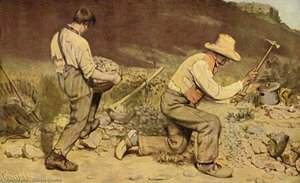
Courbet’ kunstiline areng oli märgitud tahtlikust keeldumisest valitsevate esteetiliste standardite ees. Ta ei huvitatud müütilistest narratiividest ega kangelaslike allegoriatest; tema pilk oli fikseeritud tavaliste inimeste igapäevaelule, eriti nendelegi, kes olid hõivatud töö ja maalähedase eluga. See pühendumus maailma kujutamisele ilu puudutamata – see, mida oleks hiljem tuntud kui realismi – kohtas algselt kriitikutelt põlgust ja naeruväärsust, kes harjumuslikumad olid poleeritud ja idealiseeritud esindusega. Varajased tööd uurisid maastikke ja portreede, kuid pöörduvad peagi tööealiste eludega teemalisi stseene, mis on kujutatud monumentaalses mõõtkavas, mida tavaliselt reserveeriti ajaloolistele või religioossetele maalidele. See tahtlik valik ei olnud pelgnes stilistiline; see oli avaldus nende sageli ülevaadeldavate subjektide sisemise väärikuse ja tähtsuse kohta. The Stone Breakers, mis valmis 1849. aastal, kuid kahjuks teises maailmasõjas hävis, näitas seda lähenemisviisi – kahe töölise jõuetut kujutust, nende näod varjatud väsimuse ja kannatusega. See maal, koos teistega nagu A Burial at Ornans (1850), esitas küsimusi selle kohta, mis moodustab „vääriliku“ ainese kõrge kunstiks.

Peamised Teosed ja Kunstifilosoofia

A Burial at Ornans, maal, mis kujutab maakohalise matuserituaali, tekitas skandaali, kui see 1850–51 aastal esitati. Selle tohutu suurus – tavaliselt reserveeritud suurejoonelistele ajaloolistele maalidele – koos selle vankumatu realismiga ja emotsionaalse idealiseerimise puudumisega šokeeris publikut. Courbet ei kujutanud leinajaid üllas või kurvastusest täis tegelasteks; ta esitas nad tavalisena, nende näod kirjutatud segadusega kurbust, igavust ja loobumist. See ausus oli revolutsiooniline. Tema kunstifilosoofia ulatub ainese üle tehnikani. Ta eelistab otsest, impasto stiili – värvi paksult lõuendile kandmist –, mis rõhutab keskmise materiaalset olemust. The Painter’s Studio (1855), allegoriline teos, mis peegeldas tema kunstilisi veendumusi ja kaasahaaruvusega kaasaaegsete sotsiaalsete probleemidega, kinnistas veelgi tema mainet provokatiivse ja iseseisva kunstnikuna. Tema osalemine 1863. aastal Salon des Refusés'is – ametlikult salonilt tagasilükatud tööde näitus – kindlustas ta staatuse rebelsena ja kunstilise vabaduse pooldajana. Isegi maastikud nagu View in the Forest of Fontainebleau (1855) olid täidetud realismiga, jäädvustades metsa loodusliku ilu idealiseerimata.

Pärand ja Histooline Tähendus

Gustave Courbet’ mõjutus hilisemate kunstisuundadele on kahtlevatav. Kuigi ta võttis inspiratsiooni varasematest meistritest, nagu Caravaggio, nende dramaatilise realismiga ja valguse ja varju kasutamisega, ulatub tema mõju palju kaugemale pelgjust imiteerimisest. Ta mõjutas oluliselt impressioniste ja postimpressioniste vabastades nad traditsiooniliste esindamise piirangutest, julgustades neid otsima uusi viise maailma nägemiseks ja kujutamiseks. Tema sotsiaalse kommentaari rõhutamine rajas teed hilisematelegi sotsiaalselt kohustatud kunstnikele, kes kasutasid oma tööd platvormina poliitiliseks aktivismiks. Courbet ei olnud pelgnes maalija; ta oli vokalne pooldaja kunstilise vabaduse ja poliitilise muutuse eest, osaledes aktiivselt oma aja keerulistes sündmustes, sealhulgas 1871. aasta Pariisi Kommuunis – mis viis perioodi pagendusse Šveitsis. Ta suri 1877. aastal jättes maha teosekorpuse, mis jätkab publiku inspireerimist ja provokatsiooni tänapäevani.
  • Realism pioneer
  • Välistas akadeemilised konventsioonid
  • Mõjutas impressionismi ja postimpressionismi
  • Kunstilise vabaduse pooldaja
Tema pärand on tunnistus sellest, kui võimas kunst võib olla, et esitada väljakutseid, küsida ja lõpuks muuta meie maailma arusaamist.

Teave teose kohta

  • Subject or theme: Self-representation
  • Movement: Realism
  • Artist: Gustave Courbet
  • Notable elements or techniques: Detailed facial portraiture
  • Title: Self-Portrait

Kunstiteaduse kvartett

Iga küsimuse kohta on ainult üks õige vastus.

Küsimus 1:
What artistic movement is Gustave Courbet primarily associated with?
Küsimus 2:
The painting’s composition emphasizes a close-up view of the artist's face. Why might this stylistic choice be significant?
Küsimus 3:
What is a notable characteristic of Courbet’s artistic approach?
Küsimus 4:
Considering the artist’s biography, what role did his family's encouragement play in fostering his artistic ambitions?
Küsimus 5:
The painting depicts a man with prominent facial hair. What does this detail contribute to the overall impression of the portrait?