 Eelvaade
 Saada
Saada Jaga
Jaga
 Teave teose kohta
 Juhend

 Laadi alla
 Sarnased teosed
 Röntgenuuring
 Slaidietendus
 KÜSIMUSED JA VASTUSID
 Statistika
Baptism

- 127.0 x 95.0 cm


 Loe lähemalt
Giclée / Kunstiprint
Muuseumikvaliteediga giclée- või kangasprint kiire tootmisega ja paindlikud viimistlusvõimalused. ( Osta käsitsi maalatud teos Lülita digitaalse pildi juurde)




P118B €10

P118H €10

P118W €10

P438Z €10

P508JH €12

P508YH €12

P805H €10

P805Z €10

P919BZ €10

P919G €10

P919XJ €10

P959ZH €10

P968JZ €12

W106C €8

W218G €10

W218JH €8

W218Y €10

W307PJ €10

W316G €10

W316PJ €8

W316Y €10

W398PJ €8

W4111J €10

W500HY €15

W500JH €15

W692G €12

W849H €8

W940BG €15

W953PJ €8




Vali meie eelmääratud suurused, mis vastavad teose algupärastele proportsioonidele.

Sisestage vajalik laius ja kõrgus, et see sobiks teie raamile või seinale. Trükki saab ainult lõigata, seda ei saa kunagi pildist suuremaks teha, seega ka erineva mustega suurus kaotab osa pildist. Enne trükkimist saadame teile kinnitamiseks digitaalse näidisprojektsiooni. Sellel lehel näidatud pilt ei kujuta reaalset lõiget — seda näitab ainult näidisprojektsioon.
Ülemaailmne tarne () 2 nädala jooksul, tavalise 4/5 nädala asemel. (5 november)

Tasuta ekspresssaatmine üle maailma

Kõrgekvaliteediline lina-kangas

Täielik transpordikindlustus

Tollimaksude tagastamise garantii

Värvitoime täpsuse garantii

100 päeva tagastusõigus (ainult valmistusdefektide korral)

100% raha tagasi garantii

Hulgusoodustus
 Klaasivalik on saadaval ainult kuni 110 cm suuruses teostes

Baptism
Giclée / Kunstiprint
Reproduktsiooni suurus
-


Koguhind
€ 72
Giuseppe Maria Crespi’s “Baptism”: A Window into Bolognese Baroque Life
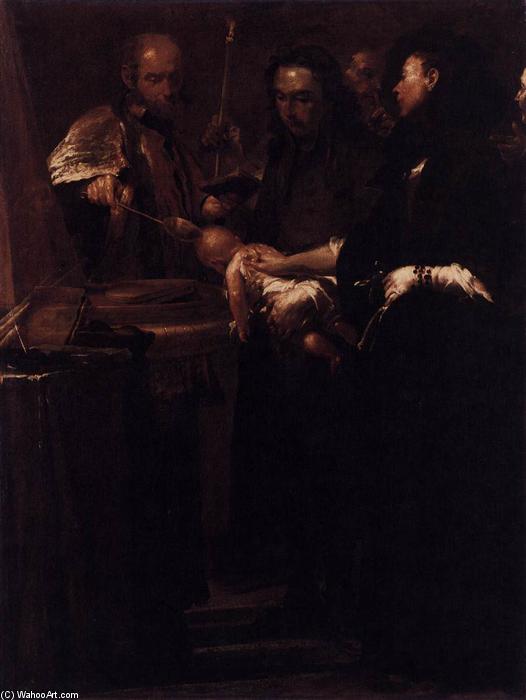
Giuseppe Maria Crespi's "Baptism," completed in 1712, isn’t merely a depiction of a religious ceremony; it’s a remarkably intimate portrait of human interaction and the subtle dramas unfolding within a seemingly ordinary scene. Housed at the Gemäldegalerie in Dresden, Germany, this oil on canvas offers a captivating glimpse into the world of 18th-century Bologna, revealing a painter who defied convention and prioritized capturing the essence of everyday life with an unparalleled sensitivity.
Crespi, nicknamed “Lo Spagnuolo” for his penchant for fashionable Spanish attire, was a revolutionary figure in Bolognese art. Unlike many of his contemporaries who flocked to Rome, he remained rooted in his hometown, forging a unique style that blended religious subjects with scenes of domestic life – a bold move at the time. "Baptism" exemplifies this approach; it’s not an idealized representation of faith but a grounded observation of a pivotal moment within a family and community. The painting immediately draws the eye to the central figures: a baby being baptized by a priest, framed against a backdrop of muted colors and carefully orchestrated light.
Composition and Symbolism: Layers of Meaning
The composition is masterfully balanced, guiding the viewer’s gaze through the scene with subtle yet effective techniques. The priest, positioned slightly to the left, holds aloft a holy book and a cross – potent symbols of his role in the sacrament. His gesture is deliberate, conveying both solemnity and compassion. Beside him stands a woman, likely the child's mother or another significant female figure, dressed in a simple black gown with elegant white gloves; her posture suggests quiet reverence and perhaps a touch of maternal concern. To the right, two men observe the ceremony, one holding a candle – a visual representation of illumination and purity – while the other consults a book, possibly referencing scripture or reflecting on the significance of the event.
Beyond these immediate figures, the background contributes significantly to the painting’s layered symbolism. The dark room, punctuated by a window allowing natural light to stream in, creates a dramatic contrast between light and shadow – a technique known as chiaroscuro. This isn't simply an aesthetic choice; it emphasizes the central figures, drawing attention to their emotions and actions while simultaneously hinting at the mysteries of faith. The architectural details, though understated, contribute to the overall sense of realism and grounding the scene in a specific time and place.
Technique and Artistic Style: A Masterclass in Observation
Crespi’s skill lies not just in his ability to depict figures accurately but in his remarkable capacity for observation. He captures the nuances of human expression – the furrowed brow, the gentle smile, the attentive gaze – with astonishing realism. The brushstrokes are loose and expressive, contributing to a sense of immediacy and spontaneity. The use of color is restrained, favoring muted tones that allow the figures and their emotions to take center stage. Crespi’s mastery of chiaroscuro further enhances this effect, creating a dynamic interplay between light and shadow that adds depth and drama to the scene.
Furthermore, the painting reflects the Baroque style prevalent in Bologna during the early 18th century – characterized by dramatic lighting, rich textures, and an emphasis on emotional intensity. However, Crespi departs from traditional Baroque conventions by focusing on everyday life rather than grand historical or mythological subjects. This shift marked a significant departure from established artistic norms and solidified his reputation as a groundbreaking artist.
A Window into the Soul: Emotional Resonance
"Baptism" is more than just a depiction of a religious ceremony; it’s a poignant meditation on family, faith, and the enduring mysteries of life. The painting's quiet intimacy invites viewers to contemplate the significance of this pivotal moment in a child’s life – a moment that marks not only their entry into the Christian community but also the beginning of a lifelong journey of faith and understanding. The subtle expressions of the figures, combined with Crespi’s masterful use of light and shadow, evoke a powerful sense of emotion—a blend of reverence, hope, and quiet joy. It's a testament to Crespi’s ability to capture the essence of human experience and transform it into a timeless work of art.
Korduvad küsimused
Kas teos „Baptism“, autor Giuseppe Maria Crespi kuulub avalikku omandisse?
Teos „Baptism“, autor Giuseppe Maria Crespi on lubaõiguslikult avalikus õiguses – selle autoriõigud onหมดunud. See staatus reguleerib teose pildi reprodüseerimise võimalusi.
Milline värv domineerib teose „Baptism“, autor Giuseppe Maria Crespi kompositsioonis?
Teose "Baptism" kõige silmapaistvam värv on Black (#0d080f). Dominantne värv on kasulik teose sobitamisel interjööriga.
Millised teemad teoses „Baptism“, autor Giuseppe Maria Crespi esile tõelve?
Teemad, mis teoses „Baptism“, autor Giuseppe Maria Crespi esinevad, hõlmavad religion, baptism, ceremony, spirituality, family, light, shadow, symbolism. Koos need kokkuvõtavad teose sisu.
Kunstniku elulugu
Boloogne originaal: Giuseppe Maria Crespi elu ja kunst
Giuseppe Maria Crespi, kallis nimi "Lo Spagnuolo" – Hispaan –, oli vapustav anomaalia Itaalia baroki maastikul. Kuna sündis Bolognas 1665. aastal, ei tulnud tema surnimärk pärit tema vereliinist, vaid eherast tihedalt istuvate riietete järele, mis olid tollal Hispaanias moodne – valik, mis viitas selle märkimata kunstniku pindal keemlevale iseseisvale vaimule. Crespi teekond algas traditsioonilise õpilaskoolitusega, esmalt Angelo Michele Toni ja hiljem Domenico Maria Canuti juures, omades Bologne maalikunstide alustalasid. Siiski tõrjus ta end Roma kütkatusest, isegi kui Carlo Maratti teda sinna kutsus, eelistades selle asemel oma teed luua – teed, mis lõpuks redefineeris žanrimaalid ja pakkus hämmastavalt intiimset vaadet igapäevaelule.Traditsioonidest lahkumine: uus visioon sünnib
Crespi kunstiline looming oli hämmastavalt mitmekülgne, hõlmades religioosne maaleeringuid, portreteid ja etsinguid, mis olid inspireeritud meisterlikestest nagu Rembrandt ja Salvator Rosa. Ometigi on ta tänapäeval kõige enam kuulustatud just oma žanriteemade eest – tavalistel tegevustel osalete inimeste kujutuste tõttu. See fookus märkas kõrvalekaldet valitsevatele akadeemilistele traditsioonidele, mis eelistasid ajaloolisi või müüdilisi teemasid. Ta ei olnud huvitatud suurevistest narratiividest ega idealiseeritud kujudest; selle asemel suunas Crespi tähelepanu oma ümber toimuvale elule – naistele, kes pesevvad nõudeid, peredele, kes jagavad toitu, ja lastele, kes mängivad. Need ei olnud pelgalt igapäevaelu esitused, vaid olid täidetud psühholoogilise sügavuse ja realisme, mida varem polnud nähtud. Tema stiili iseloomustas tegelik piiramine värvitoonis ja pintoonituses, kasutades nutikalt piiratud paletti, kuigi mõned kriitikud märkasid tema tehnikas tugeva füüsilisuse puudumist. See peenus aga aitas tõsta tema stseenide emotsionaalset mõju, tõmmates vaatajad sisse koduse elu vaiksetesse draamadesse.Seitse sakramenti ja püsiv mõju
Kuigi tema žanrimaalid tagasid talle igavene kuulsuse, ei tohiks üle vaadata ka Crespi laiemat kunstilist saavutust. Üks murdelik teos on *Seitse sakrament*, sekitar 1712. aastal kardina Ottoboni jaoks maaldud kangaside seeria. See ambitsioonikas projekt demonstreeris Crespi võimet käsitled keerulisi religioosse teemasid innovaatilise lähenemisega. Selle asemel, et kujutada piibliste sündmusi distantsetes ajaloolistes raamides, asetati need tema enda aja konteksti, sisaldades kaasaegseid isikuid ja asukohti. Tulemuseks oli seeria, mis tundus nii sügavalt vaimne kui ka sügavalt inimlik. Tema mõju ulatus üle Itaalia; ta õpetas kunstnikke nagu Giovanni Battista Piauste ja Pietro Longhi, kes viisid Veneetsias edasi tema pühendumust realismile ja žanrimaalide kunstile. Kuigi hilisemates aastates muutus ta üha eraklikum, pühendudes pärast oma naise surma 1722. aastal peamiselt religioossele tööle, jäi Crespi pärand uuendusmeelna kunstnikuna kindlaks. Talle anti isegi rüütlitiit paavst Benedict XIV poolt 1740. aastal, mis on tunnistus tema kunstilisele staatusele ja kultuurilisele olulisusele.Realismi ja intimiteedi pärand
Giuseppe Maria Crespi suri Bolognas 1747. aastal, jättes järele teose, mis edasi kõlab ka tänapäeva vaatajates. Ta oli inimliku looduse meistrallas, kes suutis märkimisväärse tundlikkusega tabada emotsioonide ja kogemuste peeneid nüansse. Tema maalid ei ole pelgalt ajaloolised artefaktid; need on aknad tavaliste inimeste elusse, pakkudes ajatut vaadet universaalsetele teemadele nagu armastus, kadunud, usku ja igapäevane eksistents. Lo Spagnuolo panus Itaalia kunstile peitub tema võimes tõsta triviaalne kunstilise olulisuse tasemele, tõestades, et ilu ja tähendus võib leida mitte ainult suurevistest jutustustest, vaid ka igapäevase elu vaiksetest hetkedest. Tema töö on võimas meeldetuletus inimeste pühendumusele vastupidavusele, ühendusele ja armule.Crespi maailma avastamine täna
Õnnigl on võimalused kokeeda Crespi kunstiline meistriklassi esimest käega rikkalikud. Tema teoseid saab leida prominentsetest muuseumidest nagu Dresdeni Gemäldegalerie Alte Meister, kus asub *Seitse sakrament*, ja Florentsi Museo dell'Opera di Santa Croce. Saadaval on arvukalt tema maalide reproduktsioone, mis võimaldab kunstihuvilistel tuua osa selle Bologne meistri visiost oma koju. Ressursid nagu OriginalUniqueArt.com pakuvad kõrgekvaliteedilisel tasemel käsitsi maaldud reproduktsioone, tagades, et Crespi pärand jätkab inspireerimist ja vaatajate võllemist põlvkondadeks. Lisateavet tema elulist ja kunstilisest arengust on võimalik leida ka Wikipediast ja Britannicaust.
Giuseppe Maria Crespi
1665 - 1747 , Italia
Lühikest infot
- Artistic Movement Or Style: Hilinen barokk
- Artists Or Movements Influenced By This Artist:
- Pietro Longhi
- G. B. Piazzetta
- Artists Who Influenced This Artist:
- Angelo Michele Toni
- Domenico Maria Canuti
- Date Of Birth: 14. märts 1665
- Date Of Death: 16. juuli 1747
- Full Name: Giuseppe Maria Crespi
- Nationality: Itaalia
- Notable Artworks:
- Seitse sakrament
- Pattundis Santa Maria Maddalena
- Ennetugi
- Naine pesemas nõude
- Place Of Birth: Bologna, Itaalia
Sarnased artiklid

The Enduring Legacy of Oil on Canvas: Technique, History & Aesthetic Impact
Explore the rich history & techniques of oil painting – from Renaissance masters to Impressionism. Discover pigments, layering methods, and why this timeless medium endures. Expert insights for artists & art enthusiasts.

Giuseppe Maria Crespi: Pioneering Genre Painting & the Bolognese Baroque
Explore the life & art of Giuseppe Maria Crespi, a pivotal Bolognese Baroque painter. Discover his groundbreaking genre scenes, religious works, and lasting influence on Italian art history. Learn more at OriginalUniqueArt.

The Dramatic Flourish: Exploring the Baroque Movement's Enduring Legacy in Art History
Explore the dramatic world of Baroque art! Discover iconic artists like Caravaggio & Rubens, defining techniques, and its lasting impact on art history. Expert insights for collectors & enthusiasts at OriginalUniqueArt.

Baroki draama ja luksus: Kuidas ajalooline elegants kaasaegsesse interjööri tuua
Avastage baroki maalide võlu OriginalUniqueArt'is! Käsitsi valmistatud reproduktsioonid, fotodest maalid ja ekspertkonsultatsioonid. Toome ajaloolise elegantsi Teie interjööri. Kvaliteet garanteeritud!

The Enduring Power of Painting: A Historical & Contemporary Exploration of Form and Emotion
Explore the rich history & enduring techniques of oil painting with OriginalUniqueArt. Discover masterpieces, learn about art collecting, and find authentic handmade reproductions crafted by skilled artists.