
 Vaata sisu
 Jaga teost
 Jaga
Jaga
 Detailid
 Õppekate juhend

 Laadi alla
 Sarnased teosed
 Röntgenuuring
 Slaidietendus
 Statistika
Violon Player
 Oil On Canvas
- WallArt
- Baroque Dutch Painting
 1653
1653- Renaissance
 32.0 x 20.0 cm
 Liechtenstein Museum
 Loe lähemalt
Giclée / Kunstiprint
Muuseumikvaliteediga giclée- või kangasprint kiire tootmisega ja paindlikud viimistlusvõimalused. ( Telli käsitsi maalitud reproduktsioon Ülemineku digitaalse pildi müügi kanalisse)




P118B €10

P118H €10

P118W €10

P438Z €10

P508JH €12

P508YH €12

P805H €10

P805Z €10

P919BZ €10

P919G €10

P919XJ €10

P959ZH €10

P968JZ €12

W106C €8

W218G €10

W218JH €8

W218Y €10

W307PJ €10

W316G €10

W316PJ €8

W316Y €10

W398PJ €8

W4111J €10

W500HY €15

W500JH €15

W692G €12

W849H €8

W940BG €15

W953PJ €8




Vali meie eelmääratud suurused, mis vastavad teose algupärastele proportsioonidele.

Type the width and the height you need, to fit your frame or your wall. A print can only be cut, never made bigger than the picture, so a size with a different shape loses a part of the image. We send you a digital mockup to approve before we print anything. The picture shown on this page does not show the real cut — only the mockup does.
Ülemaailmne tarne () 2 nädala jooksul, tavalise 4/5 nädala asemel. (14 oktoober)

Tasuta ekspresssaatmine üle maailma

Kõrgekvaliteediline lina-kangastest muld

Täielik transpordikindlustus

Tollimaksude tagastamise garantii

Värvitoime täpsuse garantii

100 päeva tagastusõigus (ainult defektide korral)

100% raha tagasi garantii

Hulgusoodustus
 Klaasivalik on saadaval ainult kuni 110 cm suuruses teostes

Violon Player
Giclée / Kunstiprint
Reproduktsiooni mõõtmed
-


Lõppsumma
€ 69
Gerrit Dou’s ‘Violon Player’: A Masterclass in Dutch Golden Age Detail
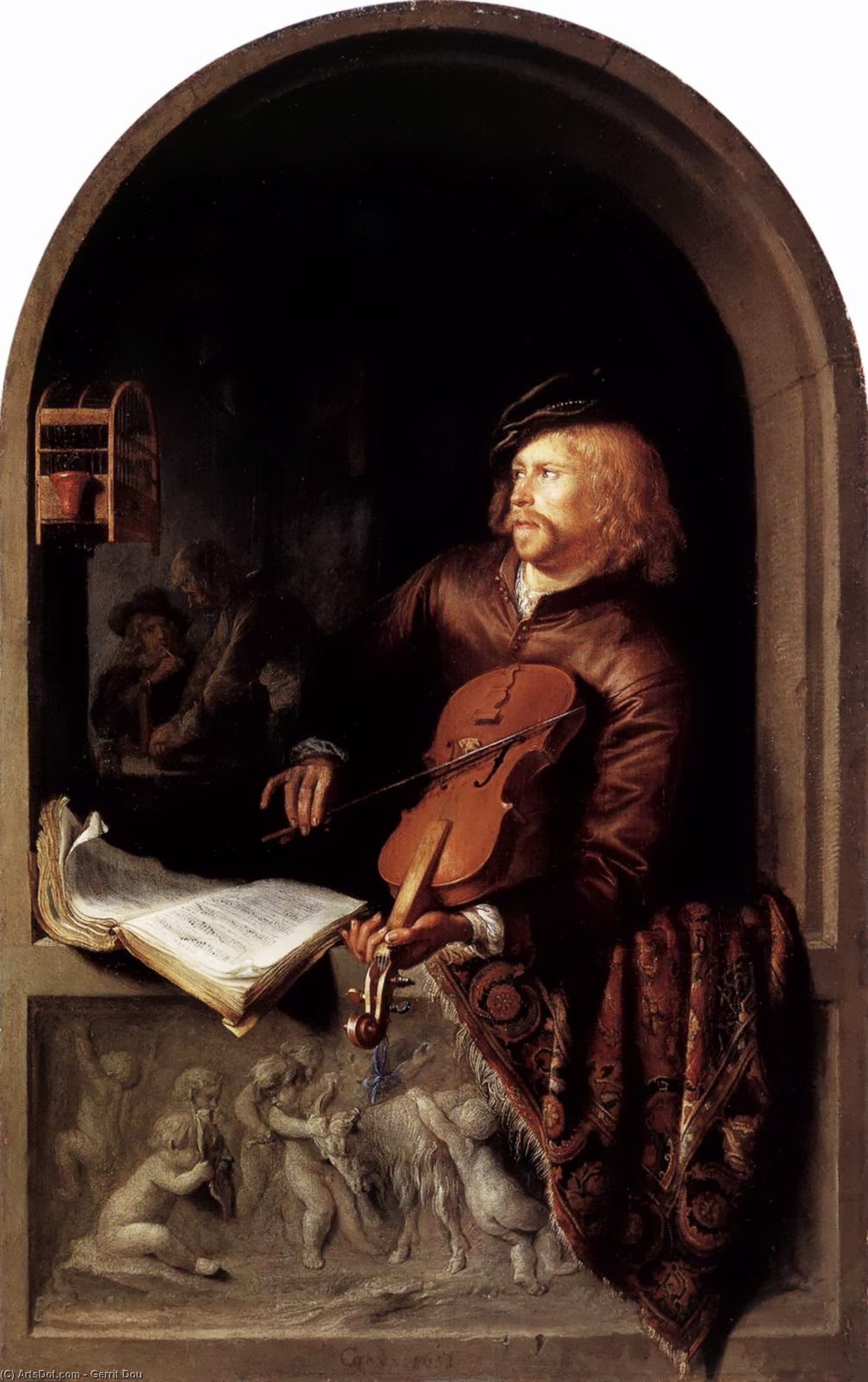
This exquisite hand-painted reproduction captures Gerrit Dou's remarkable ability to distill the essence of human experience into a single, intensely observed moment. Painted in 1653, “Violon Player” offers a poignant glimpse into the life of a musician during the Dutch Golden Age – a period defined by burgeoning commerce, artistic innovation, and a profound appreciation for leisure and refinement. The painting’s subject, a man absorbed in his violin, is rendered with an almost unsettling realism, inviting us to contemplate not just his actions but also his inner world.
- Subject & Composition: The central figure dominates the canvas, his posture suggesting both concentration and perhaps a touch of melancholy. The inclusion of indistinct figures in the background – likely members of his audience – adds depth to the scene without disrupting the focus on the musician himself. This careful composition is characteristic of Dou’s approach, prioritizing narrative suggestion over explicit storytelling.
- Style & Technique: Dou was a key figure within the Leiden Fijnschilders group, renowned for their meticulous attention to detail and mastery of *sfumato* – a technique that employs subtle gradations of light and shadow to create an atmospheric effect. Notice the incredibly detailed rendering of the violin’s varnish, the folds in the man's clothing, and the play of light on his face. This level of precision was exceptionally demanding, requiring hours of painstaking work.
Chiaroscuro and the Drama of Light
Gerrit Dou’s command of chiaroscuro – the dramatic use of light and dark – is perhaps the most striking element of “Violon Player.” He expertly manipulates light to create a sense of depth, volume, and emotional intensity. The soft glow illuminating the musician's face contrasts sharply with the darker recesses of the room, drawing our attention to his expression and intensifying the scene’s mood. This technique was particularly favored by Dou, reflecting his fascination with capturing fleeting moments of illumination – often seen in his candlelit night-scenes.
- Material & Craftsmanship: Each reproduction is created using traditional hand-painting techniques, employing archival-quality pigments and canvas to ensure lasting beauty. The meticulous brushwork and the rich color palette faithfully recreate Dou’s original vision, capturing the nuances of light and texture that are essential to his style.
Symbolism and Context
“Violon Player” transcends a simple portrait; it offers a window into 17th-century Dutch society. The musician represents a segment of the middle class, enjoying a moment of respite from their daily activities. The violin itself was a symbol of status and refinement during this era. Dou’s work reflects the growing importance of secular pursuits and leisure within the burgeoning merchant culture of Leiden. This painting aligns with the broader artistic trends of the Dutch Golden Age, where artists sought to capture not just physical likenesses but also the psychological states of their subjects.
- Historical Significance: Created in 1653, this work exemplifies Dou’s peak creative period. It provides a valuable insight into the artistic practices and aesthetic sensibilities of the Dutch Golden Age – a time when art flourished alongside economic prosperity and intellectual curiosity.
Perfect for Your Space
This stunning reproduction of Gerrit Dou's “Violon Player” is more than just a beautiful image; it’s an investment in timeless artistry. Its elegant composition, masterful technique, and evocative atmosphere make it a perfect addition to any interior space – from a formal salon to a contemporary living room. Bring the drama and sophistication of the Dutch Golden Age into your home with this exceptional hand-painted reproduction.
Küsimused ja vastused
Milline palett ja domineeriv värv määravad teose "Violon Player"?
Teoses „Violon Player“, autor Gerrit Dou on kasutatud Earthy värvipaletti, kus domineerib Black (#0c0506) värv.
Mille nimetatud või alternatiivsete nimed on Gerrit Dou?
Kunstnik Gerrit Dou tuntub ära ka nime all Gerard Dou, Da Gerrit Dou, Gerrit (Gerard) Dou, Gérard Dou, Gerrit Dou Van Leiden.
Mis on originaalteose „Violon Player“, autor Gerrit Dou tehnika ja suurus?
Teos "Violon Player" on valmistatud tehnika Oil On Canvas ja algses vormis mõõdetakse 32 x 20 cm.
Kunstniku elulugu
Varajane Elu Ja Koolkond Leidensis
Gerrit Dou, sündinud 7. aprillil 1613. aastal Leidensis Hollandis, oli kullakaaja hollandi maalikunstis silmapaistev figuur. Tema nimi on tihedalt seotud Leidensi peenmaalikoolkonnaga (*fijnschilders*), mis erines suuremate vormide ja dramaatiliste efektidega seotud teistest stiilidest. Dou isa, Jan Dou, oli kunstnik, kes algselt õpetas poega maalimise aluseid. Noore Gerritina näitas ta varakult andekust detaili täpsuses ning huvi valguse ja varju mängu vastu. Tema koolkonna eripära seisnes äärmiselt hoolikas töötluses, mis püüdis tabada iga väikseima detaili realistlikkusega. Leidensi kunstikoolkond oli tuntud oma intiimsete žanrisseenide ja *trompe l'oeil* efektidega, ning Dou sai selle traditsiooni oluliseks esindajaks. Tema varased teosed näitasid juba selget kalduvust igapäevaelu stseenidele, mis olid täis peent psühholoogilist mõistmist ja realistlikku detaili.Tehnikameister Ja Valguse Võlu
Dou maalikunstiline stiil on iseloomulik oma minutioosse ja keeruka lähenemisviisiga, keskendudes sageli žanrisseenidele ning *trompe l'oeil* nišimaalidele. Tema meisterlikkus *chiaroscuro*'s – valguse ja varju kasutamises – on eriti silmapaistev, nagu näiteks tema kuulsates ööseltsingutes küünlavalguses. See ainulaadne oskuste kombinatsioon viis Dou seostamiseni Leidensi peenmaalijatega. Ta ei piirdunud pelgalt reaalsuse kopeerimisega; ta püüdis tabada valguse ja varju nüansse, luues maalidele eriliselt elava atmosfääri. Tema teosed on täis sooja valgust, mis rõhutab objektide tekstuuri ja annab neile kolmemõõtmelise ilme. Dou oskas suurepäraselt mängida valguse ja varju kontrastidega, luues maalidel dramaatilisi efekte ja sügavust.Olulised Teosed Ja Kollektsioonid
Üks Dou tuntumaid teoseid on "Astronoom küünlavalguses", mis demonstreerib tema oskust tabada valguse peenusi ning detaili täpsust. See maal, mida saab vaadata OriginalUniqueArt.com lehel, on suurepärane näide Dou maalikunstilisest virtuoossusest. Leidensi kollektsioon New Yorgis sisaldab samuti Dou teoseid ning pakub põhjalikku ülevaadet tema loomingu kohta. Kollektsiooni kohta saab rohkem informatsiooni siin OriginalUniqueArt.com lehel. Tema žanrisseenid, portreed ja ööseltsingud on tuntud oma realistliku detaili ja psühholoogilise sügavuse poolest. Dou oskas tabada inimeste iseloomu ja emotsioone ning edastada need maalidel uskumatult elutruult.Mõju Ja Pärand
Dou mõju on näha tema õpilaste töödes, sealhulgas Frans van Mieris vanema ja Gabriel Metsu loomingus. Tema tööd on esindatud mitmetes muuseumides, nagu näiteks Museum Huis ten Bosch Haagis Hollandis, mis hoitakse muljetavaldavat kollektsiooni Euroopa kunstist 16.-18. sajandist. Dou maalikunstiline stiil mõjutas paljusid hollandi kunstnikke ning tema teosed on jätkuvalt inspiratsiooniallikaks ka tänapäeval. Tema realistlik detaili ja valguse kasutamine on muutnud ta üheks olulisimaks Hollandi kullakaaja maalikunstis.- Põhifaktid: * Sündinud: 7. aprillil 1613, Leiden, Holland * Surinut: 9. veebruaril 1675 * Olulised teosed: Astronoom küünlavalguses, žanrisseenid ja ööseltsingud * Mõjutas: Frans van Mieris vanem, Gabriel Metsu jt
- Soovitatud lugemist: * Gerrit (Gérard) Dou saidil OriginalUniqueArt.com * Hollandi kullakaaja maalikunst Vikipeedias
Järeldus
Gerrit (Gérard) Dou märkimisväärne panus Hollandi kullakaajas on jätnud kustumatu jälje kunstimaailma. Tema võluvad maalid, mis iseloomustavad keerukat detaili ja meisterlikku valguse kasutamist, jätkavad inspireerides kunstnikke ja kunstiarmastajaid tänapäevani. Tema teoste uurimiseks ning teiste silmapaistvate kunstnike tööde avastamiseks külastage OriginalUniqueArt.com lehte.
Gerrit Dou
1613 - 1675 , Eesti
Lühikest infot
- Artistic Movement Or Style: Fijnschilder
- Artists Or Movements Influenced By This Artist: ['Frans van Mieris the Elder']
- Artists Who Influenced This Artist: ['Rembrandt van Rijn']
- Date Of Birth: 7. aprill 1613
- Date Of Death: 9. veebruar 1675
- Full Name: Gerrit Dou
- Nationality: Hollandlane
- Notable Artworks:
- The Astronomer by Candlelight
- Portree vanad naisest
- Place Of Birth (City And Country): Leiden, Holland
Sarnased artiklid
Gerrit Dou: Intimacy & Light in the Dutch Golden Age
Explore the exquisite world of Gerrit Dou, a master of Dutch Golden Age painting. Discover his intimate genre scenes, signature use of light, and lasting legacy. Learn about collecting Dou's works & their value.

Hollandi Kuldaja Särgas Kunstipärit: 10 Meisterteost Sinu Koduks
Sukeldu Hollandi Kuldaja kunstivorme! Avasta 10 ikoonilist meistriteost – Rembrandt, Vermeer jt. - ning nende ajatu loojatööd. Leia inspiratsiooni interjöörile ja kaunista kodu OriginalUniqueArt.com kvaliteetsete reproduktsioonidega. Uuri kollektsiooni!

Golden Light & Dutch Skies: The Timeless Magic of Dutch Golden Age Landscapes
Discover the breathtaking beauty of Dutch Golden Age landscapes. Explore the mastery of light, chiaroscuro, and 17th-century realism through an expert art history lens, celebrating the enduring legacy of the Dutch Masters for discerning collectors and art lovers.

Golden Age Reflections: Dutch Baroque Painting & Cultural Innovation
Explore the Dutch Golden Age of painting! Discover key artists like Vermeer & ter Borch, their innovative techniques, and the rich cultural context behind these Baroque masterpieces. Learn about collecting & appreciating this iconic art period.
Illuminating Realism: Exploring the Dutch Golden Age of Painting (1600-1700)
Explore the Dutch Golden Age of painting (1600-1700) with OriginalUniqueArt. Discover Rembrandt, Vermeer & other masters. Learn about techniques, history & find museum-quality reproductions.

