

 Vaata sisu
 Jaga teost
 Jaga
Jaga
 Detailid
 Õppekate juhend

 Laadi alla
 Sarnased teosed
 Röntgenuuring
 Slaidietendus
 Statistika
Astronomer
 Oil On Canvas
- WallArt
- Baroque
 1650
1650 27.0 x 29.0 cm
 Stedelijk Museum De Lakenhal
 Loe lähemalt
Käsitsi valmistatud õlimaalireproduktsioon
Meie kunstnike poolt tellimusel valmistatud käsitsi maalitud õli-kainaste teos teie soovitud suuruses ja raamis. ( Lülita trükkitoodetele Ülemineku digitaalse pildi müügi kanalisse)




P118B €10

P118H €10

P118W €10

P438Z €10

P508JH €12

P508YH €12

P805H €10

P805Z €10

P919BZ €10

P919G €10

P919XJ €10

P959ZH €10

P968JZ €12

W106C €8

W218G €10

W218JH €8

W218Y €10

W307PJ €10

W316G €10

W316PJ €8

W316Y €10

W398PJ €8

W4111J €10

W500HY €15

W500JH €15

W692G €12

W849H €8

W940BG €15

W953PJ €8




Vali meie eelmääratud suurused, mis vastavad teose algupärastele proportsioonidele.

Sa võite sisestada oma mõõtmed konkreetse raami või ruumi sobivuse tagamiseks. Kui teie valitud suurus ei vasta originaalpildi proportsioonidele, siis kärvime kunstiteost või laiendame maali täiendavate käsitsi maalitud elementidega. Enne tootmise algust saadetakse teile heakskiitmiseks digitaalne eelvaade.
Palun pidage meeles, et ekraanil kuvatav eelvaade ei kajasta tegelikku kärpimist või laiendamist. Ainult eelvaade näitab täpselt lõplikku kompositsiooni.
Kuigi on saadaval kohandatud suurused, soovitame originaalproportsioonide säilimiseks valida mõõdud eelmääratletud nimekirjast.
Pärast tellimust saadab OriginalUniqueArt.com meeskond kliendile e-posti juhised ning esitab eelvaate kavandi
Maailmline tarne 3–4 nädala jooksul tavalise 5 nädala asemel. (14 oktoober). Kvaliteedis kompromisse ei tehta.

Tasuta ekspresssaatmine üle maailma

Kõrgekvaliteediline lina-kangastest muld

Täielik transpordikindlustus

Tollimaksude tagastamise garantii

Värvitoime täpsuse garantii

100 päeva tagastusõigus (ainult defektide korral)

100% raha tagasi garantii

Hulgusoodustus
 Klaasivalik on saadaval ainult kuni 110 cm suuruses teostes

Astronomer
Reproduktsiooni materjal
Reproduktsiooni mõõtmed
-


Lõppsumma
€ 260
The Astronomer’s Quiet Reverie: Gerrit Dou's Baroque Masterpiece
Gerrit Dou’s “Astronomer by Candlelight,” painted around 1665, isn’t merely a portrait; it’s a meticulously crafted window into the contemplative heart of the Dutch Golden Age. The painting immediately draws you in with its dramatic chiaroscuro – the stark contrast between light and shadow – reminiscent of Caravaggio but imbued with Dou's uniquely subtle touch. It depicts an elderly scholar, likely an alchemist or astronomer, deeply engrossed in his celestial globe, illuminated by a single, flickering candle. This isn’t a scene of frenetic activity; rather, it exudes a profound sense of quiet contemplation, inviting the viewer to share in the man's intellectual journey.
Dou was a master of “fijnschilder” painting – a technique characterized by painstaking detail and an almost photographic realism. He achieved this through countless layers of thin glazes applied over time, creating surfaces that shimmer with an incredible depth and luminosity. Notice the delicate rendering of the scholar’s hands, gripping the globe with a precise yet gentle touch; the subtle variations in texture across his clothing, suggesting both age and wealth; and the meticulous depiction of the candle flame itself – not as a simple source of light, but as a dynamic element casting intricate patterns on the surrounding objects. This level of detail speaks to Dou’s dedication and his mastery of oil paint.
A Window into 17th-Century Knowledge
The painting is firmly rooted in the intellectual ferment of the Dutch Golden Age – a period marked by burgeoning scientific inquiry, exploration, and a fascination with both classical learning and emerging discoveries. The celestial globe itself represents more than just an instrument for astronomical observation; it symbolizes humanity’s relentless quest to understand the cosmos and our place within it. The inclusion of books and instruments—a sextant, a compass, and various measuring tools—further emphasizes this pursuit of knowledge. It's a scene that echoes the spirit of the Renaissance, where a renewed interest in classical texts and scientific investigation fueled an era of unprecedented intellectual growth.
Furthermore, the scholar’s attire and surroundings hint at his social standing – he is clearly a man of means, comfortable enough to dedicate himself to scholarly pursuits. The arched window behind him, bathed in shadow, suggests a private study, a space for solitary reflection and intense concentration. This intimate setting reinforces the painting's theme of quiet contemplation and intellectual exploration.
Symbolism and Emotional Resonance
Beyond its historical context, “Astronomer by Candlelight” is rich in symbolic meaning. The candle, as a source of both illumination and potential danger (fire), represents enlightenment and revelation, but also the fragility of knowledge. The scholar’s aged face suggests wisdom gained through years of study, yet there's also an element of melancholy – a recognition of the vastness of the universe and perhaps the limitations of human understanding. The globe itself is a potent symbol of ambition and the desire to map and comprehend the unknown.
The painting’s emotional impact is profoundly subtle yet deeply affecting. It doesn't shout for attention; instead, it invites viewers to pause, observe, and reflect on their own relationship with knowledge, time, and the mysteries of existence. The quiet intensity of the scene creates a sense of intimacy, drawing us into the scholar’s world and allowing us to share in his contemplative gaze.
A Timeless Masterpiece for Collectors and Designers
Reproductions of “Astronomer by Candlelight” offer a remarkable opportunity to bring this exquisite Baroque masterpiece into any setting. The painting's rich colors, intricate details, and evocative atmosphere will add a touch of intellectual sophistication and timeless beauty to your home or office. Consider framing the reproduction in a dark wood frame to further enhance its dramatic effect, reminiscent of the original’s presentation. Its ability to evoke contemplation makes it an ideal addition to libraries, study spaces, or any room where one seeks inspiration and quiet reflection.
Küsimused ja vastused
Kui suur on originaalteos "Astronomer"?
Teose „Astronomer“, autor Gerrit Dou registreeritud mõõdud on 27 x 29 cm. Reproduktsioone saab tellida muudes mõõdus, säilitades samad proportsioonid.
Mis tüüpi teos on „Astronomer“, autor Gerrit Dou?
"Astronomer" on WallArt teos.
Kuidas teose "Astronomer" stiil seotub selle looja ajaga?
Teos "Astronomer" kuulub Baroque suunale ning selle looja tegutses Varajärgne modernne ajastu ajastul.
Kas saan näha teose „Astronomer“, autor Gerrit Dou röntgenpilti?
Teose „Astronomer“, autor Gerrit Dou Röntgenkiirgus leht on interaktiivne vaatur, mis võimaldab liikuda läbi teose üheksateist optilise kihti, sealhulgas röntgenlaadunäoga vaadet.
Kuidas teos "Astronomer" sobitub artisti Gerrit Dou teemade ja stiiliga?
Teos "Astronomer" jagab koos Gerrit Dou teistega Baroque stiili ja korduvaid teemasid: candlelit night scenes, genre portraiture focus, masterful detail & polish, rembrandt's chiaroscuro, dutch golden age detail, scientific observation, knowledge & enlightenment, humanist pursuit.
Kuhu kohta on teose "Astronomer" Landscape formaat soovitatav paigutada?
Teose „Astronomer“, autor Gerrit Dou Landscape formaat on soovitatav kasutada ruumis Living Room. Formaat ja ruum aitavad koos otsustada reproduktsiooni paigutamise kohta.
Kes lõi teose "Astronomer" ja millal?
Teose "Astronomer" on loonud Gerrit Dou aastal 1650.
Millist kontrasti näitab teos „Astronomer“, autor Gerrit Dou?
Teose „Astronomer“, autor Gerrit Dou kontrastivaimustus on Gentle.
Kunstniku elulugu
Varajane Elu Ja Koolkond Leidensis
Gerrit Dou, sündinud 7. aprillil 1613. aastal Leidensis Hollandis, oli kullakaaja hollandi maalikunstis silmapaistev figuur. Tema nimi on tihedalt seotud Leidensi peenmaalikoolkonnaga (*fijnschilders*), mis erines suuremate vormide ja dramaatiliste efektidega seotud teistest stiilidest. Dou isa, Jan Dou, oli kunstnik, kes algselt õpetas poega maalimise aluseid. Noore Gerritina näitas ta varakult andekust detaili täpsuses ning huvi valguse ja varju mängu vastu. Tema koolkonna eripära seisnes äärmiselt hoolikas töötluses, mis püüdis tabada iga väikseima detaili realistlikkusega. Leidensi kunstikoolkond oli tuntud oma intiimsete žanrisseenide ja *trompe l'oeil* efektidega, ning Dou sai selle traditsiooni oluliseks esindajaks. Tema varased teosed näitasid juba selget kalduvust igapäevaelu stseenidele, mis olid täis peent psühholoogilist mõistmist ja realistlikku detaili.Tehnikameister Ja Valguse Võlu
Dou maalikunstiline stiil on iseloomulik oma minutioosse ja keeruka lähenemisviisiga, keskendudes sageli žanrisseenidele ning *trompe l'oeil* nišimaalidele. Tema meisterlikkus *chiaroscuro*'s – valguse ja varju kasutamises – on eriti silmapaistev, nagu näiteks tema kuulsates ööseltsingutes küünlavalguses. See ainulaadne oskuste kombinatsioon viis Dou seostamiseni Leidensi peenmaalijatega. Ta ei piirdunud pelgalt reaalsuse kopeerimisega; ta püüdis tabada valguse ja varju nüansse, luues maalidele eriliselt elava atmosfääri. Tema teosed on täis sooja valgust, mis rõhutab objektide tekstuuri ja annab neile kolmemõõtmelise ilme. Dou oskas suurepäraselt mängida valguse ja varju kontrastidega, luues maalidel dramaatilisi efekte ja sügavust.Olulised Teosed Ja Kollektsioonid
Üks Dou tuntumaid teoseid on "Astronoom küünlavalguses", mis demonstreerib tema oskust tabada valguse peenusi ning detaili täpsust. See maal, mida saab vaadata OriginalUniqueArt.com lehel, on suurepärane näide Dou maalikunstilisest virtuoossusest. Leidensi kollektsioon New Yorgis sisaldab samuti Dou teoseid ning pakub põhjalikku ülevaadet tema loomingu kohta. Kollektsiooni kohta saab rohkem informatsiooni siin OriginalUniqueArt.com lehel. Tema žanrisseenid, portreed ja ööseltsingud on tuntud oma realistliku detaili ja psühholoogilise sügavuse poolest. Dou oskas tabada inimeste iseloomu ja emotsioone ning edastada need maalidel uskumatult elutruult.Mõju Ja Pärand
Dou mõju on näha tema õpilaste töödes, sealhulgas Frans van Mieris vanema ja Gabriel Metsu loomingus. Tema tööd on esindatud mitmetes muuseumides, nagu näiteks Museum Huis ten Bosch Haagis Hollandis, mis hoitakse muljetavaldavat kollektsiooni Euroopa kunstist 16.-18. sajandist. Dou maalikunstiline stiil mõjutas paljusid hollandi kunstnikke ning tema teosed on jätkuvalt inspiratsiooniallikaks ka tänapäeval. Tema realistlik detaili ja valguse kasutamine on muutnud ta üheks olulisimaks Hollandi kullakaaja maalikunstis.- Põhifaktid: * Sündinud: 7. aprillil 1613, Leiden, Holland * Surinut: 9. veebruaril 1675 * Olulised teosed: Astronoom küünlavalguses, žanrisseenid ja ööseltsingud * Mõjutas: Frans van Mieris vanem, Gabriel Metsu jt
- Soovitatud lugemist: * Gerrit (Gérard) Dou saidil OriginalUniqueArt.com * Hollandi kullakaaja maalikunst Vikipeedias
Järeldus
Gerrit (Gérard) Dou märkimisväärne panus Hollandi kullakaajas on jätnud kustumatu jälje kunstimaailma. Tema võluvad maalid, mis iseloomustavad keerukat detaili ja meisterlikku valguse kasutamist, jätkavad inspireerides kunstnikke ja kunstiarmastajaid tänapäevani. Tema teoste uurimiseks ning teiste silmapaistvate kunstnike tööde avastamiseks külastage OriginalUniqueArt.com lehte.
Gerrit Dou
1613 - 1675 , Eesti
Lühikest infot
- Artistic Movement Or Style: Fijnschilder
- Artists Or Movements Influenced By This Artist: ['Frans van Mieris the Elder']
- Artists Who Influenced This Artist: ['Rembrandt van Rijn']
- Date Of Birth: 7. aprill 1613
- Date Of Death: 9. veebruar 1675
- Full Name: Gerrit Dou
- Nationality: Hollandlane
- Notable Artworks:
- The Astronomer by Candlelight
- Portree vanad naisest
- Place Of Birth (City And Country): Leiden, Holland
Sarnased artiklid

Golden Age Reflections: Dutch Baroque Painting & Cultural Innovation
Explore the Dutch Golden Age of painting! Discover key artists like Vermeer & ter Borch, their innovative techniques, and the rich cultural context behind these Baroque masterpieces. Learn about collecting & appreciating this iconic art period.
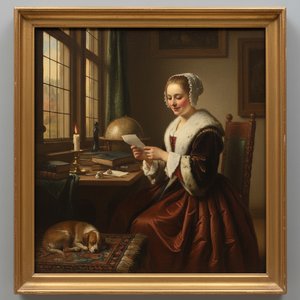
Gerrit Dou: Intimacy & Light in the Dutch Golden Age
Explore the exquisite world of Gerrit Dou, a master of Dutch Golden Age painting. Discover his intimate genre scenes, signature use of light, and lasting legacy. Learn about collecting Dou's works & their value.
Illuminating Realism: Exploring the Dutch Golden Age of Painting (1600-1700)
Explore the Dutch Golden Age of painting (1600-1700) with OriginalUniqueArt. Discover Rembrandt, Vermeer & other masters. Learn about techniques, history & find museum-quality reproductions.

Hollandi Kuldaja Särgas Kunstipärit: 10 Meisterteost Sinu Koduks
Sukeldu Hollandi Kuldaja kunstivorme! Avasta 10 ikoonilist meistriteost – Rembrandt, Vermeer jt. - ning nende ajatu loojatööd. Leia inspiratsiooni interjöörile ja kaunista kodu OriginalUniqueArt.com kvaliteetsete reproduktsioonidega. Uuri kollektsiooni!

Golden Light & Dutch Skies: The Timeless Magic of Dutch Golden Age Landscapes
Discover the breathtaking beauty of Dutch Golden Age landscapes. Explore the mastery of light, chiaroscuro, and 17th-century realism through an expert art history lens, celebrating the enduring legacy of the Dutch Masters for discerning collectors and art lovers.

