 Eelvaade
 Saada
Saada Jaga
Jaga
 Teave teose kohta
 Juhend

 Laadi alla
 Sarnased teosed
 Röntgenuuring
 Slaidietendus
 KÜSIMUSED JA VASTUSID
 Statistika
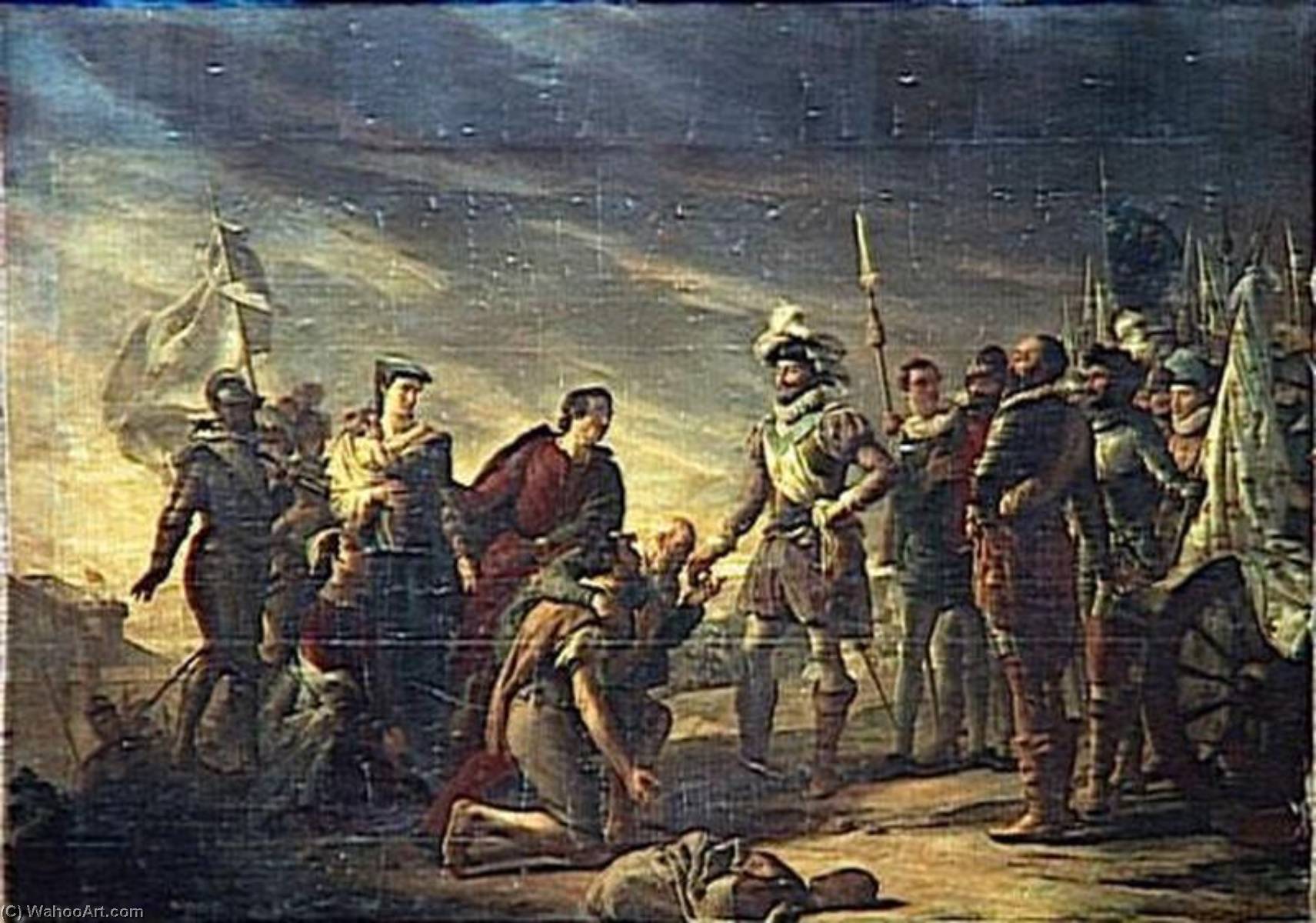
HENRI IV DEVANT PARIS ASSIEGE.AOUT 1590
 Loe lähemalt
Giclée / Kunstiprint
Muuseumikvaliteediga giclée- või kangasprint kiire tootmisega ja paindlikud viimistlusvõimalused. ( Osta käsitsi maalatud teos Lülita digitaalse pildi juurde)




































Vali meie eelmääratud suurused, mis vastavad teose algupärastele proportsioonidele.

Sisestage vajalik laius ja kõrgus, et see sobiks teie raamile või seinale. Trükki saab ainult lõigata, seda ei saa kunagi pildist suuremaks teha, seega ka erineva mustega suurus kaotab osa pildist. Enne trükkimist saadame teile kinnitamiseks digitaalse näidisprojektsiooni. Sellel lehel näidatud pilt ei kujuta reaalset lõiget — seda näitab ainult näidisprojektsioon.
Ülemaailmne tarne () 2 nädala jooksul, tavalise 4/5 nädala asemel. (8 november)

Tasuta ekspresssaatmine üle maailma

Kõrgekvaliteediline lina-kangas

Täielik transpordikindlustus

Tollimaksude tagastamise garantii

Värvitoime täpsuse garantii

100 päeva tagastusõigus (ainult valmistusdefektide korral)

100% raha tagasi garantii

Hulgusoodustus
 Klaasivalik on saadaval ainult kuni 110 cm suuruses teostes

HENRI IV DEVANT PARIS ASSIEGE.AOUT 1590
Giclée / Kunstiprint
Reproduktsiooni suurus
-


Koguhind
€ 72
Kunstniku elulugu
The Apprentice of Grandeur
Born into the burgeoning energy of late 18th-century Paris, Marie-Georges Louis Rouget was destined to become a silent architect of visual history. His journey began within the prestigious halls of the École des Beaux-Arts, where he first learned the rigors of classical form under masters such as Jean-Victor Carrier Sabre and Alexandre François Bouchardy. Yet, it was his entry into the legendary atelier of Jacques-Louis David in 1797 that would irrevocably alter the course of his life and art. In this crucible of Neoclassicism, Rouget did not merely learn to paint; he learned to breathe the very spirit of an era. As David’s most trusted assistant, he became a vital conduit for the master's revolutionary vision, absorbing a technique defined by dramatic lighting, idealized anatomy, and a profound commitment to heroic narrative. This formative period instilled in him an unwavering dedication to portraying monumental historical events with a sense of scale and conviction that would define his entire career.A Canvas of Empire
As Napoleon Bonaparte ascended the throne, Rouget’s brush became an instrument of imperial grandeur and historical record. His career was inextricably woven into the fabric of the First Empire, earning him the evocative reputation as the painter of Napoleon. This was not a role of mere imitation, but one of profound creative symbiosis between student and master. Working alongside David, Rouget contributed to some of the most iconic imagery of the age, including meticulously crafted interpretations of Bonaparte at the Grand Saint Bernard and the monumental The Coronation of Napoleon. His work captured the tension between the weight of history and the soaring ambition of a single man, utilizing a palette of deep blues, regal reds, and earthen tones to evoke a sense of permanence and power. Through his hands, the fleeting triumphs of the battlefield and the political maneuvers of the court were transformed into eternal monuments of oil and canvas, much of which eventually adorned the hallowed halls of Versailles.The Legacy of Neoclassical Precision
Beyond the sweeping historical panoramas, Rouget found his greatest expression in the intimate dignity of portraiture. His ability to capture the essence of the era's leading figures—from military commanders like François Chasseloup Laubat to the quiet authority of the French elite—demonstrated a mastery of Neoclassical realism. In these works, one finds an exquisite attention to texture and light; the subtle sheen of gold embroidery, the heavy drape of a uniform, and the soft, diffused glow that sculpts a subject's features are all rendered with breathtaking precision. While he may not have shared the singular, household fame of David or Ingres, Rouget’s presence in the annals of French art is undeniable. His legacy remains a testament to an age where art served as the ultimate mirror to human ambition, leaving behind a visual lexicon of strength, formality, and grace that continues to resonate with the spirit of the Napoleonic era.
Georges Rouget
1783 - 1869
Lühikest infot
- Full Name: Georges Rouget
- Nationality: French
- Date Of Birth: 1783
- Date Of Death: 1869
- Place Of Birth: Paris, France
- Notable Artworks:
- Marriage of Napoleon and Marie Louise
- Cupid pleading Venus to forgive Psyche
- Leonidas at Thermopylae
- Artistic Movement Or Style: Neoclassical
- Artists Who Influenced This Artist: David
- Artists Or Movements Influenced By This Artist: Versailles
Sarnased artiklid
Henri Martin: A Synthesis of Impressionism & Symbolism in the French Landscape Tradition
Explore the captivating world of Henri Martin, a French Post-Impressionist bridging Impressionism & Symbolism. Discover his unique style, influential landscapes, and lasting legacy with OriginalUniqueArt.

Masterpieces of Grandeur: The Top 25 Artworks by Paolo Veronese
Step into the opulence of the Venetian Renaissance with our curated guide to the top 25 Paolo Veronese masterpieces. Explore legendary tales of color, drama, and grandeur through museum-quality art reproductions for your collection. Discover all masterpieces on OriginalUniqueArt.com.

25 Iconic Masterpieces by Henri de Toulouse-Lautrec: The Soul of Montmartre
Step into the vibrant nightlife of Montmartre with our curated guide to the top 25 Henri de Toulouse-Lautrec masterpieces. Explore the soul of Post-Impressionism through iconic posters and paintings. Find museum-quality reproductions for your decor at OriginalUniqueArt.com. Explore the full collection online.

Masterpieces of Grandeur: The Top 25 Artworks by Paolo Veronese
Step into the opulence of the Venetian Renaissance with our curated guide to the top 25 Paolo Veronese masterpieces. From grand feasts to luminous colors, explore the stories behind these timeless icons and find museum-quality reproductions. Discover all masterpieces on OriginalUniqueArt.com.
Léon Bakst: A Master of Decadence and the Ballet Russes' Visual Revolution
Explore the captivating world of Léon Bakst, master designer of the Ballets Russes. Discover his opulent costumes, revolutionary stagecraft & lasting influence on art and design. Learn about Diaghilev's vision and Bakst’s iconic works.
