
 Eelvaade
 Saada
Saada Jaga
Jaga
 Teave teose kohta

 Laadi alla
 Sarnased teosed
 Röntgenuuring
 Slaidietendus
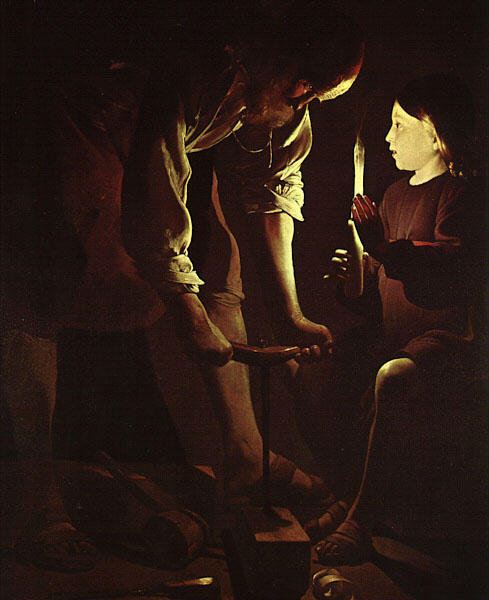
Joseph the Carpenter


 Loe lähemalt
Käsitsi valmistatud õlimaalireproduktsioon
Meie kunstnike poolt tellimusel valmistatud käsitsi maalitud õli-kainaste teos teie soovitud suuruses ja raamis. ( Lülita trükile Vaata pilti)




P118B $10

P118H $10

P118W $10

P438Z $10

P508JH $12

P508YH $12

P805H $10

P805Z $10

P919BZ $10

P919G $10

P919XJ $10

P959ZH $10

P968JZ $12

W106C $8

W218G $10

W218JH $8

W218Y $10

W307PJ $10

W316G $10

W316PJ $8

W316Y $10

W398PJ $8

W4111J $10

W500HY $15

W500JH $15

W692G $12

W849H $8

W940BG $15

W953PJ $8




Vali meie eelmääratud suurused, mis vastavad teose algupärastele proportsioonidele.

Sa võite sisestada oma mõõtmed konkreetse raami või ruumi sobivuse tagamiseks. Kui teie valitud suurus ei vasta originaalpildi proportsioonidele, siis kärvime kunstiteost või laiendame maali täiendavate käsitsi maalitud elementidega. Enne tootmise algust saadetakse teile heakskiitmiseks digitaalne eelvaade.
Palun pidage meeles, et ekraanil kuvatav eelvaade ei kajasta tegelikku kärpimist või laiendamist. Ainult eelvaade näitab täpselt lõplikku kompositsiooni.
Kuigi on saadaval kohandatud suurused, soovitame originaalproportsioonide säilimiseks valida mõõdud eelmääratletud nimekirjast.
Pärast tellimust saadab OriginalUniqueArt.com meeskond kliendile e-posti juhised ning esitab eelvaate kavandi.
Maailmline tarne 3–4 nädala jooksul tavalise 5 nädala asemel. (7 august). Kvaliteedis kompromisse ei tehta.

Tasuta ekspresssaatmine üle maailma

Kõrgekvaliteediline linakangas

Täielik transpordikindlustus

Tollimaksude tagastamise garantii

Värvitoime täpsuse garantii

60-päevane tagastusõig: ainult tootmisdefektide korral

100% raha tagasi garantii

Hulgusoodustus
 Klaasivalik on saadaval ainult suuruses kuni 110 cm

Joseph the Carpenter
Reproduktsiooni tehnika
Reproduktsiooni suurus
-


Kogusumma
$ 300
Teose kirjeldus
A Quiet Moment of Divine Foreshadowing
Joseph the Carpenter by Georges de La Tour is a profoundly moving depiction of domestic tranquility imbued with subtle religious symbolism. Created around 1642, this oil painting offers a glimpse into the humble workshop of Saint Joseph, presenting a tender scene of mentorship and foreshadowing. The composition centers on Joseph diligently working as a carpenter, while the young Jesus attentively holds a candle, illuminating his earthly father’s task.Masterful Tenebrism & Baroque Style
De La Tour was a leading figure in French Baroque painting, deeply influenced by Caravaggio's dramatic use of light and shadow – a technique known as *tenebrism*. This is powerfully evident here. The scene unfolds within a darkened space, with a single candle providing the primary source of illumination. This stark contrast isn’t merely stylistic; it directs our gaze to the key elements: Joseph’s focused labor, Jesus's gentle offering, and the tools of the trade.- Style: Baroque, Tenebrism
- Technique: Oil on canvas with meticulous layering (glazes) to achieve luminous effects despite the darkness.
- Composition: Intimate and focused, drawing the viewer into a quiet, personal moment.
Symbolism Woven in Wood & Light
Beyond its surface beauty, the painting is rich with symbolic meaning. The auger Joseph uses to drill wood subtly echoes the shape of the cross – a poignant prefiguration of Christ’s crucifixion. The arrangement of the wood itself, laid across the floor, further reinforces this foreshadowing. Jesus holding the candle isn't simply an act of assistance; it represents him as the “Light of the World,” a central tenet of Christian belief. His raised hand can be interpreted as a gesture of blessing or benediction.- The Auger: Symbolizes Christ’s future sacrifice on the cross.
- Candlelight: Represents Jesus as the “Light of the World.”
- Jesus' Gesture: Signifies blessing, acceptance of his destiny, and divine grace.
Historical Context & Artistic Legacy
Georges de La Tour (1593-1652) lived during a period of religious revival in Lorraine. His work reflects this piety, moving increasingly towards purely religious subjects throughout his career. He was appointed “Painter to the King” in 1638, demonstrating his rising status and influence. Interestingly, La Tour’s work fell into relative obscurity after his death, only being rediscovered in the early 20th century. His masterful use of light and shadow continues to inspire artists today.Emotional Resonance & Interior Appeal
Joseph the Carpenter evokes a sense of quiet contemplation, humility, and familial love. The painting’s subdued palette and intimate scale create an atmosphere of serenity and reverence. Its dramatic lighting and compelling narrative make it a captivating focal point for any space. This artwork would be particularly well-suited to interiors seeking a touch of Old World elegance, spiritual depth, or a sophisticated artistic statement. A high-quality reproduction captures the nuances of La Tour’s technique, bringing this timeless masterpiece into your home.Kunstniku elulugu
Georges de La Tour (1593–1652): French Baroque Master of Dramatic Chiaroscuro & Tenebrism
Georges de La Tour, a name that resonates with the hushed reverence reserved for masters of light and shadow, remains one of the most compelling figures of the French Baroque. Born in 1593 in Vic-sur-Seille, Lorraine—a region caught between the Habsburg Empire and burgeoning French influence—his life unfolded against a backdrop of fervent religious conviction and turbulent political upheaval. While precise details surrounding his formative years remain elusive—scholars speculate about potential journeys to Italy or apprenticeships with local artists like Jacques Bellange—the seeds of his artistic vision were undeniably sown in this environment, nurtured by the prevailing cultural currents of his time.
Early Life & Artistic Influences
Georges de La Tour’s parents were Jean and Sybille de La Tour. Jean was a baker, while Sybille’s lineage hinted at noble connections—a subtle element perhaps reflected in the dignified composure that characterizes his oeuvre. Despite lacking formal artistic training as we understand it today, De La Tour absorbed influences from various sources, shaping his distinctive style. Notably, Caravaggio—the Florentine painter who revolutionized Baroque art with his visceral realism and emotionally charged compositions—served as a pivotal mentor. However, De La Tour didn’t merely emulate Caravaggio; he skillfully filtered Caravaggism through the lens of Dutch Caravaggisti—particularly those from Utrecht School—resulting in a style that was both powerfully dramatic and exquisitely restrained.
The Style of Dramatic Chiaroscuro
De La Tour's artistic hallmark is undoubtedly his masterful manipulation of chiaroscuro—the stark contrast between light and dark—a technique perfected by Caravaggio himself. Unlike many contemporaries who embraced flamboyant ornamentation and vibrant color palettes, De La Tour opted for a muted palette dominated by earthy tones—browns, ochres, and siennas—creating scenes imbued with an atmosphere of solemn contemplation. His early works demonstrate a heightened dynamism and vibrancy, reflecting the influence of Utrecht School painters who championed Caravaggism’s uncompromising realism.
Major Works & Recurring Themes
The centerpiece of De La Tour's artistic legacy is undoubtedly his series of candlelit interiors—scenes depicting biblical narratives illuminated by flickering candlelight. These paintings aren’t merely depictions of religious events; they are meditations on faith, doubt, and the human condition. Consider *The Fortune-Teller*, painted around 1630—a genre scene rendered with meticulous observation and arresting lighting—where a young boy is absorbed in an activity that speaks to the quiet dignity of everyday life. Similarly, *Adoration of the Shepherds*, created circa 1640, exemplifies De La Tour’s ability to infuse a traditional subject with profound emotional resonance. The figures are not idealized or heroic; they are ordinary people—humbled by the presence of divine grace—rendered with breathtaking subtlety and realism.
Rediscovery & Enduring Significance
Despite achieving recognition during his lifetime—he was appointed “Painter to the King” by Louis XIII in 1638—De La Tour’s work languished in obscurity for centuries, largely due to misattribution. It wasn't until the early 20th century that scholars like Hermann Voss spearheaded a concerted effort to reassess his oeuvre—revealing an artist of extraordinary originality and depth whose influence extended far beyond his own era. De La Tour’s innovative use of light and shadow—combined with his psychological insight into his subjects—continues to captivate audiences today, reminding us that even in the darkest recesses of human experience, there exists a glimmer of hope illuminated by faith and compassion. His legacy endures as a testament to the transformative power of artistic vision and the enduring beauty of simplicity.

Georges De La Tour
1593 - 1652 , Франція
Lühikesed faktid
- Artistic Movement Or Style: Baroque, Tenebrism
- Artists Who Influenced This Artist:
- Caravaggio
- Hendrick Terbrugghen
- Date Of Birth: March 13, 1593
- Date Of Death: Jan. 30, 1652
- Full Name: Georges de La Tour
- Nationality: French
- Notable Artworks:
- The Fortune Teller
- Adoration of the Shepherds
- Saint Joseph Carpenter
- Place Of Birth: Vic-le-Comte, France
Seotud artiklid

Shadows of Drama: Exploring the Artistic Power & Historical Context of Tenebrism
Explore the captivating world of tenebrism! Discover Caravaggio's revolutionary techniques, its spread across Europe, & lasting influence on Baroque art. A comprehensive guide for art enthusiasts.
Baroque Realism: Illusion, Emotion & the Dramatic Transformation of 17th-Century Art
Explore the dramatic world of Baroque Realism! Discover iconic artists like Caravaggio & Rubens, their techniques, and the movement's lasting impact on art history. Expert insights for collectors & enthusiasts.
Chiaroscuro & Emotional Resonance: Exploring Dramatic Light in Western Painting
Explore the captivating world of chiaroscuro & tenebrism! Discover Caravaggio's influence, Baroque masters, and the enduring power of dramatic lighting in art history. Learn about these techniques with OriginalUniqueArt.
Baroque Classicism: Reconciling Drama & Order in 17th-Century Art
Explore the captivating world of Baroque Classicism! Discover its history, key artists like Caravaggio & Rubens, and defining characteristics. Expert insights & high-quality reproductions at OriginalUniqueArt.

Maurice Quentin de La Tour: Light, Shadow & the Rococo Portrait
Explore the captivating world of Maurice Quentin de La Tour, a master of Rococo portraiture. Discover his innovative pastel techniques, intimate depictions of French aristocracy, and lasting artistic legacy. Learn more at OriginalUniqueArt.



