Cubist
untitled (Georges Braque)
Georges Braque (1882–1963) on loonud teose untitled. See kuulub Cubist suuntrime. See on valmistatud materjalist Oil On Canvas.
- Oil On Canvas

 Eelvaade

 Käsitsi maalatud õlimaalatsioon
 Saada
 Jaga
 Teosest infokaart


 Laadi alla
 Sarnased teosed
 Röntgenuuring
 Slaidietendus
 KÜSIMUSED JA VASTUSID

 Statistika
untitled lühidalt
- Pealkiri
- untitled
- Kunstnik
- Georges Braque (1882–1963)
- Kunstniku sünnukoht
- Argenteuil, Prantsusmaa
- Materjalid
- Oil On Canvas
- Liikumine
- Cubist
- Aeglkond
- Modern
- Teema
- geometric shapes, monochrome palette, fragmented composition, chair arrangement, analytical cubism, spatial illusion
Mida untitled kujutab?
The Architecture of Perception: Deconstructing Reality in Braque’s Vision
In the quiet revolution that redefined the boundaries of modern vision, Georges Braque’s “untitled (7718)” emerges as a profound meditation on the nature of sight itself. This seminal work of Analytic Cubism does not merely present a still life; it orchestrates a complex symphony of fragmented forms and muted tones that challenge the viewer to look beyond the surface. At first glance, one perceives the familiar—a chair, perhaps, adorned with the humble artifacts of daily existence: vases, books, bottles, and a bowl. Yet, as the eye lingers, the solidity of these objects begins to dissolve into a rhythmic dance of geometric planes. Braque invites us into a world where the boundaries between object and space are intentionally blurred, creating an immersive experience that transcends mere representation.
The mastery of this piece lies in its radical technique, a meticulous deconstruction of form that was revolutionary for the dawn of the 20th century. Eschewing the vibrant, emotive colors of Fauvism, Braque employs an austere and sophisticated palette dominated by grayscale, subtle browns, and soft beiges. This monochromatic approach serves a higher intellectual purpose: it strips away the distraction of color to focus the viewer's attention on the structural integrity of the composition. Through layered brushstrokes and a careful interplay of light and shadow, the artist creates a sense of depth through overlapping triangles, rectangles, and cubes. The result is a tactile, textured surface that feels both intellectually rigorous and deeply contemplative.
A Legacy of Innovation and Emotional Resonance
To understand this artwork is to understand the historical seismic shift occurring in Paris around 1908. Influenced by the structural lessons of Cézanne, Braque sought to capture the essence of an object from multiple viewpoints simultaneously. This was not a pursuit of visual accuracy, but an exploration of how we perceive reality through time and movement. The painting embodies the scientific and mathematical fascinations of its era, reflecting a desire to find the underlying geometric truth within the chaos of the physical world. There is a profound sense of order hidden within the apparent fragmentation, a structured logic that guides the gaze across the canvas along vertical axes and angular intersections.
For the discerning collector or interior designer, this reproduction offers more than just a decorative element; it provides a focal point of intellectual depth and quiet elegance. The somber, muted atmosphere of the piece lends itself beautifully to sophisticated spaces, where its complex textures can interact with natural light to create an aura of timelessness. Whether placed in a contemporary studio or a classic study, Braque’s work evokes a sense of introspection and stability. It is a piece that does not shout for attention but rather commands it through its subtle complexity, making it an enduring choice for those who appreciate art that stimulates the mind as much as it delights the eye.
untitled kõrge resolutsiooniga pildid
Autoriõigustega kaitstud: need failid on mõeldud isiklikuks vaatamiseks, mitte uuestipublickeerimiseks.
Georges Braque, untitled.
Küsimused teemal untitled – vastused
Millist tehnikat teose „untitled“, autor Georges Braque valmistamisel kasutati?
Teos "untitled" on valmistatud tehnika Oil On Canvas.
Mida „untitled“, autor Georges Braque kujutab?
Teose "untitled" teemad on geometric shapes, monochrome palette, fragmented composition, chair arrangement, analytical cubism, spatial illusion, texture variation.
Kas teos "untitled" on ilma autoriõigusteta?
Autoriõiguse teave teose „untitled“, autor Georges Braque kohta: teos kuulub luba ala on endiselt autoriõiguse all under kaitse. See määrab, kas kujundist on lubatud vabadelt reproduktsioone teha.
Kes on teose "untitled" looja?
Teose "untitled" autoriks on mõeldud Georges Braque.
Millisse kunstisuuna kuulub teos „untitled“, autor Georges Braque?
Teos „untitled“, autor Georges Braque kuulub Cubist suunasse. See suund annab teosele stilistilise konteksti.
Millissele perioodile Georges Braque karjäärist kuulub teos "untitled"?
Teos "untitled" esindab kunstniku Georges Braque loovperioodi Mature Period.
Miks on teose "untitled" autoriõiguste staatus selline, nagu see on?
Georges Braque teos "untitled" on on endiselt autoriõiguse all under kaitse. Autoriõiguse kaitseajad arvutatakse alates kunstniku surmaõigustest ning Georges Braque suri aastal 1963.
Kuidas teos "untitled" sobitub artisti Georges Braque teemade ja stiiliga?
Teos "untitled" jagab koos Georges Braque teistega Cubist stiili ja korduvaid teemasid: analytical cubism, formal experimentation, spatial distortion, geometric reduction, legacy braque’s contribution.
Kust kohalt Georges Braque korduvad teemad teoses "untitled" ilmumisel?
"untitled" kujutab teemasid geometric shapes, monochrome palette, fragmented composition, chair arrangement, analytical cubism, spatial illusion, texture variation, samal ajal kui Georges Braque tuntud teemad on analytical cubism, formal experimentation, spatial distortion, geometric reduction, legacy braque’s contribution. Nende kahe võrdlemine näitab, kuidas teos seobub kunstniku tavalistega motiividega.
Kunstnik Georges Braque kohta
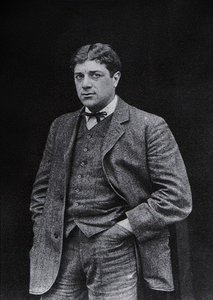
1882–1963, Prantsusmaa
Georges Braque
Varajärgi ja kunstiline alus Georges Braque, kes sündis 1882. aastal Prantsusmaal Argenteuilis, astus ette teele, mis oli sügavalt seotud moderniseeruva kunstimaastikuga. Tema kasvupõlved majaülesehajatest ja dekoratoridest pärines enough tehniline meisterlikkus materjalide suhtes, kuid ka varajane arusaatus vormist ja struktuurist. Kuigi alguses järgnes ta oma isa kutsetööle, viisid Braque loomulikud kunstilised kalduseid teda kiiresti Le Havre'i École des Beaux-Arts koolituse juurde, tähistades algust teekonnal, mille lõpus sai temast üks 20.
Teel Georges Braque kohta Georges Braque silmapaistvad teosed
Ka Georges Braque teosed
 Mandola1910
 Mees kitarriga1914
 Majad L'estaque'is
 Pargi Põhjamaal1909
Teemad teemal untitled
 From Cézanne to Cubism: The Revolutionary Evolution of Modern Art's Structural VisionExplore the profound transition from Cézanne’s structural Post-Impressionism to the revolutionary fractured forms of Cubism. A sophisticate…
 Mastering Cubism: The Top 25 Georges Braque ArtworksJourney through the revolutionary world of Georges Braque. Explore 25 iconic Cubist masterpieces, from geometric abstractions to timeless s…
 Georges Braque: The Architect of Form and the Soul of Cubist RevolutionExplore the profound legacy of Georges Braque, a master of Cubism. Discover how his technical craftsmanship and collaboration with Picasso …