

 Eelvaade
 Saada
Saada Jaga
Jaga
 Teave teose kohta

 Laadi alla
 Sarnased teosed
 Röntgenuuring
 Slaidietendus
PORTRAIT DE L'ARTISTE ( )


 Loe lähemalt
Giclée / Kunstiprint
Muuseumikvaliteediga giclée- või kangasprint kiire tootmisega ja paindlikud viimistlusvõimalused. ( Osta käsitsi maalitud maal Osta pilt)




P118B $10

P118H $10

P118W $10

P438Z $10

P508JH $12

P508YH $12

P805H $10

P805Z $10

P919BZ $10

P919G $10

P919XJ $10

P959ZH $10

P968JZ $12

W106C $8

W218G $10

W218JH $8

W218Y $10

W307PJ $10

W316G $10

W316PJ $8

W316Y $10

W398PJ $8

W4111J $10

W500HY $15

W500JH $15

W692G $12

W849H $8

W940BG $15

W953PJ $8




Vali meie eelmääratud suurused, mis vastavad teose algupärastele proportsioonidele.

Saate sisestada oma mõõdud, et need sobiks konkreetse raami või ruumi sisse. Kui valitud suurus ei vasta originaalteose proportsioonidele, lõigame teose ära või laiendame pilti peegeldatud või ühtlase servaga. Enne tootmisprotsessi algust saadetakse Teie kinnitamiseks digitaalne näidis.
Palun märka, et ekraanil kuvatav eelvaade ei kajasta tegelikku lõigamist või laiendamist. Ainult näidis kujutab täpselt lõplikku kompositsiooni.
Kuigi erimõõdu on saadaval, soovitame originaaproportsioonide säilitamiseks valida mõõt ette määratud nimekirjast.
Ülemaailmne tarne () 2 nädala jooksul, tavalise 4/5 nädala asemel. (22 august)

Tasuta ekspresssaatmine üle maailma

Kõrgekvaliteediline linakangas

Täielik transpordikindlustus

Tollimaksude tagastamise garantii

Värvitoime täpsuse garantii

60-päevane tagastusõig: ainult tootmisdefektide korral

100% raha tagasi garantii

Hulgusoodustus
 Klaasivalik on saadaval ainult suuruses kuni 110 cm

PORTRAIT DE L'ARTISTE ( )
Giclée / Kunstiprint
Reproduktsiooni suurus
-


Kogusumma
$ 80
Kogumuse kirjeldus
A Window Into Georgian Elegance: Examining George Romney’s Portrait of Himself
George Romney's "Portrait of Himself" stands as a quintessential emblem of 18th-century Neoclassical portraiture, capturing not merely likeness but also the spirit of an artist deeply invested in his craft. Painted circa 1795, this oil on canvas masterpiece offers a fascinating glimpse into the artistic sensibilities and social milieu of Britain’s Georgian era—a period defined by refined taste and a fervent admiration for classical ideals.- Subject Matter & Context: Romney depicts himself seated in his studio, bathed in soft light emanating from the left side of the canvas. The setting itself speaks volumes about the artist's profession; brushes and a palette rest upon his lap, instantly establishing him as a figure of creative endeavor. This wasn’t simply vanity; it was an assertion of identity within a society that valued intellectual pursuits and artistic accomplishment. Romney’s self-portrait reflects the broader cultural preoccupation with portraying oneself in accordance with humanist principles—a conscious effort to embody virtue and intellect.
- Style & Technique: The painting adheres rigorously to Neoclassical conventions, prioritizing clarity, restraint, and idealized beauty. Romney skillfully employs a layered technique – glazing – building up color gradually through multiple translucent layers of pigment. This meticulous process ensures subtle tonal transitions and achieves an astonishingly smooth surface finish, characteristic of the era’s finest artists. Noticeably absent is dramatic chiaroscuro; instead, Romney favors diffused illumination that lends an air of serenity to the composition.
- Color Palette & Composition: The subdued color palette—primarily creams, browns, and grays—creates a harmonious atmosphere of dignified repose. Strategic accents of red and pink within the drapery subtly enliven the scene without disrupting the overall tonal balance. Romney’s compositional choices reinforce this sense of calm; the three-quarter pose is balanced by careful attention to anatomical accuracy, reflecting the influence of Renaissance artists like Leonardo da Vinci.
- Symbolism & Emotional Resonance: Beyond mere representation, “Portrait of Himself” resonates with deeper symbolic meanings. The brushes and palette are not merely props but emblems of Romney’s vocation—a tangible manifestation of his dedication to artistic creation. His gaze directs outwards, conveying a contemplative mood that suggests introspection and perhaps even a quiet confidence in his abilities. This portrayal speaks to the artist's desire to present himself as both intellectually astute and morally upright – values highly esteemed during the Georgian period.
- Legacy & Reproduction: Romney’s “Portrait of Himself” continues to inspire admiration for its elegance and technical mastery. OriginalUniqueArt offers exceptional reproductions that faithfully capture the nuances of color and texture, allowing viewers to appreciate this iconic artwork in their own homes. Consider commissioning a high-quality print alongside a framed version to infuse your interior space with the timeless beauty of Georgian artistic tradition.
Kunstniku elulugu
A Life in Portraiture: The World of George Romney
Born in the picturesque landscape of Dalton-in-Furness, Lancashire, on December 15th, 1734, George Romney ascended to become one of the most sought-after portrait painters of his era. His journey from a cabinet maker’s son to the favored artist of British high society is a compelling narrative of innate talent and unwavering ambition. Early life offered little indication of the artistic path he would forge; initially apprenticed to his father, it was an inherent inclination towards drawing and craftsmanship that led him to Christopher Steele, a local portraitist who had studied in Paris. This apprenticeship proved pivotal, providing Romney with foundational skills and an introduction to European artistic traditions. He quickly surpassed his master, however, demonstrating a precocious talent demanding further cultivation. A brief, unhappy marriage and subsequent separation propelled him towards London in 1762, a city brimming with opportunity but also fierce competition.Establishing a Reputation: Style and Technique
London proved to be a crucible for Romney’s artistic development. He swiftly established himself as a formidable portraitist, challenging the dominance of artists like Thomas Gainsborough and Sir Joshua Reynolds. While he never sought membership in the Royal Academy – a decision that perhaps limited his access to certain patronage – his success was undeniable. Romney's style evolved over time, initially reflecting the influence of Steele and his Parisian training, but soon blossomed into something distinctly his own. He possessed an exceptional ability to capture not merely the likeness, but also the personality and social standing of his sitters. His portraits are characterized by elegant poses, a refined use of light and shadow, and a subtle psychological insight that set him apart. Romney’s technique was marked by a delicate touch and a preference for flowing lines, often drawing inspiration from classical sculpture. He skillfully employed color to convey texture and depth, creating portraits that were both visually striking and emotionally resonant. His ability to flatter his subjects while maintaining artistic integrity earned him the loyalty of an elite clientele. He understood the power of suggestion, hinting at character rather than explicitly defining it, a quality that appealed to those who valued discretion and refinement. Romney’s meticulous attention to detail—from the subtle folds of fabric to the expressive gaze of his subjects—became a hallmark of his oeuvre.The Muse and Her Influence: Emma Hamilton
Romney’s life took a dramatic turn with his encounter with Emma Hart, later known as Lady Hamilton, in 1782. She became not only his most celebrated model but also his muse, profoundly influencing his artistic output. Emma's beauty, intelligence, and theatrical flair captivated Romney, inspiring a series of portraits that explored themes of classical mythology, dramatic narrative, and feminine grace. He depicted her in various roles – as a spinner, as the tragic Miranda from Shakespeare’s *The Tempest*, and in numerous allegorical scenes that showcased her expressive range. These works demonstrate Romney's willingness to experiment with composition and symbolism, moving beyond conventional portraiture into more imaginative territory. The Tempest series, in particular, reveals a Romantic sensibility at play, anticipating the emotional intensity of later artists. The relationship was intense and all-consuming for Romney, though ultimately unfulfilled romantically; Emma eventually became the mistress of Lord Nelson, a union that cemented her place in history. Nevertheless, their artistic collaboration left an indelible mark on both their lives and produced some of Romney’s most enduring masterpieces. He painted over 80 portraits of her, each revealing a different facet of her captivating personality. The dynamism of Emma Hamilton's presence—captured with remarkable sensitivity—became central to Romney’s artistic vision.Major Achievements and Legacy
George Romney achieved considerable renown during his lifetime, securing commissions from prominent figures across British society. His portraits graced the homes of aristocrats, statesmen, and writers alike, establishing him as one of the foremost artists of his generation. Beyond his prolific output, Romney's contribution to artistic discourse was significant. He championed a style that prioritized psychological realism and emotional expression—a departure from the more formal conventions of earlier portraiture. His influence extended beyond his immediate contemporaries, inspiring subsequent generations of painters who sought to emulate his mastery of technique and his ability to convey human character with profound insight. Romney’s legacy resides not only in the beauty of his paintings but also in their enduring relevance as representations of a pivotal moment in British cultural history—the Romantic era. His work continues to be studied and admired for its elegance, subtlety, and emotional depth. He remains a testament to the transformative power of artistic talent and ambition.Concluding Thoughts
Romney’s artistic journey exemplifies the pursuit of excellence and the unwavering belief in one's own creative potential. From humble beginnings to international acclaim, his life story is an inspiration for artists and art lovers alike. His portraits stand as enduring symbols of beauty, grace, and psychological complexity—a lasting testament to George Romney’s genius and a cornerstone of British artistic heritage.
George Romney
1734 - 1802 , Ühenditud kuningriik
Lühikesed faktid
- Artistic Movement Or Style: Portraiture, Romanticism
- Artists Who Influenced This Artist:
- Christopher Steele
- Carle Vanloo
- Raphael
- Titian
- Correggio
- Date Of Birth: Dec 15, 1734
- Date Of Death: Nov 15, 1802
- Full Name: George Romney
- Nationality: British
- Notable Artworks:
- Peter and James Romney
- Portrait of G. Cowper
- The Death of General Wolfe
- Place Of Birth: Dalton-in-Furness, UK
Seotud artiklid

Georges Braque: 25 meistriteost, mis muutsid kunsti – OriginalUniqueArt.com
Avastage Georges Braque 25 ikoonilist teost! Sukeldu kubismi maailma, modernse kunsti geomeetrilistesse vormidesse ja värvikates maalidess. Leia inspiratsiooni interjööri kujunduseks OriginalUniqueArt.com-is. Kunstikollektsioonid ja kvaliteetsed reproduktsioonid.

Georges Seurat: 25 meistriteost valgusest ja värvist | OriginalUniqueArt
Avastage Georges Seurat' 25 ikoonilist teost! Sukeldume pointillismi, valgusest ja värvist täis maailma. Leidke inspiratsiooni interjööri kujundamiseks OriginalUniqueArt.com-is – kvaliteetsed reproduktsioonid ja kunstikollektsioonid ootavad!

George Romney: Portraiture, Patronage & the Shaping of Georgian Society
Explore the life & art of George Romney, leading portraitist of Georgian England. Discover his style, famous patrons like Emma Hamilton, and legacy in British society. Expert insights for collectors.
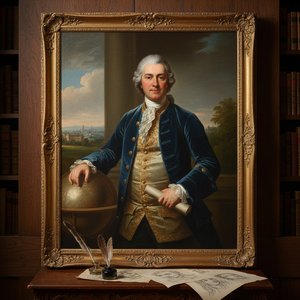
Thomas Hudson: A Study in 18th-Century Portraiture & British Artistic Identity
Explore the life & work of Thomas Hudson, a leading 18th-century British portraitist. Discover his mastery of the 'Grand Manner,' influential style, and lasting impact on British art. Learn about his notable portraits like Judge William Noel & Alexander Van Aken.

Neoclassical Portraiture: The Timeless Elegance of Order, Grace, and Academic Mastery
Explore the refined world of Neoclassical portraiture. Discover the mastery of line, light, and order through an expert exploration of academic art history, from Jacques-Louis David to Jean-Antoine Houdon. Immerse yourself in the timeless elegance of classical realism.



