

 Eelvaade
 Saada
Saada Jaga
Jaga
 Teave teose kohta

 Laadi alla
 Sarnased teosed
 Röntgenuuring
 Slaidietendus
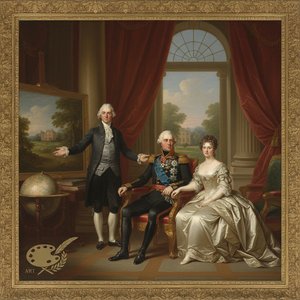
Mr and Mrs William Lindow
 Oil On Canvas
- WallArt
- Georgian Realism
 1772
1772- Early Modern
 114.0 x 139.0 cm
 Tate Britain
 Loe lähemalt
Giclée / Kunstiprint
Muuseumikvaliteediga giclée- või kangasprint kiire tootmisega ja paindlikud viimistlusvõimalused. ( Osta käsitsi maalitud maal Osta pilt)




P118B $10

P118H $10

P118W $10

P438Z $10

P508JH $12

P508YH $12

P805H $10

P805Z $10

P919BZ $10

P919G $10

P919XJ $10

P959ZH $10

P968JZ $12

W106C $8

W218G $10

W218JH $8

W218Y $10

W307PJ $10

W316G $10

W316PJ $8

W316Y $10

W398PJ $8

W4111J $10

W500HY $15

W500JH $15

W692G $12

W849H $8

W940BG $15

W953PJ $8




Vali meie eelmääratud suurused, mis vastavad teose algupärastele proportsioonidele.

Saate sisestada oma mõõdud, et need sobiks konkreetse raami või ruumi sisse. Kui valitud suurus ei vasta originaalteose proportsioonidele, lõigame teose ära või laiendame pilti peegeldatud või ühtlase servaga. Enne tootmisprotsessi algust saadetakse Teie kinnitamiseks digitaalne näidis.
Palun märka, et ekraanil kuvatav eelvaade ei kajasta tegelikku lõigamist või laiendamist. Ainult näidis kujutab täpselt lõplikku kompositsiooni.
Kuigi erimõõdu on saadaval, soovitame originaaproportsioonide säilitamiseks valida mõõt ette määratud nimekirjast.
Ülemaailmne tarne () 2 nädala jooksul, tavalise 4/5 nädala asemel. (27 august)

Tasuta ekspresssaatmine üle maailma

Kõrgekvaliteediline linakangas

Täielik transpordikindlustus

Tollimaksude tagastamise garantii

Värvitoime täpsuse garantii

60-päevane tagastusõig: ainult tootmisdefektide korral

100% raha tagasi garantii

Hulgusoodustus
 Klaasivalik on saadaval ainult suuruses kuni 110 cm

Mr and Mrs William Lindow
Giclée / Kunstiprint
Reproduktsiooni suurus
-


Kogusumma
$ 80
A Glimpse into Georgian Elegance
In the quiet, luminous atmosphere of George Romney’s 1772 masterpiece, Mr and Mrs William Lindow, we are invited to step back into the refined world of the British upper class. This exquisite portrait, currently held in the prestigious Tate Britain collection, serves as a breathtaking window into an era defined by grace, composure, and social poise. The painting captures William Lindow and his wife, Abigail, not merely as subjects for documentation, but as a couple enveloped in a moment of domestic intimacy. Bathed in a soft, ethereal light that seems to emanate from within the canvas itself, the pair sits with a serene dignity that reflects the very heart of Georgian sensibilities. For the discerning collector or interior designer, this work offers more than just visual beauty; it provides an atmosphere of timeless sophistication that can anchor any room with historical depth.
The composition is a masterclass in balanced restraint. Romney utilizes a symmetrical arrangement, placing two chairs on either side of the couple to create a sense of stability and order. This structured approach is subtly interrupted by the presence of a clock hanging upon the wall above them—a poignant symbolic element common in Romantic-era art. The clock serves as a memento mori, a gentle reminder of the relentless passage of time and the fleeting nature of mortal life, contrasting beautifully with the enduring elegance of the subjects' poses. This layer of profound meaning elevates the piece from a simple portrait to a contemplative meditation on memory and legacy.
Mastery of Light and Texture
To behold this work is to witness the pinnacle of Romney’s technical prowess. Having honed his skills through extensive study in Paris, the artist brought a sophisticated understanding of tonal gradations to the London art scene. Using oil on canvas, he achieved a luminous surface where light and shadow dance across the textures of fabric and skin with remarkable sensitivity. The man’s vibrant red coat and the woman’s deep blue attire are rendered with such meticulous detail that one can almost feel the weight and luster of the textiles. His ability to capture the subtle nuances of light—the way it catches a fold in a sleeve or softens the contour of a cheek—creates a sense of three-dimensional vitality that remains captivating centuries later.
Beyond the technical execution, there is an emotional resonance found in the subjects' expressions. There is no forced grandeur here; instead, Romney captures a quiet, shared understanding between husband and wife. The man’s thoughtful posture, with his hand resting near his chin, suggests a reflective intellect, while the woman’s presence provides a sense of calm strength. For those seeking to incorporate fine art into a curated space, a high-quality reproduction of this painting brings with it this unique emotional equilibrium—a blend of intellectual depth and aesthetic tranquility that inspires peace and admiration in any setting.
A Legacy of Portraiture
The story behind the brush is as compelling as the image itself. George Romney’s ascent from the son of a Lancashire cabinet maker to the most fashionable portraitist of his day is a narrative of extraordinary talent and ambition. His career was famously intertwined with the legendary beauty Emma Hamilton, whose presence in his work helped define the era's aesthetic. In Mr and Mrs William Lindow, we see the culmination of this journey—a style that moved away from rigid formality toward a more naturalistic, soulful representation of his sitters.
Owning or displaying a reproduction of such a significant work allows one to participate in this grand artistic tradition. Whether placed in a sunlit library or a formal dining room, the painting acts as a conversation piece that bridges the gap between the 18th century and the modern day. It is an investment in culture, offering a touch of the old world's splendor to the contemporary connoisseur who appreciates the intersection of historical narrative and unparalleled artistic beauty.
Kunstniku elulugu
A Life in Portraiture: The World of George Romney
Born in the picturesque landscape of Dalton-in-Furness, Lancashire, on December 15th, 1734, George Romney ascended to become one of the most sought-after portrait painters of his era. His journey from a cabinet maker’s son to the favored artist of British high society is a compelling narrative of innate talent and unwavering ambition. Early life offered little indication of the artistic path he would forge; initially apprenticed to his father, it was an inherent inclination towards drawing and craftsmanship that led him to Christopher Steele, a local portraitist who had studied in Paris. This apprenticeship proved pivotal, providing Romney with foundational skills and an introduction to European artistic traditions. He quickly surpassed his master, however, demonstrating a precocious talent demanding further cultivation. A brief, unhappy marriage and subsequent separation propelled him towards London in 1762, a city brimming with opportunity but also fierce competition.Establishing a Reputation: Style and Technique
London proved to be a crucible for Romney’s artistic development. He swiftly established himself as a formidable portraitist, challenging the dominance of artists like Thomas Gainsborough and Sir Joshua Reynolds. While he never sought membership in the Royal Academy – a decision that perhaps limited his access to certain patronage – his success was undeniable. Romney's style evolved over time, initially reflecting the influence of Steele and his Parisian training, but soon blossomed into something distinctly his own. He possessed an exceptional ability to capture not merely the likeness, but also the personality and social standing of his sitters. His portraits are characterized by elegant poses, a refined use of light and shadow, and a subtle psychological insight that set him apart. Romney’s technique was marked by a delicate touch and a preference for flowing lines, often drawing inspiration from classical sculpture. He skillfully employed color to convey texture and depth, creating portraits that were both visually striking and emotionally resonant. His ability to flatter his subjects while maintaining artistic integrity earned him the loyalty of an elite clientele. He understood the power of suggestion, hinting at character rather than explicitly defining it, a quality that appealed to those who valued discretion and refinement. Romney’s meticulous attention to detail—from the subtle folds of fabric to the expressive gaze of his subjects—became a hallmark of his oeuvre.The Muse and Her Influence: Emma Hamilton
Romney’s life took a dramatic turn with his encounter with Emma Hart, later known as Lady Hamilton, in 1782. She became not only his most celebrated model but also his muse, profoundly influencing his artistic output. Emma's beauty, intelligence, and theatrical flair captivated Romney, inspiring a series of portraits that explored themes of classical mythology, dramatic narrative, and feminine grace. He depicted her in various roles – as a spinner, as the tragic Miranda from Shakespeare’s *The Tempest*, and in numerous allegorical scenes that showcased her expressive range. These works demonstrate Romney's willingness to experiment with composition and symbolism, moving beyond conventional portraiture into more imaginative territory. The Tempest series, in particular, reveals a Romantic sensibility at play, anticipating the emotional intensity of later artists. The relationship was intense and all-consuming for Romney, though ultimately unfulfilled romantically; Emma eventually became the mistress of Lord Nelson, a union that cemented her place in history. Nevertheless, their artistic collaboration left an indelible mark on both their lives and produced some of Romney’s most enduring masterpieces. He painted over 80 portraits of her, each revealing a different facet of her captivating personality. The dynamism of Emma Hamilton's presence—captured with remarkable sensitivity—became central to Romney’s artistic vision.Major Achievements and Legacy
George Romney achieved considerable renown during his lifetime, securing commissions from prominent figures across British society. His portraits graced the homes of aristocrats, statesmen, and writers alike, establishing him as one of the foremost artists of his generation. Beyond his prolific output, Romney's contribution to artistic discourse was significant. He championed a style that prioritized psychological realism and emotional expression—a departure from the more formal conventions of earlier portraiture. His influence extended beyond his immediate contemporaries, inspiring subsequent generations of painters who sought to emulate his mastery of technique and his ability to convey human character with profound insight. Romney’s legacy resides not only in the beauty of his paintings but also in their enduring relevance as representations of a pivotal moment in British cultural history—the Romantic era. His work continues to be studied and admired for its elegance, subtlety, and emotional depth. He remains a testament to the transformative power of artistic talent and ambition.Concluding Thoughts
Romney’s artistic journey exemplifies the pursuit of excellence and the unwavering belief in one's own creative potential. From humble beginnings to international acclaim, his life story is an inspiration for artists and art lovers alike. His portraits stand as enduring symbols of beauty, grace, and psychological complexity—a lasting testament to George Romney’s genius and a cornerstone of British artistic heritage.
George Romney
1734 - 1802 , Ühenditud kuningriik
Lühikesed faktid
- Artistic Movement Or Style: Portraiture, Romanticism
- Artists Who Influenced This Artist:
- Christopher Steele
- Carle Vanloo
- Raphael
- Titian
- Correggio
- Date Of Birth: Dec 15, 1734
- Date Of Death: Nov 15, 1802
- Full Name: George Romney
- Nationality: British
- Notable Artworks:
- Peter and James Romney
- Portrait of G. Cowper
- The Death of General Wolfe
- Place Of Birth: Dalton-in-Furness, UK
Seotud artiklid

Georges Braque: 25 meistriteost, mis muutsid kunsti – OriginalUniqueArt.com
Avastage Georges Braque 25 ikoonilist teost! Sukeldu kubismi maailma, modernse kunsti geomeetrilistesse vormidesse ja värvikates maalidess. Leia inspiratsiooni interjööri kujunduseks OriginalUniqueArt.com-is. Kunstikollektsioonid ja kvaliteetsed reproduktsioonid.

Georges Seurat: 25 meistriteost valgusest ja värvist | OriginalUniqueArt
Avastage Georges Seurat' 25 ikoonilist teost! Sukeldume pointillismi, valgusest ja värvist täis maailma. Leidke inspiratsiooni interjööri kujundamiseks OriginalUniqueArt.com-is – kvaliteetsed reproduktsioonid ja kunstikollektsioonid ootavad!

George Romney: Portraiture, Patronage & the Shaping of Georgian Society
Explore the life & art of George Romney, leading portraitist of Georgian England. Discover his style, famous patrons like Emma Hamilton, and legacy in British society. Expert insights for collectors.
John Hoppner: Portraiture, Patronage & British Identity in the Late Georgian Era
Explore the life & work of John Hoppner, a leading Georgian portraitist. Discover his vibrant style, influential patrons, and lasting impact on British art history. Expert insights for collectors.
Sir Joshua Reynolds' Masterpieces: 25 Portraits of Power & Refinement | OriginalUniqueArt
Explore 25 captivating portraits by Sir Joshua Reynolds, a master of British art. Discover stories behind his iconic paintings, elegant style & historical influence. Find museum-quality reproductions and elevate your home decor on OriginalUniqueArt.com.



