
 Eelvaade
 Saada
Saada Jaga
Jaga
 Teave teose kohta
 Juhend

 Laadi alla
 Sarnased teosed
 Röntgenuuring
 Slaidietendus
 KÜSIMUSED JA VASTUSID
 Statistika
Landscape

- 45.0 x 38.0 cm


 Loe lähemalt
Giclée / Kunstiprint
Muuseumikvaliteediga giclée- või kangasprint kiire tootmisega ja paindlikud viimistlusvõimalused. ( Osta käsitsi maalatud teos Lülita digitaalse pildi juurde)




P118B €10

P118H €10

P118W €10

P438Z €10

P508JH €12

P508YH €12

P805H €10

P805Z €10

P919BZ €10

P919G €10

P919XJ €10

P959ZH €10

P968JZ €12

W106C €8

W218G €10

W218JH €8

W218Y €10

W307PJ €10

W316G €10

W316PJ €8

W316Y €10

W398PJ €8

W4111J €10

W500HY €15

W500JH €15

W692G €12

W849H €8

W940BG €15

W953PJ €8




Vali meie eelmääratud suurused, mis vastavad teose algupärastele proportsioonidele.

Sisestage vajalik laius ja kõrgus, et see sobiks teie raamile või seinale. Trükki saab ainult lõigata, seda ei saa kunagi pildist suuremaks teha, seega ka erineva mustega suurus kaotab osa pildist. Enne trükkimist saadame teile kinnitamiseks digitaalse näidisprojektsiooni. Sellel lehel näidatud pilt ei kujuta reaalset lõiget — seda näitab ainult näidisprojektsioon.
Ülemaailmne tarne () 2 nädala jooksul, tavalise 4/5 nädala asemel. (4 november)

Tasuta ekspresssaatmine üle maailma

Kõrgekvaliteediline lina-kangas

Täielik transpordikindlustus

Tollimaksude tagastamise garantii

Värvitoime täpsuse garantii

100 päeva tagastusõigus (ainult valmistusdefektide korral)

100% raha tagasi garantii

Hulgusoodustus
 Klaasivalik on saadaval ainult kuni 110 cm suuruses teostes

Landscape
Giclée / Kunstiprint
Reproduktsiooni suurus
-


Koguhind
€ 72
A Window on the Soul: George Howland Beaumont’s ‘Landscape’
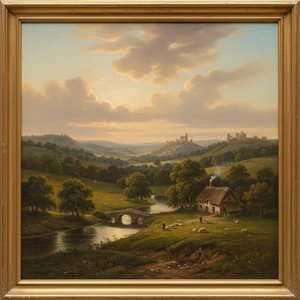
George Howland Beaumont's “Landscape,” painted in 1825, isn’t merely a depiction of a rural scene; it’s an invitation into a world steeped in Romantic sensibility and a profound appreciation for the natural world. This oil on canvas transports us to a tranquil valley, bathed in the soft light of a late afternoon, where the subtle interplay of color and form speaks volumes about the artist's vision and his deep connection to the English countryside.
Beaumont, a prominent figure in British art during the early 19th century, was more than just an amateur painter; he was a dedicated collector and connoisseur. His journey through Italy ignited a passion for the Old Masters, particularly the landscapes of Claude Lorrain and other Baroque masters. This influence is strikingly evident in “Landscape,” where the composition echoes classical principles – a balanced arrangement of elements, a sense of depth achieved through atmospheric perspective, and an emphasis on harmonious color palettes. The painting’s roots lie firmly within the Romantic movement, but Beaumont tempered its more dramatic tendencies with a refined elegance and a meticulous attention to detail.
The Language of Light and Color
Beaumont masterfully employs light as his primary tool, creating a sense of luminous serenity. Notice how he captures the diffuse glow filtering through the trees, casting long shadows that dance across the foreground. The color palette is restrained yet rich – predominantly blues and greens dominate, punctuated by earthy browns and ochres in the distant hills. These colors aren’t applied with brute force; instead, they are layered delicately to build depth and atmosphere. The artist's use of glazing techniques—thin layers of translucent paint—allows light to penetrate through the surface, giving the scene an almost ethereal quality.
A key element is the subtle rendering of texture. The rough bark of the central tree, the undulating contours of the hills, and even the suggestion of grass beneath the figures are all conveyed with remarkable sensitivity. Beaumont’s brushstrokes aren't overtly expressive; they are controlled and deliberate, contributing to the painting’s overall sense of quiet contemplation.
Figures in a Pastoral Setting
Two figures, positioned near the base of the large tree, add a touch of human presence to this otherwise solitary landscape. Their postures suggest an activity—perhaps a simple task or a moment of shared observation—but their identities remain deliberately ambiguous. They aren’t presented as heroes or protagonists; rather, they are integrated seamlessly into the scene, serving as reminders of humanity's place within the vastness of nature. This subtle inclusion invites viewers to contemplate their own relationship with the natural world.
The placement of these figures also contributes to the painting’s sense of depth and perspective. They appear smaller in scale than the towering tree, reinforcing the impression of a distant horizon and emphasizing the grandeur of the landscape. The composition guides the eye through the scene, drawing us into the heart of the valley.
A Legacy of Romantic Vision
“Landscape” stands as a testament to George Howland Beaumont’s artistic skill and his profound appreciation for the beauty of the English countryside. It embodies the core tenets of the Romantic movement—a reverence for nature, an emphasis on emotion and imagination, and a fascination with the sublime. Beaumont's work continues to resonate today, offering viewers a moment of tranquility and a reminder of the enduring power of art to capture the essence of our world.
Reproductions of this piece offer a wonderful opportunity to bring this evocative landscape into your home or office, allowing you to experience its beauty and serenity firsthand. Consider framing it in a classic style to complement its timeless appeal.
Korduvad küsimused
Kas teos „Landscape“, autor George Howland Beaumont kuulub avalikku omandisse?
Tegijateõiguse osas on teos "Landscape" kuuluv klassifikatsiooni alla: avalikus õiguses – selle autoriõigud onหมดunud.
Millisesse ruumi on teose „Landscape“, autor George Howland Beaumont värvide tõttu soovituslik paigutada?
Teose „Landscape“, autor George Howland Beaumont Earthy värvigamma sobib suurepäraselt selle soovituslikule ruumile: Living Room.
Millist tunnet tekitavad teose „Landscape“, autor George Howland Beaumont värvid?
Teose „Landscape“, autor George Howland Beaumont Earthy värvigamma sobib suurepäraselt kokku selle Melancholic emotsionaalse tooniga. Värv on üks viiseid, kuidas teos tunde edastab.
Kunstniku elulugu
Kunstile pühendatud elu: George Howland Beaumonti maailm
Sir George Howland Beaumont, kes sündis 1753. aastal rahustikus Great Dunmowi Essexi maakonnas, oli isik, kelle elu peegeldas 18. sajandi lõpu ja 19. sajandi alguse Briti arenevaid maitseaukusid ja kannatusid. Erandades noorelt nii baronetide titli kui ka suuremõisa, ei olnud Beaumonti tee alguses suunatud kunstilistele ambitsioonidele. Kuid tema haridus Eton Collegeis sisaldas esmast träningut maalistuses Alexander Cozensie juures, tekitades temas elukaasast visuaalkunstide võluda. See varajane kokkupuude oli vaid eelseadus transformatsioonilisemale kogemusele – 1eks Grand Touriks, mille ta tegi 1782. aastal koos oma naise Margaretiga. Itaalia ja selle rikkalikkultuuriline pärand osutus võtmatuks; Beaumonti silmad avanesid vanade meistrite meistriteostele, süütele temas mitte ainult imetlust, vaid ka kirevat soovi neid teoseid koguda ja mõista. See reis pani aluse kunstile pühendatud elule – nii erutatud kollektsionerina kui ka pühendunud, kuigi sageli iseennustava kunstnikuna.Maja ja maitse kultiveerimine: Kollektsioon, patroonlus ja kunstiline areng
Pärast Inglismaale naasmist alustas Beaumont muljetavaldava vanade meistrite maalidest koosneva kollektsiooni loomist, tegevust, mida juhtis tõeline kire despite piiratud finantsressurssidest. Selle kollektsiooni keskmes oli Claude Lorraini A Landscape with Hagar and the Angel, maalid, mis sai Beaumonti esteetiliseks sümboliks ja kedes sügavalt. Ta ei hankkinud pelgalt objekte; ta koostas visuaalset kirjastut, mis oli tunnistus tema arenevale arusaatusele kunstilisest suurepärasusest. Samal ajal hakkas Beaumont oma töid 1eks Royal Academy näitustel aastatel 1794 kuni 1825 esitama, kinnistades end Londoni kunstiringkondades austatud amatuuri positsioonis. Tema sotsiaalne elu õitsendas koos tema kunstiliste pingutustega, keskendudes tema elukohale Grosvenor Square'i 34. numbris ning perioodile, mil ta teenis Tory parteedi Lipu Beer Alstonis (1eks 1790–1796). See positsioon tõi teda kokku mõjuvate isikutega – järvepoetidega, eriti William Wordsworthiga, kes sai temast elukaasas sõber, Uvedale Pricest ja teistega, kelle ideed kujundasid Picturesque liikumist ning Beaumonti kasvavat huvi flamandi ja hollandi maali kunstile. Tema stiili mõjutasid Richard Wilson ja Thomas Hearne, kallutudes romantismile, nagu nä thấy on teoses View near Keswick (1779), kuid ta säilis akadeemiliste traditsioonide vankamana, väljendades sageli kriitikat radikaalsemate kunstnike, nagu J.M.W. Turner, vastu. See konservatiivne seisukoht ei välistanud kõiki avatud pilke; Beaumont võimaldas suuremeelset kala noorel John Constableil oma kollektsiooni kasutada, soodustades suhet, mis culminas Constablei puudutavaks maalidest koostuvaks tõestuseks Beaumonti erutatud silmale.Vision avalikuks kättesaadavuseks: Riikliku galerii asutamine
Ehkki Beaumonti kõige püsivam pärand peitub tema rollis Riikliku galerii (National Gallery) loomisel. Tunnustades kriitilist vajadust avaliku galeriia eest, mis oleks pühendatud vanade meistrite maalidest näitamisele, tegi ta 1823. aastal riigile murdiliku pakkumise: ta sureks oma isiklikust kollektsioonist kuuste maali tingimusel, et riik ostaks samuti John Julius Angersteini kollektsiooni ja hankiks sobivad hooned. See julge ettepanek sundis Parlamentit tegutsema, mis viis Angersteini varanduse omandamiseni ja lõpuks Riikliku galerii avamisele 1824. aasta mais. Beaumonti enda panused järgnesid lühikese aja pärast 1825. aastal, kinnistades tema koha Briti kunstikujarahus asendamatu tegelasena. Ta kujutas ette ruumi, kus suur kunst oleks kõigile kättesaadav, demokratiseerides kunstiline nautimine ja rikkustades kultuurilavast tulevates põlgedel. See tegu ei olnud pelgalt filantropia; see oli avalikundlik avalduskuju Beaumonti sügavale usule kunsti transformatsioonilise jõu ja selle tähtsustuse kohta rahvuslikus identiteedis.Püsiv mõju ja kunstiline pärand
Sir George Howland Beaumont suri 1827. aastal, jättes järele pärandi, mis ulatub kaugele tema enda kunstilistest loomingutest. Tema pühendumus vanade meistrite kogumisele ja edendamisele rikkustas oluliselt Briti kunstimaastikku, samas kui tema patroonlus ulevatavate kunstnike, nagu Constable, jaoks aitas kultiveerida uusi talente. Riikliku galerii asutamine seisab püsiva monumentina tema visioonile ja pühendumusele – tunnistusena tema usule kunsti võimekusele inspireerida, harida ja ühendada. Beaumonti mõju on tunda veelgi tänapäeval, mitte ainult galerii seinade sees, mida ta aitas luua, vaid ka käimas olevas dialoogis kunstilise maitse, kultuuri kättesaadavuse ja ühise kunstipärandi säilitamise olulisuse üle. Ta jääb meelde jäänud kütkestavaks isikuks – härrasmehel aadluslikuks amatööriks, kes oma kire, erutatud vaate ja vankumatute pühenduste kaudu sügavalt kujundas Briti kunstikujarahul.
George Howland Beaumont
1753 - 1827 , Ühendne Kuningriik
Lühikest infot
- Artistic Movement Or Style: Romantilism, Pikturistlik
- Artists Or Movements Influenced By This Artist: ['John Constable']
- Artists Who Influenced This Artist:
- Richard Wilson
- Thomas Hearne
- Date Of Birth: 1753
- Date Of Death: 1827
- Full Name: George Howland Beaumont
- Nationality: Briti
- Notable Artworks:
- Metsaline maastik
- Maastik
- Broughton Castle
- Place Of Birth: Dunmow, Ühendkuningriik
Sarnased artiklid

John Constable: 25 Suurimat Teost Inglise Maastikumaali Tippu
Avastage John Constable'i 25 suurimat teost! Sukeldu inglise maastikumaali romantismisse, imetlege Dedham Vale ilu ja leia inspiratsiooni kodukaunistuseks. Kvaliteetsed kunstireprodutsioonid OriginalUniqueArt.com-is. Vaata kohe!

Georges Seurat: 25 meistriteost valgusest ja värvist | OriginalUniqueArt
Avastage Georges Seurat' 25 ikoonilist teost! Sukeldume pointillismi, valgusest ja värvist täis maailma. Leidke inspiratsiooni interjööri kujundamiseks OriginalUniqueArt.com-is – kvaliteetsed reproduktsioonid ja kunstikollektsioonid ootavad!

Georges Braque: 25 meistriteost, mis muutsid kunsti – OriginalUniqueArt.com
Avastage Georges Braque 25 ikoonilist teost! Sukeldu kubismi maailma, modernse kunsti geomeetrilistesse vormidesse ja värvikates maalidess. Leia inspiratsiooni interjööri kujunduseks OriginalUniqueArt.com-is. Kunstikollektsioonid ja kvaliteetsed reproduktsioonid.
George Barret the Elder: Pioneering British Pastoral Painting & Landscape's Rise
Explore the life & art of George Barret Sr., a pioneer of British pastoral painting. Discover his influence on Romantic landscape art, patronage, and collecting tips from OriginalUniqueArt.

Romantilise Maastikukunsti 10 Meisterteost: Kunstiteosed Koduks OriginalUniqueArt.com'ist
Avastage 10 romantilise maastikukunsti meistriteost! Tutvuge Caspar David Friedrichi, J.M.W. Turneri ja teiste suurte kunstnike loominguga OriginalUniqueArt.com-is. Leidke täiuslik õlimaal või reproduktsioon koduks – inspireeriv kollektsioon ootab!