

 Vaata sisu
 Jaga teost
 Jaga
Jaga
 Detailid
 Õppekate juhend

 Laadi alla
 Sarnased teosed
 Röntgenuuring
 Slaidietendus
 Statistika
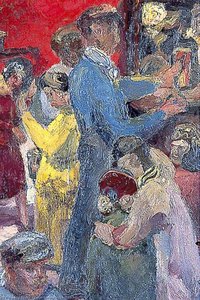
East End Pub
 1933
1933 47.0 x 33.0 cm
 Charleston
 Loe lähemalt
Giclée / Kunstiprint
Muuseumikvaliteediga giclée- või kangasprint kiire tootmisega ja paindlikud viimistlusvõimalused. ( Telli käsitsi maalitud reproduktsioon Ülemineku digitaalse pildi müügi kanalisse)




































Vali meie eelmääratud suurused, mis vastavad teose algupärastele proportsioonidele.

Saate sisestada oma mõõdud, et need sobiks konkreetse raami või ruumi sisse. Kui valitud suurus ei vasta originaalteose proportsioonidele, lõigame teose ära või laiendame pilti peegeldatud või ühtlase servaga. Enne tootmisprotsessi algust saadetakse Teie kinnitamiseks digitaalne näidis.
Palun märka, et ekraanil kuvatav eelvaade ei kajasta tegelikku lõigamist või laiendamist. Ainult näidis kujutab täpselt lõplikku kompositsiooni.
Kuigi erimõõdu on saadaval, soovitame originaaproportsioonide säilitamiseks valida mõõt ette määratud nimekirjast.
Ülemaailmne tarne () 2 nädala jooksul, tavalise 4/5 nädala asemel. (7 oktoober)

Tasuta ekspresssaatmine üle maailma

Kõrgekvaliteediline lina-kangastest muld

Täielik transpordikindlustus

Tollimaksude tagastamise garantii

Värvitoime täpsuse garantii

100 päeva tagastusõigus (ainult defektide korral)

100% raha tagasi garantii

Hulgusoodustus
 Klaasivalik on saadaval ainult kuni 110 cm suuruses teostes

East End Pub
Giclée / Kunstiprint
Reproduktsiooni mõõtmed
-


Lõppsumma
€ 69
Artistic Style and Influences
George Bergen's style is reminiscent of the modernist movement, which emphasized capturing the reality of modern life. The use of bold colors and geometric shapes adds to the overall sense of energy and dynamism in the painting. As seen in other works by George Bergen, such as The Policeman and Peñiscola, Spain, the artist's attention to detail and ability to convey emotion through his subjects are notable.Historical Context and Significance
The Charleston Museum in Lewes, United Kingdom, is home to an impressive collection of artworks, including pieces by Frederick Etchells, such as The Entry into Jerusalem. This museum is a treasure trove for art enthusiasts, offering insights into the lives and works of various artists. For those interested in learning more about the Charleston Museum and its collection, visit Discovering the Artworks of Charleston Museum, Lewes, United Kingdom.- View East End Pub by George Bergen at Painting by 'George Bergen' | George Bergen:East End Pub
- Explore other works by George Bergen, including The Policeman and Peñiscola, Spain
- Learn more about the Charleston Museum and its collection at Discovering the Artworks of Charleston Museum, Lewes, United Kingdom
The East End Pub painting by George Bergen is a significant work that showcases the artist's skill in capturing the essence of everyday life. With its vibrant colors and lively scene, this piece is sure to captivate art enthusiasts and inspire further exploration of the Charleston Museum's collection.
Küsimused ja vastused
Kes on teose "East End Pub" kunstnik?
Teose "East End Pub" looja on George Bergen. Teos on kataloogitud nime George Bergen all.
Kui palju oli George Bergen aastane, kui teos "East End Pub" loodi?
George Bergen oli 30 aastane, kui ta lõi teose "East End Pub" aastal 1933. Empiiriline vanus on arvutatud kunstniku sünnaaasta põhjal, 1903.
Mis on teose „East End Pub“, autor George Bergen kuju ja mõõdud?
„East End Pub“, autor George Bergen on Portrait kompositsioon, mille originaalsed mõõdud on 47 x 33 cm.
Milline värv on teose „East End Pub“, autor George Bergen kompositsiooni domineeriv?
Teose "East End Pub" kõige silmapaistvam värv on Espresso (#504653). Dominantne värv on kasulik teose sobitamisel interjööriga.
Millal loodi teos "East End Pub"?
Teose „East End Pub“, autor George Bergen loomimisaeg on 1933.
Kas teose "East End Pub" kõrgekvaliteediline allalaadimine on saadaval?
Teose „East End Pub“, autor George Bergen digitaalse faili hankimiseks tellige kõrge resolutsiooniga digitaalse pildi allalaadimine leheküljel see leht.
Kui eraldavad teose "East End Pub" värvid?
Teose „East End Pub“, autor George Bergen värvid on Subtle Color kütkusega ja Balanced intensiivsusega.
Kunstniku elulugu
George Bergen: A Painter of English Shadows
George Bergen (1903–1984) wasn’t a name that dominated the art world during his lifetime, yet his quietly observant paintings offer a remarkably intimate glimpse into the social fabric and atmospheric details of early to mid-20th century England. Born in Minsk, Russia, and immigrating to Brooklyn, New York, with his family in 1909, Bergen’s artistic journey was shaped by exposure to diverse influences – from the rigorous training at Yale School of Fine Arts under George Bellows to a significant period spent immersed in the vibrant intellectual circles of the Bloomsbury Group. His work transcends simple representation; it's imbued with a melancholic beauty and a keen awareness of the everyday, capturing scenes of pubs, streets, and landscapes with a distinctive, almost understated emotional resonance.
Bergen’s early career was marked by a steady progression through various artistic avenues. He began his training in New York, absorbing the techniques of Bellows while simultaneously developing an interest in European modernism. A pivotal moment arrived in 1925 when he secured a Yale travelling scholarship, allowing him to spend a year studying in Europe – a period that profoundly shaped his aesthetic sensibilities. This exposure to continental art movements, particularly Post-Impressionism and early Cubism, informed his approach to composition and color. Returning to America, Bergen quickly established himself as a respected artist, exhibiting at prominent galleries like Goupil and Lefevre, and gaining recognition for his evocative depictions of urban life.
A defining characteristic of Bergen’s work is his fascination with the British pub. Paintings such as “East End Pub” (1931) are not merely snapshots of a social gathering; they're carefully constructed narratives that reveal the quiet dramas and unspoken connections within these quintessential English institutions. The use of muted tones, textured brushwork, and a deliberate lack of dramatic lighting contribute to an atmosphere of contemplative melancholy. Bergen’s ability to capture the essence of these spaces – the worn furniture, the flickering gaslight, the faces of the patrons – speaks volumes about the social and cultural life of his time. His paintings aren't celebratory; they are imbued with a subtle sense of loss or nostalgia for a disappearing way of life.
Beyond the pub scenes, Bergen’s oeuvre encompasses a range of subjects, including streetscapes, landscapes, and portraits. “A London Street” (1932) exemplifies his skill in rendering urban detail – the weathered facades of buildings, the bustling crowds, the interplay of light and shadow. His approach to portraiture is equally notable; he eschewed idealized representations, instead favoring a more realistic and psychologically astute portrayal of his subjects. Bergen’s connection with the Bloomsbury Group—a group of influential artists, writers, and intellectuals—is significant. He shared their interest in exploring the complexities of human experience and challenging conventional artistic norms. His work reflects this intellectual engagement, demonstrating a sensitivity to social issues and a willingness to experiment with form and technique.
The Bloomsbury Connection and Artistic Influences
Bergen’s association with the Bloomsbury Group profoundly influenced his artistic development. This influential circle of artists and intellectuals—including Vanessa Bell, Duncan Grant, and Virginia Woolf—championed experimentation, challenged established conventions, and explored themes of sexuality, social class, and personal identity. Bergen's friendship with these figures provided him with a stimulating intellectual environment and exposed him to new ideas and perspectives. His work began to reflect the group’s interest in psychological realism and their rejection of traditional artistic values.
The influence of European modernism is also evident in Bergen’s paintings. He was particularly drawn to the works of Post-Impressionists like Paul Gauguin and Vincent van Gogh, whose use of color and expressive brushwork paved the way for later developments in abstract art. Bergen's own approach to color is characterized by a subtle palette—often dominated by muted browns, grays, and greens—that creates a sense of atmosphere and mood. He employed broken color techniques, layering thin washes of paint to build up complex textures and visual effects.
Furthermore, Bergen’s exposure to the work of Cubist artists like Pablo Picasso and Georges Braque influenced his approach to composition. While he never fully embraced Cubism's radical fragmentation of form, he incorporated elements of this style—such as multiple viewpoints and flattened perspectives—into his paintings. This experimentation with perspective contributed to the sense of depth and spatial ambiguity that characterizes much of his work.
Technique and Style
Bergen’s artistic technique is characterized by a meticulous attention to detail and a masterful control of paint. He employed a layered approach, building up surfaces through multiple thin washes of color—a technique known as glazing. This method allowed him to create subtle gradations of tone and achieve remarkable luminosity. His brushwork is often loose and expressive, particularly in his depictions of landscapes and street scenes. Bergen’s use of light and shadow is particularly noteworthy; he skillfully manipulated these elements to create a sense of atmosphere and mood.
His paintings are not defined by bold colors or dramatic compositions. Instead, they rely on subtle nuances—a carefully placed brushstroke, a delicate shift in tone—to convey meaning and emotion. Bergen’s style can be described as quietly evocative, understated, and deeply perceptive. He possessed an extraordinary ability to capture the essence of his subjects—not through literal representation, but through a nuanced understanding of their psychological and emotional qualities.
Legacy and Significance
Despite not achieving widespread fame during his lifetime, George Bergen’s work has gained increasing recognition in recent decades. His paintings are now exhibited in public galleries across the United Kingdom and America, and they are valued for their quiet beauty, psychological depth, and historical significance. Bergen's contribution to British art lies in his ability to capture the everyday realities of life in early 20th-century England—the social rituals, the atmospheric details, and the unspoken emotions that shaped the lives of ordinary people.
His paintings offer a valuable window into a bygone era, providing insights into the cultural landscape of Britain during a period of profound social and political change. Bergen’s work continues to resonate with viewers today because it speaks to universal themes—loss, memory, and the search for meaning in a complex world. He remains an important figure in British art history, a painter who quietly observed and powerfully rendered the shadows and light of his time.
George Bergen
1903 - 1984
Lühikest infot
- Full Name: George Bergen
- Nationality: Russian-Jewish
- Date Of Birth: 1903
- Date Of Death: 1984
- Place Of Birth: Minsk, Russia
- Notable Artworks:
- The Policeman
- East End Pub
- Artistic Movement Or Style: Post-Impressionist
- Artists Who Influenced This Artist: ['George Bellows']
- Artists Or Movements Influenced By This Artist: ['Bloomsbury Group']