

 Vaata sisu
 Jaga teost
 Jaga
Jaga
 Detailid
 Õppekate juhend

 Laadi alla
 Sarnased teosed
 Röntgenuuring
 Slaidietendus
 Statistika
Dead Cock
 Acrylic On Canvas
- WallArt
- Baroque
 57.0 x 40.0 cm
 Prado muuseum
 Loe lähemalt
Käsitsi valmistatud õlimaalireproduktsioon
Meie kunstnike poolt tellimusel valmistatud käsitsi maalitud õli-kainaste teos teie soovitud suuruses ja raamis. ( Lülita trükkitoodetele Ülemineku digitaalse pildi müügi kanalisse)




P118B €10

P118H €10

P118W €10

P438Z €10

P508JH €12

P508YH €12

P805H €10

P805Z €10

P919BZ €10

P919G €10

P919XJ €10

P959ZH €10

P968JZ €12

W106C €8

W218G €10

W218JH €8

W218Y €10

W307PJ €10

W316G €10

W316PJ €8

W316Y €10

W398PJ €8

W4111J €10

W500HY €15

W500JH €15

W692G €12

W849H €8

W940BG €15

W953PJ €8




Vali meie eelmääratud suurused, mis vastavad teose algupärastele proportsioonidele.

Sisestage vajalik laius ja kõrgus, et teos sobiks teie raamile või seinale. Kuna tegu on käsipainatud teosega, siis erineva kujuga suuruse korral võib kunstnik jätta pildi ümber veidi rohkem marginaali või lõigata osa ära — valik on teie. Enne maali alustamist saadame teile kinnitamiseks digitaalse näidisprojektsiooni. Sellel lehel näidatud pilt ei kajasta tegelikku tulemust — seda näitab ainult näidisprojekttsioon.
Pärast tellimust saadab OriginalUniqueArt.com meeskond kliendile e-posti juhised ning esitab eelvaate kavandi
Maailmline tarne 3–4 nädala jooksul tavalise 5 nädala asemel. (23 oktoober). Kvaliteedis kompromisse ei tehta.

Tasuta ekspresssaatmine üle maailma

Kõrgekvaliteediline lina-kangastest muld

Täielik transpordikindlustus

Tollimaksude tagastamise garantii

Värvitoime täpsuse garantii

100 päeva tagastusõigus (ainult defektide korral)

100% raha tagasi garantii

Hulgusoodustus
 Klaasivalik on saadaval ainult kuni 110 cm suuruses teostes

Dead Cock
Reproduktsiooni materjal
Reproduktsiooni mõõtmed
-


Lõppsumma
€ 264
A Silent Testament: Gabriel Metsu’s “Dead Cock”
Gabriel Metsu's "Dead Cock," painted circa 1659-1660, is not merely a still life; it’s a profoundly unsettling meditation on mortality, vulnerability, and the fleeting nature of beauty. This small panel, measuring just 57 x 40 cm, housed within the Museo del Prado in Madrid, commands attention with its stark simplicity and unnerving realism. It depicts a recently deceased rooster, meticulously rendered with an almost clinical precision – feathers ruffled, skin subtly flushed, and feet delicately positioned on a simple wooden hook. Yet, it’s precisely this meticulous detail that elevates the painting beyond a straightforward depiction of death; Metsu forces us to confront the raw, unvarnished truth of decay.
Metsu's artistic trajectory is notoriously complex, defying easy categorization. He was a “highly eclectic artist,” as art historian Arnold Houbraken noted, moving seamlessly between history paintings, portraits, and genre scenes – often blending influences from various masters like Rembrandt and Jan Steen. This versatility is particularly evident in "Dead Cock," which draws upon elements of both Dutch Baroque realism and the more emotionally charged style of Flemish artists. The composition itself is deceptively straightforward: a single subject dominating the frame, bathed in a muted, almost somber light that emphasizes its vulnerability. The dark background serves to heighten the rooster’s presence, creating a dramatic contrast that underscores its stillness.
The Symbolism of Mortality and Loss
The symbolism embedded within “Dead Cock” is layered and open to interpretation. The rooster itself – traditionally associated with masculinity, vitality, and heraldry – becomes an emblem of loss and the inevitable decline of life. Its recent demise is palpable; the subtle discoloration of its skin hints at the swiftness of death, while the carefully arranged feathers suggest a deliberate attempt to preserve some semblance of dignity in the face of oblivion. The hook, a simple, utilitarian object, serves as a stark reminder of the rooster’s fate – suspended between life and death, a poignant symbol of suspension itself.
Furthermore, the painting's context within Metsu’s oeuvre—his penchant for depicting solitary women engaged in domestic activities—adds another layer of meaning. The rooster’s vulnerability mirrors the fragility of human existence, echoing themes often explored in his genre scenes. It’s a quiet lament on the transient beauty of life and the inevitability of decay, rendered with an almost unnerving stillness.
Technique and Artistic Nuances
Metsu's technical skill is undeniable. He masterfully employs chiaroscuro – the dramatic contrast between light and shadow – to sculpt the form of the rooster, creating a sense of three-dimensionality that belies its small scale. The meticulous rendering of feathers, with their individual textures and subtle variations in color, demonstrates an extraordinary level of detail and observation. The use of oil paint allows for a rich, luminous quality, capturing the delicate sheen of skin and the subtle reflections on the rooster’s plumage.
Notably, Metsu's work was often characterized by a deliberate lack of overt sentimentality. He avoided dramatic gestures or exaggerated expressions, instead opting for a quiet, understated realism that invites contemplation. This restraint is particularly evident in “Dead Cock,” where the painting’s power lies not in its emotional intensity but in its ability to evoke a profound sense of melancholy and reflection.
A Reproduction Worth Cherishing
OriginalUniqueArt offers meticulously hand-painted reproductions of Gabriel Metsu's "Dead Cock," capturing the essence of this haunting masterpiece. Each reproduction is created by skilled artists using archival-quality materials, ensuring that the colors and details faithfully replicate those of the original painting. Whether displayed in a formal gallery setting or incorporated into a personal collection, this reproduction provides a tangible connection to one of the most enigmatic figures of the Dutch Golden Age – a silent testament to the beauty and fragility of life.
Küsimused ja vastused
Milline värv silmapaistvalt "Dead Cock" esile tuleb?
Teose „Dead Cock“, autor Gabriel Metsu domineeriv värv on Black (#0a090c).
Kuidas kontrast ja harmonii "Dead Cock" teoses ühes tuttuvad?
Teoses "Dead Cock" on Balanced kontrast ühendatud Softly Mixed Palette harmooniasusega.
Mille kohta teos "Dead Cock" on?
Teos „Dead Cock“, autor Gabriel Metsu kujutab: rooster, death, hook, dark, realistic, dutch, still life.
Kunstniku elulugu
kunstiline uuristamine
gabriël metsu, Hollandi maalikunstnik, elas elu, mida isutas kunstiline uuristamine ja uuenduslik loovus. Metsu sündis 1629. aastal ning tema looming embodies Hollandi kuldajastu vaimu – ajastut, mis on tuntud oma tohutu kunstilise viljakuse poolest. See biograafia suubub sügavale selle salapärase isiku elusse ja teostesse, kelle panused kunstimaailma võlustavad meid siiani.varajane elu ja mõjud
Metsu sündis 1629. aastal, olles Jacques Metsu poeg – tapetsitöörija ja maalikunstnik, kes pärit oli Hainaultst. See mitmekülgne taust aitas tõenäolisoleks Gabrielil huvi teada olması erinevatele kunstiline tehnikatele. Peredi move Leidenisse, kus Metsu kasvupidi, avas talle uusi kultuurilisi pilte ja mõjusid.kunstiline karjäär
Metsu karjääri iseloomustas vältimine ühe kindla stiili või tehnika juurde püsimise eest, mis tõi talle nimetuse "kõrgelt eklektiline kunstnik". Tema looming hõlmas ajaloolisi maale, stillelife, portreede ja žanripildu. Oluline on märkida, et vaid 14 tema 133 teosest on dateeritud, jättes palju alles avastamatut tema loovprotsessis.- rembrandt van rijn mõju Metsu varajases loomingus on selgelt nähtav, eriti tema valguse ja värvi kasutamisel.
- Metsu koliine Amsterdamisse 1655. aastal märkis olulist pöördet tema stiilis, kus rõhk liikus rohkem kodumajapiduse interjööridele ja žanripiltidele.
- Tema õpetamine koos michiel van musscher ja joost van geeliga peegeldab tema pühendumust kunstilisele kogukonnale.
olulised teosed ja pärand
Metsu maalid kujutasid sageli noori naisi, turukohtadesid ja vanusejõudseid inimesi, kasutades populaarseid embleeme. Silmapaistav näide on kana müüja, mis demonstreerib tema oskust kasutada sümbolikat. olulised teosed:- haige laps (umb. 1664), mis peegeldab Metsu imetlust vermeeeri loomingu vastu.
- hinlopeni familia portret, meistriteos, mis ühendab žanri- ja portretimaali.
muuseumid ja kogumikud
Metsu teoseid saab leida erinevatest muuseumidest, sealhulgas Amsterdami Rijksmuseumist. Rohkem infot tema kunstist ning teiste Hollandi kuldajastu maalide uurimiseks külastage /et/art/show/art-d3c627-et/ põhjalikuks ülevaateks. lõppsõna: gabriel metsu elu ja kunst on Hollandi kuldajastu uuendusrikka vaimu tunnistus. Tema eklektiline stiil, kuigi vahel salapärane, on jätnud tematu jälje kunstimaailma. Järgnevalt, kui me jätkame tema elu ja loominguga tuttavaks saamist, meelde tuletaksin sügavast mõjust, mida ta avaldas lääne kunsti arengul.- hollandi kuldajastu sügavamaks mõistmiseks vaadake [https://en.wikipedia.org/wiki/dutch_golden_age_painting](https://en.wikipedia.org/wiki/dutch_golden_age_painting).
- uurige rohkem Metsu teoseid ja tema kaaslaste loomingut aadressil [https://OriginalUniqueArt.com/@/gabriel-metsu](https://OriginalUniqueArt.com/@/gabriel-metsu).
allikad:
- the house of orange-nassau historic collection trust (Haag, Holland), [https://OriginalUniqueArt.com/@@/a@d3ccx5](https://OriginalUniqueArt.com/@@/a@d3ccx5).
- van gogh museum (Holland) - kunstihuviliste varjupaik, [https://OriginalUniqueArt.com/@@/a@d3c8x3](https://OriginalUniqueArt.com/@@/a@d3c8x3).
- hollandi kuldajastu maalikunst, [https://en.wikipedia.org/wiki/dutch_golden_age_painting](https://en.wikipedia.org/wiki/dutch_golden_age_painting).

Gabriel Metsu
1629 - 1667 , Holland
Lühikest infot
- Artistic Movement Or Style: Hollandi kuldajastu
- Artists Or Movements Influenced By This Artist:
- Michiel van Musscher
- Joost van Geel
- Artists Who Influenced This Artist:
- Rembrandt van Rijn
- Johannes Vermeer
- Date Of Birth: 1629
- Date Of Death: 1667
- Full Name: Gabriel Metsu
- Nationality: Hollandlane
- Notable Artworks:
- Haige laps
- Linnumüüja
- Hinlopeni perekond
- Place Of Birth (City And Country): Leiden, Holland
Sarnased artiklid

Dante Gabriel Rossetti 25 parimat teost: kunstiline pärand ja kodukaunistuse inspiratsioon
Avastage Dante Gabriel Rossetti 25 parimat teost! Sukeldume viktoriaanliku romantika ja Pre-Raphaelite kunstiliikumise maailma. Leidke inspiratsiooni kodukaunistuseks ning ostke kvaliteetseid Rossetti reproduktsioone OriginalUniqueArt.com-is. Avastage kogu kollektsioon online!

Hollandi Kuldaja Särgas Kunstipärit: 10 Meisterteost Sinu Koduks
Sukeldu Hollandi Kuldaja kunstivorme! Avasta 10 ikoonilist meistriteost – Rembrandt, Vermeer jt. - ning nende ajatu loojatööd. Leia inspiratsiooni interjöörile ja kaunista kodu OriginalUniqueArt.com kvaliteetsete reproduktsioonidega. Uuri kollektsiooni!

Gabriel Metsu: Illuminating Dutch Daily Life with Exquisite Detail
Explore the captivating world of Gabriel Metsu, a leading Dutch Golden Age painter. Discover his exquisite genre scenes, masterful realism, and insightful social commentary. Learn about key works & his lasting legacy.
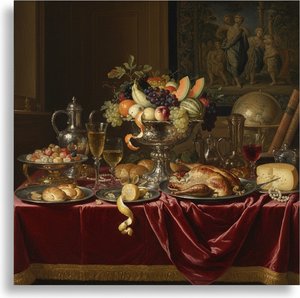
Abraham Hendricksz van Beyeren: Pioneering Dutch Still Life & the Banquet Tradition
Explore the captivating world of Dutch Golden Age still life with Abraham van Beyeren. Discover his innovative techniques, symbolic banquet scenes & lasting influence on art history. Learn about collecting these masterpieces.

Golden Light & Dutch Skies: The Timeless Magic of Dutch Golden Age Landscapes
Discover the breathtaking beauty of Dutch Golden Age landscapes. Explore the mastery of light, chiaroscuro, and 17th-century realism through an expert art history lens, celebrating the enduring legacy of the Dutch Masters for discerning collectors and art lovers.
