

 Eelvaade
 Saada
Saada Jaga
Jaga
 Teave teose kohta

 Laadi alla
 Sarnased teosed
 Röntgenuuring
 Slaidietendus
 Statistika
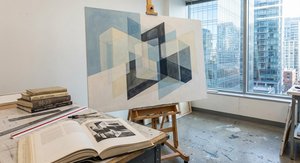
Étude, 1929 1930

 Loe lähemalt
Käsitsi valmistatud õlimaalireproduktsioon
Meie kunstnike poolt tellimusel valmistatud käsitsi maalitud õli-kainaste teos teie soovitud suuruses ja raamis. ( Lülita trükkitoodetele Ülemineks digitaalse pildiga müügi kanalisse)




































Vali meie eelmääratud suurused, mis vastavad teose algupärastele proportsioonidele.

Sa võite sisestada oma mõõtmed konkreetse raami või ruumi sobivuse tagamiseks. Kui teie valitud suurus ei vasta originaalpildi proportsioonidele, siis kärvime kunstiteost või laiendame maali täiendavate käsitsi maalitud elementidega. Enne tootmise algust saadetakse teile heakskiitmiseks digitaalne eelvaade.
Palun pidage meeles, et ekraanil kuvatav eelvaade ei kajasta tegelikku kärpimist või laiendamist. Ainult eelvaade näitab täpselt lõplikku kompositsiooni.
Kuigi on saadaval kohandatud suurused, soovitame originaalproportsioonide säilimiseks valida mõõdud eelmääratletud nimekirjast.
Pärast tellimust saadab OriginalUniqueArt.com meeskond kliendile e-posti juhised ning esitab eelvaate kavandi.
Maailmline tarne 3–4 nädala jooksul tavalise 5 nädala asemel. (13 september). Kvaliteedis kompromisse ei tehta.

Tasuta ekspresssaatmine üle maailma

Kõrgekvaliteediline linakangas

Täielik transpordikindlustus

Tollimaksude tagastamise garantii

Värvitoime täpsuse garantii

100 päeva tagastusõigus (ainult tootmisdefektide korral)

100% raha tagasi garantii

Hulgusoodustus
 Klaasivalik on saadaval ainult suuruses kuni 110 cm

Étude, 1929 1930
Reproduktsiooni tehnika
Reproduktsiooni suurus
-


Kogusumma
$ 300
Kunstniku elulugu
A Pioneer of Concrete Art: Fritz Glarner’s Relational Vision
Born in Zurich, Switzerland, in 1899 and ultimately finding his home in the United States, Fritz Glarner stands as a pivotal figure in the development of concrete art – a movement that sought to strip away representational imagery and embrace pure geometric form. His journey wasn’t one of sudden revelation but rather a gradual evolution, deeply rooted in the principles of Piet Mondrian and culminating in his own distinctive “relational painting.” Glarner's work represents a fascinating dialogue with modernism, a deliberate rejection of illusionistic space while simultaneously exploring the dynamic potential within simplified shapes and colors.
Early influences were decidedly European. His formative years in Naples, Italy, exposed him to classical art and architecture, while his studies at the Reggio Instituto di Belle Arti further solidified his understanding of artistic tradition. However, it was his time in Paris during the 1920s and early 30s that proved transformative. Here, he encountered the burgeoning Abstraction-Création group, a collective dedicated to exploring non-objective art – a crucial stepping stone towards his own unique style.
The Mondrian Connection: Diagonal Dynamics
Glarner’s artistic trajectory became inextricably linked with that of Piet Mondrian. He was profoundly influenced by Mondrian's theories of “dynamic symmetry,” particularly the artist’s rigorous system for organizing space and color based on horizontal and vertical lines intersecting at right angles. Yet, Glarner didn’t simply replicate Mondrian’s aesthetic; he actively pushed against its perceived rigidity. He introduced a crucial element – the diagonal – into the strict geometric framework, creating a sense of movement and spatial depth that was absent in Mondrian's earlier work. This subtle but significant alteration fundamentally shifted the visual experience of his paintings.
This innovation led to what Glarner termed “relational painting.” Rather than focusing on a single, dominant form or color, he developed a system where each element – line, shape, and hue – was intrinsically linked to its surrounding counterparts. The composition wasn’t about creating a static image but rather establishing a dynamic equilibrium between the elements, a carefully orchestrated interplay of relationships. He maintained Mondrian's commitment to a limited palette of primaries—red, yellow, and blue—and expanded upon Mondrian’s use of black lines, employing a range of grays to add further nuance and depth.
The Tondo Form: A Circular System
Glarner’s most recognizable output is the “tondo,” a circular format that became his signature. Within this contained space, he meticulously arranged simplified geometric forms according to his relational principles. The circle itself isn't merely a frame; it actively participates in the composition, creating a sense of unity and suggesting an infinite expanse beyond its boundaries. The tondo form provided a powerful visual metaphor for Glarner’s artistic philosophy – a contained system governed by precise rules yet capable of generating complex and engaging results.
His work is often described as “non-illusionistic,” meaning that it deliberately avoids creating the illusion of depth or perspective. Instead, he sought to represent space through the relationships between forms, suggesting volume and dimension through their arrangement within the circular field. This approach was a radical departure from traditional painting techniques and aligned with the core tenets of concrete art.
Legacy and Recognition
Fritz Glarner’s influence extends far beyond his own lifetime. His work is recognized as a cornerstone of concrete art, a movement that profoundly shaped the course of 20th-century abstraction. His paintings are held in prestigious collections, including the Museo Cantonale d’Arte of Lugano, Switzerland, and the Governor Nelson A. Rockefeller Empire State Plaza Art Collection in Albany, New York. His legacy lies not only in his distinctive visual style but also in his pioneering approach to composition and his unwavering commitment to exploring the fundamental principles of art.
Glarner’s life was marked by both artistic achievement and personal hardship. A serious injury sustained during a transatlantic voyage in 1966 forced him to return to Switzerland, where he ultimately passed away in Locarno in 1972. Despite the challenges he faced, his artistic vision continued to resonate, solidifying his place as one of the most important figures in the history of concrete art.

Lühikesed faktid
- Artistic Movement Or Style: Concrete Art, Neoplasticism
- Artists Or Movements Influenced By This Artist:
- De Stijl
- Bauhaus
- Artists Who Influenced This Artist: ['Piet Mondrian']
- Date Of Birth: July 20, 1899
- Date Of Death: September 18, 1972
- Full Name: Fritz Glarner
- Nationality: Swiss-American
- Notable Artworks:
- Étude
- Tondo (Studie)
- Place Of Birth: Zurich, Switzerland
Seotud artiklid

Beyond Form & Color: Geometric Abstraction's Evolution in 20th/21st Century Art
Explore the evolution of geometric abstraction from Cubism to contemporary art. Discover key artists like Malevich & Mondrian, investment insights, and expert collecting advice at OriginalUniqueArt.
Beyond Form & Color: Geometric Abstraction's Enduring Legacy in Art History
Explore the captivating world of geometric abstraction! Discover its origins, key artists like Malevich & Mondrian, and why this movement remains highly valued by art collectors today. Expert insights at OriginalUniqueArt.

Neo-Abstract Art: The High-Impact Evolution of Modern Visual Energy and Geometric Sophistication
Discover the power of Neo-Abstract art. Explore how bold geometric forms and high-impact visual energy are redefining modern design. Learn to curate sophisticated, high-energy spaces with the latest trends in contemporary abstraction and structural color.

Cubist Expressionism: The Profound Intersection of Geometric Structure and Raw Emotion
Discover the profound intersection of geometry and emotion in Cubist Expressionism. Explore art history through our expert analysis of modern masters and find museum-quality, hand-painted oil reproductions of iconic masterpieces for your collection.

Geomeetrilise Abstraktsiooni 10 Meisterteost: Kunst ja Kodukaunistus OriginalUniqueArt.com-is
Avastage geomeetrilise abstraktsiooni 10 suurteost – Kandinsky, Mondrian ja teised. Lugege kunstiteoste lugusid ning leidke inspiratsiooni kodukaunistuseks OriginalUniqueArt.com-is! Kunstikollektsioon ja reprodutsioonid.