 Lülita trükkitoodetele
 Loe lähemalt







































 Kunstiteoste või reproduktsioonide puhul, mille üks külg on üle 105 cm (umbikmolt 41 tolli), saadetakse raam kirjal asendis, la Dismantlitud komplektina. See meetod tagab ohutuse kohaletoimetamisel ja väldib transpordil tekkivaid kahjustusi.


Florinda: A Celebration of Aristocratic Beauty and Romantic Landscape
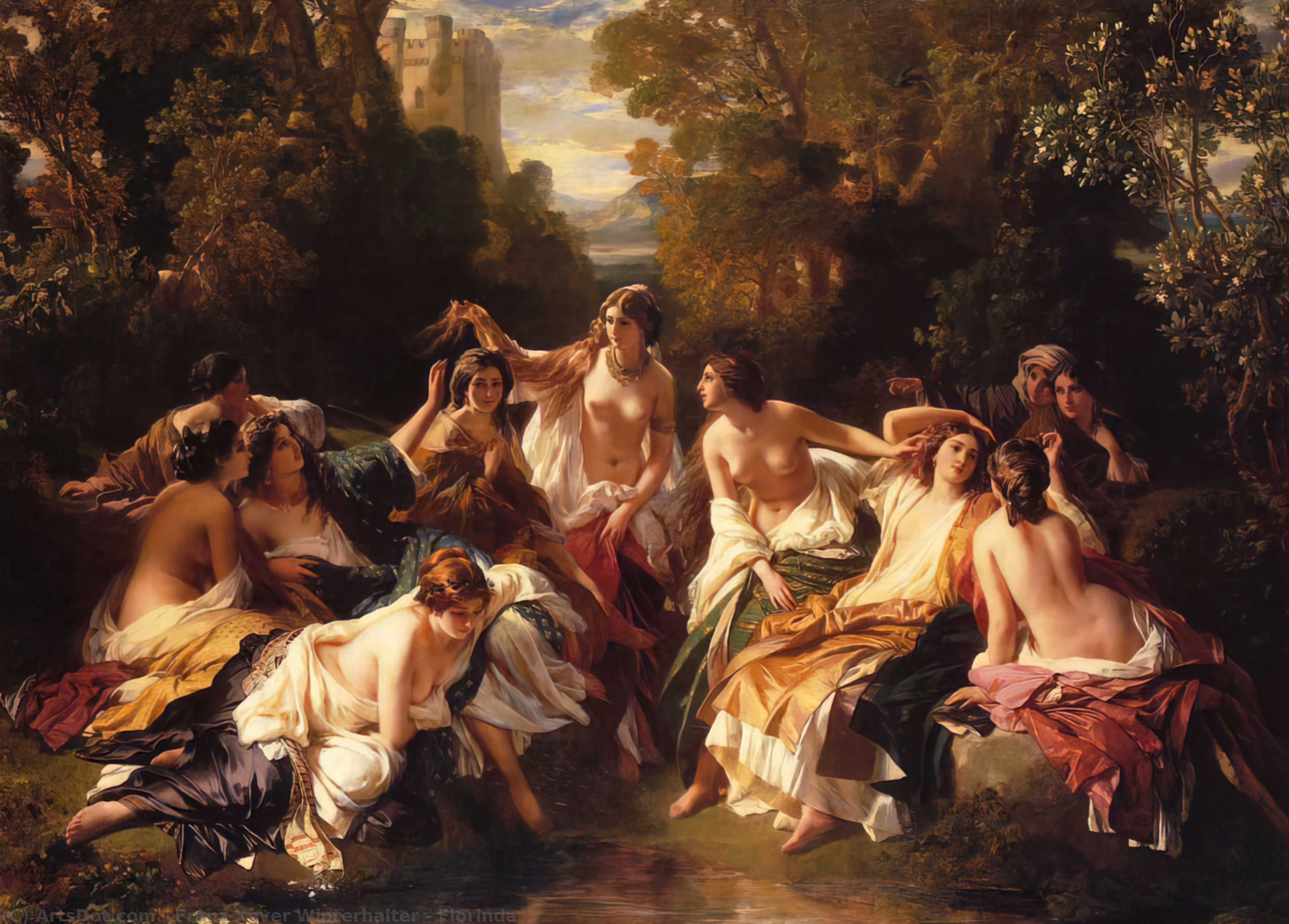
Franz Xaver Winterhalter’s “Florinda” (1853) stands as an emblem of the Victorian era's fascination with idealized femininity and serene natural grandeur. More than just a portrait, it’s a meticulously crafted tableau vivant—a living painting—that transports viewers to a moment of exquisite leisure amidst a breathtaking Alpine vista.
The artwork depicts a group of nude women reclining gracefully on a riverbank, bathed in the warm glow of afternoon sunlight. Their poses are deliberately languid yet imbued with an understated elegance, reflecting Winterhalter’s mastery of capturing aristocratic grace and conveying subtle emotional nuance. The landscape backdrop—characterized by rolling hills adorned with mature trees—serves as a counterpoint to the figures' nudity, symbolizing purity and harmony with the natural world.
Masterful Composition and Technique
Winterhalter’s compositional genius lies in his deliberate use of pyramidal structure, anchoring the central group of women while subtly directing the viewer’s gaze towards the distant castle perched atop a prominent hill. The artist employs fluid lines and organic shapes—evident in the curves of the figures' bodies and the undulating contours of the foliage—to create a sense of movement and dynamism that belies the painting’s stillness.
Technically, Winterhalter demonstrates unparalleled skill in layering oil paints to achieve remarkable textural depth. The artist meticulously builds up surface detail through countless brushstrokes, capturing the subtle nuances of skin tone and drapery with astonishing accuracy. This painstaking process—a hallmark of Baroque painting—results in a richly textured surface that invites close observation and enhances the overall visual impact.
Historical Context and Royal Connections
"Florinda" embodies Winterhalter’s reputation as Europe's foremost royal portraitist, reflecting his profound understanding of aristocratic sensibilities and his ability to infuse his canvases with flattery. Commissioned by Queen Victoria herself—a testament to Winterhalter’s prestige—the painting exemplifies the Romantic movement’s preoccupation with emotion and imagination alongside its commitment to realism.
Winterhalter skillfully blends likeness with idealized beauty, capturing not merely physical appearance but also inner character—a technique that cemented his position as a favorite among European monarchs. The artwork speaks to the Victorian desire for moral virtue and refined taste, presenting an image of aristocratic women engaged in contemplative repose amidst a landscape imbued with symbolic significance.
Symbolism and Emotional Impact
The distant castle symbolizes civilization and authority—a visual reminder of the social hierarchy prevalent during Winterhalter’s time. However, it is overshadowed by the dominant presence of nature—specifically the serene Alpine landscape—which embodies purity, tranquility, and spiritual contemplation.
"Florinda" evokes a profound sense of serenity and beauty, inviting viewers to savor the fleeting pleasures of life while appreciating the sublime grandeur of the natural world. It’s a masterpiece that transcends mere visual representation, conveying an emotional resonance rooted in Romantic ideals—a celebration of feminine grace and harmony with the cosmos.
Size: 178 x 246 cm
Date: 1853
Korduvad küsimused
Kas on õpilaste jaoks olemas infoleht teose „Florinda“, autor Franz Xaver Winterhalter kohta?
Teose „Florinda“, autor Franz Xaver Winterhalter Õppekasutusjuhend leht pakub trükkideletavat kahele lehele jaotatud infolehte: teose koos identifiekatsiooniga, ajajooni, mis asetab selle kunstniku eluajale, muid kunstniku teoseid, mõõdetud väripaletti ning neljas stiilis kopeerimiseks valmis allatlusi.
Millisse kunstisuuna kuulub teos „Florinda“, autor Franz Xaver Winterhalter?
"Florinda" on Romantic Baroque Elegance suunaga teos. See suundumine viitab kunstilisele traditsioonile, millega teos on seotud.
Kes tegi teose "Florinda" ja millal?
Teose "Florinda" autor on Franz Xaver Winterhalter ja selle loomisaeg on 1853.
 Eelvaade
 Saada
Saada Jaga
Jaga
 Teave teose kohta
 Juhend

 Laadi alla
 Sarnased teosed
 Röntgenuuring
 Slaidietendus
 KÜSIMUSED JA VASTUSID
 Statistika