
 Eelvaade
 Saada
Saada Jaga
Jaga
 Teave teose kohta

 Laadi alla
 Sarnased teosed
 Röntgenuuring
 Slaidietendus
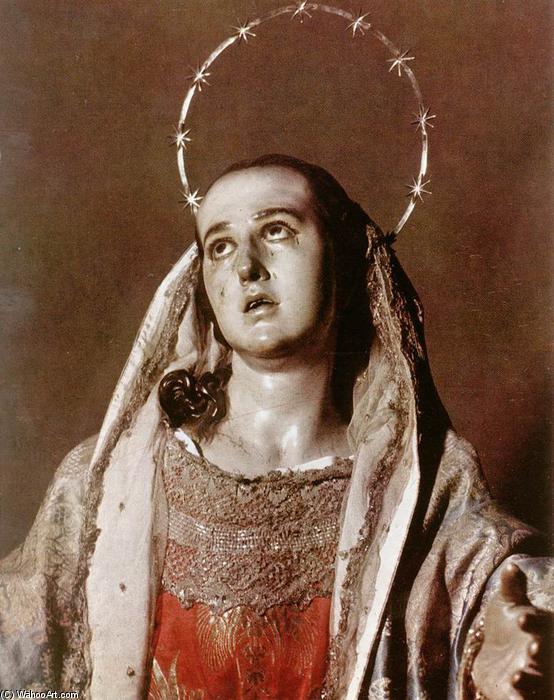
Dolorosa


 Loe lähemalt
Ostke kõrglahutusel ja täiustatud digitaalne pilt, mis on oluliselt parem kui veebilehel näidatud eelvaade.
Iga fail on meie spetsialistide poolt hoolikalt ette valmistatud, kasutades kaasaegseid tööriistu ja professionaalset käsitsi retušeerimist. Tagame, et igal pildil on erakordne selgus, täpne värvitäpsus ja peen detail.
Lõplik fail saadetakse e-posti teel 72 tunni jooksul, olles optimeeritud koheseks kasutamiseks professionaalsetes, toimetuslikes ja trüki keskkondades. See on sama kvaliteet, mida usaldavad tipptasemel disainistuudiod, kirjastused ja galeriid.
Digitaalne kunstiteos
Laadi alla kõrge resolutsiooniga fail isiklikuks vaatamiseks, trükkimiseks ja loomingulisteks projektideks. ( Osta print Osta käsitsi maalitud maal)
Sisse kuulub iga digitaalse pildi tellimusega
Eksperdi digitaalne kohaletoimetamine, garanteeritud
Valides OriginalUniqueArt.com, ei saa sa lihtsalt pilti – saad professionaalselt parandatud digitaalse teose, mida on valmistatud täpsusega ja mis on toetatud rahuldamatusgarantiiga. Siin on kõik, mis sinu tellimusega automaatselt kaasneb:

Kiire digitaalne saatmine
Teie kõrge resolutsiooniga digitaalne pildifail saadetakse teile e-posti 72 tunni jooksul pärast tellimist – kohe kasutamiseks valmis.

Tehisintellektiga täiustatud digitaalne fail
Teie teos on professionaalselt optimeeritud arenenud tehisintellekti tööriistade ja käsitsi redigeerimise abil, tagades maksimaalse detailitaseme, selguse ja värvitäpsuse.

Tasuta eluaegne uuesti saatmine
Kas kustutasid faili kogukalu unustamisel või kustutamisel? Puudub mure – saad selle uuesti igal ajal ilma lisatasuta.

Puuduvad importimaksed – alati
Nautige oma teoseid koheselt ilma tolli-, maksude või tarnimaskuludeta – digiletchargused on alati maksuvabadud.

Värvitäpsuse garantii
Me tagame, et teie digitaalne pilt kajastaks originaali värve professionaalsete tööriistade ja värvihalduse abil võimalikult täpselt.

60-päevane rahulolu garantii
Kui te ei ole oma digipildiga rahul, parandame seda või tagastame 100% summast 60 päeva jooksul – küsimusi ei esita.

100% raha tagastamise garantii
Ei ole rahul? Saate täielise tagastaja 60 päeva jooksul pärast digitaalse faili kättesaamist – küsimata.

Suurema tellimuse soodustused
Osta 3 pilti, säästa 10% - Osta 5, säästa 15% - Osta 10+, säästa 20%. Sobib suurepäraselt loomingulisteks projektideks, galeriideks ja agentuurideks.
Kunstniku biograafia
The Soul of Baroque Murcia
Francisco Salzillo y Alcaraz stands as the preeminent voice of the Spanish Baroque in the eighteenth century, a master whose hands breathed life into wood to create some of the most profound religious imagery in European history. Born in 1707 in Murcia, Spain, his artistic destiny was woven from the very fibers of his family's workshop. As the son of Nicolás Salzillo, a Neapolitan sculptor who brought the dramatic sensibilities of Italy to Spanish soil, Francisco was raised in an environment where art and devotion were inseparable. This lineage provided him with more than just technical training; it gifted him a stylistic vocabulary rooted in the emotive power of Bernini and the classical elegance of Italian sculpture, which he would later refine into a uniquely Murcian expression.
The trajectory of his career was marked by an early and remarkable maturity. By the age of twenty, he had already demonstrated a profound ability to capture spiritual depth through works such as the statue of Saint Ignatius Loyola for the Montepulciano Dominican Monastery. Following the passing of his father in 1727, the weight of the family legacy fell upon his shoulders. Alongside his siblings, Francisco transformed the Salzillo workshop into a powerhouse of artistic production, fostering a tradition of excellence that would define the religious landscape of the Region of Murcia for decades. His work was never merely about the physical act of carving; it was an attempt to bridge the gap between the earthly and the divine, making the mysteries of faith tangible through the medium of polychromed wood.
Mastery of Wood and Devotion
Salzillo’s technical brilliance lay in his mastery of polychrome sculpture, specifically the use of the estofado technique. This painstaking process involved carving intricate figures from wood, applying layers of gold leaf, and then painting over them to create textures that mimicked the rich fabrics of royal and divine vestments. His sculptures were not intended for the static silence of a gallery, but for the rhythmic, communal movement of Semana Santa (Holy Week) processions. These pasos—monumental sculptural groups—were designed to tell the story of Christ's Passion with such visceral realism that they could move entire crowds to tears.
His oeuvre is characterized by a seamless transition from the heavy, dramatic shadows of the high Baroque toward the lighter, more delicate grace of the Rococo. This evolution allowed him to imbale his figures with a sense of human tenderness and psychological complexity. Whether depicting the sorrowful Virgin in his Dolorosa or the solemnity of the Last Supper, Salzillo possessed an uncanny ability to render emotion through subtle gestures and facial expressions. His work reached its zenith in his expansive Nativity scenes, where he recreated biblical landscapes with an astonishing level of detail, turning miniature worlds into windows of profound spiritual contemplation.
A Legacy Carved in Faith
The historical significance of Francisco Salzillo extends far beyond the borders of Murcia. He was a foundational figure of the Murcian School, establishing an academy in 1765 to ensure that the secrets of his craft would be passed to future generations. Although many of his most precious works were tragically lost or damaged during the devastation of the Spanish Civil War, the fragments that remain continue to serve as pillars of Spanish cultural identity. Today, institutions such as the Iglesia de Jesús and the Salzillo Museum stand as sanctuaries for his enduring genius.
To contemplate a Salzillo masterpiece is to witness the intersection of art, history, and intense religious fervor. His life's work remains a testament to the power of sculpture to act as a vessel for collective memory and spiritual longing. Through his hands, the rigid medium of wood became fluid with emotion, ensuring that the Baroque spirit of Murcia would never truly fade from the annals of art history.

Francisco Salzillo
1707 - 1783 , Spain
Lühikesed faktid
- Artistic Movement Or Style: Baroque
- Artists Or Movements Influenced By This Artist: ['Rococo']
- Artists Who Influenced This Artist:
- Juan Martínez Montañés
- Gregorio Fernández
- Date Of Birth: May 1707
- Date Of Death: March 2, 1783
- Full Name: Francisco Salzillo y Alcaraz
- Nationality: Spanish
- Notable Artworks:
- El Belén
- Dolorosa
- Place Of Birth: Murcia, Spain

