

 Eelvaade
 Saada
Saada Jaga
Jaga
 Teave teose kohta
 Juhend

 Laadi alla
 Sarnased teosed
 Röntgenuuring
 Slaidietendus
 Q&A
Q&A Statistika
The Child Carburetor


 Loe lähemalt
Giclée / Kunstiprint
Muuseumikvaliteediga giclée- või kangasprint kiire tootmisega ja paindlikud viimistlusvõimalused. ( Osta käsitsi maalatud teos Lülita digitaalse pildi juurde)




P118B €10

P118H €10

P118W €10

P438Z €10

P508JH €12

P508YH €12

P805H €10

P805Z €10

P919BZ €10

P919G €10

P919XJ €10

P959ZH €10

P968JZ €12

W106C €8

W218G €10

W218JH €8

W218Y €10

W307PJ €10

W316G €10

W316PJ €8

W316Y €10

W398PJ €8

W4111J €10

W500HY €15

W500JH €15

W692G €12

W849H €8

W940BG €15

W953PJ €8




Vali meie eelmääratud suurused, mis vastavad teose algupärastele proportsioonidele.

Sisestage vajalik laius ja kõrgus, et see sobiks teie raamile või seinale. Trükki saab ainult lõigata, seda ei saa kunagi pildist suuremaks teha, seega ka erineva mustega suurus kaotab osa pildist. Enne trükkimist saadame teile kinnitamiseks digitaalse näidisprojektsiooni. Sellel lehel näidatud pilt ei kujuta reaalset lõiget — seda näitab ainult näidisprojektsioon.
Ülemaailmne tarne () 2 nädala jooksul, tavalise 4/5 nädala asemel. (31 oktoober)

Tasuta ekspresssaatmine üle maailma

Kõrgekvaliteediline lina-kangas

Täielik transpordikindlustus

Tollimaksude tagastamise garantii

Värvitoime täpsuse garantii

100 päeva tagastusõigus (ainult valmistusdefektide korral)

100% raha tagasi garantii

Hulgusoodustus
 Klaasivalik on saadaval ainult kuni 110 cm suuruses teostes

The Child Carburetor
Giclée / Kunstiprint
Reproduktsiooni suurus
-


Koguhind
€ 71
A Mechanical Reverie: Francis Picabia’s “The Child Carburetor”
Francis Picabia's "The Child Carburetor," painted in 1919, isn’t merely a depiction of a machine part; it’s a meticulously constructed visual poem—a testament to the burgeoning anxieties and exhilarating experimentation of the Dada movement. This striking work, currently residing within the Solomon R. Guggenheim Museum’s collection, immediately commands attention with its intricate assemblage of gears, wheels, springs, and other mechanical components arranged upon a stained plywood base. Yet, beneath this seemingly industrial facade lies a profound exploration of childhood, technology, and the very nature of creation itself.
The painting's style is undeniably rooted in the principles of Cubism, but it transcends simple geometric deconstruction. Picabia employs a deliberately fragmented perspective, presenting multiple viewpoints simultaneously—as if peering into the inner workings of a complex engine or dissecting the anatomy of a child’s imagination. The use of mixed media – incorporating pencil, graphite, crayon, and metallic paints—adds layers of texture and visual interest, mirroring the multifaceted nature of the subject matter. Notice particularly the deliberate application of gold leaf, lending an almost liturgical quality to the mechanical forms, suggesting a reverence for the machine as a new form of sacred object.
Dada’s Disruption: Context and Intent
Created during the tumultuous years following World War I, “The Child Carburetor” is deeply embedded within the context of Dadaism. This anti-art movement arose from a profound disillusionment with traditional values, societal norms, and the perceived failures of Western civilization. Dadaists sought to dismantle established artistic conventions and challenge viewers’ perceptions through shock, absurdity, and intellectual provocation. Picabia, a key figure in the Parisian Dada scene, embraced this spirit wholeheartedly, using his art as a vehicle for social critique and philosophical inquiry.
The title itself is crucial—"The Child Carburetor." It immediately juxtaposes the innocence of childhood with the cold efficiency of machinery. This deliberate pairing reflects Dada’s core concern: to expose the underlying mechanisms that govern our lives, revealing the often-absurd relationship between human experience and technological advancement. The inscription “DÉTRUIRE LE FUTUR” – "Destroy the Future" – further underscores this critical stance, suggesting a rejection of progress as blindly pursued and a call for radical reevaluation.
Symbolism Within the Machine
Beyond its immediate visual impact, “The Child Carburetor” is rich in symbolic meaning. The various mechanical components can be interpreted as representing different aspects of human existence—the gears symbolizing cycles of life and death, the wheels suggesting movement and progress, and the springs embodying potential energy. The clock visible on the right side adds another layer of complexity, referencing time’s relentless march and the anxieties surrounding modernity.
Furthermore, the painting's overall composition evokes a sense of both order and chaos. The meticulously arranged mechanical parts create an illusion of structure, while the fragmented perspective and unconventional use of color introduce an element of instability and uncertainty. This tension reflects the Dadaist desire to expose the inherent contradictions within modern society—the simultaneous promise of progress and the threat of destruction.
A Timeless Reverie
“The Child Carburetor” is more than just a painting; it’s an experience. It invites viewers to contemplate the relationship between humanity, technology, and the passage of time. Its bold aesthetic, intellectual depth, and emotional resonance continue to captivate audiences today, solidifying Picabia's place as one of the most important artists of the 20th century. Whether viewed as a critique of industrialization or a celebration of mechanical ingenuity, this remarkable work remains a powerful reminder of the enduring power of art to challenge our perceptions and provoke profound reflection.
Korduvad küsimused
Mis on teose „The Child Carburetor“, autor Francis Picabia loomisaeg ja stiil?
Teos "The Child Carburetor" loodi aastal 1919, kuuludes Dada and Abstract suunasse.
Kes lõi teose "The Child Carburetor" ja millal?
Francis Picabia loob teose "The Child Carburetor" aastal 1919.
Millistes mõõtudes ja millises suunases on "The Child Carburetor" trükkimist soovitatav teha?
Medium suurus, Portrait orientatsioon: see on teosele „The Child Carburetor“, autor Francis Picabia soovitatud trükkimise seadistus.
Kunstniku elulugu
A Life Forged in Avant-Garde Fire: The World of Francis Picabia
Francis Picabia, a name synonymous with the restless spirit of early 20th-century art, was more than just a painter; he was a provocateur, a poet, a typographer, and a relentless explorer of artistic boundaries. Born in Paris in 1879 to a French mother and a Cuban father steeped in diplomatic circles, Picabia’s life was marked by both privilege and a profound dissatisfaction with convention. This duality fueled his artistic journey, propelling him through Cubism, Dada, Surrealism, and beyond, leaving an indelible mark on the landscape of modern art. His early years were shadowed by tragedy – the loss of his mother to tuberculosis when he was just five – but also nurtured by a father who encouraged his burgeoning talent. Inheriting a substantial fortune allowed Picabia the freedom to dedicate himself entirely to artistic pursuits, a luxury that enabled him to relentlessly experiment and challenge established norms. He wasn’t merely interested in *what* art looked like; he questioned its very purpose and meaning.
From Impressionistic Beginnings to Cubist Revolution
Picabia's initial forays into the art world were rooted in the prevailing styles of the time, particularly Impressionism. He painted Parisian landscapes and riverbanks with a technical proficiency that nonetheless left him feeling unfulfilled. Critics found his work derivative, lacking originality, prompting a crucial turning point. This dissatisfaction spurred him to seek new avenues of expression, leading him towards the revolutionary ideas brewing within the Cubist movement around 1909. Joining the Puteaux Group – a collective including Marcel Duchamp and Guillaume Apollinaire – proved pivotal. He immersed himself in the deconstruction of form, the fragmentation of perspective, and the exploration of geometric abstraction. This period saw a significant shift in his aesthetic, moving away from representational accuracy towards a more conceptual approach to painting. His canvases began to pulse with a new energy, reflecting the intellectual ferment of the era. The influence of Duchamp was particularly strong, fostering a shared spirit of iconoclasm and a willingness to dismantle artistic traditions.
Dada’s Provocateur: Machines, Satire, and the Rejection of Reason
The outbreak of World War I served as a catalyst for Picabia's most radical phase – his embrace of Dadaism. Disgusted by the senseless violence and societal hypocrisy he witnessed, he rejected reason, logic, and traditional artistic values altogether. A move to New York in 1915 placed him at the heart of an emerging American Dada scene alongside Duchamp and Man Ray. It was here that Picabia truly honed his unique brand of Dadaist expression. He began creating a series of “machine drawings,” depicting fantastical mechanical contraptions – often imbued with sexual undertones – that served as biting critiques of modern society’s obsession with technology and industrialization. These works weren't simply depictions of machines; they were allegories for the dehumanizing forces at play in the world around him. His satirical wit, combined with a masterful command of line and form, made these drawings particularly potent. He published *The Little Review*, a Dadaist journal that further disseminated his provocative ideas and challenged conventional artistic norms. Universal Prostitution, a complex drawing created during this period, exemplifies his willingness to confront taboo subjects and dismantle societal expectations.
A Shifting Kaleidoscope: Surrealism and Beyond
Picabia’s artistic journey was characterized by constant evolution and a refusal to be bound by the limitations of tradition. While deeply involved with Dada, he briefly flirted with Surrealism in the 1920s, exploring the realm of dreams and the subconscious. However, even this association proved temporary. He quickly grew disillusioned with what he perceived as the rigid dogma of the Surrealist movement, preferring to maintain his independence and continue charting his own course. Throughout the latter part of his career, Picabia continued to experiment with various styles and techniques, incorporating elements of figuration, abstraction, and even transparency into his work. His later paintings often featured biomorphic forms and a vibrant palette, reflecting a renewed interest in organic shapes and sensual textures. He remained a restless innovator until his death in 1953, leaving behind a body of work that continues to challenge and inspire artists today.
Legacy: A Pioneer of Modern Artistic Freedom
Francis Picabia’s influence on modern art is undeniable. His relentless experimentation, his rejection of convention, and his willingness to embrace contradiction paved the way for generations of artists who followed. He was a true pioneer of artistic freedom, demonstrating that art could be anything – a political statement, a philosophical inquiry, a personal expression, or simply a playful exploration of form and color. His work anticipated many of the key developments in 20th-century art, from Pop Art to Conceptualism. He challenged the very definition of what constituted “art,” forcing viewers to question their own assumptions and preconceptions. Today, Picabia’s paintings are celebrated for their intellectual rigor, their visual dynamism, and their enduring relevance. His legacy lies not only in his individual masterpieces but also in his unwavering commitment to artistic innovation and his refusal to be bound by the limitations of tradition.

Francis Picabia
1879 - 1953 , Prantsuse
Lühikest infot
- Artistic Movement Or Style: Cubism, Dada, Surrealism
- Artists Or Movements Influenced By This Artist: ['Dada']
- Artists Who Influenced This Artist:
- Alfred Sisley
- Marcel Duchamp
- Date Of Birth: 1879
- Date Of Death: 1953
- Full Name: Francis Picabia
- Nationality: Prantsuse
- Notable Artworks:
- Stuudi Velazquez maalilt "Pope Innocent X"
- Kolm Uuringut Risti Aluse Jalgadele
- Place Of Birth: Pariis, Prantsuse
Sarnased artiklid

Geomeetrilise Abstraktsiooni 10 Meisterteost: Kunst ja Kodukaunistus OriginalUniqueArt.com-is
Avastage geomeetrilise abstraktsiooni 10 suurteost – Kandinsky, Mondrian ja teised. Lugege kunstiteoste lugusid ning leidke inspiratsiooni kodukaunistuseks OriginalUniqueArt.com-is! Kunstikollektsioon ja reprodutsioonid.

Abstract Ekspressionismi 10 Meisterteost: Kunsti ja Sisustamise Klassikat
Sukeldu abstraktse ekspressionismi maailma! Avasta 10 legendaarset kunstiteost – Pollock, Rothko jt. – ja nende loo. Leia inspiratsiooni interjööriks ning kaunista kodu OriginalUniqueArt.com kvaliteetsete reproduktsioonidega. Uuri kollektsiooni!

Fernand Légeri 25 parimat teost: modernse kunsti meistriteosed teie interjööri jaoks
Avastage Fernand Légeri 25 parimat teost! Sukelduge modernse kunsti, kubismi ja tubismi maailma. Leidke inspiratsiooni interjööridisainiks ning ostke kvaliteetseid kunstireproduktsioone OriginalUniqueArt.com-ist. Avastage kogu kollektsioon veebis!
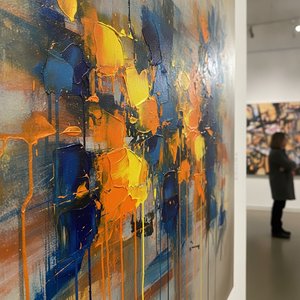
Beyond the Lines: Mastering the High-Impact World of Contemporary Abstraction
Master the high-impact world of contemporary abstraction. Discover how bold colors, textures, and modern movements like Abstract Expressionism can transform your space with premium, high-energy art curated for the design-conscious professional.

Francis Picabia: Dada's Provocateur – Reassessing Mechanical Forms & Mystical Undercurrents
Explore the revolutionary art of Francis Picabia – Dada's enigmatic provocateur. Discover his mechanical forms, hidden symbolism & lasting influence on modern art. Expert analysis for collectors.