
 Eelvaade
 Saada
Saada Jaga
Jaga
 Teave teose kohta
 Juhend

 Laadi alla
 Sarnased teosed
 Röntgenuuring
 Slaidietendus
 KÜSIMUSED JA VASTUSID
 Statistika
A Cosey Corner

- 92.0 x 62.0 cm


 Loe lähemalt
Hankige trükiivaldatav fail, mis on kvaliteedilt palju parem kui veebilehel näidatud eelvaade. Kõik meie müüdavad digitaalsed pildid pärinevad meie arhiivist kõrge resolutsiooniga originaalfailidest — tavaliselt 5000 kuni 15 000 pikslit laiust — nii et saate julgelt trükida suurematsat, lüüdist teha või detailset sisu reproduktsiooni teha.
Meie stuudiost ei lahtu ükski fail puutumatuna. Digiekpert võrdleb värve algsest maalistimusega ja vajadusel korrigeerib neid, seejärel parandab selgust ja detaile professionaalsete retušimisvahendite abil — püüdes alati jääda truudeks kunstniku pintoonile ja stiilile. Tulemuseks on pilt, mis näeb välja nagu maali, mitte nagu filtreeritud skann.
Teet kinnituse enne lõplikku valmimist: meie ekspert saadab pildi 72 tunni jooksul e-posti ülevaatamiseks. Ei ole rahul? Paluge parandusi või korrektsioone ning kui kvaliteet ei vasta ootustele, võite paluda tagastamist.
See on kvaliteet, millele tuguvad väljaandjad, disainistuudiod, galeriid ja trükikojad.
Digitaalne kunstiteos
Laadi alla kõrge resolutsiooniga fail isiklikuks vaatamiseks, trükkimiseks ja loomingulisteks projektideks. ( Lülita trükkitoodetele Osta käsitsi maalatud teos)
Sisse kuulub iga digitaalse pildi tellimusega
Eksperdi digitaalne kohaletoimetamine, garanteeritud
Valides OriginalUniqueArt.com, ei saa sa lihtsalt pilti – saad professionaalselt parandatud digitaalse teose, mida on valmistatud täpsusega ja mis on toetatud rahuldamatusgarantiiga. Siin on kõik, mis sinu tellimusega automaatselt kaasneb:

Kiire digitaalne edastus
Teie kõrge resolutsiooniga digitaalne pildifail saadetakse teile e-posti 72 tunni jooksul pärast tellimist – kohe kasutamiseks valmis.

Tehisintellektiga täiustatud digitaalne fail
Teie teos on professionaalselt optimeeritud arenenud tehisintellekti tööriistade ja käsitsi redigeerimise abil, tagades maksimaalse detailitaseme, selguse ja värvitäpsuse.

Tasuta eluaegne uuesti saatmine
Kas kustutasid faili kogukalu unustamisel või kustutamisel? Puudub mure – saad selle uuesti igal ajal ilma lisatasuta.

Puuduvad importimaksud – alati
Nautige oma teoseid koheselt ilma tolli-, maksude või tarnimaskuludeta – digiletchargused on alati maksuvabadud.

Värvitäpsuse garantii
Me tagame, et teie digitaalne pilt kajastaks originaali värve professionaalsete tööriistade ja värvihalduse abil võimalikult täpselt.

100 päeva rahuldamatuse garantii
Kui te ei ole oma digitaalse pildi eest rahul, siis me parandame seda või tagastame 100% summast 100 päeva jooksul – küsimusteta.

100% raha tagastamise garantii
Ei ole rahul? Saate täielise tagastaja 100 päeva jooksul pärast digitaalse faili kättesaamist – ilma küsimusteta.

Suurema tellimuse soodustused
Osta 3 pilti, säästa 10% - Osta 5, säästa 15% - Osta 10+, säästa 20%. Sobib suurepäraselt loomingulisteks projektideks, galeriideks ja agentuurideks.
A Moment of Quiet Reflection: Exploring Millet’s “A Cosey Corner”
Francis Davis Millet’s “A Cosey Corner,” painted in 1884, stands as a quintessential example of American academic realism—a style characterized by meticulous detail and unwavering adherence to classical principles. More than just a depiction of a rural interior, the painting embodies a profound exploration of domestic tranquility and timeless beauty, resonating deeply with viewers even today.
- Subject Matter: The artwork centers around a young woman seated indoors, bathed in soft light emanating from a window to her right. This intimate tableau captures a moment of serene contemplation—the simple act of reading—suggesting introspection and connection to the natural world.
- Style & Influences: Millet’s artistic vision draws heavily upon English Romanticism, blending elements of eighteenth-century costume design with subtle nods to New England domestic architecture. The stylistic choices reflect a desire for idealized representation, mirroring the conventions prevalent in historical painting during Millet's era.
Millet skillfully employs chiaroscuro—the dramatic interplay between light and shadow—to sculpt the woman’s figure and illuminate the room’s textures. This technique enhances depth perception and emphasizes emotional resonance, mirroring the artistic sensibilities of artists like Rembrandt and Caravaggio.
- Technique: Executed in oil paints on canvas, Millet's brushstrokes are visible yet controlled, contributing to a rich textural surface that captures the warmth of the hearth and the softness of fabric. The artist’s meticulous attention to detail—evident in the rendering of drapery folds and architectural ornamentation—demonstrates his commitment to capturing reality with uncompromising accuracy.
- Historical Context: Millet's painting emerged during a period of significant artistic experimentation, coinciding with the flourishing Anglo-American artists colony established in Broadway, Vermont. The inclusion of elements reminiscent of colonial New England kitchens speaks to broader cultural trends reflecting a fascination with idealized rural life and domestic harmony.
Beyond its formal qualities, “A Cosey Corner” carries symbolic weight. Reading represents knowledge, contemplation, and connection to inner thought—themes central to Romantic ideals. The muted earth tones of the palette evoke feelings of comfort, nostalgia, and serenity, inviting viewers into a space of quiet beauty.
Consider commissioning a high-quality reproduction of Millet’s masterpiece to infuse your home with an atmosphere of timeless elegance and contemplative peace.Korduvad küsimused
Kas Metropolitani Kunstimuuseum kogumuses olevat teost „A Cosey Corner“, autor Francis Davis Millet on lubatud seaduslikult reproduktsiooniga?
Teose „A Cosey Corner“, autor Francis Davis Millet autoriõiguste staatus on selge: teos kuulub avalikule omandile (avalikus õiguses – selle autoriõigud onหมดunud). Selle paik Metropolitani Kunstimuuseum kollektsioonis ei muuda seda staatust.
Kust saan näha originaalteost „A Cosey Corner“, autor Francis Davis Millet?
Originaalteost "A Cosey Corner" saab vaadata Metropolitani Kunstimuuseum, New York, United States of America-is.
Kuidas teos "A Cosey Corner" sobitub artisti Francis Davis Millet teemade ja stiiliga?
Teos "A Cosey Corner" jagab koos Francis Davis Millet teistega Academic Realism stiili ja korduvaid teemasid: 19th-century realism, academic tradition, english genre, colonial themes, studio experiments, domesticity, victorian values.
Kunstniku elulugu
A Life Interrupted: The Tragic Story of Francis Davis Millet
Francis Davis Millet, a name resonating with both artistic achievement and profound sorrow, was an American academic classical painter, sculptor, and writer whose life was tragically cut short aboard the RMS Titanic in April 1912. Born in Mattapoisett, Massachusetts, in either 1846 or 1848 – conflicting accounts exist, a diary suggesting the latter date – Millet’s journey from a young drummer boy in the Civil War to a celebrated artist and influential figure in American art circles is a testament to his multifaceted talent and unwavering dedication. His early experiences profoundly shaped his artistic sensibility; he often spoke of how assisting his surgeon father during the war instilled within him a deep appreciation for the vivid, arresting power of red – a color that would frequently appear in his paintings, lending them an emotional intensity. After graduating from Harvard with a Master of Arts degree, Millet embarked on a diverse career path, working as a reporter and editor before fully committing to his artistic pursuits.From Battlefield to Beaux-Arts: Artistic Development and Recognition
Millet’s formal artistic training began in 1876 when he returned to Boston to contribute murals at Trinity Church alongside John La Farge, a pivotal figure in the American art scene. This experience ignited his passion for large-scale decorative work. He then journeyed to Europe, specifically Antwerp, Belgium, where he studied at the Royal Academy of Fine Arts. His talent was immediately recognized; he became the first student to win a silver medal in his initial year and followed it up with a gold medal the following year. This European sojourn proved crucial in shaping his artistic style, firmly grounding him within the academic classical tradition. However, Millet’s adventurous spirit extended beyond the studio. He served as a war correspondent during the Russo-Turkish War of 1877–78, reporting for prominent publications like the *New York Herald* and the *London Daily News*. His bravery under fire earned him decorations from both Russia and Romania, adding another layer to his already remarkable life story. This period demonstrates Millet’s willingness to engage with the world beyond art, bringing a unique perspective to his work.A Champion of American Art: Institutions and Influence
Upon returning to America, Millet quickly became a leading voice in the burgeoning American art establishment. He was elected a member of both the Society of American Artists and the National Academy of Design, eventually rising to Vice-Chairman of the latter’s Fine Arts Committee. His influence extended into museum administration as a trustee of the Metropolitan Museum of Art and an advisor to the National Gallery of Art. Millet played a key role in shaping the artistic landscape of his time, notably serving as decorations director for the World's Columbian Exposition in Chicago in 1893. While stories surrounding his innovative use of compressed air spray painting during the exposition are debated – contemporary accounts suggest the technology was already in use – it underscores his forward-thinking approach to large-scale artistic projects. He was a founding member and vice chairman of the U.S. Commission of Fine Arts, dedicating himself to promoting excellence in American art and architecture until his untimely death. Furthermore, Millet was instrumental in establishing the School of the Museum of Fine Arts, Boston, and securing Emil Otto Grundmann as its first head, demonstrating his commitment to nurturing future generations of artists. His involvement with the American Academy in Rome further solidified his dedication to fostering artistic exchange and education.Beyond the Canvas: Literary Pursuits and Personal Life
Francis Davis Millet was not solely defined by his visual art; he was also a prolific writer and journalist. He translated works by Tolstoy, showcasing his intellectual curiosity and linguistic skills, and penned essays and short stories, including *Capillary Crime and Other Stories* (1892) and *The Danube From the Black Forest to the Black Sea* (1892). These literary endeavors reveal a multifaceted personality capable of expressing himself through various mediums. His personal life was equally rich and complex. He married Elizabeth (“Lily”) Greely Merrill in Paris in 1879, with Mark Twain serving as his best man, highlighting his close friendships with prominent figures of the era. The couple had three children: Kate, Laurence, and John. Intriguingly, historical evidence suggests a romantic relationship between Millet and Charles Warren Stoddard, an American travel journalist, during their time together in Venice, adding another layer to his personal narrative. He was also close friends with Augustus Saint-Gaudens, further cementing his place within the artistic elite of the late 19th and early 20th centuries.A Final Voyage: Legacy and Remembrance
On April 10, 1912, Millet boarded the RMS Titanic at Cherbourg, France, en route to New York City on Academy business. His final act of heroism – assisting women and children into lifeboats as the ship sank – embodies his character and selflessness. Though his body was recovered by the cable boat *Mackay-Bennett*, his death marked a profound loss for the art world. The Butt–Millet Memorial Fountain, erected in Washington D.C. in 1913, stands as a lasting tribute to Millet and his close friend Archibald Butt, both victims of the Titanic disaster. A bronze bust in Harvard University’s Widener Library also serves as a poignant memorial. Francis Davis Millet's legacy extends beyond his artistic creations; he remains a symbol of dedication, versatility, and courage – an artist whose life, though tragically interrupted, left an indelible mark on American art and culture. His paintings, sculptures, and writings continue to captivate audiences, reminding us of the enduring power of creativity and the fragility of human existence.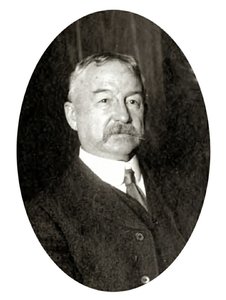
Francis Davis Millet
1846 - 1912