Cubist · 1948
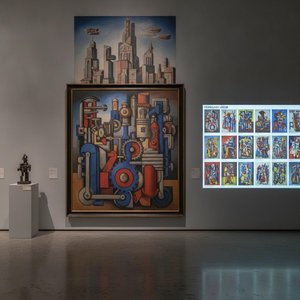
Mechanical Elements on a blue background (Fernand Léger, 1948)
Fernand Léger (1881–1955) on loonud teose Mechanical Elements on a blue background. See on pärinev 1948 aastast. See kuulub Cubist suuntrime. Teos on valmistatud materjalist Collage. Mõõdud on 65 × 50 cm.
- 1948
- Collage
- 65 × 50 cm

 Eelvaade

 Käsitsi maalatud õlimaalatsioon
 Saada
 Jaga
 Teave teose kohta


 Laadi alla
 Sarnased teosed
 Röntgenuuring
 Slaidietendus
 KÜSIMUSED JA VASTUSID

 Statistika
Mechanical Elements on a blue background lühidalt
- Pealkiri
- Mechanical Elements on a blue background
- Kunstnik
- Fernand Léger (1881–1955)
- Kunstnik on sündinud
- Argentan, Prantsusmaa
- Kuupäev
- 1948
- Tehnika
- Collage
- Mõõtmed
- 65 × 50 cm
- Suunad
- Cubist
- Aeglkond
- Modern
- Teema
- mechanical forms, collage, gears, bird, texture, assemblage
Mida Mechanical Elements on a blue background kujutab?
A Symphony of Gears and Birdsong
In the quiet tension of Fernand Léger’s 1948 masterpiece, Mechanical Elements on a blue background, we encounter a visual dialogue that transcends the mere arrangement of shapes. This work, often referred to as part of his "Composition VIII" series, serves as a profound embodiment of the anxieties and aspirations defining post-reconstruction Europe. As the world grappled with the debris of World War II, Léger sought to find beauty within the industrial fragments of a rebuilding civilization. The canvas explodes with a calculated chaos of interlocking circles, squares, and triangles, all set against a deep, atmospheric blue that provides both a sense of infinite space and a somber, reflective weight.
What makes this composition truly captivating for the modern observer is the unexpected intrusion of the organic into the mechanical. Amidst the rigid logic of gears, screws, and metallic fragments, a single bird perches atop a central structure. This delicate juxtaposition establishes a poignant tension between the cold, unyielding precision of machine construction and the fragile, ephemeral beauty of nature. It is a moment of dreamlike irrationality—a Surrealist whisper within a Constructivist shout—that invites the viewer to contemplate whether technology serves to suppress life or to provide a new stage upon which it might flourish.
The Art of Industrial Alchemy
Léger’s technique in this period was nothing short of revolutionary, moving beyond traditional brushwork to embrace the tactile reality of the machine age. He employed a sophisticated collage-like approach, meticulously assembling fragments that mimic metal sheeting and industrial components. This method was not merely decorative; it was an essential conceptual tool used to bridge the gap between fine art and the physical world. By integrating textures that suggest steel and iron onto the canvas, Léger transforms the act of painting into an act of engineering, creating a sense of depth and complexity that draws the eye into its intricate layers.
For the discerning collector or interior designer, this piece offers a unique aesthetic versatility. Its style—a masterful blend of Constructivist abstraction and Surrealist whimsy—allows it to anchor a room with its bold, geometric energy while maintaining a sophisticated, contemplative mood through its cool color palette. The interplay of blue and grey tones provides a calming foundation, making it an ideal centerpiece for contemporary spaces that value intellectual depth and structural elegance. To possess a reproduction of this work is to bring into one's home a piece of history that celebrates the resilience of the human spirit amidst the relentless march of progress.
Mechanical Elements on a blue background kõrge resolutsiooniga pildid
Avalik omanik: kunstnik suri aastal 1955.
Fernand Léger, Mechanical Elements on a blue background (1948). Avalik omaniklik õigus
Küsimused teemal Mechanical Elements on a blue background – vastused
Mis aastal loodi teos „Mechanical Elements on a blue background“, autor Fernand Léger?
Teos "Mechanical Elements on a blue background" on pärit aastast 1948. See ajastu aitab mõista teost Fernand Léger karjääri ja selle ajastu kontekstis.
Millises materjalis on teos „Mechanical Elements on a blue background“, autor Fernand Léger valmistatud?
Teose "Mechanical Elements on a blue background" loomisel kasutas Fernand Léger Collage tehnikat. See tehnika määrab originaalteose materjalilise olemuse.
Mis on originaalteose „Mechanical Elements on a blue background“, autor Fernand Léger mõõdud?
Originaalteose „Mechanical Elements on a blue background“, autor Fernand Léger mõõdud on 65 x 50 cm.
Millised teemad teoses „Mechanical Elements on a blue background“, autor Fernand Léger esile tõelve?
Teose "Mechanical Elements on a blue background" teemad on mechanical forms, collage, gears, bird, texture, assemblage, industrial age.
Kas teose „Mechanical Elements on a blue background“, autor Fernand Léger pilt on vabalt reproduseeritav?
Autoriõiguse teave teose „Mechanical Elements on a blue background“, autor Fernand Léger kohta: teos kuulub luba ala avalikus õiguses – selle autoriõigud onหมดunud. See määrab, kas kujundist on lubatud vabadelt reproduktsioone teha.
Millisele kunstnikule on teos "Mechanical Elements on a blue background" atribuutseeritud?
Teose "Mechanical Elements on a blue background" loovija on Fernand Léger. Selle lehe info kirjeldab Fernand Léger algteost.
Millissele stiilile kuulub "Mechanical Elements on a blue background"?
Teos „Mechanical Elements on a blue background“, autor Fernand Léger kuulub Cubist suunasse. See suund annab teosele stilistilise konteksti.
Kuhu Fernand Léger loomingulisse perioodi kuulub teos "Mechanical Elements on a blue background"?
Teos "Mechanical Elements on a blue background" kuulub Fernand Léger loomingulise karjääri perioodi Mature Period. See klassifikatsioon seostab teose kunstniku loovliku arenguga.
Mis vanuses loos Fernand Léger teose "Mechanical Elements on a blue background"?
Fernand Léger oli 67 aastane, kui ta teosest "Mechanical Elements on a blue background" aastal 1948 lõi. Vanus on arvutatud kunstniku sünnaaasta põhjal, 1881.
Kunstnikust, Fernand Léger

1881–1955, Prantsusmaa
Fernand Léger
Fernand Léger'i elu Fernand Léger'i lugu algab Argentani külas, mis asub Madrõun-Normandie piirkonnas Orne ängis. Ta tuli homma valgama 4. veebruaril 1881 aastal kui ainukein poeg. Tema varajased aastad said vormistada Prantsuse maapiirkonna vaiksuse ja tema ema, Marie-Adèle Daunou, kohalolun mõju all.
Ka Fernand Léger teosed
 Linn1919
 Mehaanik1920
 Kolm naist tükkidega1921
 Naised metsas1910
Essee teemadel Mechanical Elements on a blue background
 Industrial Revolution on Canvas: 10 Artworks That Define a Modern AestheticExplore 10 iconic artworks capturing the Industrial Revolution’s grit & beauty. From Monet to Manet, discover realism, impressionism & powe…
 Mastering the Machine Age: The 25 Best Artworks by Fernand LégerImmerse yourself in the vibrant world of Fernand Léger. Explore 25 iconic masterpieces of Cubism and Tubism, from bold geometric forms to m…
 10 Iconic Masterpieces to Elevate Your Coworking Space DesignTransform your workspace with timeless elegance. Discover 10 iconic masterpieces, from Impressionist classics to modern abstracts, curated …