
() ·
A print made for you, with care
Giclée / Kunstiprint
Muuseumikvaliteediga giclée- või kangasprint kiire tootmisega ja paindlikud viimistlusvõimalused. ( Osta käsitsi maalatud teos Lülita digitaalse pildi juurde)
Kunstniku elulugu
Eugène Laermans (1864-1940): Belgian painter known for evocative genre scenes of laborers & peasants, influenced by Bruegel & Decadent movements. Explore his powerful portrayals of social realism and haunting compositions.
 Loe lähemalt
alates ·
1. peatükk
On which medium should it be printed?
Canvas is printed with giclée inks and can be stretched or framed like a painting; paper comes flat, or framed behind glass.
Lugu 2
Millise suurusega see peaks olema?
Libistage suuruse muutmiseks; vasakul olev pilt näitab raami tegelikku laiust. Originaali proportsioonid on säilitatud.
Vali meie eelmääratud suurused, mis vastavad teose algupärastele proportsioonidele.

Sisestage vajalik laius ja kõrgus, et see sobiks teie raamile või seinale. Trükki saab ainult lõigata, seda ei saa kunagi pildist suuremaks teha, seega ka erineva mustega suurus kaotab osa pildist. Enne trükkimist saadame teile kinnitamiseks digitaalse näidisprojektsiooni. Sellel lehel näidatud pilt ei kujuta reaalset lõiget — seda näitab ainult näidisprojektsioon.
Lugu 3
Kuidas see peaks lleguema?
Vali pingutatud kanga servade stiil
Vali oma raam

Valge serv €1

häguse servaga lõppviimistlus €1

Laiendatud €1

P118B €10

P118H €10

P118W €10

P438Z €10

P508JH €12

P508YH €12

P805H €10

P805Z €10

P919BZ €10

P919G €10

P919XJ €10

P959ZH €10

P968JZ €12

W106C €8

W218G €10

W218JH €8

W218Y €10

W307PJ €10

W316G €10

W316PJ €8

W316Y €10

W398PJ €8

W4111J €10

W500HY €15

W500JH €15

W692G €12

W849H €8

W940BG €15

W953PJ €8

H24-GOLD €30

H24-SILVER €30

H36-GOLD €45

H36-SILVER €45
Raamitud
Kujund: . Kogumõõt koos raamiga: .
Lugu 4
Ülemaailmne tarne () 2 nädala jooksul, tavalise 4/5 nädala asemel. (22 november)
Viimistlusdetailid
Nimetelis, nagu muuseumis?
Graveeritud pronksplaadi üksikasjad
This elegant plaque features the artist's name and the title of the artwork, finely engraved for a timeless presentation.
It is made from bronze with a refined, elegant finish. The text is precisely laser-engraved for a sharp and permanent result. Measuring 9x2 cm, the plaque is compact yet easy to read. It's built to be durable and scratch-resistant, offering a professional, museum-quality look. Mounting is simple thanks to the included adhesive backing.
Läbipaistva akrüülplaadi üksikasjad
The plaque includes essential engraved details such as the artist's name, the title of the artwork, the date it was created, the type of media used-like oil on canvas or watercolor-a brief description of the piece, and a QR code that links to the complete artwork information.
It is crafted from clear acrylic, offering a sleek, modern appearance. The text is UV-engraved in black to ensure strong visual contrast. With a size of 10x15 cm, it ensures optimal readability. It comes equipped with two metal hooks for secure wall mounting. The plaque is designed to be weather-resistant, making it suitable for various environments, and it includes interactive features that work seamlessly with smartphone scanning.
Musta akrüülplaadiรายละเอียด (Note: The user provided "Musta akrüülplaadi detailid" as the current translation and asked for an improved version. Since "Musta akrüülplaadi
This elegant plaque includes engraved information such as the artist's name, the title of the artwork, the date it was created, the type of media used (like oil on canvas or watercolor), a short description of the artwork, and a QR code for quick access to more information.
The plaque itself is made from refined black acrylic with a premium finish. The text is laser-engraved in white for high contrast and readability. Its size is 10x15 cm, designed to be easy to read. It comes with two metal hooks for professional mounting. The design is sleek and fits any interior style. It is also weather-resistant and durable, with built-in digital integration for mobile compatibility.
Kaitsev lakikih?
Millal te seda vajate?
Lugu 5
Your print, as you ordered it

The blind one
Reproduktsiooni tehnika
Reproduktsiooni suurus
-

Reproduktsiooni raamivalikud
-
-
Kunstiteoste või reproduktsioonide puhul, mille üks külg on üle 105 cm (umbikmolt 41 tolli), saadetakse raam kirjal asendis, la Dismantlitud komplektina. See meetod tagab ohutuse kohaletoimetamisel ja väldib transpordil tekkivaid kahjustusi.
Vajalik professionaalne kokkupanek – see ei ole isetegevusega valmistamiseks mõeldud toode.
Komplekt tuleb kokku panna ja lõvet pingutada kogemusega professionaalse raamija, kasutades puiduliim (ei kuulu komplekti), lõvetpingi ja klempe, et hoida raami kande mustad õigena liimi kuivamisaja jooksul. Vale kokkupanek või ebaühtlane lõvetping võib kunstiteost püsivalt kahjustada ning seda
 Kunstiteoste või reproduktsioonide puhul, mille üks külg on üle 105 cm (umbikmolt 41 tolli), saadetakse raam kirjal asendis, la Dismantlitud komplektina. See meetod tagab ohutuse kohaletoimetamisel ja väldib transpordil tekkivaid kahjustusi.
Kaasatud on kõik tahked puidust liistud, täpselt lõigatud vastavaks suuruseks.
Kokku panemiseks kasutatakse lisatud kruvisid ning nurkade liimamiseks vajalikku puuliima, mida ei ole komplektis ja mida peab raamivalmistaja ise hankima.
Vajalik on kasutada professionaalseid tööriistu, mis ei kuulu komplekti: lõvetelapide pingist (pingutaja) ja klambreid, et hoida raami puidu nurgas õigena liimi kuivamisaja jooksul.
Oluline:
Nurgaliimamiseks on vaja puiduliim, liimimine peab toimuma klempide all kuni liim on täielikult kuivanud ning kokku monteeritud raami kanga pingutamiseks on vajalik kanga pingutustang. Kumbki neist ei kuulu komplekti. Palun veenduge enne selle suuruse tellimist, et teil on saadaval kogenud professionaalne raamistaja.

Nimesildikiri
-
-

Kaitsevärnitsus
Läikiv lakk (muudab värvid elavamaks ning kaitseb valgust ja niiskust eest)
-

Kiire tarne
Ülemaailmne tarne piirkonda 2 nädala jooksul, tavapärase 4/5 nädala asemel. 22 november
-
Kiirsaatmine
Ülemaailmne tarne riiki 4–5 nädala jooksul. (29 november).
Sisse kuuluv
Koguhind
€ 72
Klaasivalik on saadaval ainult kuni 110 cm suuruses teostes
Säli iga tellimusega
- Tasuta ekspresssaatmine üle maailma
- Kõrgekvaliteediline lina-kangas
- Täielik transpordikindlustus
- Tollimaksude tagastamise garantii
- Värvitoime täpsuse garantii
- 100 päeva tagastusõigus (ainult valmistusdefektide korral)
- 100% raha tagasi garantii
- Hulgusoodustus


 Eelvaade

 Saada
 Jaga
 Teave teose kohta
 Juhend


 Laadi alla
 Sarnased teosed
 Röntgenuuring
 Slaidietendus
 KÜSIMUSED JA VASTUSID
 Statistika
Numbritega
- 1898maalimis年份
- 29valikud raamidest
- standardne suurus, oma proportsioonidega
- 5nädalaid maalimiseks ja kohaletoimetamiseks
Originaali kohta

- 174.0 x 134.0 cm


Eugène Laermans
1864 - 1940, Belgium
Kiirinfo Eugène Laermans kohta
- Artistic Movement Or Style: Decadent Art; Genre Painting; Bruegel Influence
- Artists Or Movements Influenced By This Artist: ['Bruegel']
- Artists Who Influenced This Artist:
- Jean-François Portaels
- Charles Baudelaire
- Félicien Rops
- Date Of Birth: 1864
- Date Of Death: 1940
- Full Name: Eugène Jules Joseph Baron Laermans
- Nationality: Belgian
- Notable Artworks:
- English The Staircase
- Oasis
- The Drinker
- Landverhuisers
- Place Of Birth: Saint-jans-molenbeek, Belgium
Kunstniku elulugu
The Silent Visionary: The Life and Legacy of Eugène Laermans
In the quiet, shadowed corners of Belgian art history, few figures command as much profound respect and haunting intrigue as Eugène Jules Joseph Baron Laermans. Born in 1864 in Molenbeek-Saint-Jean, Brussels, his life was defined by a struggle against the encroaching darkness and silence of physical infirmity. At the tender age of eleven, a devastating bout of meningitis robbed him of his hearing and left him nearly mute. Yet, rather than allowing this tragedy to sever his connection to the world, Laermulus transformed his sensory deprivation into an unparalleled visual acuity. Deprived of sound, he turned his entire being toward the power of sight, developing an observational intensity that would eventually allow him to capture the very soul of the marginalized and the downtrodden.
His journey through the artistic landscape was one of remarkable stylistic metamorphosis. Enrolling at the Académie Royale des Beaux-Arts in 1887, he studied under the guidance of Jean-François Portaels, an experience that provided him with a rigorous academic foundation. During his early years, Laermans found himself drawn to the provocative and the decadent. Influenced by the evocative writings of Charles Baudelaire, he actively participated in the Decadent movement of 1890, even lending his brush to illustrate the controversial Les Fleurs du Mal. This period of his life was marked by an exploration of uncomfortable truths and a willingness to confront the darker, more complex facets of human nature, often utilizing an expressive and sometimes unsettling aesthetic.
From Decadence to Social Realism
As his career matured, Laermans underwent a profound shift that would ultimately define his historical significance. By 1893, he began to move away from the stylized decadence of his youth, gravitating instead toward a rugged, earthy realism reminiscent of the great Pieter Bruegel. This transition saw him abandon ornamental flourishes in favor of a more somber, monumental approach to his subjects. He became a chronicler of the human condition, focusing his gaze on the heavy-laden laborers and impoverished peasants of the Belgian countryside. His work during this era was not merely observational; it was an empathetic, often visceral, portrayal of the dignity found within hardship.
His mastery of composition and tone reached new heights in works such as his celebrated triptych, Landverhuisers (Emigrants), inspired by the novel La Nouvelle Carthage by Georges Eekhoud. In these pieces, Laermans utilized a muted palette and atmospheric depth to convey the weight of displacement and the struggle for survival. While some contemporary critics dismissed his depictions as "disturbing caricatures," it is precisely this raw, unvarnished honesty that has secured his place in the canon of social realism. He possessed a unique ability to imbue even the most desolate scenes with a sense of monumental gravity, turning the mundane struggles of the working class into epic narratives of endurance.
The Fading Light and Eternal Impression
The trajectory of Laermans' life took a final, tragic turn in 1924 when his eyesight began to fail. For an artist whose entire identity was forged through the lens of visual perception, this loss was catastrophic. He famously declared, "I am no longer Laermans," as he ceased to paint, retreating into a reclusive existence. Despite being elevated to the rank of Baron in 1927 by King Albert, his later years were marked by the profound isolation of total blindness. He passed away in 1940, leaving behind a body of work that serves as a testament to the resilience of the human spirit.
Today, the legacy of Eugène Laermans endures through paintings that continue to haunt and inspire. His ability to find beauty in the bleak and strength in the silent remains his greatest achievement. To look upon a Laermans canvas is to witness:
- A heightened sensory experience: Where the absence of sound creates a profound visual stillness.
- Social empathy: A deep, respectful connection to the lives of those often ignored by history.
- Technical evolution: A journey from the intricate decadence of the late 19th century to the powerful, stripped-back realism of the early 20th century.
His work remains a vital pillar of Belgian art, reminding us that even when the world grows dark and silent, the eyes of the soul can still perceive the profound truths of existence.
Sarnased artiklid
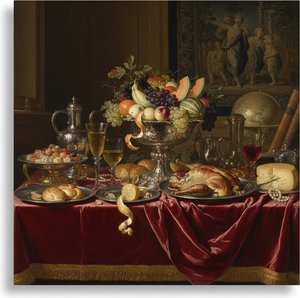
Abraham Hendricksz van Beyeren: Pioneering Dutch Still Life & the Banquet Tradition
Explore the captivating world of Dutch Golden Age still life with Abraham van Beyeren. Discover his innovative techniques, symbolic banquet scenes & lasting influence on art history. Learn about collecting these masterpieces.