

 Vaata sisu
 Jaga teost
 Jaga
Jaga
 Detailid
 Õppekate juhend

 Laadi alla
 Sarnased teosed
 Röntgenuuring
 Slaidietendus
 Statistika
Meditation
 Oil On Canvas
- WallArt
- Symbolism
 1893
1893- 19th Century
 48.0 x 65.0 cm
 Ohara Museum of Art
 Loe lähemalt
Käsitsi valmistatud õlimaalireproduktsioon
Meie kunstnike poolt tellimusel valmistatud käsitsi maalitud õli-kainaste teos teie soovitud suuruses ja raamis. ( Lülita trükkitoodetele Ülemineku digitaalse pildi müügi kanalisse)




P118B €10

P118H €10

P118W €10

P438Z €10

P508JH €12

P508YH €12

P805H €10

P805Z €10

P919BZ €10

P919G €10

P919XJ €10

P959ZH €10

P968JZ €12

W106C €8

W218G €10

W218JH €8

W218Y €10

W307PJ €10

W316G €10

W316PJ €8

W316Y €10

W398PJ €8

W4111J €10

W500HY €15

W500JH €15

W692G €12

W849H €8

W940BG €15

W953PJ €8




Vali meie eelmääratud suurused, mis vastavad teose algupärastele proportsioonidele.

Sisestage vajalik laius ja kõrgus, et teos sobiks teie raamile või seinale. Kuna tegu on käsipainatud teosega, siis erineva kujuga suuruse korral võib kunstnik jätta pildi ümber veidi rohkem marginaali või lõigata osa ära — valik on teie. Enne maali alustamist saadame teile kinnitamiseks digitaalse näidisprojektsiooni. Sellel lehel näidatud pilt ei kajasta tegelikku tulemust — seda näitab ainult näidisprojekttsioon.
Pärast tellimust saadab OriginalUniqueArt.com meeskond kliendile e-posti juhised ning esitab eelvaate kavandi
Maailmline tarne 3–4 nädala jooksul tavalise 5 nädala asemel. (26 oktoober). Kvaliteedis kompromisse ei tehta.

Tasuta ekspresssaatmine üle maailma

Kõrgekvaliteediline lina-kangastest muld

Täielik transpordikindlustus

Tollimaksude tagastamise garantii

Värvitoime täpsuse garantii

100 päeva tagastusõigus (ainult defektide korral)

100% raha tagasi garantii

Hulgusoodustus
 Klaasivalik on saadaval ainult kuni 110 cm suuruses teostes

Meditation
Reproduktsiooni materjal
Reproduktsiooni mõõtmed
-


Lõppsumma
€ 263
The Soul in Stillness: A Journey into Carrière’s Meditation
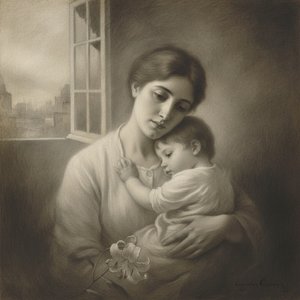
In the quiet corners of art history, few works possess the haunting, introspective power of Eugène Anatole Carrière’s 1893 masterpiece, Meditation. This oil on canvas is far more than a mere portrait; it is an invitation into the private sanctuary of the human psyche. At first glance, the viewer is met with the profound stillness of a young woman lost in thought, her presence commanding the space through a deliberate lack of movement. Carrière, a titan of the French Symbolist movement, eschews the fleeting light and vibrant energy of his Impressionist contemporaries to instead cultivate an atmosphere of eternal, somber reflection. The subject does not interact with the world outside the frame; rather, she exists in a state of profound interiority, making the painting a poignant testament to the beauty found within solitude and the weight of unspoken thoughts.
The technical brilliance of Meditation lies in Carrière’s masterful command over a restricted, almost monochromatic palette. Eschewing bright colors, the artist utilizes a sophisticated range of deep browns, velvety blacks, and subtle, earthy undertones of muted red and orange. This choice is not merely aesthetic but deeply psychological, serving to shroud the subject in a sense of mystery and melancholy. Through an ambitious layering process and the meticulous application of glazing techniques, Carrière achieves a luminous depth that seems to glow from within the canvas itself. The texture of the paint is remarkably tactile, creating a soft, skin-like quality in the figure’s face and a heavy, luxurious feel to her garments. His brushwork, while controlled, retains an organic fluidity that mirrors the natural contours of the human form, lending the piece a dreamlike, ethereal quality that borders on the supernatural.
Symbolism and the Echoes of the Subconscious
To understand Meditation is to understand the heart of Symbolism. During the fin-de-sięcle period, artists sought to represent ideas and emotions rather than the literal external world. In this work, every element serves a symbolic purpose. The woman’s downward gaze and slumped, vulnerable posture act as visual metaphors for grief, introspection, or perhaps an existential longing. The flattened composition—where the background dissolves into a hazy, indistinct void—strips away all worldly distractions, forcing the viewer to confront the subject's emotional state directly. There is no landscape to provide context, only the raw, unadulterated presence of feeling.
For the discerning collector or interior designer, this painting offers a profound sense of gravitas and emotional depth. It is a piece that does not merely decorate a wall but transforms the atmosphere of a room, bringing a sense of quiet sophistication and intellectual weight. Whether placed in a contemporary gallery setting or a classic study, Meditation acts as an anchor of tranquility. Its somber tones and rich textures provide a perfect counterpoint to modern minimalism or complement the ornate grandeur of traditional decor. Owning a high-quality reproduction of this work allows one to possess a fragment of the Symbolist soul, a permanent window into the profound beauty of the human spirit in repose.
Küsimused ja vastused
Jääb teos "Meditation" kunstniku kodumaale?
Ei - teos asub välismaal. Teost "Meditation" hoivadatud Jaapan, samal ajal sündis Eugène Carrière riigis Prantsusmaa.
Kas teosele „Meditation“, autor Eugène Carrière on saadaval diapositatsioon?
Teost „Meditation“, autor Eugène Carrière saab vaadata diapositena teose Slideshow lehel.
Millist atmosfääri teevad „Meditation“, autor Eugène Carrière sisekujundusse?
Teose „Meditation“, autor Eugène Carrière meeleolu on Calm ning seda soovitatakse ruumides, mis on Living Room. Meeleolu tähistab seda, mida teos ümbritsevale piirkonnale lisab.
Kunstniku elulugu
Varajane Elu ja Koolitus
Eugène Anatole Carrière, tuntud prantsuse sümbolisti kunstnik, sündis 16. jaanuaril 1849. aastal Gournay-sur-Marne'is Seine-Saint-Denise’i departemangus. Tema varajased eluaastad olid täidetud kunstiarmastusest ja soovist väljendada maailma oma unikaalses vaates. Carrière alustas õpinguid École des Beaux-Arts’is Pariisis, kus ta omandas põhjalikud teadmised klassikalises kunstis. Hiljem õppis ta Cabaneli juures, mis andis talle tugeva aluse tulevaste loominguliste ettevõtmiste jaoks. See koolitus aitas tal arendada tehnilisi oskusi ja kujundada isiklikku stiili, mis eristaks teda teistest kunstnikutest. Tema varajased tööd näitasid juba kalduvust dramaatilisele valguse ja varju kasutamisele ning sügava emotsionaalse intensiivsuse poole.Kunstiline Stiil ja Mõjud
Carrière’i maalid on tuntud oma eripärase pruuni monokroomse paleti poolest, mis on paljude kunstihuviliste tähelepanu köitnud. Tema tööde loomisel mängis olulist rolli Peter Paul Rubensi kunst, millega ta tutvus vangistuses Dresdenis. See mõju ilmneb tema varajaste maalide säravates värvides ja dünaamilises kompositsioonis. Carrière’i loomingut iseloomustab sügav psühholoogiline lähenemine figuuridele ning keskendumine inimliku olemasolu fundamentaalsetele küsimustele. Tema maalid ei piirdu pelgalt välise ilu kujutamisega, vaid püüavad tabada sisemisi emotsioone ja tundeid. “Noor ema” (1879), üks Carrière’i varajaseid silmapaistvamaid teoseid, asub praegu Musée des Beaux-Arts'is Rouen’s. See töö tähistas tema koduelu teemade algust, mis hiljem said tema kunstilise stiili tunnusjooneks. Ta otsis uusi viise väljendada intiimsust ja perekondlikke suhteid oma maalides.Olulised Teosed ja Näitused
Carrière’i loomingu hulka kuuluvad mitmed silmapaistvad teosed, mis on pälvinud kriitikute ja publiku tähelepanu. Nende seas on:- “Haige laps (Montargis)”, mis kujutab lapse haigust ja perekonna valu ning kaastunnet.
- “Esimene pihtimine (Toulon)”, mis on sügavalt emotsionaalne stseen noore tüdruku esimesest pihtimisest, täis religioosset vaimu ja sisemist pinget.
- “Portree Louis-Henri Devillez’ist (1887)”, mis on kõrgelt hinnatud töö, mis demonstreerib Carrière’i oskust tabada oma mudelite olemust ja iseloomu.
Pärand ja Mõju Kaasaegsele Kunstile
Carrière’i monokroomne stiil on leidnud kajastust Pablo Picasso töödes, eriti tema sinisel perioodil. See mõju kinnitab Carrière’i püsivat jälge kaasaegses kunstis. Tema loomingut iseloomustav dramaatiline valguse ja varju kasutamine ning sügav psühholoogiline lähenemine figuuridele on inspireerinud paljusid kunstnikke läbi aegade. Carrière’i tööd avavad uue perspektiivi inimliku olemasolu fundamentaalsetele küsimustele, pakkudes vaatajale võimaluse sügavalt mõtiskleda elu ja surma üle. Tema looming on oluline osa prantsuse sümbolismi ajaloost ning tema panus kunstimaailma on hindamatu. Vaadake rohkem Carrière’i töid OriginalUniqueArt.com/eugène anatole carrière saidil, avastage Musée des Beaux-Arts de Rouen, mis mahutab mõningaid tema varajasi teoseid aadressil discovering the musée des beaux-arts de carcassonne (france) ja õppige rohkem sümbolismist ning selle mõjust kunstile saidil the symbolism art movement. Carrière’i pärand jätkab inspireerides kunstnikke ja kunsti entusiaste, olles tõeline prantsuse sümbolismi pioneer.
Eugène Carrière
1849 - 1906 , Prantsusmaa
Lühikest infot
- Artistic Movement Or Style: Sümbolism, Monokroom
- Artists Or Movements Influenced By This Artist: ['Pablo Picasso']
- Artists Who Influenced This Artist: ['Peter Paul Rubens']
- Date Of Birth: 16. jaanuar 1849
- Date Of Death: 27. märts 1906
- Full Name: Eugène Anatole Carrière
- Nationality: Prantslane
- Notable Artworks:
- Haige laps
- Noor ema
- Esimene pihtimus
- Place Of Birth: Gournay-sur-Marne, Prantsusmaa
Sarnased artiklid

Lõuendi püsivus ja väljendusvõime: Tehnika, ajalugu ja kaasaegne praktika
Avastage lõuendi püsivuse ja väljendusvõime saladused! Ajaloolised tehnikad, kaasaegsed lähenemised ja ekspertide nõuanded maalikunsti austajatele. Lugege nüüd!

Oil on Canvas: A Historical & Technical Exploration of a Timeless Artistic Medium
Explore the rich history & enduring techniques of oil painting on canvas. Discover the science behind its longevity, conservation practices, and contemporary relevance. Expert insights for art enthusiasts.
Eugène Carrière: The 'Peintre d'Âme' & Symbolist Portraiture’s Intimate Vision
Explore the haunting world of Eugène Carrière, a pivotal French Symbolist artist known for his deeply intimate portraits & 'peinture d'âme'. Discover his life, style, and lasting influence on modern masters like Picasso. Shop high-quality reproductions at OriginalUniqueArt.

The Enduring Legacy of Oil on Canvas: Technique, History & Aesthetic Impact
Explore the rich history & techniques of oil painting – from Renaissance masters to Impressionism. Discover pigments, layering methods, and why this timeless medium endures. Expert insights for artists & art enthusiasts.

The Enduring Power of Painting: A Historical & Contemporary Exploration of Form and Emotion
Explore the rich history & enduring techniques of oil painting with OriginalUniqueArt. Discover masterpieces, learn about art collecting, and find authentic handmade reproductions crafted by skilled artists.