

 Vaata sisu
 Jaga teost
 Jaga
Jaga
 Detailid
 Õppekate juhend

 Laadi alla
 Sarnased teosed
 Röntgenuuring
 Slaidietendus
 Statistika
Maastik


 Loe lähemalt
Sellel lehel kuvatav kunstiteos on kaitstud autoriõigusega, mis tähendab, et meil ei ole seaduslikku õigust luua või müüa identset reproduktsiooni. Seda kaitset rakendatakse rahvusvaheliste kokkulepete alusel, nagu näiteks Berne konventsioon ning riiklike seadustega, sealhulgas nendega, mida on sätestatud USA autoriõiguse seadus – 17. peatükk.
Austasena ja seaduslikuna alternatiivina pakume originaalist inspireeritud, käsitsi maalitud isikupärastatud teoseid. Meie osutavad ja professionalsed kunstnikud uurivad hoolikalt originaali stiili, meelemoi ja kunstilist olemust, et luua uus, ainulaadne teos, mis tekitab sama tunnet – olles samal ajal omaette originaalne looming.
See meetod järgib täielikult autoriõiguse reegleid, kuna see ei põhine kaitstud kunstiteose kopeerimisel või dupliteerimisel. Selle asemel on tegu loova reinterpreetatsiooniga – uue maaldisega, mis on algteosest inspireeritud, kuid ei ole sellest identiline.
Käsitsi valmistatud õlimaalireproduktsioon
Meie kunstnike poolt tellimusel valmistatud käsitsi maalitud õli-kainaste teos teie soovitud suuruses ja raamis. ( Lülita trükkitoodetele Ülemineku digitaalse pildi müügi kanalisse)




P118B €10

P118H €10

P118W €10

P438Z €10

P508JH €12

P508YH €12

P805H €10

P805Z €10

P919BZ €10

P919G €10

P919XJ €10

P959ZH €10

P968JZ €12

W106C €8

W218G €10

W218JH €8

W218Y €10

W307PJ €10

W316G €10

W316PJ €8

W316Y €10

W398PJ €8

W4111J €10

W500HY €15

W500JH €15

W692G €12

W849H €8

W940BG €15

W953PJ €8




Vali meie eelmääratud suurused, mis vastavad teose algupärastele proportsioonidele.

Sisestage vajalik laius ja kõrgus, et teos sobiks teie raamile või seinale. Kuna tegu on käsipainatud teosega, siis erineva kujuga suuruse korral võib kunstnik jätta pildi ümber veidi rohkem marginaali või lõigata osa ära — valik on teie. Enne maali alustamist saadame teile kinnitamiseks digitaalse näidisprojektsiooni. Sellel lehel näidatud pilt ei kajasta tegelikku tulemust — seda näitab ainult näidisprojekttsioon.
Pärast tellimust saadab OriginalUniqueArt.com meeskond kliendile e-posti juhised ning esitab eelvaate kavandi
Maailmline tarne 3–4 nädala jooksul tavalise 5 nädala asemel. (22 oktoober). Kvaliteedis kompromisse ei tehta.

Tasuta ekspresssaatmine üle maailma

Kõrgekvaliteediline lina-kangastest muld

Täielik transpordikindlustus

Tollimaksude tagastamise garantii

Värvitoime täpsuse garantii

100 päeva tagastusõigus (ainult defektide korral)

100% raha tagasi garantii

Hulgusoodustus
 Klaasivalik on saadaval ainult kuni 110 cm suuruses teostes

Maastik
Reproduktsiooni materjal
Reproduktsiooni mõõtmed
-


Lõppsumma
€ 263
Esteban Vicente: Bridging Spanish Heritage and Abstract Expressionism
Esteban Vicente Pérez (January 20, 1903 – January 10, 2001) stands as a monumental figure in the annals of modern art, specifically enshrined within the vibrant tapestry of the New York School movement. Born amidst the burgeoning artistic fervor of Europe’s avant-garde—a period marked by radical experimentation and a fervent desire to redefine visual language—Vicente ultimately cemented his legacy as one of its most distinctive voices: a painter who possessed an extraordinary ability to harmonize Iberian traditions with the breathtaking audacity of abstract expressionism. This singular fusion resulted in artworks that resonate with profound emotional depth and intellectual complexity, captivating audiences for decades after their creation.A Synthesis of Tradition and Innovation
Vicente’s formative years instilled within him not merely an appreciation for visual arts but also a rigorous engagement with philosophical thought—a duality that profoundly shaped his artistic trajectory. His father, Toribio Vicente Ruiz, served as a military officer, fostering discipline and observational acuity—skills which would prove indispensable to Vicente's meticulous approach to capturing the essence of his subjects. Sofia Pérez y Álvarez, his mother, nurtured his sensitivity to the cultural richness of Asturias, cultivating an enduring connection to the landscapes and traditions of his homeland. This confluence of influences fueled a desire to transcend conventional artistic boundaries while simultaneously honoring the heritage of Spanish painting.The Landscape as Canvas: Exploring Color Field Composition
Vicente’s oeuvre is characterized by a masterful manipulation of color field composition—a technique pioneered by artists like Mark Rothko and Barnett Newman—that reflects his fascination with capturing the sublime beauty of nature. Paintings such as “Countryside” exemplify this stylistic preference, presenting expansive canvases dominated by hues of green and yellow. The artist's deliberate use of pigment—often applied in thin washes—creates an ethereal atmosphere that evokes feelings of tranquility and contemplation. Vicente’s meticulous attention to detail—evident in the subtle gradations of color and the careful placement of brushstrokes—underscores his commitment to conveying not merely visual representation but also emotional resonance.Symbolism Rooted in Iberian Spirituality
Beyond its formal aesthetic qualities, “Countryside” carries symbolic weight rooted in Spanish religious tradition. The depiction of a boat gliding across water—a motif frequently found in medieval and Renaissance art—suggests themes of pilgrimage and spiritual journey. Similarly, the soaring birds overhead symbolize aspiration and transcendence—concepts central to Christian theology. Vicente’s artistic vision transcends mere visual observation; it seeks to communicate profound ideas about human existence and our relationship with the divine.A Legacy Honored by Reproduction
Esteban Vicente's enduring influence extends far beyond his own lifetime, inspiring artists across generations. Reproductions of “Countryside” offer art lovers a chance to experience the beauty and contemplation inherent in his original masterpiece—a testament to the power of artistic legacy and the transformative potential of visual expression. The Museo Nacional de Salamanca’s collection proudly showcases this iconic artwork, ensuring that Vicente's vision continues to captivate audiences worldwide.- Explore more about Esteban Vicente’s life and work: Countryside - Esteban Vicente — Google Arts & Culture
- Discover Vicente Muniz Rodriguez’s photographic artistry: vicente muñiz rodríguez
- Delve into the artistic explorations of Esteban Lisa: esteban lisa
- Admire San Esteban Monastery Museum’s treasures: San Esteban
Küsimused ja vastused
Kas ma saan enne ostmist näha teost „Maastik“, autor Esteban Vicente oma seinal?
Teosele "Maastik" on saadaval täiendatud reaalne eelvaade: teose AR-eelvaade leht näitab seda teie enda ruumis ühilduval seadmel.
Kes tegi teose "Maastik" ja millal?
Esteban Vicente loomis teose "Maastik" aastal 1999.
Kust leian juhendi teose "Maastik" kohta?
Juhend teose "Maastik" kohta on selle Juhend leht – trükkiv infoleht, mis näitab teost koos selle pealkirja, autori ja allika ning identifiekatsioonitabeliga (kunstnik, kuupäevad, tehnika, algne suurus, kollektsioon).
Kunstniku elulugu
The Lyrical Soul of Abstract Expressionism
Esteban Vicente stands as a profound bridge between the classical traditions of Europe and the radical, transformative energy of the New York School. Born in 1903 in the quiet Spanish town of Turégano, his early life was shaped by a deep connection to the cultural richness of Spain. Under the guidance of his father, an amateur painter, Vicente’s formative years were spent wandering the halls of the Museo del Prado, where the masters of the past instilled in him a foundational respect for light, form, and composition. This classical training at the Real Academia de Bellas Artes de San Fernando provided the structural discipline that would later allow him to navigate the boundless realms of abstraction with unparalleled grace.
As the shadows of the Spanish Civil War loomed over his homeland, Vicente’s journey took a decisive turn toward New York City in 1936. This migration was more than a mere change of geography; it was an immersion into the epicenter of a burgeoning modernism. In the vibrant artist colonies of Manhattan, he found himself amidst a circle of luminaries including Jackson Pollock, Willem de Kooning, and Mark Rothko. Yet, while many of his contemporaries embraced the raw, spontaneous ferocity of Action Painting, Vicente carved out a distinctively meditative path. His work became a reflective counterpoint to the era's more aggressive gestures, focusing instead on a lyrical abstraction that sought to capture the intangible relationships within the natural world.
A Symphony of Color and Light
The true essence of Vicente’s mastery lies in his ability to manipulate color as if it were a living, breathing entity. Unlike the automatic, impulsive creation favored by some of his peers, Vicente approached his canvases with a painstaking, layered precision. He explored the delicate interplay between tonal harmonies and geometric forms, creating works that felt both expansive and deeply intimate. His technique often involved the careful layering of paint and even the inventive use of cut-and-torn paper in collages, resulting in textures that invite the viewer into a state of quiet contemplation.
His aesthetic evolution can be viewed through several key artistic pillars:
- Color Field Exploration: A profound focus on how hues interact to create depth and atmosphere without the need for representational subjects.
- Biomorphic Influence: A subtle nod to Surrealism, where organic, fluid shapes emerge from the abstract landscape.
- Meditative Composition: The use of light and form to evoke emotional responses, moving away from narrative toward pure sensation.
In his later years, particularly after establishing a refuge in Bridgehampton, Long Island, his work continued to refine this dialogue between the physical and the ethereal. Whether through oil on canvas or intricate paper works, Vicente’s art remained a testament to the power of chromatic resonance—the idea that color alone can communicate the complexities of human experience.
A Lasting Legacy in Modern Art
The historical significance of Esteban Vicente extends far beyond his individual canvases. He represents the successful synthesis of two worlds: the academic rigor of the Spanish tradition and the experimental freedom of American Post-War art. His career, spanning eight decades and two continents, serves as a vital link in the evolution of modernism, proving that abstraction could be both intellectually rigorous and deeply poetic.
Today, his legacy is preserved in some of the world's most prestigious institutions, ensuring that his quiet revolution of color continues to inspire. His works are held in permanent collections at:
- The Museum of Modern Art (MoMA), New York
- The Metropolitan Museum of Art, New York
- The Art Institute of Chicago
- The National Gallery of Art, Washington, D.C.
- The Bilbao Fine Arts Museum, Spain
Through his ability to find the universal in the abstract, Esteban Vicente remains a pivotal figure whose art does not merely demand to be seen, but invites the soul to linger within its luminous depths.

Esteban Vicente
1903 - 2001 , Spain
Lühikest infot
- Full Name: Esteban Vicente Pérez
- Nationality: Spanish American
- Date Of Birth: 1903
- Date Of Death: 2001
- Place Of Birth: Turégano, Spain
- Notable Artworks:
- Countryside
- Untitled, from the portfolio Peace Portfolio I
- Spring
- Artistic Movement Or Style: Abstract Expressionism
- Artists Or Movements Influenced By This Artist: ['New York School']
Sarnased artiklid
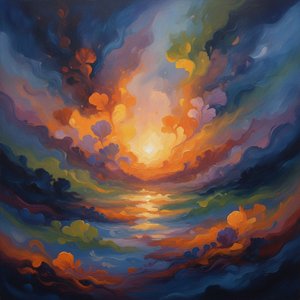
The Soul of Color: A Journey into the Emotional Resonance of Lyrical Abstraction
Embark on a cultural journey through Lyrical Abstraction. Explore how masters like Kandinsky used color and motion to translate emotion into visual poetry. Discover the profound beauty of abstract expressionism and learn to curate emotional resonance in your own art collection.
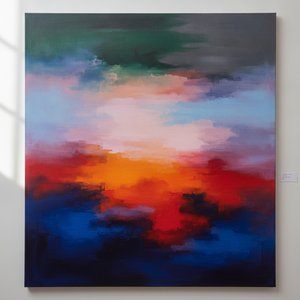
Color Field Painting: The Emotional Power of Pure Abstraction and Chromatic Depth
Explore the profound emotional depth of Color Field painting. Discover the history of mid-century abstraction, from Rothko to Newman, and learn how pure color transforms the viewer's experience through our expert art history guide.
Beyond the Brush: The Raw Emotion and Power of Abstract Expressionism
Explore the profound emotional depth of Abstract Expressionism. From the visceral energy of Action Painting to the serene beauty of Color Field, discover the history and mastery behind this transformative movement for the discerning art collector.

Abstract Ekspressionismi 10 Meisterteost: Kunsti ja Sisustamise Klassikat
Sukeldu abstraktse ekspressionismi maailma! Avasta 10 legendaarset kunstiteost – Pollock, Rothko jt. – ja nende loo. Leia inspiratsiooni interjööriks ning kaunista kodu OriginalUniqueArt.com kvaliteetsete reproduktsioonidega. Uuri kollektsiooni!
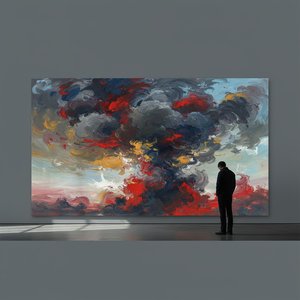
Beyond Representation: Exploring the Emotional Landscape of Abstract Expressionism
Explore the profound emotional world of Abstract Expressionism with OriginalUniqueArt. Discover key artists like Pollock & Rothko, learn about collecting, and find museum-quality reproductions to inspire your space.
