German Expressionism
Friends (Emil Nolde)
Emil Nolde (1867–1956) on loonud teose Friends. See kuulub German Expressionism suuntrime. See on valmistatud materjalist Oil On Canvas.
- Oil On Canvas

 Eelvaade

 Käsitsi maalatud õlimaalatsioon
 Saada
 Jaga
 Teosest infokaart


 Laadi alla
 Sarnased teosed
 Röntgenuuring
 Slaidietendus
 KÜSIMUSED JA VASTUSID

 Statistika
Friends lühidalt
- Pealkiri
- Friends
- Kunstnik
- Emil Nolde (1867–1956)
- Kunstniku sünnukoht
- Nordel, Taani
- Materjalid
- Oil On Canvas
- Liikumine
- German Expressionism
- Aeglkond
- Modern
- Teema
- landscape painting, german art scene, rural scenery, expressionist style, colorful palette”,, friendship theme”,
Mida Friends kujutab?
Identification of the Artwork and Artist
Friends is a work by the German painter and printmaker Emil Nolde. The piece focuses on the complexities of human connection, intimacy, and emotional vulnerability. Through a simplified and expressive visual language, the artist explores the fundamental themes of friendship or love.
Nolde, a prominent figure in the Expressionist movement and a member of the Die Brücke group, sought to move beyond mere surface representation. His approach prioritized the internal weight of a subject over literal likeness. In this work, the focus remains on the psychological depth of the figures, utilizing a directness that emphasizes feeling over anatomical precision.
Composition and Visual Elements
The composition is tightly cropped, focusing intensely on the faces and upper bodies of the individuals. The intertwined forms of the two figures dominate the frame, filling almost the entire space. This proximity creates a sense of intimacy, pressing the subjects almost directly against the picture plane. The figures occupy the foreground entirely, leaving little room for spatial recession.
The background remains minimal, providing no environmental context. This lack of detail ensures the viewer's attention remains fixed on the physical connection between the subjects. Organic shapes define the human forms, while loose, gestural lines contribute to a sense of movement and emotional intensity. The flattened perspective further emphasizes the closeness of the embrace, removing traditional depth in favor of immediate, tactile presence.
Technique and Material Application
Executed in oil, the work exhibits a rough, painterly texture. The application of pigment is direct, leaving visible brushstrokes across the surface. In certain areas, the paint is applied with enough thickness to suggest an impasto technique, adding a physical weight to the forms. This tactile approach emphasizes the materiality of the medium.
The linework is characterized by a loose, gestural quality rather than precision. Lines are frequently blurred and overlapping, which creates a sense of movement and visual tension. These indistinct boundaries contribute to a dynamic effect, prioritizing the sensation of the subject over anatomical or structural accuracy.
Color Palette and Lighting
The palette is grounded in earthy, muted tones. Dominant shades of brown, ochre, and grey establish a somber foundation for the composition. These neutral colors are interrupted by a striking red hue applied to a figure's hair or head covering, creating a singular point of visual intensity. Small accents of yellow appear in the background and around the faces of the figures, providing a subtle contrast to the darker, more subdued surroundings.
Lighting is diffused and uneven across the surface. There is no singular, identifiable light source; instead, the illumination creates a series of irregular shadows and highlights. This lack of uniform light emphasizes the contours of the faces and bodies, adding a sense of weight to the physical proximity of the subjects. The interplay of light and shadow contributes to the overall emotional density of the work.
Style and Artistic Expression
The work is characterized by a strong Expressionistic style, prioritizing emotional intensity over literal representation. Through the use of non-naturalistic colors and simplified forms, the artist moves away from academic realism toward a more subjective visual language. The composition relies on organic shapes that reflect the human form, creating a sense of physical and emotional closeness.
Facial features are suggested rather than realistically rendered, favoring abstraction to convey the internal state of the subjects. This approach utilizes simplified and somewhat abstracted shapes to emphasize the essence of the human connection. The resulting aesthetic is one of immediacy and raw feeling, where the distortion of form serves to heighten the psychological weight of the embrace.
Related Works by the Same Artist
Nolde’s exploration of human connection and psychological depth extends through various subjects, from religious narratives to landscape studies. His religious output includes Christ among the Children and the visceral 1909 work The Mocking of Christ. These pieces reflect a shift toward depicting the emotional weight of spiritual moments through non-naturalistic color and simplified forms.
The artist also engaged with the primal and the figurative in works such as Masks, executed about 1906-1907. His interest in the natural world and the atmospheric qualities of light is evident in Autumn Sea, painted about 1908, and in the composition of Two Women against a Blue Sky. Each work demonstrates a consistent preoccupation with using color as the primary substance of form.
Friends kõrge resolutsiooniga pildid
Emil Nolde, Friends. Avalik omaniklik õigus
Küsimused teemal Friends – vastused
Millest on teos "Friends" valmistatud?
Teos "Friends" on valmistatud tehnika Oil On Canvas.
Mida „Friends“, autor Emil Nolde kujutab?
„Friends“, autor Emil Nolde kujutab: landscape painting, german art scene, rural scenery, expressionist style, colorful palette”,, friendship theme”,, nolde’s landscapes”.
Kas teos "Friends" on ilma autoriõigusteta?
Autoriõiguse teave teose „Friends“, autor Emil Nolde kohta: teos kuulub luba ala avalik && copyright on aegunud. See määrab, kas kujundist on lubatud vabadelt reproduktsioone teha.
Kes on teose "Friends" kunstnik?
Teose "Friends" autoriks on mõeldud Emil Nolde.
Millissele kunstisuunale kuulub teos „Friends“, autor Emil Nolde?
Teosest „Friends“, autor Emil Nolde tuntud kunstisuuna on German Expressionism. See klassifikatsioon aitab teost paigutada sarnaste kunstnike ja teoste hulka.
Millist etap Emil Nolde loomingus teos "Friends" esindab?
Teos "Friends" kuulub Emil Nolde loomingulise karjääri perioodi Early Modern. See klassifikatsioon seostab teose kunstniku loovliku arenguga.
Kas Emil Nolde teos "Friends" kuulub avalikku omandisse ja miks?
„Friends“, autor Emil Nolde on avalik && copyright on aegunud. Tegijakeskuse kaitse kestus arvatakse kunstniku surmaajaest, mis toimus aastal 1956.
Kuidas teos "Friends" sobitub artisti Emil Nolde teemade ja stiiliga?
Emil Nolde loomingus on teos "Friends", mis kuulub German Expressionism stiili ja kordub teemad nagu german expressionism, rural landscapes", friendship & nature, nolde's regional focus, "simple, emotive forms", spiritual undertones.
Kas teos "Friends" on tüüpiline sellele, mida Emil Nolde tavaliselt lõi?
Emil Nolde korduvad teemad hõlmavad german expressionism, rural landscapes", friendship & nature, nolde's regional focus, "simple, emotive forms", spiritual undertones; teos "Friends" keskendub landscape painting, german art scene, rural scenery, expressionist style, colorful palette”,, friendship theme”,, nolde’s landscapes”.
Kunstnik Emil Nolde kohta
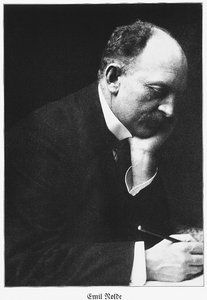
1867–1956, Taani
Emil Nolde
Emil Nolde elu ja identiteet 7. augustil 1867 sündinud Hans Emil Hansen, kes sai hiljem tuntuks nimega Emil Nolde, kasvas Schleswig-Holsteinile kuulvas Schleswigi hirmutavas ja ilu täis looduskeskkonnas, lähedal Nolde küla piiridel. Tema varajased aastad olid vormitud tema pere agrarilisest ja rühitudud maaelust, kus rütm oli määratud looduse ja põllutöö loogikaga. Kuid ta otsustas eventually sellest teele kõrvalähkuda, valides tee puuseppena ja mööblikaunistajana.
Ka Emil Nolde teosed
 Sunset
 Sea with Red Sky
 Sea and ship in the sunset
 Couple on the beach1903
Teemad teemal Friends
 Expressionism vs. New Objectivity: Emotion vs. Precision in German ArtMaster the tension between Expressionist emotion and New Objectivity precision. Explore the soul of German modern art now.
 Norwegian artworks of the 1920sNorwegian 1920s art by Edvard Munch and Nikolai Astrup defines an era of expressionism. View the full collection online at OriginalUniqueAr…
 Norwegian artworks of the 1900sNorwegian Expressionism and the intense works of Edvard Munch, including The Scream and Anxiety, define this era. View the collection at Or…