1879
At Elmore, Gloucester (Edward Smith, 1879)
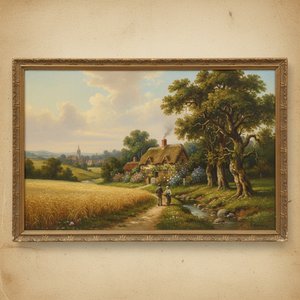
Edward Smith on loonud teose At Elmore, Gloucester. See on pärinev 1879 aastast. Teos asub Museum of Gloucester kogamuses Gloucester, Üliinglonia. Mõõdud on 31 × 46 cm.
- 1879
- 31 × 46 cm
- Museum of Gloucester

 Eelvaade

 Käsitsi maalatud õlimaalatsioon
 Saada
 Jaga
 Teave teose kohta


 Laadi alla
 Sarnased teosed
 Röntgenuuring
 Slaidietendus
 KÜSIMUSED JA VASTUSID

 Statistika
At Elmore, Gloucester lühidalt
- Pealkiri
- At Elmore, Gloucester
- Kunstnik
- Edward Smith
- Kunstnik on sündinud
- Kingdom of Great Britain
- Kuupäev
- 1879
- Mõõtmed
- 31 × 46 cm
- Kus seda näeb
- Museum of Gloucester, Gloucester, Üliinglonia
Mida At Elmore, Gloucester kujutab?
A Glimpse into Rural Life
The scene depicted in "At Elmore, Gloucester" is one of serenity and tranquility. A couple, with a woman holding a baby, is seen walking towards a house or farm building, surrounded by animals such as dogs, horses, and cows. The presence of birds flying overhead adds to the sense of peace and harmony that pervades the atmosphere. This painting is a testament to Edward Smith's skill in capturing the beauty of everyday life.Other Notable Works by Edward Smith
Some of Edward Smith's other notable works include River Scene with Anglers, the Leadon, Gloucestershire, Southgate Street, Gloucester, and The Quay and Docks, Gloucester, 1878. These paintings can be found on OriginalUniqueArt.com, where art enthusiasts can discover and purchase handmade oil painting reproductions of these masterpieces.- Handmade oil painting reproductions of "At Elmore, Gloucester" and other works by Edward Smith are available on OriginalUniqueArt.com.
- The Museum of Gloucester is home to an impressive collection of artworks, including those by Edward Smith.
- For more information on Edward Smith and his works, visit OriginalUniqueArt.com's artist page.
The captivating scene depicted in "At Elmore, Gloucester" is a testament to Edward Smith's skill as an artist and his ability to capture the essence of rural life in the late 19th century.
Kumba muuseumis asub teos At Elmore, Gloucester?
Museum of Gloucester
Gloucester, Üliinglonia
A Victorian Sanctuary of History and Art: Unveiling the Treasures of Gloucester Nestled within a magnificent Grade II listed Victorian building—originally the Price Memorial Hall of the Gloucester Science and Art Society—the Museum of Gloucester offers an extraordinary journey through time, a testament to the enduring power of heritage and artistic expression. Completed in 1893 by F.S. Waller in the early Renaissance style, this structure itself is a captivating work of art; its very stones whisper tales of intellectual curiosity and civic pride, echoing with the voices of generations past.


At Elmore, Gloucester kõrge resolutsiooniga pildid

Protected by copyright: these files are for personal reference, not a licence to republish.
Edward Smith, At Elmore, Gloucester (1879), Museum of Gloucester.
Küsimused teemal At Elmore, Gloucester – vastused
Kust saab teose „At Elmore, Gloucester“, autor Edward Smith täna vaadata?
Originaalteost „At Elmore, Gloucester“, autor Edward Smith hoiustatakse Museum of Gloucester, Gloucester, Üliinglonia muuseumis. Reproduktsioon võimaldab teost koduses keskkonnas esitleda.
Mis aastal loodi teos „At Elmore, Gloucester“, autor Edward Smith?
Teose „At Elmore, Gloucester“, autor Edward Smith loomimisaastaks on märgitud 1879.
Mis on originaalteose "At Elmore, Gloucester" mõõdud?
Teose „At Elmore, Gloucester“, autor Edward Smith mõõdud on 31 x 46 cm. Reproduktsioone saab tellida muutes mõõtust, säilitades samal ajal samad proportsioonid.
Kas teos „At Elmore, Gloucester“, autor Edward Smith kuulub avalikku omandisse?
Tegijateõiguse osas on teos "At Elmore, Gloucester" kuuluv klassifikatsiooni alla: on endiselt autoriõiguse all under kaitse.
Kes on teose "At Elmore, Gloucester" looja?
Teose "At Elmore, Gloucester" loovija on Edward Smith. Selle lehe info kirjeldab Edward Smith algteost.
Kas teost "At Elmore, Gloucester" peetakse kunstniku kodumaal?
Ei – teos asub välismaal. Edward Smith sünnimaa on Kingdom of Great Britain ning teose "At Elmore, Gloucester" originaali hoiab endas muuseum, mis asub riigis Üliinglonia.
Kunstnikust, Edward Smith

Kingdom of Great Britain
Edward Smith
The Visionary Landscapes of Edward Smith Edward Smith (1850 – 1912) stands as a singular figure in Victorian British art, recognized primarily for his monumental canvases depicting mythological scenes—particularly the biblical Flood—and expansive landscapes imbued with an almost unsettling grandeur. While overshadowed by contemporaries like Turner and Constable during his lifetime, Smith’s distinctive style has garnered renewed appreciation in recent decades, cementing his place as a pivotal artist of the era and influencing subsequent generations of painters. His work transcends mere representation; it strives to convey profound emotional resonance and philosophical contemplation, reflecting the anxieties and aspirations of a society grappling with scientific advancements alongside spiritual yearning. Born in Hanley, Staffordshire, Smith’s upbringing amidst a family of potters instilled an appreciation for craftsmanship and detail—traits that would become hallmarks of his artistic practice.
Ka Edward Smith teosed
 Market House, Dursley, Gloucestershire1879
 An Angling Party (The Willyams Family at Carnanton )1773
 Edward Rushton (1795–1851)1840
 Spa Grounds, Gloucester1875
Essee teemadel At Elmore, Gloucester
 Alfred I. Glendening: Capturing Rural England's Poetic EssenceExplore the captivating rural landscapes of Alfred I. Glendening, a master of British sporting paintings. Discover his life, artistic style…
 Masterpieces of the Countryside: Top 25 Sir Alfred James Munnings ArtworksImmerse yourself in the vibrant world of Sir Alfred James Munnings. Explore 25 iconic equestrian paintings and English landscapes that defi…
 25 Must-See Masterpieces at the Smithsonian American Art MuseumExplore 25 iconic works from the Smithsonian American Art Museum. From Hopper to O'Keeffe, find museum-quality art on OriginalUniqueArt.com.