
 Eelvaade
 Saada
Saada Jaga
Jaga
 Teave teose kohta
 Juhend

 Laadi alla
 Sarnased teosed
 Röntgenuuring
 Slaidietendus
 KÜSIMUSED JA VASTUSID
 Statistika
Road near Galle, Ceylon

- 38.0 x 24.0 cm


 Loe lähemalt
Giclée / Kunstiprint
Muuseumikvaliteediga giclée- või kangasprint kiire tootmisega ja paindlikud viimistlusvõimalused. ( Osta käsitsi maalatud teos Lülita digitaalse pildi juurde)




P118B €10

P118H €10

P118W €10

P438Z €10

P508JH €12

P508YH €12

P805H €10

P805Z €10

P919BZ €10

P919G €10

P919XJ €10

P959ZH €10

P968JZ €12

W106C €8

W218G €10

W218JH €8

W218Y €10

W307PJ €10

W316G €10

W316PJ €8

W316Y €10

W398PJ €8

W4111J €10

W500HY €15

W500JH €15

W692G €12

W849H €8

W940BG €15

W953PJ €8




Vali meie eelmääratud suurused, mis vastavad teose algupärastele proportsioonidele.

Sisestage vajalik laius ja kõrgus, et see sobiks teie raamile või seinale. Trükki saab ainult lõigata, seda ei saa kunagi pildist suuremaks teha, seega ka erineva mustega suurus kaotab osa pildist. Enne trükkimist saadame teile kinnitamiseks digitaalse näidisprojektsiooni. Sellel lehel näidatud pilt ei kujuta reaalset lõiget — seda näitab ainult näidisprojektsioon.
Ülemaailmne tarne () 2 nädala jooksul, tavalise 4/5 nädala asemel. (7 november)

Tasuta ekspresssaatmine üle maailma

Kõrgekvaliteediline lina-kangas

Täielik transpordikindlustus

Tollimaksude tagastamise garantii

Värvitoime täpsuse garantii

100 päeva tagastusõigus (ainult valmistusdefektide korral)

100% raha tagasi garantii

Hulgusoodustus
 Klaasivalik on saadaval ainult kuni 110 cm suuruses teostes

Road near Galle, Ceylon
Giclée / Kunstiprint
Reproduktsiooni suurus
-


Koguhind
€ 72
A Glimpse of Ceylon’s Soul: Edward Lear's “Road Near Galle, Ceylon”
Edward Lear’s “Road Near Galle, Ceylon,” painted in 1879, isn’t merely a depiction of a tropical landscape; it’s a carefully constructed window into the heart of late Victorian Sri Lanka. More than just a picturesque scene, this oil painting embodies a profound sense of observation and quiet contemplation – qualities deeply rooted in Lear's own life experiences and artistic sensibilities. The image transports us to a moment suspended in time, capturing not just the physical beauty of the region but also an atmosphere of gentle serenity and understated dignity. It’s a testament to Lear’s ability to distill complex emotions into a single, evocative composition.The Scene Unfolds: A Vibrant Tapestry of Life
The painting immediately draws the eye to a small group of figures traversing a dusty dirt road that snakes its way through a lush, palm-dominated landscape. These aren’t grand heroes or dramatic events; instead, they represent everyday life – men and women engaged in simple activities: some pausing for rest, others continuing their journey with purposeful strides. Their attire, rendered in warm, earthy tones, speaks to the practicality of rural existence while simultaneously hinting at a vibrant local culture. The backdrop is dominated by towering palm trees, their fronds reaching skyward, creating a sense of depth and scale that emphasizes the vastness of the Ceylon landscape. The light itself – a rich, golden hue – seems to bathe the scene in an eternal afternoon glow, lending it a timeless quality. Lear masterfully uses color to create a harmonious balance between the vibrant greens of the foliage and the warm browns and ochres of the road and figures, evoking a feeling of warmth and tranquility.Lear’s Technique: A Delicate Balance of Observation and Impression
Examining the painting's technique reveals Lear’s meticulous approach to capturing light and atmosphere. He employs a broken brushstroke style, layering thin washes of color to build up form and texture with remarkable subtlety. This method allows for a luminous quality, particularly evident in the dappled sunlight filtering through the palm fronds. The artist’s attention to detail is striking – from the individual folds of fabric on the figures' clothing to the intricate patterns of the foliage – yet he avoids overly precise rendering, instead favoring an impressionistic approach that captures the essence of the scene rather than a photographic likeness. The use of color is particularly noteworthy; Lear doesn’t shy away from bold hues but skillfully blends them to create a sense of depth and realism. The painting's overall effect is one of quiet beauty and understated elegance, reflecting Lear’s own artistic philosophy.Symbolism and Context: A Window into Victorian Sri Lanka
“Road Near Galle, Ceylon” offers more than just a visual pleasure; it provides a glimpse into the social and cultural context of late 19th-century Sri Lanka during the British colonial period. Lear’s depiction of everyday life—the simple routines of the villagers—reflects a nuanced understanding of the region's diverse population. The painting can be interpreted as a celebration of Ceylon’s natural beauty and its people, while subtly acknowledging the presence of foreign influence. Lear himself was a keen observer of human nature and a master of capturing fleeting moments of emotion in his art. His own experiences with illness and isolation likely informed his ability to imbue his paintings with a sense of melancholy and introspection. The painting’s title itself—"Road Near Galle, Ceylon"—suggests a deliberate focus on the journey, both literal and metaphorical, that defines human existence.Bringing Lear's Vision Home: Reproductions and Artistic Legacy
Today, “Road Near Galle, Ceylon” stands as a testament to Edward Lear’s artistic genius. High-quality reproductions offer an accessible way to experience the painting’s beauty and evoke its evocative atmosphere. Whether displayed in a living room, study, or gallery, this artwork invites contemplation and offers a connection to a bygone era. Consider framing options that complement the painting's rich colors and textures – a natural linen canvas would be particularly fitting, allowing the artwork to truly shine. Explore various sizes to find one that best suits your space and aesthetic preferences. By investing in a reproduction of “Road Near Galle, Ceylon,” you’re not simply acquiring an image; you’re inheriting a piece of art history—a window into the soul of Ceylon and the perceptive eye of Edward Lear.Korduvad küsimused
Mis on teose „Road near Galle, Ceylon“, autor Edward Lear loomisaeg ja stiil?
Teos "Road near Galle, Ceylon" loodi aastal 1879 ning see kuulub Romanticism suunasse. Aasta ja stiil anavad teosele kunstiajalist konteksti.
Kes lõi teose "Road near Galle, Ceylon" ja millises stiilis see on?
Edward Lear lõi teose "Road near Galle, Ceylon" Romanticism suunaga.
Kes lõi teose "Road near Galle, Ceylon" ja millal?
Edward Lear loob teose "Road near Galle, Ceylon" aastal 1879.
Kunstniku elulugu
Edward Lear (1812–1888): The Poet of Nonsense
Edward Lear, a name synonymous with whimsical verse and delightfully peculiar illustrations, was far more than the purveyor of limericks and fantastical creatures that often define his legacy. Born in 1812 in Holloway, Middlesex, England, into a family teeming with twenty-one children, Lear’s early life was marked by both financial instability and a burgeoning artistic talent. His father, Jeremiah Lear, faced hardship after the Napoleonic Wars, forcing young Edward to begin earning a living through his drawings at the tender age of fifteen. This necessity, however, ignited a lifelong passion that would see him traverse continents and capture the world in vibrant hues and playful lines. The shadow of familial difficulty, coupled with early health challenges – including epilepsy and bouts of melancholia he termed “the Morbids” – instilled within Lear a sense of gentle solitude and an inclination towards imaginative escape, qualities profoundly reflected in his art and writing. Lear's artistic journey began with meticulous precision. Initially employed by the Zoological Society, he honed his skills illustrating birds and animals, demonstrating a remarkable eye for detail and anatomical accuracy. This early work brought him to the attention of Edward Stanley, the 13th Earl of Derby, who commissioned Lear to document the exotic creatures within his private menagerie at Knowsley Hall. These years spent amongst lions, tigers, and parrots not only refined his draftsmanship but also fostered a deep connection with the natural world – a connection that would permeate his later landscapes. His dedication to scientific illustration instilled in him a disciplined approach to observation and representation, shaping his artistic sensibilities for decades to come. He meticulously rendered specimens of birds, reptiles, and mammals, capturing their textures and contours with remarkable accuracy—a testament to his technical prowess.From Ornithological Precision to Landscape’s Embrace
Lear's artistic development took a significant turn when he embarked on extensive travels throughout Europe and beyond. Italy became a particular haven, offering not only respite for his health but also an abundance of inspiring vistas. He absorbed the light, colors, and textures of these diverse regions, developing a distinctive style characterized by atmospheric perspective and delicate brushwork. His landscapes are imbued with a palpable sense of emotion—a reflection of his own contemplative spirit—and demonstrate a masterful command of watercolor technique. Unlike many artists of his time who sought to depict nature in idealized form, Lear embraced its imperfections, capturing the subtle nuances of light and shadow with sensitivity and nuance. He wasn’t merely recording what he saw; he was conveying an inner vision—a communion with the beauty and mystery of the natural world.The Poet of Nonsense: A World Unbound
Lear's literary contributions cemented his place in artistic history, establishing him as a pioneer of “nonsense” poetry – particularly limericks. *A Book of Nonsense*, published in 1846 under the pseudonym "Derry down Derry," revolutionized children’s literature and captivated audiences of all ages. This collection introduced a world populated by owls and pussycats sailing in pea-green boats, dongs with luminous noses, and other delightfully absurd creations. These verses weren't merely frivolous; they were imbued with a subtle melancholy and a playful subversion of conventional logic. Lear’s limericks explored themes of loneliness, longing, and the absurdity of existence—cloaked within a veneer of whimsicality—challenging readers to question assumptions about reality and embrace imaginative freedom. He didn’t simply invent nonsense words; he crafted entire worlds governed by their own internal rules, inviting audiences to suspend disbelief and revel in the joy of playful experimentation. *The Owl and the Pussy-Cat*, arguably his most famous poem, remains a beloved classic—its enduring appeal stemming from its lyrical rhythm and evocative imagery.A Legacy of Innovation and Enduring Charm
Lear’s influence extends far beyond the realm of children's literature. He championed a new form of poetic expression, liberating verse from rigid structures and embracing playful experimentation. His landscapes, though often overshadowed by his poetry, demonstrate a keen artistic sensibility and a mastery of watercolor technique—a skill honed through years of observation and practice. He was a true polymath – artist, illustrator, musician (he composed musical settings for Tennyson’s poems), author, and poet – whose diverse talents converged to create a unique and enduring legacy. His work continues to inspire artists, writers, and dreamers alike, reminding us that even amidst darkness, there is always room for light, laughter, and the boundless possibilities of the human spirit. He achieved considerable renown as an illustrator, notably contributing to publications by John Ruskin and Tennyson, showcasing his versatility and artistic vision. Lear’s paintings can be found in esteemed collections like The Ashmolean Museum, Oxford—a testament to his skill as a landscape artist and his enduring contribution to Victorian art.
Edward Lear
1812 - 1888 , Ühenditud kuningriik
Lühikest infot
- Artistic Movement Or Style: Nonsenss
- Date Of Birth: Mai 12, 1812
- Date Of Death: jaanuuar 29, 1888
- Full Name: Edward Lear
- Nationality: Inglismaa
- Notable Artworks:
- The Owl and the Pussy-Cat
- Illustratsioone linnudest
- Place Of Birth: London, UK
Sarnased artiklid

John Constable: 25 Suurimat Teost Inglise Maastikumaali Tippu
Avastage John Constable'i 25 suurimat teost! Sukeldu inglise maastikumaali romantismisse, imetlege Dedham Vale ilu ja leia inspiratsiooni kodukaunistuseks. Kvaliteetsed kunstireprodutsioonid OriginalUniqueArt.com-is. Vaata kohe!

Evocations of Place: A Historical Journey Through Landscape Art
Explore the rich history of landscape art with OriginalUniqueArt. Discover renowned artists, movements like Impressionism & Romanticism, and expert guidance for collecting timeless pieces. Find your perfect serene escape today!

Romantilise Maastikukunsti 10 Meisterteost: Kunstiteosed Koduks OriginalUniqueArt.com'ist
Avastage 10 romantilise maastikukunsti meistriteost! Tutvuge Caspar David Friedrichi, J.M.W. Turneri ja teiste suurte kunstnike loominguga OriginalUniqueArt.com-is. Leidke täiuslik õlimaal või reproduktsioon koduks – inspireeriv kollektsioon ootab!

Evocations of Place: A Historical Journey Through Landscape Art
Explore the rich history of landscape art with OriginalUniqueArt. Discover renowned artists, movements like Impressionism & tonalism, and expert guidance for collecting timeless pieces. Find your perfect serene escape today!
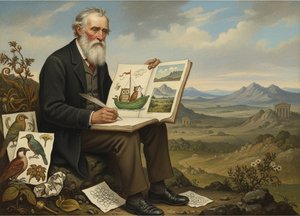
Edward Lear: A Life Beyond Nonsense – Landscape, Illustration & the Poetics of Isolation
Explore the life of Edward Lear beyond his nonsense poems. Discover his stunning landscape paintings, travel illustrations & the poignant themes of isolation in this expert art history analysis.