

 Vaata sisu
 Jaga teost
 Jaga
Jaga
 Detailid
 Õppekate juhend

 Laadi alla
 Sarnased teosed
 Röntgenuuring
 Slaidietendus
 Statistika
Gas
 Õlimaal kangaruumil
- Seinakunst
- Contemporary Realism
 1940
1940- Modernism
 102.0 x 66.0 cm
 Loe lähemalt
Sellel lehel kuvatav kunstiteos on kaitstud autoriõigusega, mis tähendab, et meil ei ole seaduslikku õigust luua või müüa identset reproduktsiooni. Seda kaitset rakendatakse rahvusvaheliste kokkulepete alusel, nagu näiteks Berne konventsioon ning riiklike seadustega, sealhulgas nendega, mida on sätestatud USA autoriõiguse seadus – 17. peatükk.
See meetod järgib täielikult autoriõiguse reegleid, kuna see ei põhine kaitstud kunstiteose kopeerimisel või dupliteerimisel. Selle asemel on tegu loova reinterpreetatsiooniga – uue maaldisega, mis on algteosest inspireeritud, kuid ei ole sellest identiline.
Giclée / Kunstiprint
Muuseumikvaliteediga giclée- või kangasprint kiire tootmisega ja paindlikud viimistlusvõimalused. ( Telli käsitsi maalitud reproduktsioon Ülemineku digitaalse pildi müügi kanalisse)




P118B €10

P118H €10

P118W €10

P438Z €10

P508JH €12

P508YH €12

P805H €10

P805Z €10

P919BZ €10

P919G €10

P919XJ €10

P959ZH €10

P968JZ €12

W106C €8

W218G €10

W218JH €8

W218Y €10

W307PJ €10

W316G €10

W316PJ €8

W316Y €10

W398PJ €8

W4111J €10

W500HY €15

W500JH €15

W692G €12

W849H €8

W940BG €15

W953PJ €8




Vali meie eelmääratud suurused, mis vastavad teose algupärastele proportsioonidele.

Sisestage vajalik laius ja kõrgus, et see sobiks teie raamile või seinale. Trükki saab ainult lõigata, seda ei saa kunagi pildist suuremaks teha, seega ka differentse vormiga suurus kaotab osa pildist. Enne trükkimist saadame teile kinnitamiseks digitaalse näidisprojektsiooni. Sellel lehel näidatud pilt ei kujuta reaalset lõiget — seda näitab ainult näidisprojekttsioon.
Ülemaailmne tarne () 2 nädala jooksul, tavalise 4/5 nädala asemel. (15 oktoober)

Tasuta ekspresssaatmine üle maailma

Kõrgekvaliteediline lina-kangastest muld

Täielik transpordikindlustus

Tollimaksude tagastamise garantii

Värvitoime täpsuse garantii

100 päeva tagastusõigus (ainult defektide korral)

100% raha tagasi garantii

Hulgusoodustus
 Klaasivalik on saadaval ainult kuni 110 cm suuruses teostes

Gas
Giclée / Kunstiprint
Reproduktsiooni mõõtmed
-


Lõppsumma
€ 70
Ameerika üksinduse ajatu Tematu kujundus
Edward Hopperi teos "Gas" (1940) on meistraluslik uuring üksindusel ja nostalgiat, mis tabab pehmet loomulikku valgust uputatud vana ajan kuju tankimiskohas. See emotsionaalne maal kutsub vaatajat sisse ajasse kinni jäänud hetke, kus maapiirkonna vaiksus on peaaegu kätt katsuda. Teos kiirgab enesearutluse tunnet, olles ligivalt väärtuslik lisa igale kunstikolektsioonile või interjöörile.Kompositsioon ja stiil: uuring tasakaalu ja kontrastide üle
Hopperi kompositsioon on hoolikalt tasakaalustatud, kus bensiinipumbud on asetsatud diagonaalsel joonel, mis juhib vaataja pilget läbi kogu stseenist. Paremal pool ilmub väike valge hoone punase katusega, tõenäoliselt teeninduspunkt, samas kui vasakul avaneb vaikus ja lai maastik koos kõrge rohu ja kauguses hääbuva metsaga. See kuju ja tühjuse vastandamine tekitab sügavuse ja rahu tunde. Värvipaletti on domineeritud pehmete mullikatustoonide, rohelise ja pruuniga, mis on teravas kontrastis bensiinipumpe ja valge hoone erksama punase ning valge värviga. Taevas, mis on maaldud pehmetes sinis grayish toonides, aitab suurendada rahulikku, kuid veidi melankoolist atmosfääri. Hopperi kasutatud tugevad horisontaalsed jooned, mida loovad tee ja horisont, aitavad teil teose rahu tunde edasi kanda, samas kui bensiinipumpe ja valgusmastaiooni asetsiooniga loodud diagonaaljooned suunavad vaataja pilget läbi kogu maali.Tehnika ja materjalid: valguse ja varju meisterlikkus
Hopperi tehnika iseloomuliseks teeb pehme pintoonimine koos hoolika tähelepanuga valgusel ja varjul, luues realismi tunde, säilitades samal ajal kunstilise tõlgenduse. Tekstuurid on suved, kuid detailne, eriti bensiinipumpe ja hoone pindade esitamisel. Roheline ala on tekstuurilisem, kus nähtavad pintoonimised vihjavad liikumisele ja elule. Valgus on pehme ja difuseeritud, viidates tõenäoliselt pilvisele päevale või varajasele õhtule. Varjud on diskreetne, kuid kohal olla, lisades stseenile sügavust ilma liigset dramaatilisust loomata. Perspektiiv on lineaarne, tõmbades vaataja pilget esile bensiinipumpidega eesfondist kaugusele, kus puud ja avatud ala kaduvad horisondis.Ajalooline kontekst: Ameerika elu hetkeline peegeldus
Maalitud aastal 1940, peegeldab "Gas" Edward Hopperi isikupärast stiili, mis keskendub kaasaegse Ameerika elu tabamisele üksinduse ja enesearutluse vaatamisest. Sel perioodil oli Hopper juba tunnustatud kunstnik, kes oli tuntud oma realistiliste, kuid stiilsetult tõlgendatud igapäevaste stseenide esitamise poolest. Teos on osa laiemast loomingust, mis uurib isolatsiooni ja aja kulumise teemasid Ameerika maastikul.Sümbolika ja emotsionaalne mõju: vaikse mõttemimuse lugu
Teema pöörleb üksi isiku ümber vana ajan tankimiskohas, tekitades üksinduse, nostalgia ja ehk ka aja kulumise teemasid. Tühi tee ja vaikne ümbritus vihjavad peatumise või mõttemimuse hetke. Bensiinipumpe oma ajaloolise disainiga sümboliseerivad Ameerika elu möödunud ajastut. "Gas" eristub oma võimekuse poolest edastada tugevat emotsionaalset atmosfääri näiliselt triviaalsete teemade kaudu. Erinevus bensiinipumpe erksat punast ja ümbruse pehmeid toone vahel tekitab visuaalset huvi. Üksik inimfiguur lisab inimlikku elementi, mis kutsub vaatajat spekuleerima stseenile eelnevate sündmuste üle.Miks kollektsionid ja disajinerid seda teost hindavad
Kunstihuvilistele, kollektsionide kogujatele ja interjööride disajineritele pakub "Gas" ajatut teost, mis ühendab ajaloolise tähtsuse emotsionaalse sügavusega. Selle pehmete värvide palett ja rahulik kompositsioon teeb selle mitmekülpse erinevates interjöörides, alates modernistlikust minimalistsest kuni rustikaalse šarmini. Maali võime tekitada vaikse mõttemimuse tunnet teeb sellest suurepärase keskpunktse, mis igas ruumis silma paistab. Otsides teid, et lisada oma koju nostalgia tunnet või otsite tähendusrikast teost oma kollektsiooni, on Edward Hopperi "Gas" lummav valik, mis inspireerib ja kõnetab aastaid.Küsimused ja vastused
Millissele stiilile kuulub "Gas"?
Teosest „Gas“, autor Edward Hopper tuntud kunstisuuna kuulub Contemporary Realism stiili. See klassifikatsioon aitab teost paikutada sarnaste kunstnike ja teoste hulka.
Millist värviharmoniat esitab „Gas“, autor Edward Hopper?
Teos „Gas“, autor Edward Hopper kujutab esile Tasakaalustatud harmonika värvharmooniat.
Mille teiste nimetega on Edward Hopper tuntud?
Kunstnik Edward Hopper tuntub ära ka nime all Eddie Hopper.
Kunstniku elulugu
Edward Hopper: A Master of American Realism
Edward Hopper, a name inextricably linked to the quietude and subtle melancholy that permeated 20th-century American life, wasn’t simply a painter of scenes; he was a poet of light and shadow, a chronicler of modern isolation. Born in Nyack, New York, in 1882, to middle-class parents of Dutch ancestry, Hopper's early years provided a stable upbringing that nurtured his artistic inclinations. From childhood sketches meticulously dated and signed, it became evident that keen observation and an innate talent for drawing were central to his being. Though initially encouraged towards commercial illustration – a pragmatic suggestion from his parents – Hopper’s ambitions leaned toward fine art, leading him to the New York School of Art where he studied under William Merritt Chase and Robert Henri. These formative years instilled not only technical skill but also an appreciation for realism and a commitment to depicting the world as he saw it—unvarnished and honest. The writings of Ralph Waldo Emerson resonated deeply with Hopper, reinforcing his sense of individualism and acute observation – qualities that would become hallmarks of his artistic vision. Early travels to Paris exposed him to Impressionism, yet Hopper quickly diverged from its fleeting brushstrokes, forging a path uniquely his own.Early Life and Artistic Beginnings
Hopper’s formative years were marked by a quiet determination to pursue his passions despite familial expectations. He demonstrated exceptional drawing skills from a young age, capturing landscapes and portraits with remarkable accuracy—a testament to his innate talent for visual representation. Despite initial inclinations toward commercial illustration, Hopper steadfastly adhered to his conviction that true artistic expression demanded engagement with the complexities of fine art. His studies at the New York School of Art under Chase and Henri profoundly shaped his aesthetic sensibilities, fostering a commitment to realism and influencing his stylistic choices throughout his career. These mentors championed observation as paramount to artistic achievement—a principle Hopper embraced wholeheartedly, prioritizing meticulous detail and capturing the essence of reality with unwavering fidelity. William Merritt Chase encouraged Hopper to focus on tonal harmony and expressive brushwork, while Robert Henri instilled in him a rebellious spirit and a desire to challenge conventional artistic norms.Finding His Voice: Realism and the American Scene
Hopper’s artistic journey wasn't immediate or effortless. He grappled with discovering his distinctive voice, experimenting with various styles before settling into the realism that would define his career. This wasn’t mere replication of reality; it was a distillation of its essence, stripping away extraneous detail to reveal underlying emotional truths. His paintings began to focus on everyday scenes – houses, diners, offices, hotel rooms – imbued with a sense of stillness and often, loneliness. He possessed an extraordinary ability to capture the psychological states of his subjects, hinting at narratives without explicitly stating them. The precise rendering of light and shadow became crucial, not merely as descriptive elements but as emotional cues, creating atmospheres that were both captivating and unsettling. House by the Railroad (1925), an early masterpiece, exemplifies this approach—a seemingly simple composition radiating a profound sense of isolation and mystery. Hopper’s printmaking, often overlooked, ran parallel to his painting, sharing similar themes and stylistic qualities, demonstrating his mastery across mediums. He wasn't interested in grand historical narratives or allegorical symbolism; he focused on the mundane, elevating it through careful observation and emotional resonance.Iconic Visions: Nighthawks and Beyond
While Hopper’s career unfolded gradually, certain works catapulted him to widespread recognition. Nighthawks (1942), arguably his most famous painting, became an instant icon of American culture. The late-night diner scene, bathed in stark fluorescent light, perfectly encapsulates the alienation and anonymity of modern urban life. The figures within are lost in their own thoughts, disconnected from one another despite their proximity—a poignant commentary on the human condition. Gas (1940), with its striking portrayal of a roadside gas station, showcases Hopper’s fascination with American landscapes and the burgeoning automobile culture. Other notable works like *Automat*, *Office in a Small City*, and *Summertime* each offer unique insights into the complexities of 20th-century American society. These paintings weren't merely depictions of places; they were explorations of mood, psychology, and the subtle dramas unfolding within ordinary settings. His wife, Josephine Nivison Hopper, played a vital role not only as his lifelong companion but also as a frequent model, contributing significantly to the characterization of his female figures.Legacy and Influence
Edward Hopper’s enduring legacy rests upon his profound contribution to American art history—a contribution characterized by unwavering realism, psychological depth, and an unparalleled sensitivity to capturing the nuances of human experience. His paintings continue to resonate with audiences today because they speak to universal themes of loneliness, isolation, and the search for meaning in a rapidly changing world. Hopper’s stylistic innovations profoundly influenced subsequent artists, establishing him as one of the most important figures in modern American art—a legacy cemented by his iconic works and their enduring presence in museums worldwide. His ability to transform commonplace scenes into evocative explorations of emotion solidified his place as a visionary artist who captured the spirit of his time—and continues to inspire contemplation and wonder generations later. Hopper’s influence extends beyond painting, permeating film and literature, demonstrating the breadth of his artistic impact on cultural expression.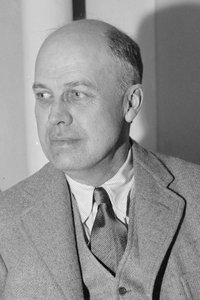
Edward Hopper
1931 - 1967 , USA
Lühikest infot
- Artistic Movement Or Style: Realism
- Artists Who Influenced This Artist:
- William Merritt Chase
- Robert Henri
- Date Of Birth: July 22, 1882
- Date Of Death: May 15, 1967
- Full Name: Edward Hopper
- Nationality: American
- Notable Artworks:
- Nighthawks
- House by the Railroad
- Gas
- Place Of Birth: Nyack, USA
Sarnased artiklid
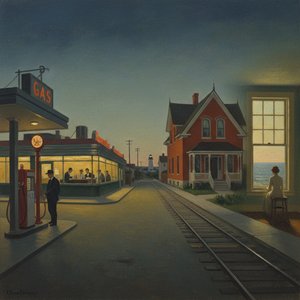
Edward Hopperi 25 parimat teost: Valgus, vari ja ameerika hingus seinakaunistuseks | OriginalUniqueArt
Avastage Edward Hopperi 25 parimat teost! Sukelduge valgusest ja varjust täis maailma, mis peegeldab ameerika hingust. Leidke inspiratsiooni kodukaunistuseks ja kvaliteetsed kunstireproduktsioonid OriginalUniqueArt.com-ist. Vaadake kogu kollektsiooni online!

Edward Hicks’ ‘Peaceable Kingdom’: American Folk Art & the Shaping of a National Identity
Explore the profound symbolism & historical context of Edward Hicks’ ‘Peaceable Kingdom.’ Discover how this iconic American folk art masterpiece reflects Quaker values and shaped a nation's identity. Learn more at OriginalUniqueArt.

Grant Wood & American Regionalism: Identity, Myth & the Rural Landscape
Explore the world of Grant Wood & American Regionalism with OriginalUniqueArt. Discover the symbolism behind 'American Gothic', recurring themes, and the movement's lasting impact on art history. High-quality reproductions available.

American Realism's Defining Works: 10 Masterpieces for Your Home
Explore 10 defining American Realism masterpieces – Hopper, Homer & more. Discover the stories behind these iconic paintings and bring timeless art to your home with OriginalUniqueArt's museum-quality reproductions. Explore the full collection online.
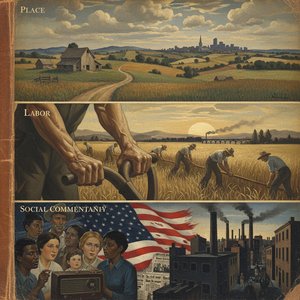
American Regionalism: A Crucible of Identity – Exploring Themes of Place, Labor & Social Commentary
Explore American Regionalism's powerful depiction of the American heartland during the Great Depression. Discover Grant Wood, Thomas Hart Benton & more. Expert analysis & high-quality art reproductions at OriginalUniqueArt.


