
 Eelvaade
 Saada
Saada Jaga
Jaga
 Teave teose kohta
 Juhend

 Laadi alla
 Sarnased teosed
 Röntgenuuring
 Slaidietendus
 Q&A
Q&A Statistika
Três orixás

- 130.0 x 195.0 cm


 Loe lähemalt
Sellel lehel kuvatav kunstiteos on kaitstud autoriõigusega, mis tähendab, et meil ei ole seaduslikku õigust luua või müüa identset reproduktsiooni. Seda kaitset rakendatakse rahvusvaheliste kokkulepete alusel, nagu näiteks Berne konventsioon ning riiklike seadustega, sealhulgas nendega, mida on sätestatud USA autoriõiguse seadus – 17. peatükk.
See meetod järgib täielikult autoriõiguse reegleid, kuna see ei põhine kaitstud kunstiteose kopeerimisel või dupliteerimisel. Selle asemel on tegu loova reinterpreetatsiooniga – uue maaldisega, mis on algteosest inspireeritud, kuid ei ole sellest identiline.
Giclée / Kunstiprint
Muuseumikvaliteediga giclée- või kangasprint kiire tootmisega ja paindlikud viimistlusvõimalused. ( Osta käsitsi maalatud teos Lülita digitaalse pildi juurde)




P118B €10

P118H €10

P118W €10

P438Z €10

P508JH €12

P508YH €12

P805H €10

P805Z €10

P919BZ €10

P919G €10

P919XJ €10

P959ZH €10

P968JZ €12

W106C €8

W218G €10

W218JH €8

W218Y €10

W307PJ €10

W316G €10

W316PJ €8

W316Y €10

W398PJ €8

W4111J €10

W500HY €15

W500JH €15

W692G €12

W849H €8

W940BG €15

W953PJ €8




Vali meie eelmääratud suurused, mis vastavad teose algupärastele proportsioonidele.

Sisestage vajalik laius ja kõrgus, et see sobiks teie raamile või seinale. Trükki saab ainult lõigata, seda ei saa kunagi pildist suuremaks teha, seega ka erineva mustega suurus kaotab osa pildist. Enne trükkimist saadame teile kinnitamiseks digitaalse näidisprojektsiooni. Sellel lehel näidatud pilt ei kujuta reaalset lõiget — seda näitab ainult näidisprojektsioon.
Ülemaailmne tarne () 2 nädala jooksul, tavalise 4/5 nädala asemel. (1 november)

Tasuta ekspresssaatmine üle maailma

Kõrgekvaliteediline lina-kangas

Täielik transpordikindlustus

Tollimaksude tagastamise garantii

Värvitoime täpsuse garantii

100 päeva tagastusõigus (ainult valmistusdefektide korral)

100% raha tagasi garantii

Hulgusoodustus
 Klaasivalik on saadaval ainult kuni 110 cm suuruses teostes

Três orixás
Giclée / Kunstiprint
Reproduktsiooni suurus
-


Koguhind
€ 71
A Vibrant Celebration of Faith and Folklore
In the evocative masterpiece Três orixás, created in 1966, the Brazilian master Djanira da Motta e Silva invites us into a sacred, rhythmic space where the boundaries between the earthly and the divine blur. The painting presents a striking tableau of three women, figures of immense presence, adorned in elaborate, brightly colored costumes that seem to dance even in their stillness. Djanical's composition is a feast for the eyes; one figure is draped in a deep blue accented with sun-drenched yellow, another in pristine white with bold red flourishes, and the third in a brilliant yellow interlaced with azure. These women stand as pillars of tradition, holding ceremonial objects that suggest a rhythmic, musical ritual is underway. The presence of secondary figures on the periphery adds a sense of community and depth, transforming the canvas from a mere portrait into a living, breathing moment of cultural performance.
The style of this work is deeply rooted in the Brazilian Naïve art tradition, yet it possesses a sophisticated structural clarity that speaks to Djanira’s unique anthropological perspective. Her technique avoids the heavy shadows of academic realism, opting instead for flat planes of saturated color and simplified forms that emphasize the symbolic weight of each figure. This approach allows the viewer to focus on the essential geometry of the scene—the way the vibrant fabrics interact with the stage-like setting. The brushwork, while seemingly direct, carries a profound intentionality, capturing the textures of cloth and the spiritual gravity of the orixás (deities) being honored. For the collector or interior designer, this piece offers a powerful focal point that brings an infusion of warmth, energy, and cultural richness to any sophisticated space.
The Soul of Brazil: Symbolism and Historical Resonance
To understand Três orixás is to understand the heartbeat of Brazilian identity. Djanira, with her background in anthropology, did not merely paint scenes; she documented the soul of a nation. The subject matter—the celebration of the orixás—is deeply intertwined with the Afro-Brazilian religious traditions that form the bedrock of Brazil's spiritual landscape. Each color choice and ceremonial object serves as a silent language, communicating themes of protection, fertility, and ancestral connection. The painting acts as a visual hymn, celebrating the resilience of marginalized communities and the beauty found in their sacred rituals.
Beyond its historical significance, the emotional impact of the work lies in its infectious joy. There is an undeniable sense of movement and sound suggested by the composition; one can almost hear the faint rattle of percussion and the rustle of heavy fabrics. This piece does more than decorate a wall; it narrates a story of continuity and pride. For those seeking to curate an environment that inspires awe and invites conversation, this reproduction serves as a window into a world where art, religion, and daily life are harmoniously entwined in a brilliant display of color and spirit.
Korduvad küsimused
Kuidas teose „Três orixás“, autor Djanira Da Motta E Silva väripaletti kirjeldatakse?
Teose „Três orixás“, autor Djanira Da Motta E Silva väripalett on kirjeldatud kui Dark. See on lühike kirjeldus teose värvide kohta.
Kes on teose "Três orixás" kunstnik?
Teose "Três orixás" loovija on Djanira Da Motta E Silva. Selle lehe info kirjeldab Djanira Da Motta E Silva algteost.
Millissele perioodile Djanira Da Motta E Silva karjäärist kuulub teos "Três orixás"?
Teos "Três orixás" esindab kunstniku Djanira Da Motta E Silva loovperioodi Mature Period.
Kunstniku elulugu
Djanira da Motta e Silva: A Voice of Brazilian Naïve Art
Djanira da Motta e Silva, affectionately known as Djanira, emerged from the fertile soil of Brazil in 1914, leaving an indelible mark on the landscape of Brazilian art. Born in Avaré, São Paulo State, her artistic journey began amidst a burgeoning interest in anthropology and visual documentation—a passion that would profoundly shape her distinctive style and thematic concerns. Unlike many artists of her era preoccupied with grand narratives or formal experimentation, Djanira focused intently on capturing the essence of everyday life within rural Brazil, particularly amongst marginalized communities. Her canvases pulsate with vibrant colors and simple forms, reflecting a deep connection to the traditions and beliefs of her people.- Early Life & Education: Little is known about Djanira’s formative years beyond her birth in Avaré. However, she pursued formal education, earning degrees in anthropology and pedagogy—disciplines that instilled in her a meticulous observation of human behavior and cultural practices.
- Influences: Djanira's artistic vision was undeniably shaped by the Brazilian Modernist movement, which championed vernacular art forms as counterpoints to European academic conventions. Artists like Portinari and Candido Portinari served as inspiration for her exploration of Brazilian identity and social realities.
The Style of Naïve Art: A Celebration of Simplicity
Djanira’s artistic style is undeniably rooted in the principles of naïve art—a movement characterized by its unpretentious aesthetic and rejection of illusionistic techniques. Unlike polished realism, her paintings prioritize expressive color palettes and stylized depictions of subjects—often religious icons or scenes from rural Brazilian life—to convey emotion and spiritual significance. Her compositions are deliberately uncluttered, emphasizing geometric shapes and bold lines that lend a sense of immediacy and authenticity to her work. This stylistic choice wasn’t merely an aesthetic preference; it was a deliberate strategy for communicating directly with the viewer, bypassing intellectual analysis in favor of visceral experience.- Color Palette: Djanira employed vibrant hues—primarily reds, yellows, and blues—to imbue her canvases with energy and luminosity. These colors weren’t used to create photographic accuracy but rather to evoke feelings of joy, reverence, and connection to the natural world.
- Technique: Her technique involved applying paint thickly onto canvas, creating textured surfaces that mirrored the materiality of her subjects—the rough bark of trees, the weathered faces of villagers—further enhancing the sense of realism despite its stylized presentation.
Themes and Subjects: Portraits of Brazilian Soul
Djanira’s paintings consistently explore themes central to Brazilian culture and spirituality. Recurring motifs include depictions of saints—particularly Nossa Senhora Aparecida, Brazil's patron saint—and scenes from the Catholic faith that resonate deeply with rural communities. However, her artistic focus extended beyond religious iconography; she meticulously documented daily life in villages across Brazil, portraying farmers, artisans, and families engaged in traditional activities. These portraits aren’t merely representations of individuals but embodiments of Brazilian identity—a testament to resilience, piety, and unwavering connection to ancestral traditions.Notable Achievements & Legacy
Djanira da Motta e Silva's contribution to Brazilian art is recognized globally. Her work has been showcased in prestigious institutions such as the Museu Nacional de Belas Artes and MASP (Museu de Arte Contemporânea São Paulo), cementing her place among Brazil’s most important artists of the 20th century. Furthermore, her paintings are featured prominently in the Inhotim Contemporary Art Museum, demonstrating the enduring relevance of her artistic vision. Djanira's legacy lies not only in her distinctive style but also in her unwavering commitment to preserving and celebrating Brazilian folklore—a mission that continues to inspire artists and scholars alike.Further Exploration
To delve deeper into Djanira da Motta e Silva’s artistic oeuvre, we encourage you to visit OriginalUniqueArt.com for detailed information about her artworks and explore the collections of Museu Nacional de Belas Artes and MASP. You can also discover more about João da Motta (Mulambö), whose vibrant canvases share similar stylistic affinities with Djanira's work at Pinacoteca São Paulo. Finally, consider examining Anna Letycia Quadros’s abstract prints—a kindred spirit who similarly sought to express emotion through bold color and form—available at OriginalUniqueArt.
Djanira Da Motta E Silva
1914 - 1979 , Brazil
Lühikest infot
- Full Name: djanira da motta e silva
- Nationality: Brazilian
- Date Of Birth: 1914
- Date Of Death: 1979
- Place Of Birth: Avare, Brazil
- Notable Artworks:
- Tres Orixás
- Candomblé - Study for Wall Painting
- Artistic Movement Or Style: Naïve Art
- Artists Or Movements Influenced By This Artist: ['Brazilian Modernist Movement']
Sarnased artiklid
Alceu de Paula Penna: A Synthesis of Brazilian Modernism & Poetic Abstraction
Explore the captivating world of Alceu de Paula Penna, a pivotal figure in Brazilian Modernism. Discover his innovative concrete poetry & influence on Latin American art history. Expert insights for collectors.
Benedito Calixto: A Brazilian Modernist's Landscape of Memory & National Identity
Explore the captivating world of Benedito Calixto, a pivotal Brazilian Modernist painter. Discover his iconic landscapes, the story behind the famous Bandeirante portrait, and his lasting impact on Brazilian national identity. Learn more at OriginalUniqueArt.
Sacred Narratives on Canvas: Exploring Religious Painting Through History
Explore the rich history of religious painting with OriginalUniqueArt.com! Discover iconic artworks, symbolism & techniques from antiquity to the Renaissance. Enhance your art appreciation today.
Sacred Narratives Embodied: A Comprehensive Exploration of Religious Iconography in Art History
Explore the rich history of religious iconography in art! Discover symbolism, movements & masterpieces from Byzantine to Renaissance periods. Expert insights for collectors and enthusiasts at OriginalUniqueArt.
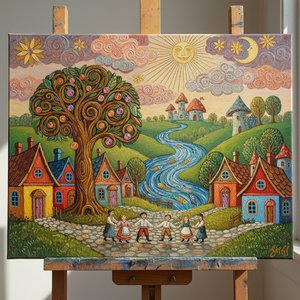
The Unconventional Vision: Exploring the Characteristics, History & Enduring Appeal of Naïve Art
Explore the captivating world of naïve art! Discover its history, characteristics, key artists & collecting tips from OriginalUniqueArt's experts. Find your perfect piece today.