
 Eelvaade
 Saada
Saada Jaga
Jaga
 Teave teose kohta

 Laadi alla
 Sarnased teosed
 Röntgenuuring
 Slaidietendus
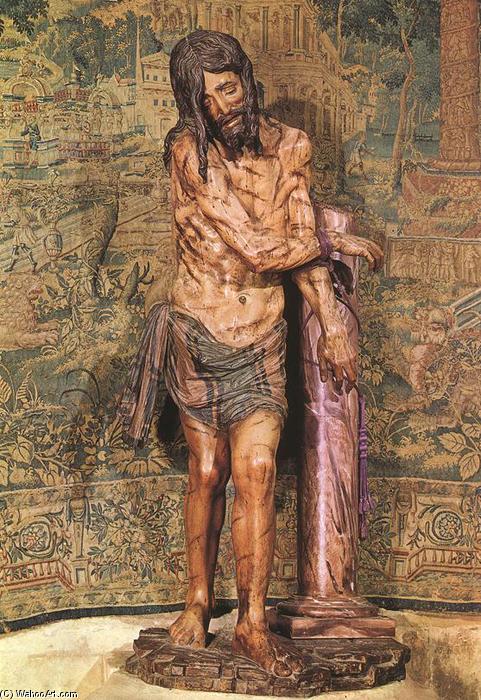
Christ at the Column


 Loe lähemalt
Käsitsi valmistatud õlimaalireproduktsioon
Meie kunstnike poolt tellimusel valmistatud käsitsi maalitud õli-kainaste teos teie soovitud suuruses ja raamis. ( Osta print Osta pilt)




































Vali meie eelmääratud suurused, mis vastavad teose algupärastele proportsioonidele.

Sa võite sisestada oma mõõtmed konkreetse raami või ruumi sobivuse tagamiseks. Kui teie valitud suurus ei vasta originaalpildi proportsioonidele, siis kärvime kunstiteost või laiendame maali täiendavate käsitsi maalitud elementidega. Enne tootmise algust saadetakse teile heakskiitmiseks digitaalne eelvaade.
Palun pidage meeles, et ekraanil kuvatav eelvaade ei kajasta tegelikku kärpimist või laiendamist. Ainult eelvaade näitab täpselt lõplikku kompositsiooni.
Kuigi on saadaval kohandatud suurused, soovitame originaalproportsioonide säilimiseks valida mõõdud eelmääratletud nimekirjast.
Pärast tellimust saadab OriginalUniqueArt.com meeskond kliendile e-posti juhised ning esitab eelvaate kavandi.
Maailmline tarne 3–4 nädala jooksul tavalise 5 nädala asemel. (15 august). Kvaliteedis kompromisse ei tehta.

Tasuta ekspresssaatmine üle maailma

Kõrgekvaliteediline linakangas

Täielik transpordikindlustus

Tollimaksude tagastamise garantii

Värvitoime täpsuse garantii

60-päevane tagastusõig: ainult tootmisdefektide korral

100% raha tagasi garantii

Hulgusoodustus
 Klaasivalik on saadaval ainult suuruses kuni 110 cm

Christ at the Column
Reproduktsiooni tehnika
Reproduktsiooni suurus
-


Kogusumma
$ 300
Kunstniku elulugu
The Architect of the Renaissance Soul
Diego de Siloe stands as a pivotal figure in the artistic landscape of Spain during the Renaissance, recognized primarily for his groundbreaking contributions to sculpture and architecture. As the progenitor of the Granadan school of sculpture, he orchestrated a profound stylistic shift that would redefine the visual identity of southern Spain. Born in Burgos around 1495, Siloe was likely the son of Gil de Siloé, a prominent Gothic sculptor whose established presence in Flanders provided Diego with a rich, inherited connection to the intricate traditions of Northern Europe. This familial lineage, rooted in the delicate and ornate Gothic aesthetic, served as the foundation upon which Siloe would build his revolutionary synthesis of styles, blending the structural rigor of Italian Classicism with the lingering elegance of the Mudéjar and Gothic heritencies.
The evolution of Siloe’s artistic vision was deeply shaped by his travels and exposure to the burgeoning humanist ideals sweeping across the continent. His journey to Naples around 1517 proved transformative, as he encountered the monumental innovations championed by masters such as Donato Bramante and Filippo Brunelleschi. These architects, who were actively reshaping Roman grandeur into a new, balanced humanism, instilled in Siloe a lifelong reverence for classical proportions and architectural harmony. This period of discovery allowed him to transcend his Burgundian roots, integrating the rhythmic complexity of Spanish tradition with the disciplined grace of the Italian Renaissance.
A Legacy Carved in Stone and Spirit
Siloe’s early career in Burgos serves as a breathtaking testament to his ability to navigate disparate artistic languages. The monumental staircase of Burgos Cathedral, completed in 1519, remains one of his most evocative achievements. In this structure, one witnesses a bold departure from traditional cathedral design; it is a space where soaring Gothic verticality meets a new, sophisticated ornamentation. Adorned with intricate carvings of cherubs, heraldic coats of arms, and lush vegetal motifs, the staircase defies the conventional limitations of its location on the city's northern flank. Through innovative structural solutions, Siloe created a sense of movement and grandeur that bridged the gap between the medieval past and the classical future.
As his career progressed, Siloe’s influence moved southward, eventually establishing him as the master of Granada. His most enduring legacy lies in his monumental designs for the Granada Cathedral and the Monastery of Saint Jerome. In these projects, he did not merely build; he sculpted space itself. By weaving together the delicate textures of the Plateresque style with the robust dignity of Renaissance architecture, he created a unique aesthetic that felt both profoundly Spanish and cosmopolitally modern. His work in Granada became the cornerstone of a new regional identity, ensuring that his name would be forever etched into the very fabric of Spanish history.
The significance of Diego de Siloe extends far beyond the physical structures he left behind. He was an artist of transition, a bridge-builder who understood that true innovation requires a deep respect for tradition. His ability to harmonize the following elements defines his historical importance:
- Gothic Intricacy: The preservation of detailed, ornamental storytelling inherited from his father's lineage.
- Italian Classicism: The adoption of mathematical proportion, symmetry, and Roman-inspired grandeur.
- Mudéjar Influence: The integration of the unique, decorative Moorish-influenced patterns characteristic of the Iberian Peninsula.
- Plateresque Elegance: A mastery of silver-like, highly detailed surface ornamentation that defines the Spanish Renaissance.

Diego de Siloe
1495 - 1563 , Spain
Lühikesed faktid
- Artistic Movement Or Style: Renaissance, Plateresque
- Artists Or Movements Influenced By This Artist: Filippo Brunelleschi
- Artists Who Influenced This Artist: Gil de Siloé
- Date Of Birth: ca. 1495
- Date Of Death: 1563
- Full Name: Diego de Siloe
- Nationality: Spanish
- Notable Artworks:
- Burgos Cathedral Staircase
- Granada Cathedral
- Monastery of Saint Jerome
- Place Of Birth: Burgos, Spain

