Vaata sisu
 Jaga teost
 Jaga
Jaga
 Detailid
 Õppekate juhend

 Laadi alla
 Sarnased teosed
 Röntgenuuring
 Slaidietendus
 Statistika
James Duff Corsindae


 Loe lähemalt
Giclée / Kunstiprint
Muuseumikvaliteediga giclée- või kangasprint kiire tootmisega ja paindlikud viimistlusvõimalused. ( Telli käsitsi maalitud reproduktsioon Ülemineku digitaalse pildi müügi kanalisse)




P118B €10

P118H €10

P118W €10

P438Z €10

P508JH €12

P508YH €12

P805H €10

P805Z €10

P919BZ €10

P919G €10

P919XJ €10

P959ZH €10

P968JZ €12

W106C €8

W218G €10

W218JH €8

W218Y €10

W307PJ €10

W316G €10

W316PJ €8

W316Y €10

W398PJ €8

W4111J €10

W500HY €15

W500JH €15

W692G €12

W849H €8

W940BG €15

W953PJ €8




Vali meie eelmääratud suurused, mis vastavad teose algupärastele proportsioonidele.

Sisestage vajalik laius ja kõrgus, et see sobiks teie raamile või seinale. Trükki saab ainult lõigata, seda ei saa kunagi pildist suuremaks teha, seega ka differentse vormiga suurus kaotab osa pildist. Enne trükkimist saadame teile kinnitamiseks digitaalse näidisprojektsiooni. Sellel lehel näidatud pilt ei kujuta reaalset lõiget — seda näitab ainult näidisprojekttsioon.
Ülemaailmne tarne () 2 nädala jooksul, tavalise 4/5 nädala asemel. (24 oktoober)

Tasuta ekspresssaatmine üle maailma

Kõrgekvaliteediline lina-kangastest muld

Täielik transpordikindlustus

Tollimaksude tagastamise garantii

Värvitoime täpsuse garantii

100 päeva tagastusõigus (ainult defektide korral)

100% raha tagasi garantii

Hulgusoodustus
 Klaasivalik on saadaval ainult kuni 110 cm suuruses teostes

James Duff Corsindae
Giclée / Kunstiprint
Reproduktsiooni mõõtmed
-


Lõppsumma
€ 70
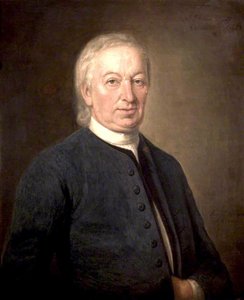
James Duff of Corsindae – A Portrait Steeped in Scottish Tradition
Cosmo Alexander’s “James Duff of Corsindae,” completed in 1760, is more than just a depiction of an individual; it's a window into the social and artistic landscape of eighteenth-century Scotland. The painting portrays James Duff, a prominent landowner and figure within the Scottish aristocracy, rendered with meticulous detail by Alexander—a painter deeply influenced by the naturalist philosophy championed by George Stubbs. This connection to Stubbs’ groundbreaking anatomical studies is palpable in Alexander's approach to capturing the human form, prioritizing accuracy and observation above mere stylistic convention.- Subject Matter: The portrait focuses squarely on Duff himself—a dignified gentleman dressed in a dark blue coat adorned with white buttons, conveying status and respectability typical of his era. His gaze directs towards the viewer, establishing an intimate connection between subject and observer.
- Style & Technique: Alexander’s style leans heavily toward Rococo influences, characterized by graceful lines and subtle ornamentation—elements that reflect the prevailing aesthetic sensibilities of the time. However, unlike many artists of his generation, he eschewed excessive embellishment, favoring a restrained palette and precise rendering to emphasize Duff's character and presence.
- Historical Context: Created during Stuart Restoration Scotland, “James Duff of Corsindae” speaks to the enduring importance of lineage and social standing. The painting reflects the values of the Scottish elite—a commitment to tradition, honor, and intellectual pursuits—values that were actively debated and reaffirmed through artistic representations like this one.
Symbolism Within Precision: Echoes of Stubbs’ Anatomical Vision
Alexander's dedication to anatomical accuracy owes a significant debt to George Stubbs, whose pioneering work revolutionized the depiction of animals—particularly horses—by prioritizing scientific observation and detailed anatomical studies. Just as Stubbs dissected equine musculature to understand its movement and beauty, Alexander similarly scrutinized Duff’s posture and facial expression to convey his inner state. This stylistic choice isn't merely about realism; it symbolizes a broader humanist concern for understanding the human body as an instrument of thought and emotion—a cornerstone of Enlightenment ideals.Emotional Resonance: Capturing Dignity and Quiet Reflection
Despite its formal elegance, “James Duff of Corsindae” possesses a remarkable emotional depth. The subtle shading around Duff’s eyes suggests contemplation and inner seriousness—qualities that resonate with viewers even today. Alexander skillfully avoids melodrama, presenting Duff as a man of quiet dignity and intellectual curiosity—a figure worthy of admiration and remembrance. This understated portrayal underscores the enduring power of portraiture to convey not just likeness but also character and spirit.A Legacy Enduring Through Reproduction
Today, reproductions of Cosmo Alexander’s “James Duff of Corsindae” offer art enthusiasts and interior designers alike a chance to experience the beauty and intellectual rigor of eighteenth-century Scottish painting. OriginalUniqueArt.com presents exceptionally crafted prints that faithfully capture the original artwork's nuances—allowing collectors and admirers to appreciate its artistic merit and historical significance for generations to come.Küsimused ja vastused
Mis on teose „James Duff Corsindae“, autor Cosmo Alexander luminants?
Teose „James Duff Corsindae“, autor Cosmo Alexander kirjeldatud luminants on Tume.
Kuidas saan hankida teose „James Duff Corsindae“, autor Cosmo Alexander digitaalse faili?
Teose „James Duff Corsindae“, autor Cosmo Alexander digitaalset pilti saab osta selle Digitaalne pilt lehelt: kõrge resolutsiooniga digitaalse pildi allalaadimine.
Kui vana oli Cosmo Alexander, kui ta loos 1760 aastal teose "James Duff Corsindae"?
Kui teos "James Duff Corsindae" loodi aastal 1760, oli Cosmo Alexander (sündinud aastal 1724) 36 aastane.
Kunstniku elulugu
A Legacy of Portraiture and Pedagogy
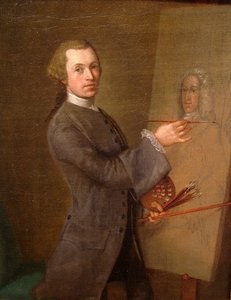
The story of Cosmo Alexander is one of wandering brilliance and the profound influence of a master upon his pupil. Born in Scotland to the noted portrait painter John Alexander, Cosmo was destined for a life steeped in the traditions of fine art. Before his journey took him across the Atlantic, he refined his eye through extensive travels across Europe, documenting his presence in Italy between 1745 and 1751, including time in Rome. His artistic development continued in Holland, where he achieved professional recognition by joining the painters' guild at The Hague. These formative years in the great art centers of Europe provided him with a sophisticated foundation in classical techniques that would later define his work in the American colonies.
Though Alexander often referred to himself as a history painter, his enduring legacy resides in his mastery of the portrait. His style, which aligns closely with the Classical Realism later championed by John Singleton Copley, captured the essence of the Scottish community and the colonial elite with remarkable precision. As he moved through the American landscape between 1766 and 1772, his brush followed a path of significant historical importance. From the bustling streets of Philadelphia to the coastal elegance of Newport, Rhode Island, and even as far south as Charleston, South Carolina, Alexander sought to capture the likenesses of a burgeoning nation through a lens of European refinement.
The Teacher of a Master
Perhaps the most significant chapter in Alexander’s life was his role as a mentor. In Newport, Rhode Island, he encountered a young Gilbert Stuart, a meeting that would alter the course of American art history forever. Recognizing the potential in the fourteen-year-old, Alexander took Stuart on as an apprentice. This relationship was more than a mere professional arrangement; it was a passing of the torch from the Old World traditions to the New. The two traveled together through the colonies, eventually returning to Edinburgh in 1771, where the bond between master and student remained unbroken until Alexander’s sudden death.
Alexander's life was marked by both artistic triumph and personal hardship. Driven by financial debts that had forced him to leave London, he arrived in America with the hope of rebuilding his fortune through his craft. While his travels were frequent—visiting New York City, Boston, and Williamsburg—his ability to secure patrons remained a testament to his skill. In Burlington, New Jersey, he even resided within the governor's mansion, utilizing such high-profile connections to find sitters for his portraits. Though his life was cut short in Edinburgh, the impact of his work remains visible in the collections of prestigious institutions today.
- Key Artistic Contributions: Known for over twenty-five identified American portraits that showcase his skill in portraiture and historical genre painting.
- Notable Mentorship: Served as the primary teacher and mentor to the legendary American artist Gilbert Stuart.
- Geographic Reach: His career spanned Scotland, Italy, Holland, England, and various American colonies including New York, Pennsylvania, and Rhode Island.
Cosmo Alexander
1724 - 1772
Sarnased artiklid
Alexander Nasmyth: Picturing Scotland's Romantic Landscape – Innovation & Identity
Explore the life & art of Alexander Nasmyth, a pivotal figure in Scottish Romantic landscape painting. Discover his iconic works, including portraits of Robert Burns, and learn about his lasting influence on national identity. Fine art reproductions available.

Romantic Realism's Finest: 10 Masterpieces for Your Home | OriginalUniqueArt
Explore 10 defining masterpieces of Romantic Realism! Discover Courbet, Millet & Daumier's powerful paintings—capturing emotion and social realities. Find museum-quality reproductions for your home at OriginalUniqueArt.com.

The Equine Muse: A Historical & Artistic Exploration of Horses in Painting
Explore the captivating history of horses in painting! Discover Renaissance masterpieces, Baroque grandeur & expert insights for collecting equestrian art. Learn about symbolism, techniques & lasting value with OriginalUniqueArt.
The Noble Steed on Canvas: A Historical & Artistic Exploration of Horse Painting Across Cultures
Explore the rich history of horse painting! Discover masterpieces from Stubbs to Munnings & learn about symbolism, techniques & artists. Find museum-quality reproductions at OriginalUniqueArt.
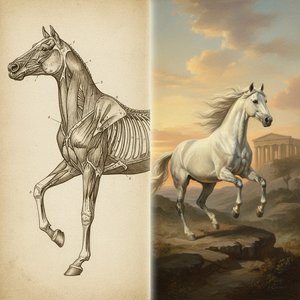
George Stubbs: Anatomical Precision & Romantic Vision in 18th-Century British Art
Explore the captivating world of George Stubbs, the 18th-century master renowned for his anatomical precision & Romantic animal paintings. Discover his legacy and investment potential.