

 Vaata sisu
 Jaga teost
 Jaga
Jaga
 Detailid
 Õppekate juhend

 Laadi alla
 Sarnased teosed
 Röntgenuuring
 Slaidietendus
 Statistika
Roman Ruins
 Oil
Oil- WallArt
- Dutch Golden Age
 1620
1620- Early Modern
 23.0 x 31.0 cm
 Loe lähemalt
Giclée / Kunstiprint
Muuseumikvaliteediga giclée- või kangasprint kiire tootmisega ja paindlikud viimistlusvõimalused. ( Telli käsitsi maalitud reproduktsioon Ülemineku digitaalse pildi müügi kanalisse)




P118B €10

P118H €10

P118W €10

P438Z €10

P508JH €12

P508YH €12

P805H €10

P805Z €10

P919BZ €10

P919G €10

P919XJ €10

P959ZH €10

P968JZ €12

W106C €8

W218G €10

W218JH €8

W218Y €10

W307PJ €10

W316G €10

W316PJ €8

W316Y €10

W398PJ €8

W4111J €10

W500HY €15

W500JH €15

W692G €12

W849H €8

W940BG €15

W953PJ €8




Vali meie eelmääratud suurused, mis vastavad teose algupärastele proportsioonidele.

Sisestage vajalik laius ja kõrgus, et see sobiks teie raamile või seinale. Trükki saab ainult lõigata, seda ei saa kunagi pildist suuremaks teha, seega ka differentse vormiga suurus kaotab osa pildist. Enne trükkimist saadame teile kinnitamiseks digitaalse näidisprojektsiooni. Sellel lehel näidatud pilt ei kujuta reaalset lõiget — seda näitab ainult näidisprojekttsioon.
Ülemaailmne tarne () 2 nädala jooksul, tavalise 4/5 nädala asemel. (24 oktoober)

Tasuta ekspresssaatmine üle maailma

Kõrgekvaliteediline lina-kangastest muld

Täielik transpordikindlustus

Tollimaksude tagastamise garantii

Värvitoime täpsuse garantii

100 päeva tagastusõigus (ainult defektide korral)

100% raha tagasi garantii

Hulgusoodustus
 Klaasivalik on saadaval ainult kuni 110 cm suuruses teostes

Roman Ruins
Giclée / Kunstiprint
Reproduktsiooni mõõtmed
-


Lõppsumma
€ 70
A Window into Antiquity: The Timeless Allure of Roman Ruins
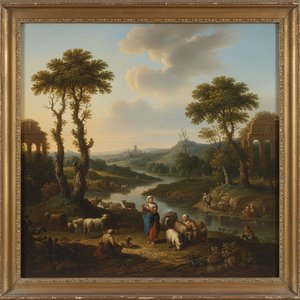
In the delicate, circular embrace of this exquisite tondo, Cornelis van Poelenburgh invites us to step through a portal into a bygone era. Painted around 1620, Roman Ruins is far more than a mere depiction of architectural decay; it is a profound meditation on the passage of time and the enduring relationship between humanity and the remnants of greatness. The composition, framed by its characteristic round format, focuses our gaze upon a landscape where the grandeur of the Roman Empire has softened into a pastoral sanctuary. Within this intimate space, the heavy stone arches and crumbling pillars serve as silent witnesses to history, now providing a backdrop for the quiet, rhythmic pulse of rural life.
The scene unfolds with a masterful use of light and shadow, reminiscent of the Dutch Golden Age's obsession with atmospheric truth. As we gaze upon the foreground, we encounter a world in gentle motion: a shepherd tending his flock, a laborer with his oxen, and figures caught in quiet contemplation. These small-scale inhabitants of the landscape bring a sense of warmth and vitality to the otherwise somber ruins. The artist employs a subtle, earthy palette—rich ochres, muted greens, and soft umbers—to weave a tapestry of textures that feels both tactile and ethereal. The hazy, overcast sky suggests the fleeting light of dawn or dusk, casting a melancholic yet peaceful glow over the entire vista, evoking a sense of nostalgia for a lost civilization.
The Mastery of the Italianate Style
Cornelis van Poelenburgh was a pivotal figure in the first generation of Dutch landscape painters who found profound inspiration in Italy. His travels to Rome allowed him to infuse his Northern training with the classical elegance of the Mediterranean. In Roman Ruins, we see this synthesis perfected. The technique is characterized by an incredible attention to detail; every crack in the ancient masonry and every distant bird in flight is rendered with a precision that draws the viewer deeper into the frame. This meticulousness does not feel clinical, however, but rather serves to enhance the three-dimensional depth of the scene, making the archway feel like a real threshold through which one might walk.
For the discerning collector or interior designer, this piece offers a unique emotional resonance. It possesses a "Caravaggesque" drama tempered by a serene, pastoral tranquility. The symbolism of the ruins—representing the inevitable cycle of rise and fall—is balanced by the resilience of the natural world and the simplicity of the human spirit. Such a work is an ideal centerpiece for a sophisticated interior, providing a conversational focal point that inspires reflection. Whether placed in a sunlit study or a grand gallery, this reproduction captures a moment of eternal stillness, offering any space it inhabits a touch of historical majesty and poetic grace.
Küsimused ja vastused
Kes lõi teose "Roman Ruins" ja millal?
Teose "Roman Ruins" on loonud Cornelis Van Poelenburgh aastal 1620.
Mida „Roman Ruins“, autor Cornelis Van Poelenburgh kujutab?
Teemad, mis teoses „Roman Ruins“, autor Cornelis Van Poelenburgh esinevad, hõlmavad figures, sheep, cow, archway, ruins, trees, birds, earth tones. Koos need kokkuvõtavad teose sisu.
Kui eraldavad teose "Roman Ruins" värvid?
Teose „Roman Ruins“, autor Cornelis Van Poelenburgh värvid on Muted kütkusega ja Balanced intensiivsusega.
Kunstniku elulugu
Varajane elu ja koolitamine
Cornelis van Poelenburgh, väljõrimaasa olulisel dülendusmaalajalajal, sündis aastal 1594 Utrechtis, Leidneskuningriigis. Alguses koolitas teda Abraham Bloemaert, seal ajal tunnustatud kunstnik. See põhiline koolitus laitis alusta van Poelenburghi tulevikule edukusele.Kunstiline karjääri ja mõjutajad
Van Poelenburghi reisid Roomasse 17. sajabostele algusele mõjutasid tema teoseid oluliselt, muutes teda Itaalias aktiivse dülendusmaalajalajal esile tõstva juhtiva esindaja. Tema väiksemaluateosed, millel oli sageli itaalia-vaikutel dülendused maastikud väike figuridega, kes elmasid bibliilisi või mitoloogilisi areeneid, näitasid tema unikaalse stiili. Märktavad teosed:- Satyriid naimad vaatamas (pärast 1627), van Poelenburghi tüüpilane näide, millel on arhaiksed maastikud figuridega, kes uivatavad. (vaade OriginalUniqueArt'is)
- Maaolemu nõukogu (c. 1630), maaling, mis näitab van Poelenburghi ideaalise kukkulase maastikku ja Roomast inspiratsiooni saanud jumalatteid, mille on nüüd hoiustatud Mauritshuis's (Lahe, Leidneskuningriik). (vaade OriginalUniqueArt'is)
Mälestus ja hilisem elu
Van Poelenburghi teoseid hinnati kõrgelt tema samakoorajatel, sealhulgas Tuskani suurhertog ja Leidneskuningriigi staadtholder. Ta pöördus edasi Utrechtisse tagasi, kus ta suri 1667. aastal, vaid mõne aasta pärast oma vanema õppkasa Abraham Bloemaert. Peamised punktid:- sündis Utrechtis, Leidneskuningriigis 1594. aastal
- koolitas Abraham Bloemaert'i juures
- mõjutatud oma ajal Roomas
- teada väiksemaluateostel, itaalia-vaikutel dülendust maastikud figuridega
- suri Utrechtis 1667. aastal vaade Cornelis van Poelenburghi teostele OriginalUniqueArt'is læpimehed Cornelis van Poelenburghist Wikipedia's kaudu

Cornelis Van Poelenburgh
1594 - 1667 , Nederland
Lühikest infot
- Artistic Movement Or Style: Hollandse maastik, Rooma-vaikutteeline
- Artists Or Movements Influenced By This Artist: ['Claude Lorraine']
- Artists Who Influenced This Artist: ['Abraham Bloemaert']
- Date Of Birth: 1594, Utrecht, Belanda
- Date Of Death: 1667, Utrecht, Belanda
- Full Name: Cornelis van Poelenburgh
- Nationality: Hollandse
- Notable Artworks:
- Satyrs spying on nymphs
- Council of the gods
- Place Of Birth: Utrecht, Belanda
Sarnased artiklid

Golden Light & Dutch Skies: The Timeless Magic of Dutch Golden Age Landscapes
Discover the breathtaking beauty of Dutch Golden Age landscapes. Explore the mastery of light, chiaroscuro, and 17th-century realism through an expert art history lens, celebrating the enduring legacy of the Dutch Masters for discerning collectors and art lovers.

Golden Age Reflections: Dutch Baroque Painting & Cultural Innovation
Explore the Dutch Golden Age of painting! Discover key artists like Vermeer & ter Borch, their innovative techniques, and the rich cultural context behind these Baroque masterpieces. Learn about collecting & appreciating this iconic art period.

Mastering Light & Shadow: A Journey Through the Dutch Golden Age's Luminous Legacy
Embark on a cultural journey through the Dutch Golden Age. Explore the masterful interplay of light and shadow in 17th-century masterpieces, from Rembrandt to Vermeer, and discover how this era of profound realism continues to inspire fine art collectors today.

Hollandi Kuldaja Särgas Kunstipärit: 10 Meisterteost Sinu Koduks
Sukeldu Hollandi Kuldaja kunstivorme! Avasta 10 ikoonilist meistriteost – Rembrandt, Vermeer jt. - ning nende ajatu loojatööd. Leia inspiratsiooni interjöörile ja kaunista kodu OriginalUniqueArt.com kvaliteetsete reproduktsioonidega. Uuri kollektsiooni!
Nicolaes Berchem: Dutch Golden Age Pastoralism & the Evolution of Landscape Painting
Explore the captivating world of Nicolaes Berchem, a leading Dutch Golden Age painter. Discover his idyllic landscapes, masterful technique & lasting influence on art history. Learn more at OriginalUniqueArt.