

 Vaata sisu
 Jaga teost
 Jaga
Jaga
 Detailid
 Õppekate juhend

 Laadi alla
 Sarnased teosed
 Röntgenuuring
 Slaidietendus
 Statistika
PAYSAGE AUX CINQ BAIGNEUSES


 Loe lähemalt
Giclée / Kunstiprint
Muuseumikvaliteediga giclée- või kangasprint kiire tootmisega ja paindlikud viimistlusvõimalused. ( Telli käsitsi maalitud reproduktsioon Ülemineku digitaalse pildi müügi kanalisse)




P118B $10

P118H $10

P118W $10

P438Z $10

P508JH $12

P508YH $12

P805H $10

P805Z $10

P919BZ $10

P919G $10

P919XJ $10

P959ZH $10

P968JZ $12

W106C $8

W218G $10

W218JH $8

W218Y $10

W307PJ $10

W316G $10

W316PJ $8

W316Y $10

W398PJ $8

W4111J $10

W500HY $15

W500JH $15

W692G $12

W849H $8

W940BG $15

W953PJ $8




Vali meie eelmääratud suurused, mis vastavad teose algupärastele proportsioonidele.

Saate sisestada oma mõõdud, et need sobiks konkreetse raami või ruumi sisse. Kui valitud suurus ei vasta originaalteose proportsioonidele, lõigame teose ära või laiendame pilti peegeldatud või ühtlase servaga. Enne tootmisprotsessi algust saadetakse Teie kinnitamiseks digitaalne näidis.
Palun märka, et ekraanil kuvatav eelvaade ei kajasta tegelikku lõigamist või laiendamist. Ainult näidis kujutab täpselt lõplikku kompositsiooni.
Kuigi erimõõdu on saadaval, soovitame originaaproportsioonide säilitamiseks valida mõõt ette määratud nimekirjast.
Ülemaailmne tarne () 2 nädala jooksul, tavalise 4/5 nädala asemel. (25 september)

Tasuta ekspresssaatmine üle maailma

Kõrgekvaliteediline lina-kangastest muld

Täielik transpordikindlustus

Tollimaksude tagastamise garantii

Värvitoime täpsuse garantii

100 päeva tagastusõigus (ainult defektide korral)

100% raha tagasi garantii

Hulgusoodustus
 Klaasivalik on saadaval ainult kuni 110 cm suuruses teostes

PAYSAGE AUX CINQ BAIGNEUSES
Giclée / Kunstiprint
Reproduktsiooni mõõtmed
-


Lõppsumma
$ 80
A Symphony of Light and Myth
In the quiet, golden glow of an idealized Roman hillside, Cornelis van Poelenburch’s Paysage aux cinq baigneuses (Landscape with Five Bathers) invites the viewer into a realm where time seems to suspend itself. Executed between 1627 and 1630, this exquisite oil on copper masterpiece serves as a profound meditation on the harmony between humanity and the natural world. As one gazes upon the lush foliage and rugged rocky outcrops, there is an immediate sense of serenity, a palpable stillness that transcends the centuries. The painting does not merely depict a scene; it orchestrates an atmosphere, using a warm, diffused light to bathe five nude figures in a soft, ethereal radiance that suggests a moment of divine grace captured in the fleeting seconds of a summer afternoon.
The narrative woven into this landscape is deeply rooted in the humanist ideals of the seventeenth century. By portraying men and women engaged in the ritual of bathing amidst nymphs and satyrs, Van Poelenburch draws directly from the wellspring of classical mythology. This choice of subject matter elevates the work from a simple pastoral scene to a symbolic exploration of desire, beauty, and contemplation. The figures, rendered with a delicate grace, embody the Renaissance preoccupation with the human body as a vessel of both intellect and aesthetic perfection. For the discerning collector or interior designer, this piece offers more than visual splendor; it provides a window into an era that sought to find the sacred within the sensual, making it a captivating centerpiece for any space dedicated to reflection and elegance.
Mastery of the Baroque Brush
Technically, the work is a triumph of the Dutch Baroque tradition, showcasing Van Poelenburch’s ability to balance the dramatic tension of Mannerism with the clarity of the emerging Baroque style. The artist employs a sophisticated technique of layering oil paint to build a sense of profound depth and volume. While one might detect subtle distortions in form—a lingering influence from his Mannerist predecessors—the overall composition is defined by an exquisite equilibrium. The perspective recedes thoughtfully into hazy, distant mountains, creating a spatial ambiguity that draws the eye deeper into the landscape, while the organic shapes of trees and stone are anchored by a balanced, classical structure.
The color palette is a masterclass in understated luxury, dominated by earthy ochres, deep browns, and muted greens that ground the mythological fantasy in a sense of tangible reality. These somber tones are brilliantly punctuated by highlights of gold and pale blues in the sky, mirroring the way sunlight filters through a forest canopy. The texture of the skin is rendered with such smoothness that it almost invites a tactile response, contrasting beautifully with the ruggedness of the landscape. For those seeking to adorn a sophisticated interior, this painting offers a versatile emotional impact; its warm tones and tranquil subject matter can evoke feelings of peace and classical grandeur, seamlessly integrating into both traditional and contemporary settings as a testament to timeless artistic excellence.
Kunstniku elulugu
Varajane elu ja koolitamine
Cornelis van Poelenburgh, väljõrimaasa olulisel dülendusmaalajalajal, sündis aastal 1594 Utrechtis, Leidneskuningriigis. Alguses koolitas teda Abraham Bloemaert, seal ajal tunnustatud kunstnik. See põhiline koolitus laitis alusta van Poelenburghi tulevikule edukusele.Kunstiline karjääri ja mõjutajad
Van Poelenburghi reisid Roomasse 17. sajabostele algusele mõjutasid tema teoseid oluliselt, muutes teda Itaalias aktiivse dülendusmaalajalajal esile tõstva juhtiva esindaja. Tema väiksemaluateosed, millel oli sageli itaalia-vaikutel dülendused maastikud väike figuridega, kes elmasid bibliilisi või mitoloogilisi areeneid, näitasid tema unikaalse stiili. Märktavad teosed:- Satyriid naimad vaatamas (pärast 1627), van Poelenburghi tüüpilane näide, millel on arhaiksed maastikud figuridega, kes uivatavad. (vaade OriginalUniqueArt'is)
- Maaolemu nõukogu (c. 1630), maaling, mis näitab van Poelenburghi ideaalise kukkulase maastikku ja Roomast inspiratsiooni saanud jumalatteid, mille on nüüd hoiustatud Mauritshuis's (Lahe, Leidneskuningriik). (vaade OriginalUniqueArt'is)
Mälestus ja hilisem elu
Van Poelenburghi teoseid hinnati kõrgelt tema samakoorajatel, sealhulgas Tuskani suurhertog ja Leidneskuningriigi staadtholder. Ta pöördus edasi Utrechtisse tagasi, kus ta suri 1667. aastal, vaid mõne aasta pärast oma vanema õppkasa Abraham Bloemaert. Peamised punktid:- sündis Utrechtis, Leidneskuningriigis 1594. aastal
- koolitas Abraham Bloemaert'i juures
- mõjutatud oma ajal Roomas
- teada väiksemaluateostel, itaalia-vaikutel dülendust maastikud figuridega
- suri Utrechtis 1667. aastal vaade Cornelis van Poelenburghi teostele OriginalUniqueArt'is læpimehed Cornelis van Poelenburghist Wikipedia's kaudu

Cornelis Van Poelenburgh
1594 - 1667 , Nederland
Lühikest infot
- Artistic Movement Or Style: Hollandse maastik, Rooma-vaikutteeline
- Artists Or Movements Influenced By This Artist: ['Claude Lorraine']
- Artists Who Influenced This Artist: ['Abraham Bloemaert']
- Date Of Birth: 1594, Utrecht, Belanda
- Date Of Death: 1667, Utrecht, Belanda
- Full Name: Cornelis van Poelenburgh
- Nationality: Hollandse
- Notable Artworks:
- Satyrs spying on nymphs
- Council of the gods
- Place Of Birth: Utrecht, Belanda
Sarnased artiklid

Masterpieces of Light: A Definitive Guide to the Landscapes of the Dutch Golden Age
Discover the luminous mastery of Dutch Golden Age landscapes. Our expert guide explores the atmospheric realism of masters like Van Goyen and Cuyp. Elevate your space with museum-quality, hand-painted oil reproductions from OriginalUniqueArt.com. Art history, beautifully realized.
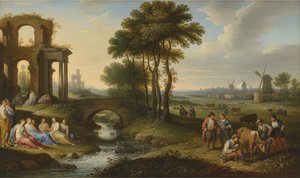
Cornelis van Poelenburch: Bridging Mannerism & the Dutch Baroque Landscape
Discover Cornelis van Poelenburch, a pivotal Dutch Baroque landscape painter bridging Mannerism & Italianate styles. Explore his life, key works, and lasting influence on 17th-century art with OriginalUniqueArt.

Rembrandti 25 meistriteost: Valgus ja varjud Hollandi kuldajast kunstikollektsioonis
Avastage Rembrandti 25 meistriteost! Hollandi kuldajastu barokkmaalid, portreed ja ajaloolised stseenid. Leidke inspiratsiooni interjööri kujunduseks või soetage luksuslik Rembrandt reproduktsioon OriginalUniqueArt.com-ist. Avastage kogu kollektsioon veebis!

Golden Light & Dutch Skies: The Timeless Magic of Dutch Golden Age Landscapes
Discover the breathtaking beauty of Dutch Golden Age landscapes. Explore the mastery of light, chiaroscuro, and 17th-century realism through an expert art history lens, celebrating the enduring legacy of the Dutch Masters for discerning collectors and art lovers.

Jan van Goyen: Master of Dutch Landscape & Atmospheric Perspective
Discover Jan van Goyen, the master of Dutch landscape painting. Explore his subtle technique, atmospheric realism & lasting influence on art history. Learn about this 17th-century pioneer at OriginalUniqueArt.