

 Vaata sisu
 Jaga teost
 Jaga
Jaga
 Detailid
 Õppekate juhend

 Laadi alla
 Sarnased teosed
 Röntgenuuring
 Slaidietendus
 Statistika
Rural Landscape


 Loe lähemalt
Käsitsi valmistatud õlimaalireproduktsioon
Meie kunstnike poolt tellimusel valmistatud käsitsi maalitud õli-kainaste teos teie soovitud suuruses ja raamis. ( Lülita trükkitoodetele Ülemineku digitaalse pildi müügi kanalisse)




P118B €10

P118H €10

P118W €10

P438Z €10

P508JH €12

P508YH €12

P805H €10

P805Z €10

P919BZ €10

P919G €10

P919XJ €10

P959ZH €10

P968JZ €12

W106C €8

W218G €10

W218JH €8

W218Y €10

W307PJ €10

W316G €10

W316PJ €8

W316Y €10

W398PJ €8

W4111J €10

W500HY €15

W500JH €15

W692G €12

W849H €8

W940BG €15

W953PJ €8




Vali meie eelmääratud suurused, mis vastavad teose algupärastele proportsioonidele.

Sisestage vajalik laius ja kõrgus, et teos sobiks teie raamile või seinale. Kuna tegu on käsipainatud teosega, siis erineva kujuga suuruse korral võib kunstnik jätta pildi ümber veidi rohkem marginaali või lõigata osa ära — valik on teie. Enne maali alustamist saadame teile kinnitamiseks digitaalse näidisprojektsiooni. Sellel lehel näidatud pilt ei kajasta tegelikku tulemust — seda näitab ainult näidisprojekttsioon.
Pärast tellimust saadab OriginalUniqueArt.com meeskond kliendile e-posti juhised ning esitab eelvaate kavandi
Maailmline tarne 3–4 nädala jooksul tavalise 5 nädala asemel. (23 oktoober). Kvaliteedis kompromisse ei tehta.

Tasuta ekspresssaatmine üle maailma

Kõrgekvaliteediline lina-kangastest muld

Täielik transpordikindlustus

Tollimaksude tagastamise garantii

Värvitoime täpsuse garantii

100 päeva tagastusõigus (ainult defektide korral)

100% raha tagasi garantii

Hulgusoodustus
 Klaasivalik on saadaval ainult kuni 110 cm suuruses teostes

Rural Landscape
Reproduktsiooni materjal
Reproduktsiooni mõõtmed
-


Lõppsumma
€ 264
A Serene Vision of Rural America: Charles Harold Davis’ “Rural Landscape”
Charles Harold Davis' "Rural Landscape," painted in 1905, isn’t merely a depiction of a field and trees; it’s an invitation to step into a moment of profound tranquility. Born in Amesbury, Massachusetts, in 1856, Davis honed his artistic skills under the tutelage of prominent figures like Jules Joseph Lefebvre and Gustave Boulanger in Paris, absorbing the vibrant energy of the European art scene before returning to America and embracing a distinctly American aesthetic. His work, particularly during his time in Mystic, Connecticut, shifted towards a Tonalist style, characterized by its muted colors, atmospheric perspective, and an almost meditative focus on capturing the essence of nature – a legacy deeply influenced by the Barbizon School’s emphasis on light and shadow.
The painting immediately draws the eye with its harmonious blend of blues, greens, and browns. Davis masterfully employs a technique reminiscent of Impressionism, though tempered with a Tonalist sensibility. He doesn't strive for photographic realism; instead, he uses broken brushstrokes and subtle gradations of color to evoke a feeling of atmosphere—the hazy warmth of the afternoon sun filtering through the trees, the gentle movement of clouds across the sky. The composition is carefully balanced, leading the viewer’s eye through the scene towards a distant horizon, creating a sense of depth and spaciousness. Note the delicate rendering of the foliage – not sharply defined, but rather suggested with loose, expressive strokes that capture the texture and vitality of the landscape.
The Language of Light and Shadow
Davis’s genius lies in his ability to translate light into color and form. The painting is bathed in a soft, diffused light, characteristic of the late afternoon. He skillfully uses shadows to define shapes and create a sense of volume, particularly in the trees that frame the scene. These aren't dark, ominous shadows; they are gentle, almost luminous, suggesting warmth and inviting the viewer into the heart of the landscape. The clouds themselves are rendered with remarkable subtlety, shifting between shades of gray and blue, creating an ethereal quality that elevates the painting beyond a simple depiction of weather.
The inclusion of figures in the foreground adds a layer of narrative to the scene without disrupting its overall sense of serenity. These individuals – likely farmers or laborers – are rendered with minimal detail, serving primarily as anchors for the viewer’s eye and subtly hinting at human connection within this vast landscape. They represent not just a rural life but also a timeless harmony between humanity and nature.
Symbolism and Emotional Resonance
“Rural Landscape” is more than just a pretty picture; it's imbued with symbolism. The scene evokes a sense of nostalgia for a simpler time, a longing for connection to the land, and an appreciation for the beauty of the natural world. It speaks to the values of hard work, community, and resilience – themes that were particularly resonant in America at the turn of the 20th century.
The painting’s quietude is profoundly calming. It invites contemplation and offers a respite from the stresses of modern life. Davis's masterful use of color and light creates an emotional atmosphere of peace, contentment, and connection to something larger than oneself. The scene feels both familiar and timeless, tapping into a deep-seated human desire for beauty and tranquility.
A Legacy in American Art
Charles Harold Davis’s “Rural Landscape” stands as a testament to the power of Tonalist and Impressionistic techniques to capture the essence of the American landscape. His work is represented in prominent museums, including the Metropolitan Museum of Art and the Corcoran Gallery of Art, solidifying his place as a significant figure in American art history. Reproductions of this evocative painting offer a beautiful way to bring a touch of rural serenity into any home or office – a reminder of the enduring beauty and tranquility of the natural world.
Küsimused ja vastused
Millist tehnikat teose "Rural Landscape" valmistamisel kasutati ja millal see loodi?
Teos "Rural Landscape" loodi aastal 1905, kasutades Oil On Canvas tehnikat. Materjal ja kuupäev kirjeldavad, kuidas ja millal originaal valminud on.
Millist kintust ja intensiivsust „Rural Landscape“, autor Charles Harold Davis näitab?
Teose „Rural Landscape“, autor Charles Harold Davis värvitoit on Subtle Color kütkusega ja Balanced intensiivsusega.
Kas on õpilaste jaoks olemas infoleht teose „Rural Landscape“, autor Charles Harold Davis kohta?
Teosele „Rural Landscape“, autor Charles Harold Davis on saadaval Juhend leht: trüvitav infoleht teose kohta, mis on loodud õpilasteks ja klassiruumis kasutamiseks.
Kunstniku elulugu
varase elu ja koolitus
Charles Harold Davis, ameerika maaparidist, sündis 7. jaanuaril 1856 Amesburys, Massachusettsis. Boston Museum of Fine Arts õpilasena saadetigi ta 1880. aastal Pariisi, et täiendada oma kunstilisi oskusi. Académie Julian õpetajate Jules Joseph Lefebvre ja Gustave Boulanger juures arendas Davis sügavat arusaamist Euroopa kunstimaastikust.kunstiline stiil ja mõjud
Davis'i teosid iseloomustavad rahustavad ja idyllised looduskirjeldused, mis tabavad looduse ilu äärmiselt täpselt. Tema pikk täitmine Barbizonis, kus ta jõudlikult maalis, avaldas sügavat mõju tema stiilile, mis liikus ajapärgul suunatud impressionismile. See uuendus on selgelt nähtav tema pilvetundlik olemuses ehk pilvimaalides, mille eest ta sai tuntuks.olulised saavutused ja kuuluvused
- sai 1906. aastal National Academy of Design täiskohaliseks liikmeks.
- pälvis hõbedamedali 1889. aasta Pariisi ekspositsioonil.
- tema teoseid esindavad märkimisväärsed muuseumid, sealhulgas Metropolitan Museum of Art (New York), Corcoran Gallery of Art (Washington) ja Boston Museum of Fine Arts.
pärand
Davis'i pärand ulatub kaugele tema kunstilistest panustest. Ta mängis võtuvrolli Mystic Art Association asutamisel aastal 1913, olles juhtiv tegelane kunstikoguduses, mis arenes Connecticutis asuvas Mysticis. vaadake Charles Harold Davis'i teoseid OriginalUniqueArt poes: https://OriginalUniqueArt.com/@/charles-harold-davis lugege rohkem Charles Harold Davisist Wikipediast: https://en.wikipedia.org/wiki/charles_harold_davis
Charles Harold Davis
1856 - 1933
Sarnased artiklid

John Constable: 25 Suurimat Teost Inglise Maastikumaali Tippu
Avastage John Constable'i 25 suurimat teost! Sukeldu inglise maastikumaali romantismisse, imetlege Dedham Vale ilu ja leia inspiratsiooni kodukaunistuseks. Kvaliteetsed kunstireprodutsioonid OriginalUniqueArt.com-is. Vaata kohe!

The Unvarnished Truth: A Cultural Journey Through the Soul of American Realism
Explore the profound beauty of American Realism. From the Ashcan School's urban grit to intimate portraits, discover how artists captured the authentic soul of a nation through unvarnished truth and masterful observation.

Grant Wood & American Regionalism: Identity, Myth & the Rural Landscape
Explore the world of Grant Wood & American Regionalism with OriginalUniqueArt. Discover the symbolism behind 'American Gothic', recurring themes, and the movement's lasting impact on art history. High-quality reproductions available.

American Realism's Defining Works: 10 Masterpieces for Your Home
Explore 10 defining American Realism masterpieces – Hopper, Homer & more. Discover the stories behind these iconic paintings and bring timeless art to your home with OriginalUniqueArt's museum-quality reproductions. Explore the full collection online.
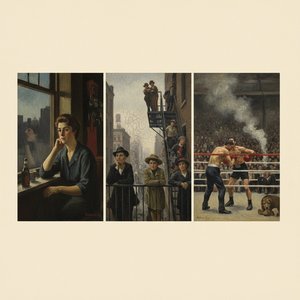
American Realism: Social Commentary & Artistic Representation in Early 20th-Century Painting
Explore the powerful social commentary & artistic representation of American Realism. Discover key artists like Bellows & Sloan, and understand the movement's lasting impact on 20th-century art history.