
 Eelvaade
 Saada
Saada Jaga
Jaga
 Teave teose kohta
 Juhend

 Laadi alla
 Sarnased teosed
 Röntgenuuring
 Slaidietendus
 Q&A
Q&A Statistika
St. Philip Neri


 Loe lähemalt
Giclée / Kunstiprint
Muuseumikvaliteediga giclée- või kangasprint kiire tootmisega ja paindlikud viimistlusvõimalused. ( Osta käsitsi maalatud teos Lülita digitaalse pildi juurde)




































Vali meie eelmääratud suurused, mis vastavad teose algupärastele proportsioonidele.

Sisestage vajalik laius ja kõrgus, et see sobiks teie raamile või seinale. Trükki saab ainult lõigata, seda ei saa kunagi pildist suuremaks teha, seega ka erineva mustega suurus kaotab osa pildist. Enne trükkimist saadame teile kinnitamiseks digitaalse näidisprojektsiooni. Sellel lehel näidatud pilt ei kujuta reaalset lõiget — seda näitab ainult näidisprojektsioon.
Ülemaailmne tarne () 2 nädala jooksul, tavalise 4/5 nädala asemel. (1 november)

Tasuta ekspresssaatmine üle maailma

Kõrgekvaliteediline lina-kangas

Täielik transpordikindlustus

Tollimaksude tagastamise garantii

Värvitoime täpsuse garantii

100 päeva tagastusõigus (ainult valmistusdefektide korral)

100% raha tagasi garantii

Hulgusoodustus
 Klaasivalik on saadaval ainult kuni 110 cm suuruses teostes

St. Philip Neri
Giclée / Kunstiprint
Reproduktsiooni suurus
-


Koguhind
€ 71
Kunstniku elulugu
The Sculptor of Roman Baroque Grandeur
Carlo Monaldi stands as a luminous figure within the vibrant tapestry of Italian Baroque sculpture, embodying the dramatic fervor and intellectual depth of eighteenth-century Rome. While historical records suggest his origins may trace back to approximately 1683, his presence in the Roman art scene was undeniably profound. Monaldi’s life was deeply intertwined with the prestigious institutions of his era, most notably the Academy of Saint Luke, where he demonstrated early brilliance by securing numerous prestigious awards throughout the first decade of the 1700s. His journey from a promising young talent to an established master reflects the rigorous academic tradition of Rome, a city that served as both his cradle and his greatest inspiration.
The evolution of Monaldi’s style reveals a profound dialogue between classical restraint and the theatrical exuberance of the Baroque movement. Though he was likely shaped by the influential Roman school of Camillo Rusconi, Monaldi possessed a unique ability to infuse marble with a sense of living breath. His early works, such as the statue of Umiltà for Santa Maria Maddalena, already whispered of the grace found in Correggio and the delicate plasticity of Camillo Mariani. As his career matured, he mastered the art of capturing movement and emotional intensity, utilizing the medium of marble to create textures that seemed to shift under the play of light and shadow.
Mastery of Form and Spiritual Expression
Monaldi’s technical prowess was most evident in his ability to translate complex theological narratives into tangible, emotive forms. His sculptures were never merely static figures; they were vessels of spiritual contemplation. In works such as his depictions of Saint Isaiah and Saint Sebastian, one observes a meticulous attention to anatomical precision paired with an extraordinary capacity for gesture. He understood that the true power of sculpture lies in the tension between the hardness of the stone and the perceived softness of the flesh, a feat he achieved through masterful carving techniques that allowed for subtle tonal variations.
The artist’s repertoire was characterized by a profound dedication to religious subjects, which allowed him to explore the heights of human passion and divine ecstasy. His ability to imbue saints with a palpable sense of vitality made his work highly sought after for prominent Roman churches and ecclesiastical commissions. Through his hands, the cold marble of the Baroque era became a medium for storytelling, where every fold of drapery and every strained muscle served to elevate the viewer's spirit toward the divine.
Legacy within the Roman Tradition
Beyond his individual creative achievements, Carlo Monaldi played a vital role in the continuity of the Roman sculptural tradition. His involvement with the Academy of Portugal and his recognized standing among his peers ensured that his influence extended to subsequent generations of artists. He was not merely a creator of objects but a participant in the grand cultural dialogue of the 18th century, bridging the gap between the late Baroque's dramatic intensity and the emerging refinements of the following era.
Today, Monaldi’s legacy is preserved in the silent, powerful presence of his surviving works, which continue to command respect for their technical excellence and emotional resonance. His contribution to the Roman school remains a testament to an age where art was the ultimate expression of faith, intellect, and human endurance. To study Monaldi is to encounter the very heart of the Baroque—a period where stone was transformed into soul.

Carlo Monaldi (1691-1760)
1691 - 1760 , Italy
Lühikest infot
- Full Name: Carlo Monaldi
- Nationality: Italian
- Date Of Birth: 1691
- Date Of Death: 1760
- Place Of Birth: Rome, Italy
- Notable Artworks:
- St Isaiah statue
- St Sebastian art
- St Vincent
- Artistic Movement Or Style: Baroque
Sarnased artiklid

Bronze Sculptures That Defined Art History | OriginalUniqueArt
Journey through art history with our Top 10 bronze sculptures! Explore masterpieces by Rodin, Michelangelo & more. Discover stories behind iconic statues and find museum-quality reproductions for your home decor at OriginalUniqueArt.com.

Bronze Age to Modern Masters: 10 Sculptures That Redefined Art | OriginalUniqueArt
Journey through art history with 10 legendary bronze sculptures – from Michelangelo's David to Rodin’s Thinker. Explore the stories, techniques & timeless beauty of these masterpieces. Find museum-quality reproductions & elevate your home decor on OriginalUniqueArt.com.

The Enduring Form: Sculpture Across History, Technique & Emotional Resonance
Explore the rich history of sculpture with OriginalUniqueArt. Discover key techniques, influential artists & investment potential for discerning collectors. Expert insights into valuing and collecting timeless masterpieces.
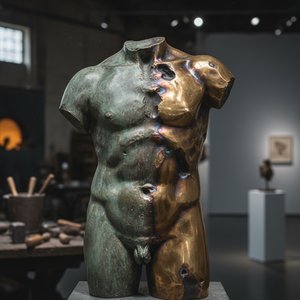
Pronksi Skulptuuride Püsiv Pärand: Ajalugu, Tehnikad ja Kaasaegsed Interpretatsioonid
Avastage pronksivalu rikkalik ajalugu ja tehnikaid! Lugege meie eksperdiartiklit pronksi skulptuuride kollektsioneerimisest, hindamisest ja kaasaegsetest interpretatsioonidest. Lisaks tutvume "Pronksivalu" muusikali taustaga.

The Enduring Form: Exploring Themes & Techniques in Sculpture Across Historical Periods
Explore the rich history of sculpture from ancient masterpieces to contemporary innovations. Discover key techniques, influential artists & investment potential for discerning art collectors.