- Avaleht

- Digitaalne kunstiteos
- carl buchheister
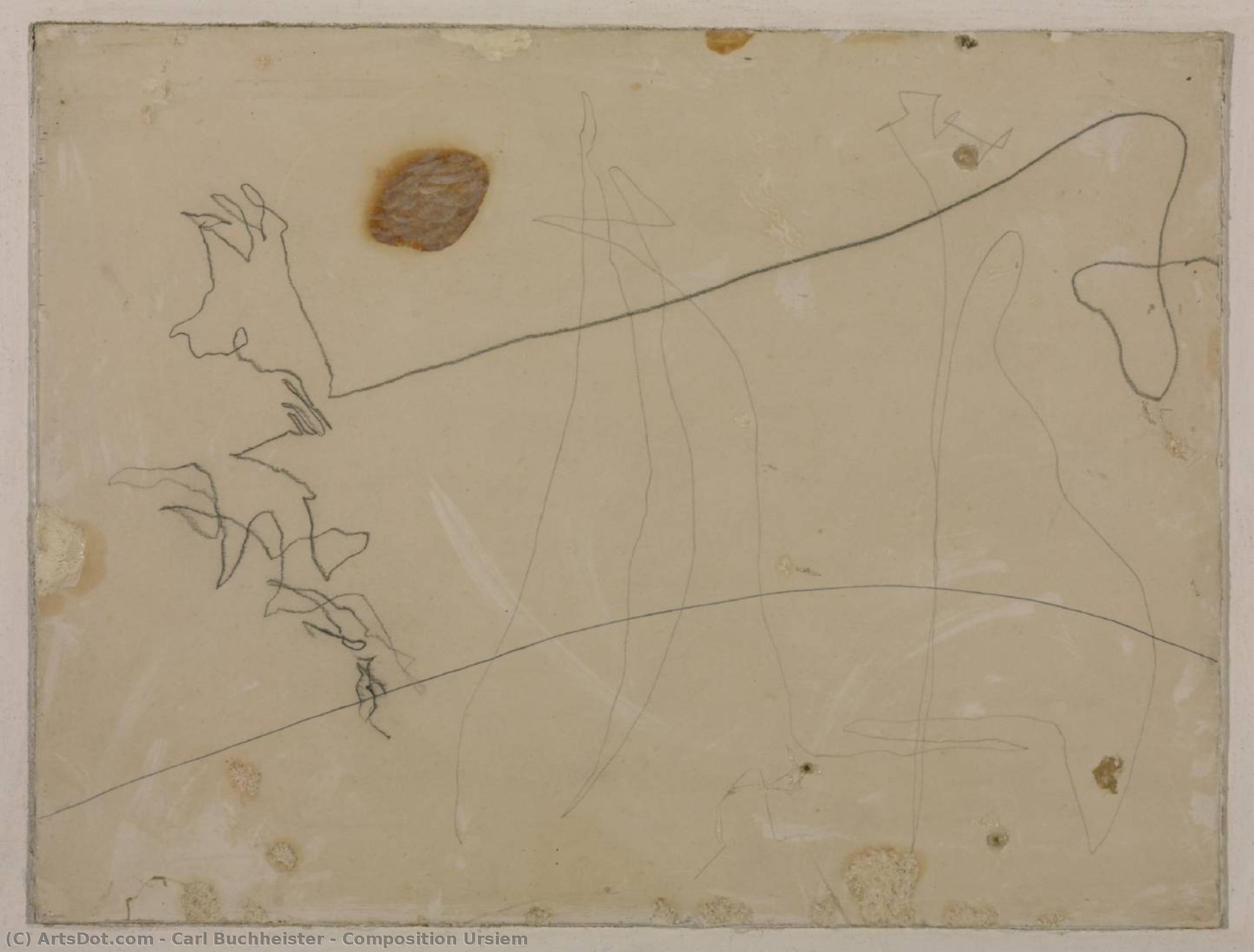
- Composition Ursiem
 Eelvaade
 Saada
Saada Jaga
Jaga
 Teave teose kohta

 Laadi alla
 Sarnased teosed
 Röntgenuuring
 Slaidietendus
Composition Ursiem


 Loe lähemalt
Ostke kõrglahutusel ja täiustatud digitaalne pilt, mis on oluliselt parem kui veebilehel näidatud eelvaade.
Iga fail on meie spetsialistide poolt hoolikalt ette valmistatud, kasutades kaasaegseid tööriistu ja professionaalset käsitsi retušeerimist. Tagame, et igal pildil on erakordne selgus, täpne värvitäpsus ja peen detail.
Lõplik fail saadetakse e-posti teel 72 tunni jooksul, olles optimeeritud koheseks kasutamiseks professionaalsetes, toimetuslikes ja trüki keskkondades. See on sama kvaliteet, mida usaldavad tipptasemel disainistuudiod, kirjastused ja galeriid.
Digitaalne kunstiteos
Laadi alla kõrge resolutsiooniga fail isiklikuks vaatamiseks, trükkimiseks ja loomingulisteks projektideks. ( Lülita trükile Lülita käsitsi maalatud版本le)
Sisse kuulub iga digitaalse pildi tellimusega
Eksperdi digitaalne kohaletoimetamine, garanteeritud
Valides OriginalUniqueArt.com, ei saa sa lihtsalt pilti – saad professionaalselt parandatud digitaalse teose, mida on valmistatud täpsusega ja mis on toetatud rahuldamatusgarantiiga. Siin on kõik, mis sinu tellimusega automaatselt kaasneb:

Kiire digitaalne saatmine
Teie kõrge resolutsiooniga digitaalne pildifail saadetakse teile e-posti 72 tunni jooksul pärast tellimist – kohe kasutamiseks valmis.

Tehisintellektiga täiustatud digitaalne fail
Teie teos on professionaalselt optimeeritud arenenud tehisintellekti tööriistade ja käsitsi redigeerimise abil, tagades maksimaalse detailitaseme, selguse ja värvitäpsuse.

Tasuta eluaegne uuesti saatmine
Kas kustutasid faili kogukalu unustamisel või kustutamisel? Puudub mure – saad selle uuesti igal ajal ilma lisatasuta.

Puuduvad importimaksed – alati
Nautige oma teoseid koheselt ilma tolli-, maksude või tarnimaskuludeta – digiletchargused on alati maksuvabadud.

Värvitäpsuse garantii
Me tagame, et teie digitaalne pilt kajastaks originaali värve professionaalsete tööriistade ja värvihalduse abil võimalikult täpselt.

60-päevane rahulolu garantii
Kui te ei ole oma digipildiga rahul, parandame seda või tagastame 100% summast 60 päeva jooksul – küsimusi ei esita.

100% raha tagastamise garantii
Ei ole rahul? Saate täielise tagastaja 60 päeva jooksul pärast digitaalse faili kättesaamist – küsimata.

Suurema tellimuse soodustused
Osta 3 pilti, säästa 10% - Osta 5, säästa 15% - Osta 10+, säästa 20%. Sobib suurepäraselt loomingulisteks projektideks, galeriideks ja agentuurideks.
Kollektsiooni kirjeldus
The Echoes of Form: Exploring Buchheister's Composition Ursiem
To stand before Carl Buchheister’s Composition Ursiem is to step into a landscape of the mind itself—a place where structure dissolves into gesture and emotion takes tangible form. This charcoal drawing, executed in 1959, does not offer a scene to be merely observed; rather, it demands an emotional resonance from the viewer. It possesses the raw, untamed energy characteristic of preparatory studies, suggesting that what we see here is less a finished statement and more a vital moment caught mid-thought—a visual exhalation from the artist’s subconscious.
A Dialogue with Abstraction and Line
Technically, the piece is a masterclass in the expressive potential of charcoal. The medium allows Buchheister to build texture not through careful blending, but through the sheer accumulation and layering of marks. Dark, sinuous lines writhe across the paper, creating an almost frenetic dance that speaks volumes without uttering a single word. These elongated, amorphous shapes intertwine in a chaotic yet compelling arrangement. There is no clear focal point dictated by traditional perspective; instead, the eye is drawn into the density of the central, darker tones, suggesting an implied object or perhaps the core of a deeply felt anxiety. The overall effect is one of dynamic tension, where line weight becomes synonymous with emotional intensity.
Historical Resonance: From Constructivism to Inner Space
While Buchheister is historically recognized as a pioneer of Constructivist landscape painting—a movement dedicated to liberating art from mere representation and embracing geometric purity—Composition Ursiem seems to navigate the space between that rigorous structure and pure, unbridled expressionism. Influenced by the profound anxieties of the postwar era, his work often grappled with the fragmentation of modern existence. This drawing feels like a later meditation on those early struggles; if his earlier career sought elemental forms in the landscape, here he finds them within the tangled architecture of human feeling.
Symbolism and Emotional Depth for Your Space
For collectors and designers alike, this piece offers more than mere decoration; it offers conversation. The symbolism inherent in its undefined forms—the suggestion of limbs, figures, or merely currents of energy—invites contemplation on themes of disorientation, the subconscious, and the struggle for coherence. Reproducing Composition Ursiem allows one to introduce a sophisticated layer of intellectual depth into any room. It is perfect for an environment that values artistic dialogue over placid repose, lending an air of thoughtful, bohemian gravitas.
To own this reproduction is to possess a piece of art history distilled into pure feeling—a charcoal whisper from 1959 that continues to challenge and captivate the modern eye.
Kunstniku biograafia
Carl Buchheister: A Pioneer of Constructivist Landscape Painting
Carl Buchheister (October 17, 1890 – February 2, 1964) emerged as a significant figure in German art during the turbulent years following World War I, establishing himself as one of the foremost practitioners of Constructivism—a revolutionary artistic movement that sought to liberate painting from representational illusionism and embrace geometric abstraction. Born in Hanover, Germany, Buchheister’s formative years coincided with the burgeoning intellectual ferment of Expressionism and Dada, shaping his artistic sensibilities and propelling him toward a distinctive visual language rooted in elemental forms and bold color palettes.- Early Influences: Like many artists of his time, Buchheister absorbed considerable inspiration from the landscapes of Edvard Munch and Friedrich Nietzsche, whose philosophical explorations mirrored the anxieties and uncertainties surrounding the postwar era. These influences instilled a preoccupation with psychological depth and emotional intensity—characteristics that would permeate his oeuvre throughout his career.
- Constructivist Principles: Embracing the tenets of Constructivism championed by artists like Wassily Kandinsky and Aleksandr Rodchenko, Buchheister rejected traditional perspective and tonal shading in favor of simplified geometric shapes arranged according to principles of balance and rhythm. He aimed to distill visual experience into its purest essence, prioritizing formal structure over detailed depiction.
- Notable Works: Buchheister’s artistic output comprises a series of striking landscape paintings—most notably “Composition Gowa,” “Composition Ursiem,” and “Composition Har”—that exemplify his Constructivist aesthetic. These canvases showcase monumental expanses of color punctuated by angular forms, conveying a sense of grandeur and immediacy that transcends mere visual observation.
Formal Innovation & Color Theory
Buchheister’s compositional strategies were meticulously crafted to evoke profound emotional responses in the viewer. He utilized techniques borrowed from photography—specifically the concept of “photographic illusion”—to create images that appeared to capture fleeting moments of atmospheric grandeur. His masterful manipulation of color—particularly hues derived from mineral pigments—further amplified the expressive power of his paintings. Analyzing geological formations and utilizing a palette informed by scientific observation, Buchheister sought to translate natural phenomena into visual metaphors for psychological states.- Geometric Abstraction: The artist’s canvases are dominated by large-scale geometric shapes—rectangles, triangles, and circles—arranged in harmonious configurations that prioritize spatial relationships over realistic representation.
- Mineral Pigments & Color Harmony: Buchheister meticulously selected mineral pigments—such as ultramarine blue and ochre—to achieve precise color matches and create visual compositions characterized by striking chromatic contrasts.
Legacy & Historical Significance
Carl Buchheister’s contribution to German art extends beyond his individual paintings; he served as a pivotal voice in advocating for Constructivism's role in shaping the artistic landscape of the Weimar Republic. His unwavering commitment to abstraction—coupled with his profound engagement with geological observation and psychological exploration—established him as a pioneer of a movement that anticipated many developments in postwar abstract expressionism. Buchheister’s work continues to resonate today, reminding us of the transformative potential of art to grapple with existential questions and convey visceral experiences.Further Exploration
For deeper insights into Carl Buchheister's artistic vision and his influence on subsequent generations of artists, consult resources such as Wikipedia (
carl buchheister
1890 - 1964 , Germany
Lühikesed faktid
- Artistic Movement Or Style: Constructivism
- Date Of Birth: October 17, 1890
- Date Of Death: February 2, 1964
- Full Name: Carl Buchheister
- Nationality: German
- Notable Artworks:
- Composition Gowa
- Composition Ursiem
- Composition Har
- Place Of Birth: Hanover, Germany

