Lülita trükkitoodetele
 Loe lähemalt







































 Kunstiteoste või reproduktsioonide puhul, mille üks külg on üle 105 cm (umbikmolt 41 tolli), saadetakse raam kirjal asendis, la Dismantlitud komplektina. See meetod tagab ohutuse kohaletoimetamisel ja väldib transpordil tekkivaid kahjustusi.


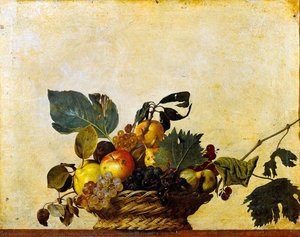
Basket of Fruit (Caravaggio): A Symphony of Light and Shadow
Caravaggio’s “Basket of Fruit” (1596) stands as an unparalleled achievement in Baroque still life painting, encapsulating the artist's mastery of naturalism combined with dramatic theatricality. More than just a depiction of produce—apples, pears, grapes, figs, quince—it’s a meditation on mortality and beauty, rendered with breathtaking precision and illuminated by Caravaggio’s revolutionary use of chiaroscuro. This artwork transcends mere representation; it aspires to evoke emotion and captivate the viewer's imagination.- Subject Matter: The centerpiece is a wicker basket overflowing with summer fruits—ripe peaches marred by wormholes, glistening apples reflecting light, plump pears nestled amongst leaves, and clusters of grapes displaying both vibrant color and subtle decay.
- Style: Caravaggio’s style embodies the Baroque ethos – an emphasis on grandeur, emotion, and dramatic contrasts. He eschewed idealized beauty in favor of gritty realism, mirroring the textures and imperfections of the natural world.
- Technique: Employing oil paint on canvas, Caravaggio achieved astonishing depth and luminosity through meticulous layering and blending—a technique known as tenebrism. This masterful manipulation of light creates a palpable sense of three-dimensionality, drawing the eye into the composition’s heart.
Historical Context: The Pursuit of Emotion in Baroque Art
Created during Caravaggio's formative years in Rome—a period marked by artistic experimentation and spiritual fervor—the painting reflects the broader cultural currents of the Baroque era. Artists sought to stir the soul through visual experience, conveying profound emotions and exploring themes of faith and human suffering. Caravaggio’s “Basket of Fruit” exemplifies this ambition, inviting contemplation on the fleeting nature of existence and celebrating the splendor of creation.- Influence: Caravaggio's innovative approach profoundly impacted subsequent generations of painters—particularly Rubens and Rembrandt—establishing tenebrism as a cornerstone of Baroque aesthetics.
- Symbolism: The basket itself symbolizes abundance and prosperity, mirroring biblical narratives about God’s provision. Each fruit carries symbolic weight, representing seasons, virtues, or perhaps even the fragility of life.
Emotional Impact: A Feast for the Eyes and Soul
“Basket of Fruit” is more than just a visual spectacle; it's an invitation to engage with profound questions about beauty, decay, and mortality. Caravaggio’s masterful rendering captures not only the physical appearance of the fruit but also its emotional essence—a poignant reminder that even the most exquisite creations are destined for eventual transformation. Viewing this artwork inspires awe and appreciation for the simple wonders of nature—and prompts reflection on our own place within the grand tapestry of existence. Its enduring power lies in its ability to transport us back to a moment of artistic brilliance, capturing the spirit of an era defined by dramatic intensity and unwavering conviction.Why Choose a Reproduction?
Bringing Caravaggio’s “Basket of Fruit” into your home allows you to experience the transformative beauty of Baroque art firsthand—without the considerable expense associated with acquiring the original masterpiece. A high-quality reproduction faithfully captures the painting's luminous palette and textural richness, offering an accessible pathway to artistic inspiration and enriching any interior space.Korduvad küsimused
Kust saan osta teose „Õlle Kask ja Puukorb“, autor Caravaggio käsitsi maalatud reproduktsiooni?
Teose „Õlle Kask ja Puukorb“, autor Caravaggio käsitsi maaldatud reproduktsiooni saab tellada otse selle Käsitsi maalatud reproduktsioon lehelt: käsitsi maalatud õlireproduktsioon linaelapale, valmistatud tellimusest.
Kes on teose "Õlle Kask ja Puukorb" looja?
Teose "Õlle Kask ja Puukorb" autoriks on mõeldud Caravaggio.
Millissele perioodile Caravaggio karjäärist kuulub teos "Õlle Kask ja Puukorb"?
Caravaggio loomingus kuulub teos "Õlle Kask ja Puukorb" perioodi Mature Period. See etap aitab seda võrdida kunstniku teiste töödega.
 Eelvaade
 Saada
Saada Jaga
Jaga
 Teave teose kohta
 Juhend

 Laadi alla
 Sarnased teosed
 Röntgenuuring
 Slaidietendus
 KÜSIMUSED JA VASTUSID
 Statistika