- Avaleht

- Digitaalne kunstiteos
- Bill Traylor
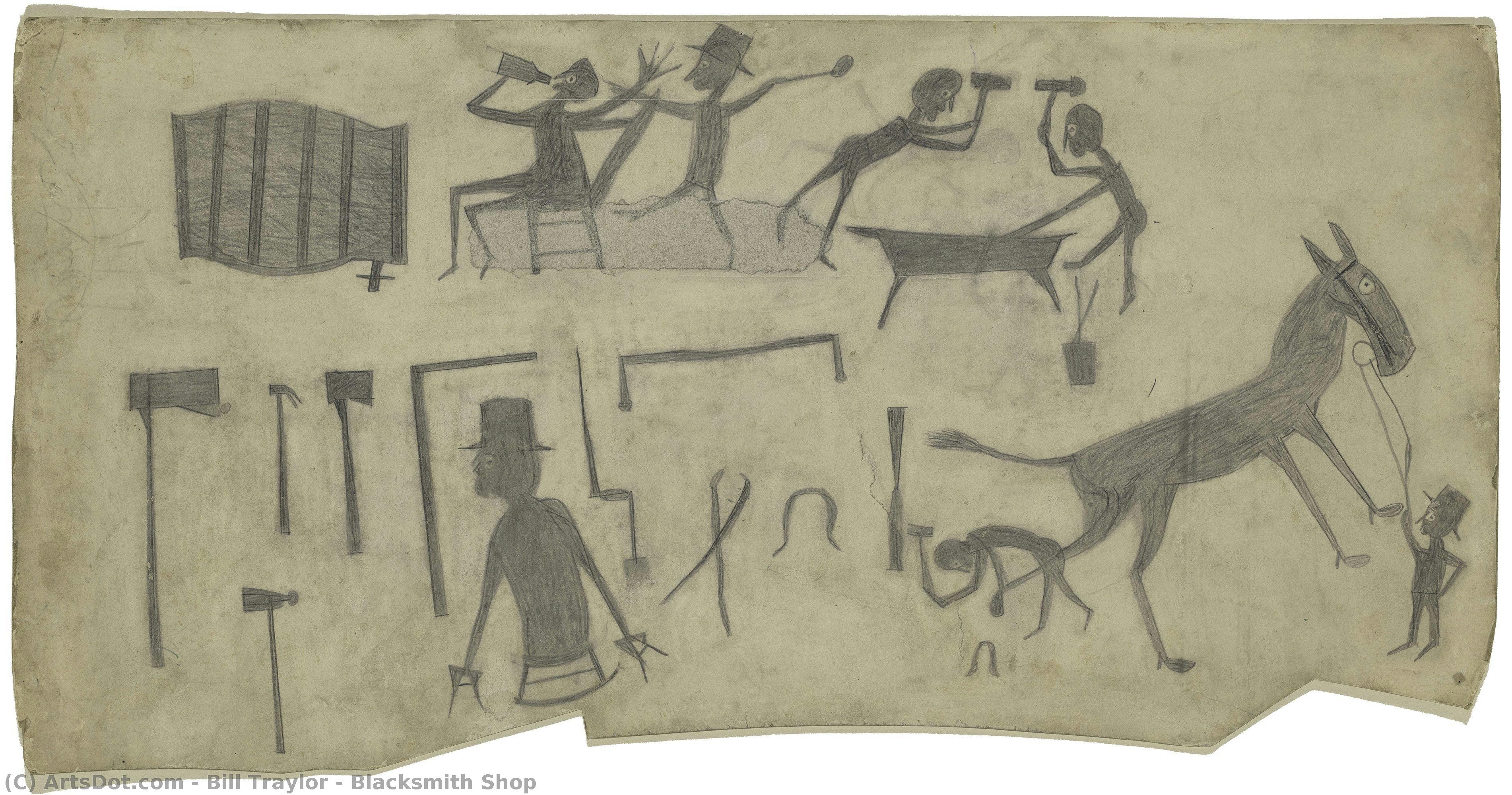
- Blacksmith Shop
 Telli trükis Tellimaks maali
 Saada
Saada
 Jaga
Jaga
 Teave teose kohta
 Lisa lemmikutesse

 Laadi alla
 Sarnased teosed
 Röntgenuuring
 Slaidietendus
Blacksmith Shop


 Loe lähemalt
Ostke kõrglahutusel ja täiustatud digitaalne pilt, mis on oluliselt parem kui veebilehel näidatud eelvaade.
Iga fail on meie spetsialistide poolt hoolikalt ette valmistatud, kasutades kaasaegseid tööriistu ja professionaalset käsitsi retušeerimist. Tagame, et igal pildil on erakordne selgus, täpne värvitäpsus ja peen detail.
Lõplik fail saadetakse e-posti teel 72 tunni jooksul, olles optimeeritud koheseks kasutamiseks professionaalsetes, toimetuslikes ja trüki keskkondades. See on sama kvaliteet, mida usaldavad tipptasemel disainistuudiod, kirjastused ja galeriid.
Digitaalne kunstiteos
Laadi alla kõrge resolutsiooniga fail isiklikuks vaatamiseks, trükkimiseks ja loomingulisteks projektideks.
Sisse kuulub iga digitaalse pildi tellimusega
Eksperdi digitaalne kohaletoimetamine, garanteeritud
Valides OriginalUniqueArt.com, ei saa sa lihtsalt pilti – saad professionaalselt parandatud digitaalse teose, mida on valmistatud täpsusega ja mis on toetatud rahuldamatusgarantiiga. Siin on kõik, mis sinu tellimusega automaatselt kaasneb:

Kiire digitaalne saatmine
Teie kõrge resolutsiooniga digitaalne pildifail saadetakse teile e-posti 72 tunni jooksul pärast tellimist – kohe kasutamiseks valmis.

Tehisintellektiga täiustatud digitaalne fail
Teie teos on professionaalselt optimeeritud arenenud tehisintellekti tööriistade ja käsitsi redigeerimise abil, tagades maksimaalse detailitaseme, selguse ja värvitäpsuse.

Tasuta eluaegne uuesti saatmine
Kas kustutasid faili kogukalu unustamisel või kustutamisel? Puudub mure – saad selle uuesti igal ajal ilma lisatasuta.

Puuduvad importimaksed – alati
Nautige oma teoseid koheselt ilma tolli-, maksude või tarnimaskuludeta – digiletchargused on alati maksuvabadud.

Värvitäpsuse garantii
Me tagame, et teie digitaalne pilt kajastaks originaali värve professionaalsete tööriistade ja värvihalduse abil võimalikult täpselt.

60-päevane rahulolu garantii
Kui te ei ole oma digipildiga rahul, parandame seda või tagastame 100% summast 60 päeva jooksul – küsimusi ei esita.

100% raha tagastamise garantii
Ei ole rahul? Saate täielise tagastaja 60 päeva jooksul pärast digitaalse faili kättesaamist – küsimata.

Suurema tellimuse soodustused
Osta 3 pilti, säästa 10% - Osta 5, säästa 15% - Osta 10+, säästa 20%. Sobib suurepäraselt loomingulisteks projektideks, galeriideks ja agentuurideks.
Kunstniku biograafia
The Voice of Alabama Folklore
William “Bill” Traylor remains one of the most profound enigmas in the annals of American art history—a self-taught African American visionary whose striking drawings emerged from the quiet obscurity of rural Alabama during the Great Depression. His work, characterized by a hauntingly beautiful simplicity, serves as a window into a world shaped by the complexities of the Jim Crow South. While early critics often dismissed his compositions as mere “primitive” or “outsider” sketches, modern scholarship has undergone a dramatic reassessment, recognizing Traylor as a master of modernism whose rhythmic lines and symbolic figures command a place within the global canon of fine art. This rediscovery was catalyzed by the tireless efforts of Charles Shannon, who encountered Traylor’s captivating vision in 1940, effectively bringing his singular perspective to the attention of a wider, more appreciative audience.
Born into the harsh realities of slavery on the plantation of George Hartful Traylor, Bill’s early life was defined by the profound social upheavals of the nineteenth century. His parents, Sally and Bill Calloway, navigated the immense hardships inherent in the post-emancipation era, instilling in him a sense of resilience that would later permeate his creative output. Despite the systemic discrimination and economic struggles of the sharecropping system in Alabama, Traylor built a life of remarkable familial devotion, fathering approximately twenty children. His journey from the bondage of slavery through the reconstruction era to the twilight of his life in Montgomery is a testament to human endurance, a narrative arc that provides a heavy, soulful backdrop to the imagery he would eventually commit to paper.
A Visual Language of Resilience and Motion
Traylor’s artistic career began unexpectedly late in his life, following his relocation to Montgomery in 1939. Driven by a sudden impulse to create, he utilized whatever materials were at hand—often pencil, crayon, or ink on discarded paper—to capture the essence of his surroundings. His work is not merely a collection of figures; it is a dynamic lexicon of movement and memory. In pieces such as Untitled (Dog Fight with Writing), one can witness the raw energy and kinetic tension of two dogs locked in combat, a composition that captures the visceral intensity of folk life through sharp, decisive strokes. His ability to distill complex emotions into minimalist forms allows his subjects—ranging from livestock like pigs to human figures engaged in daily toil or sudden violence—to vibrate with an almost supernatural life.
The symbolism within Traylor’s repertoire is both subtle and profound, often blending the mundane with the mythic. His depictions of animals and people frequently inhabit a space that feels simultaneously grounded in the reality of Alabama folklore and elevated by a dreamlike abstraction. This unique stylistic approach allows him to explore themes of:
- The rhythms of rural life: Capturing the steady, often grueling pace of agricultural existence.
- Social tension: Using fragmented figures to mirror the fractured social landscape of the segregated South.
- Narrative movement: Utilizing a sense of "floating" or disconnected limbs to suggest action and transformation.
Legacy and Historical Significance
The historical significance of Bill Traylor cannot be overstated. He stands as a bridge between the oral traditions of the African American experience and the formal language of modern art. His work does not merely document history; it interprets the psychological landscape of an era marked by both extreme oppression and incredible creative survival. By transforming the scraps of everyday life into permanent artifacts of beauty, Traylor challenged the boundaries of what constitutes "fine art" and forced the art world to look toward the margins for true innovation.
Today, his legacy continues to resonate through museums and galleries worldwide, serving as a cornerstone for the study of self-taught artists. His ability to communicate the universal through the deeply personal ensures that his vision remains as vital and provocative today as it was when he first began drawing in the streets of Montgomery. Through his pencil and paper, Traylor achieved a form of immortality, ensuring that the voices of the Alabama landscape would never be silenced.

Bill Traylor
1854 - 1949

