
 Eelvaade
 Saada
Saada Jaga
Jaga
 Teave teose kohta

 Laadi alla
 Sarnased teosed
 Röntgenuuring
 Slaidietendus
Villiers David
 Acrylic On Canvas
- WallArt
 1932
1932- 19th Century
 51.0 x 40.0 cm
 The Ashmolean Museum of Art And Archaeology
 Loe lähemalt
Giclée / Kunstiprint
Muuseumikvaliteediga giclée- või kangasprint kiire tootmisega ja paindlikud viimistlusvõimalused. ( Osta käsitsi maalitud maal Osta pilt)




P118B $10

P118H $10

P118W $10

P438Z $10

P508JH $12

P508YH $12

P805H $10

P805Z $10

P919BZ $10

P919G $10

P919XJ $10

P959ZH $10

P968JZ $12

W106C $8

W218G $10

W218JH $8

W218Y $10

W307PJ $10

W316G $10

W316PJ $8

W316Y $10

W398PJ $8

W4111J $10

W500HY $15

W500JH $15

W692G $12

W849H $8

W940BG $15

W953PJ $8




Vali meie eelmääratud suurused, mis vastavad teose algupärastele proportsioonidele.

Saate sisestada oma mõõdud, et need sobiks konkreetse raami või ruumi sisse. Kui valitud suurus ei vasta originaalteose proportsioonidele, lõigame teose ära või laiendame pilti peegeldatud või ühtlase servaga. Enne tootmisprotsessi algust saadetakse Teie kinnitamiseks digitaalne näidis.
Palun märka, et ekraanil kuvatav eelvaade ei kajasta tegelikku lõigamist või laiendamist. Ainult näidis kujutab täpselt lõplikku kompositsiooni.
Kuigi erimõõdu on saadaval, soovitame originaaproportsioonide säilitamiseks valida mõõt ette määratud nimekirjast.
Ülemaailmne tarne () 2 nädala jooksul, tavalise 4/5 nädala asemel. (23 august)

Tasuta ekspresssaatmine üle maailma

Kõrgekvaliteediline linakangas

Täielik transpordikindlustus

Tollimaksude tagastamise garantii

Värvitoime täpsuse garantii

60-päevane tagastusõig: ainult tootmisdefektide korral

100% raha tagasi garantii

Hulgusoodustus
 Klaasivalik on saadaval ainult suuruses kuni 110 cm

Villiers David
Giclée / Kunstiprint
Reproduktsiooni suurus
-


Kogusumma
$ 80
Kogumuse kirjeldus
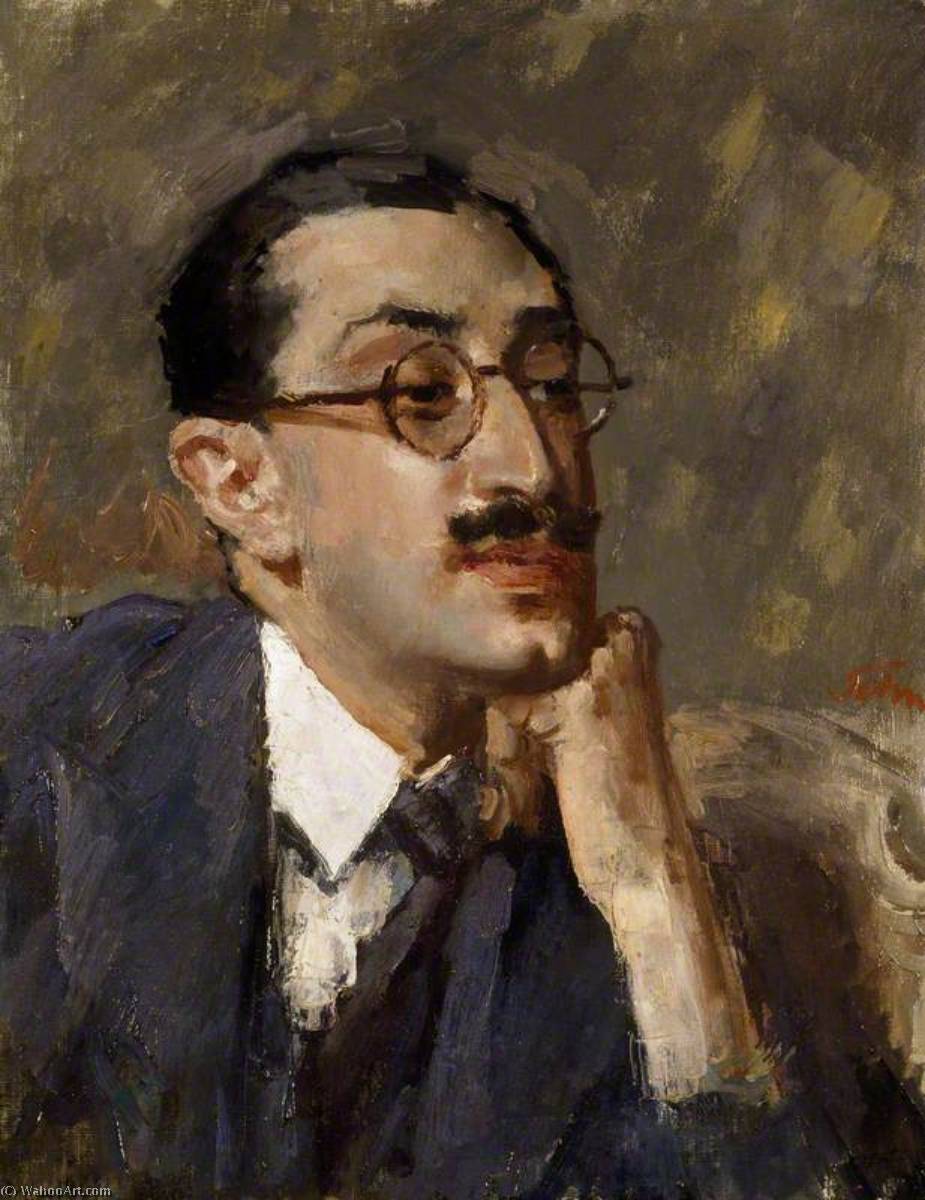
The Subject: An Intimate Gaze
“ Villiers David,” painted in 1932 by Augustus Edwin John, isn’t a grand historical portrait or a flamboyant depiction of celebrity. Instead, it offers a remarkably intimate glimpse into the face and demeanor of an unknown gentleman. The subject, dressed in the restrained elegance of a well-tailored suit – a dark grey wool that speaks to both wealth and understated taste – is seated with his hands resting thoughtfully on his chin. His gaze, direct yet not confrontational, holds a quiet confidence, a subtle suggestion of intelligence and perhaps even melancholy. John’s masterful observation captures the nuances of human expression, revealing more than just physical features; he conveys a sense of personality, a hint of inner life.
- The man's attire – the tie, the jacket, the overall cut – speaks to a period of relative prosperity and formality.
- His posture, relaxed yet attentive, invites the viewer into his world.
- Notice the subtle lines around his eyes and mouth; these are not signs of age but rather evidence of a life lived with contemplation.
The Style: A Welsh Bohemian’s Vision
Augustus Edwin John was, by nature, an artist who defied easy categorization. Born in Wales, he cultivated a distinctly bohemian lifestyle, flitting between London and the French Riviera, always seeking inspiration and challenging conventional artistic norms. His style is characterized by a remarkable sensitivity to light and color, combined with a loose, expressive brushstroke that imbues his paintings with a palpable sense of movement and emotion. “ Villiers David” exemplifies this approach perfectly – it’s not a meticulously rendered likeness but rather an impression, a feeling captured on canvas.
John's work is often described as ‘impressionistic,’ though he deliberately avoided strict adherence to the style, preferring instead to develop his own unique visual language.Technique and Composition: A Dance of Light and Shadow
The painting’s strength lies in John’s skillful manipulation of light and shadow. He employs a broken brushstroke technique, layering colors rather than blending them smoothly, creating a shimmering effect that seems to emanate from within the canvas. The background is deliberately muted – a simple chair provides minimal distraction – allowing the viewer's attention to remain firmly focused on the subject’s face. The use of warm tones in his clothing contrasts with the cooler shades of the background, further emphasizing his presence and drawing us into his gaze. John’s meticulous attention to detail, particularly in rendering the textures of the fabric and the subtle nuances of light reflecting off the man's glasses, is truly remarkable.
Historical Context and Symbolism: A Window into a Changing World
Painted in 1932, “ Villiers David” reflects a period of significant social and cultural change. Britain was emerging from the austerity of the Great Depression, and there was a growing sense of uncertainty about the future. John’s portrait can be interpreted as a meditation on these anxieties – the man's quiet confidence suggests resilience in the face of adversity, while his contemplative gaze hints at the complexities of human experience. The inclusion of the glasses is particularly noteworthy; they symbolize intellect and observation, suggesting that this individual possesses both wisdom and a critical eye. The portrait also speaks to John’s lifelong fascination with the Romani people, whom he often depicted in his work, capturing their vibrant spirit and unique perspective.
Emotional Impact: A Moment of Quiet Reflection
Ultimately, “ Villiers David” is a profoundly moving painting. It's not merely a portrait; it’s an invitation to connect with another human being, to share in his thoughts and feelings. The man’s gaze holds a quiet dignity and a hint of melancholy, prompting us to consider our own place in the world. It’s a reminder that even in the midst of uncertainty, there is beauty and meaning to be found in simple moments of reflection. Reproductions of this piece offer a chance to bring this intimate portrait into your home, inviting contemplation and adding a touch of understated elegance to any space.
Kunstniku elulugu
Augustus Edwin John: Walesi boheemlane ja portreekunstniku tee
Augustus Edwin John (sündinud Edwin Augustus Stevens, 4. jaanuar 1878 Tenbys – 31. oktoober 1961 Fordingbridge) oli 20. sajandi alguse Briti kunstimaailma keskne figuur, maalikunstnik, kelle elu oli sama elav ja konventsioonivaba kui tema loodud lõuendid. Tema kunstiline teekond sai alguse Walesis Tenbys, kus ema õpetas talle varakult joonistamist armastama. See varajane julgustus viis ta seitsmeteistkümne aasta vanuses Tenby School of Arti ning sealne loomupõline ande kohe märgatuks tuli. Ent alles sisenemine University College Londoni Slade School of Fine Art’i (1894–1898) süütas tema kunstiliku arengu tõeliselt. Seal, Henry Tonksi juhendamisel, ta lihvis oma joonistusoskust erakordsel määral, pälvides kiitust ja kinnistades end juba lõpetamise eel andekana. 1897. aastal Tenbys sukeldumise õnnetusel saadud peavigastus muutis tema isiksust drastiliselt, vallandades uue spontaansuse ja julguse, mis oleks iseloomulik nii tema elule kui ka kunstile.Mõjutused ja stiili kujunemine
Johni kunstilised tundlikkused olid sügavalt juurdunud vanade meistrite traditsioonis, eriti Peter Paul Rubensi loomingus, mille dünaamilised kompositsioonid ja rikkalikud värvipaletrid resoneerisid temaga. Samal ajal omandas ta ka prantsuse kaasaegsete uuendusi, nagu Matisse ja Gauguin, võttes omaks nende väljendusrikka värvikasutuse ja traditsiooniliste akadeemiliste piirangute lükatust. Puvis de Chavannesi peened tooniharmooniad jätsid kustumatu jälje tema esteetilisele visioonile. Need mitmekesised mõjutused sulandusid omapäraseks stiiliks, mida iseloomustasid elavad värvid, voolav pintslijoon ja veenv keskendumine subjekti olemuse tabamisele. Ta ei olnud pelgalt huvitatud sarnasest; ta otsis iga indiviidi sisemist elu, mööduvaid emotsioone, mis määrasid igaüks. See soov viis ta portreekunstis silpa, kus tal oli erakordne võime tabada seda, mida ta nimetas “hetkeline hoiak” – lühike pilguheit istuja hinge.Portreed ja mustlaste kultuur: täielikult elatud elu
Augustus Edwin Johni mäletatakse ehk kõige paremini aristokraatide ja kirjandushuviliste silmapaistvate portreede eest. Tema lõuendid äratasid ellu selliseid isiksusi nagu David Lloyd George, James Joyce ja George Bernard Shaw, mis olid kujutatud psühholoogilise sügavusega, mis ületas pelgalt esitust. Tähelepanuväärsed teosed nagu *Caspar* (1909), poeetiline noore puhtuse kujutus ning Archibald Henry Macdonald Sinclairi (1924) ja Francis Henry Crittalli (1919) portreed on tema žanri meisterlikkuse näited. Johni kunstilised huvid ei piirdunud aga konventsionaalse portreekunstiga. Sügav huvi romani kultuuri vastu viis ta rändava eluviisi juurde, reisides koos perega pikema perioodi vagonis. See süvenev kogemus mõjutas tema kunsti oluliselt, täites selle vabaduse, hulkurmeele ja loodusmaailma ilu teemadega. Tema sügav seotus selle kogukonnaga kulmineerus Gypsy Lore Society presidendiametiga, kinnistades tema pühendumust nende ainulaadse eluviisi mõistmisele ja tähistamisele. *Air Mechanic Shaw* (1935), T.E. Lawrence’i portree on veel üks tunnistus tema võimest tabada keerulisi tegelasi tähelepanuväärse tundlikkusega.Kompleksne pärand: tunnustus ja ümberhindamine
Kogu oma karjääri jooksul koges John nii laialdast kiitust kui ka kriitilisi kõikumisi. Esialgu tähistati tema uuenduslikke õlisketšitehnikaid ja figuurijooniseid, kuid mõned kriitikud leidsid hiljem tema tööd liiga ekstravagantseks või maalilikult puudulikuks. Tema teenistus sõjakunstnikuna Esimeses maailmasõjas, mis oli seotud Kanada vägedega, andis mälestusväärseid portreesid sõduritest, kuid kahjuks viis üks intsident tema tagasikutsumiseni Inglismaale. Nendest väljakutsetest hoolimata jäi Augustus Edwin John oluliseks jõuks Briti kunstiajaloo vallas. Ta oli väheste seas oma aja kunstnikke, kes saavutasid laialdase avaliku tunnustuse ja mängisid otsustavat rolli postimpressionismi populariseerimisel Ühendkuningriigis. 1942. aastal autasustati teda Order of Merit’iga ning ta dokumenteeris oma elu ja kunstifilosoofiat kahes autobiograafia köites: *Chiaroscuro* (1952) ja *Finishing Touches* (välja antud postuumselt 1964. aastal). Kuigi tema maine pärast Teist maailmasõda veidi kahanes, on viimastel aastatel täheldatud uut tunnustust tema töö vastu, eriti varajaste teoste elavuse ja originaalsuse eest. Tema pärandit rikastab veelgi tema õe Gwen Johni kunstiline saavutus, kelle ainulaadne visioon andis olulise panuse modernismi liikumisse.- Sündinud: 4. jaanuar 1878, Tenby, Wales
- Surnud: 31. oktoober 1961, Fordingbridge, Inglismaa

Augustus Edwin John
1878 - 1961 , Ameerika Ühendriigid
Lühikesed faktid
- Artistic Movement Or Style: Post-Impressionism
- Artists Or Movements Influenced By This Artist: ['Modern British painting']
- Artists Who Influenced This Artist:
- Rubens
- Matisse
- Gauguin
- Date Of Birth: 4. jaanuar 1878
- Date Of Death: 31. oktoober 1961
- Full Name: Augustus Edwin John
- Nationality: Welsh
- Notable Artworks:
- Caspar
- Air Mechanic Shaw
- David John
- Place Of Birth (City And Country): Tenby, Wales
Seotud artiklid

John Singer Sargent's 25 Masterpieces: Portraits & Beyond | OriginalUniqueArt
Explore 25 iconic John Singer Sargent paintings – from dazzling portraits to Impressionist landscapes. Discover the stories behind Madame X, El Jaleo & more! Find museum-quality art reproductions and elevate your home decor with OriginalUniqueArt.com.

John Constable: 25 Suurimat Teost Inglise Maastikumaali Tippu
Avastage John Constable'i 25 suurimat teost! Sukeldu inglise maastikumaali romantismisse, imetlege Dedham Vale ilu ja leia inspiratsiooni kodukaunistuseks. Kvaliteetsed kunstireprodutsioonid OriginalUniqueArt.com-is. Vaata kohe!

Oil on Canvas: A Historical & Technical Exploration of a Timeless Artistic Medium
Explore the rich history & enduring techniques of oil painting on canvas. Discover the science behind its longevity, conservation practices, and contemporary relevance. Expert insights for art enthusiasts.

The Enduring Legacy of Oil on Canvas: Technique, History & Aesthetic Impact
Explore the rich history & techniques of oil painting – from Renaissance masters to Impressionism. Discover pigments, layering methods, and why this timeless medium endures. Expert insights for artists & art enthusiasts.

Lõuendi püsivus ja väljendusvõime: Tehnika, ajalugu ja kaasaegne praktika
Avastage lõuendi püsivuse ja väljendusvõime saladused! Ajaloolised tehnikad, kaasaegsed lähenemised ja ekspertide nõuanded maalikunsti austajatele. Lugege nüüd!



